


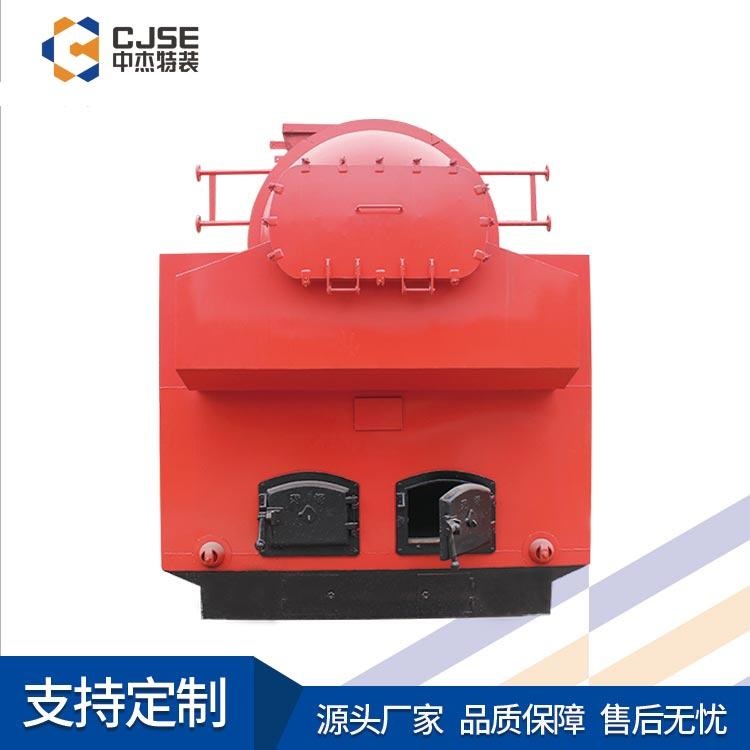

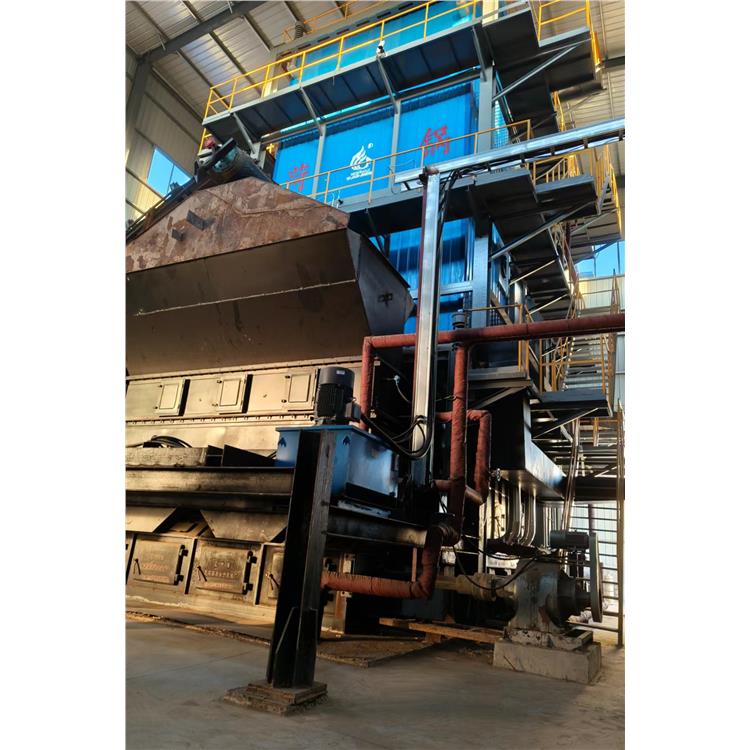
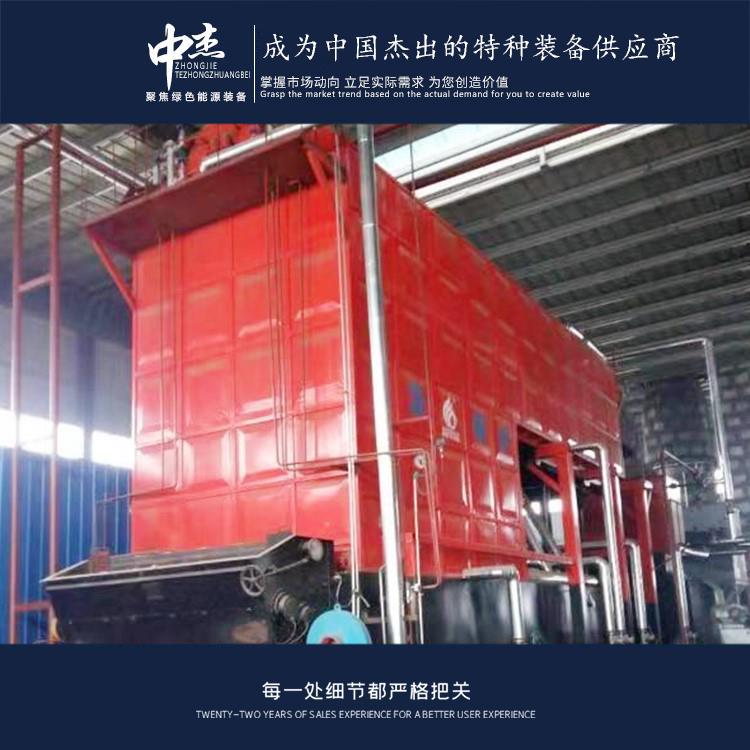


















Shandong Zhongjie Special Equipment (formerly Heze Boiler Factory Co., Ltd.) was established in 2001, located at No. 2218 Jinnan Road, Development Zone, Heze City, with a registered capital of 50 million yuan and total assets of 500 million yuan. The company has 7 business centers: boilers, deep-freeze containers, pressure vessels, central air conditioning, engineering installation, international trade, and the Internet of Things. It has three factory sites on Jinnan Road, East Changjiang Road, and Bohai Road, covering a total of 200,000 square meters, with the main workshop spanning 83,000 square meters. It currently employs 710 people, including 247 engineers and technicians and 82 intermediate-level technicians. In December 2016, it was recognized as a "High-tech Enterprise" by the Science and Technology Department. In June 2021, it was identified as a "Specialized and New Enterprise in Shandong Province" by the Ministry of Industry and Information Technology. In June 2022, it was recognized as a "Gazelle Enterprise in Shandong Province" and in August 2022, it was identified as a "Specialized and New Small Giant Enterprise" by the Ministry of Industry and Information Technology.
Biomass boiler combustion boasts the following energy-saving features compared to traditional fuel boilers:
Combustion: The combustion technology and design of biomass boilers enable the burning of biomass fuel. Compared to traditional fuel boilers, biomass boilers have higher combustion efficiency, allowing for better utilization of fuel energy and reduced energy waste.
Heat Recovery Utilization: Biomass boilers are equipped with a heat recovery system, which can use the excess heat generated by combustion for heating systems, enhancing energy utilization efficiency. The heat from flue gases in traditional fuel boilers is usually wasted, but biomass boilers can recover and utilize the heat energy from flue gases, reducing energy waste.
Renewable Energy Utilization: Biomass boilers utilize renewable biomass fuels such as wood chips, straw, and waste crops, reducing dependence on finite fossil fuel resources. Compared to traditional fuel boilers, biomass boilers have a more sustainable fuel source and can achieve sustainable energy use.
Carbon Emission Reduction: The combustion of biomass fuel produces relatively lower carbon emissions compared to traditional fuel boilers, resulting in reduced carbon emissions from biomass boilers. The use of biomass boilers can decrease greenhouse gas emissions and is more environmentally friendly.
Waste Utilization: Biomass boilers can use agricultural by-products such as crop straw and wood waste as fuel, effectively utilizing waste resources and reducing resource waste. Compared to traditional fuel boilers, biomass boilers have a more diverse fuel source and can achieve effective utilization of waste.
To prevent and alleviate corrosion issues in biomass boilers, the following methods can be adopted:
Regular Cleaning and Maintenance: Regularly clean the boiler's interior to remove accumulated dust and dirt, maintaining its cleanliness. During the cleaning process, use appropriate cleaning agents and tools to remove dirt from the interior, preventing corrosion.
Regulate Water Quality: The water quality of biomass boilers significantly affects corrosion. Regularly test and adjust the chemical composition of the boiler water to maintain the pH value, hardness, and oxygen content within appropriate ranges. Utilize water treatment equipment, such as water softeners and oxygen removers, to enhance water quality.
Prevent Oxygen Corrosion: Oxygen corrosion is one of the common corrosion forms in biomass boilers. It can be mitigated by installing a deaerator in the boiler's feedwater piping to remove oxygen from the water, thereby reducing the occurrence of oxygen corrosion. Additionally, chemical measures such as corrosion inhibitors can also be employed to prevent oxygen corrosion.
Control the combustion process: High temperatures during combustion and acidic substances in the flue gas can also cause corrosion. To control the combustion process, ensure that the combustion temperature and acidic substances in the flue gas are within the appropriate range. This can be achieved by adjusting the air flow, fuel supply, and fuel distribution.
Prevent Local Corrosion: Some parts of the boiler, such as the furnace and flue, are prone to corrosion. Reinforcement or protective coatings made from corrosion-resistant materials can be applied to these areas, extending their service life.
Regular Inspections and Maintenance: Regularly inspect and maintain biomass boilers to promptly identify and address corrosion issues. Entrust a maintenance crew for scheduled inspections and maintenance tasks.
A biomass organic heat carrier boiler is a boiler equipment that uses biomass as fuel to transfer heat energy through an organic heat carrier. Compared to traditional steam boilers, the biomass organic heat carrier boiler has the following performance advantages:
High thermal efficiency: Biomass organic thermal carrier boilers use organic thermal carriers as heat transfer mediums, offering higher heat transfer efficiency. Organic thermal carriers can achieve liquid-phase heat transfer at low temperatures, resulting in minimal heat loss and enabling more efficient utilization of fuel's thermal energy, thereby enhancing thermal efficiency.
Flexibility: The biomass organic heat carrier boiler is suitable for various biomass fuels such as wood chips, straw, etc. Due to the abundance of biomass resources, different biomass fuels can be chosen according to actual conditions, enhancing the substitutability and flexibility of the fuel.
Environmental Protection: The biomass organic heat carrier boiler produces relatively little waste gas and slag during the combustion process, with low emissions of pollutants. The biomass fuel itself is characterized by low sulfur and low nitrogen content, and the slag after combustion can be reused as organic fertilizer or biomass fuel, reducing environmental pollution.
Safety: The biomass organic thermal carrier boiler uses organic thermal carriers as heat transfer mediums, featuring lower working pressure, thereby reducing safety risks during boiler operation. Additionally, biomass fuel has a lower risk of explosion and fire during combustion compared to fossil fuels.
Renewability: Biomass organic heat carrier boilers use biomass as fuel, a resource with renewability, which can be continuously replenished through planting and cultivation. Compared to fossil fuels, the use of biomass fuel has a smaller environmental impact, contributing to sustainable development.
In the technical aspect of biomass boilers, it is crucial to address the following three issues:
Enhanced Combustion Efficiency: Biomass fuel has characteristics different from traditional fossil fuels, which tend to produce particulates like straw and wood shavings during combustion, leading to lower efficiency. Therefore, it is necessary to develop and improve combustion systems, optimize the combustion process, enhance efficiency, and reduce energy waste.
High-temperature Corrosion Issue: Ash and elements like chlorine in biomass fuel are prone to cause corrosion at high temperatures, damaging the metal components of boilers. To address high-temperature corrosion, it is necessary to develop and apply corrosion-resistant materials, control combustion conditions, and reduce the occurrence of corrosion.
Ash treatment and utilization: Biomass fuel combustion generates a large amount of ash, including waste, ash content, and unburned materials. The treatment and disposal of ash is a significant issue, requiring the development and application of ash treatment technologies, including ash recycling and utilization, resource utilization, and chemical treatment.
By addressing these three issues, the combustion efficiency of biomass boilers can be further enhanced, corrosion risks reduced, and the effective treatment and utilization of ash and slag achieved, promoting the sustainable development of biomass energy.
Our company places great emphasis on technological innovation and R&D design. We have one municipal-level enterprise technology center in Heze City, equipped with testing facilities for non-destructive testing, physical and chemical testing, welding testing, hydrostatic testing, and more. We have over 600 types of equipment, including CNC machine tools, X-ray flaw detectors, digital ultrasonic flaw detectors, mechanical property testing machines, chemical analyzers, spectrometers, tensile testing machines, plasma welding machines, and others. The key products and technologies we have developed, such as temperature and pressure vessel welding, biomass boiler emission reduction, and waste heat utilization, have successively been selected for multiple Shandong Provincial Department of Industry and Information Technology science and technology innovation projects, Shandong Provincial key projects, and Heze City innovative and excellent projects. We have accumulated 27 authorized utility models, 16 authorized inventions, participated in drafting 2 standards, 2 industry standards, and registered 15 trademarks. Our technical team, in collaboration with Professor Yajiang Li from Shandong University, has developed deep cryogenic container processing technology using the international plasma arc + filler wire argon arc welding (PAW-GTAW) technology. The provincial-level scientific and technological achievement identification has confirmed that our technology level in deep cryogenic container manufacturing has reached an international standard. Choose Zhongjie Special Equipment, let's create brilliance together!
WeChat Official Account

Scan to follow Official Account



















