


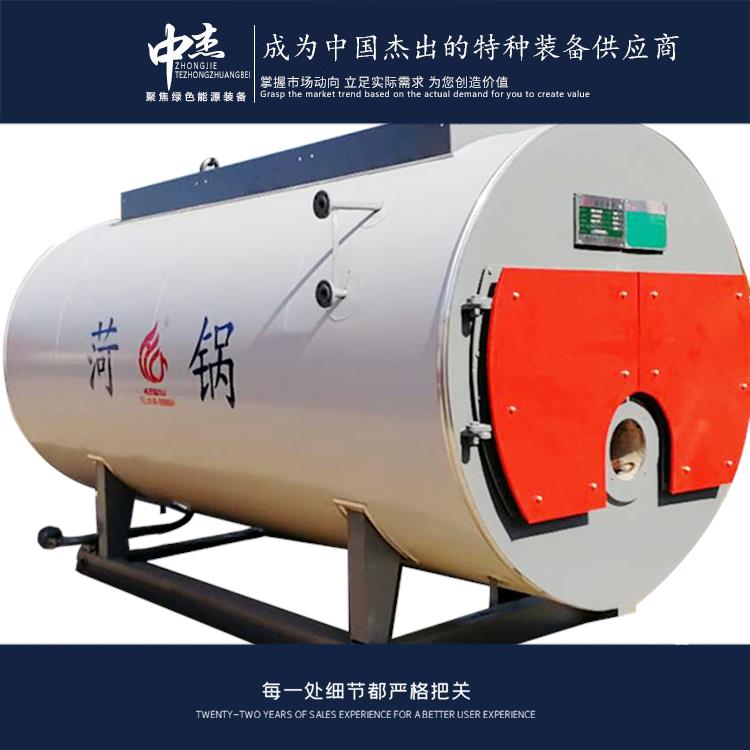

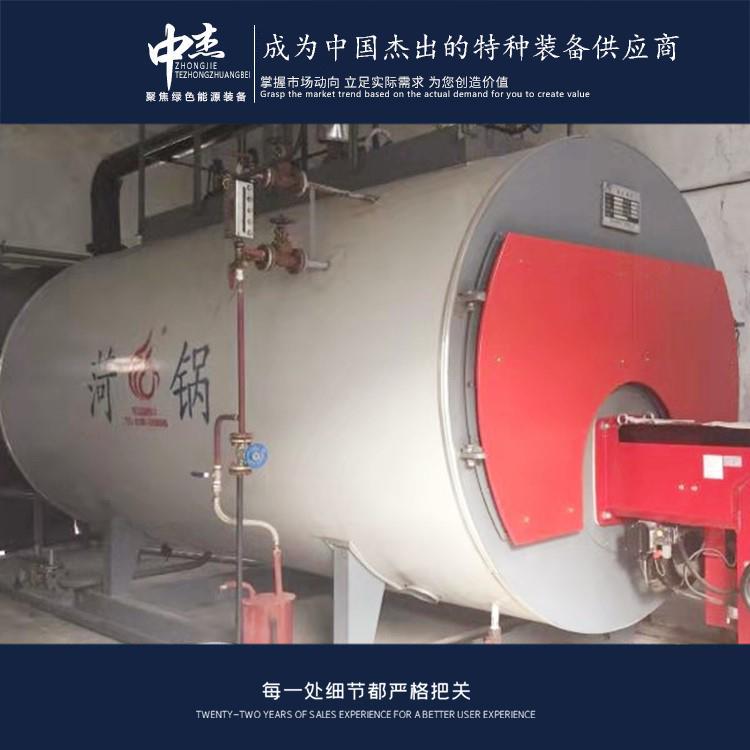
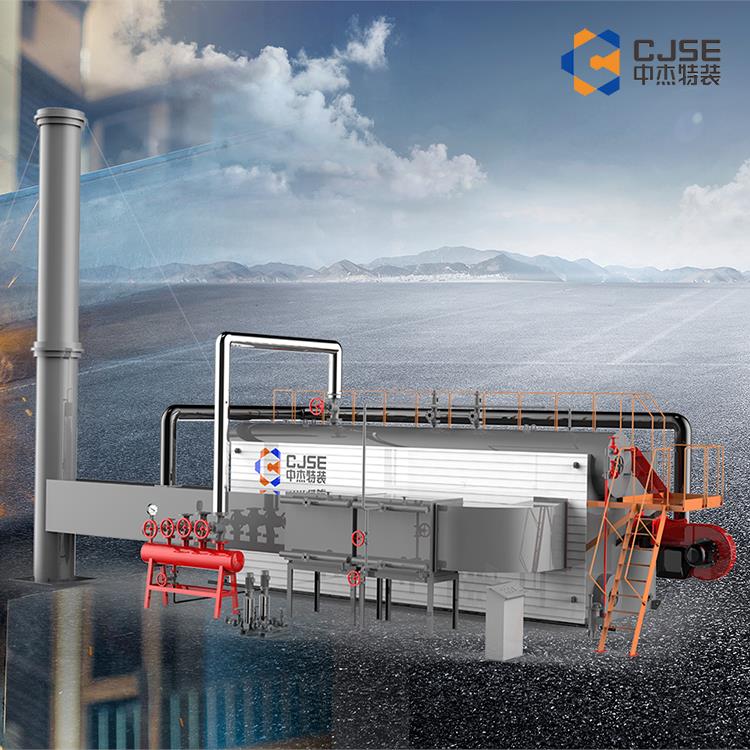


















Shandong Zhongjie Special Equipment Co., Ltd. (formerly Heze Boiler Factory Co., Ltd.) holds an A-grade boiler manufacturing license, an A2-grade pressure vessel manufacturing license, an A2-grade pressure vessel design license, a B-grade boiler installation license, and GB2/GC2-grade pressure pipeline installation licenses, as well as a qualification for electromechanical equipment installation contracting. It is a member of the China Boiler and Water Treatment Association, the China Chemical Equipment Association, and the Standing Committee of the Shandong Equipment Manufacturing Association. The company has also passed certifications for the ISO9001 Quality Management System, ISO14001 Environmental Management System, OHSAS18001 Occupational Health and Safety Management System, and the American ASME/U2 certification.
If gas boiler gas leakage is detected, immediate action is required to handle it:
1. Immediately shut off the gas supply: First, quickly close the gas supply valve to cut off the gas supply. This prevents further leakage and reduces safety risks.
2. Ventilate the area: Open windows and doors to ensure proper indoor air circulation and expel any remaining gas. This lowers the indoor gas concentration, reducing the risk of explosion and poisoning.
3. Avoid open flames and electrical appliances: In the event of gas leakage, avoid using open flames and electrical equipment to prevent fire or electrical sparks that could trigger an explosion.
4. Do not operate electrical switches: Do not operate electrical switches, including lights, TVs, computers, etc., to prevent the generation of sparks that could cause an accident.
5. Contact the gas company or personnel: Promptly contact the local gas company or personnel to report the gas leakage and request their inspection and handling.
6. Do not use a phone or make calls: In cases of suspected gas leakage, do not use a phone or make calls to avoid static electricity that could cause an explosion.
7. Keep away from the leakage area: Stay as far away from the leakage area as possible to ensure your safety. Do not approach the gas boiler or the leakage point to avoid injury.
Remember, handling gas boiler gas leakage is a dangerous task that requires caution. It is best handled by trained personnel to ensure safety.
Safety requirements for steam boiler valves primarily include the following aspects: Valve Selection: Choose the appropriate type and specification of valves for steam boilers. The valves must meet relevant standards and specifications, and possess characteristics such as high-temperature resistance, pressure resistance, and corrosion resistance. Valve Installation: Install the valve correctly at the corresponding position on the steam boiler. Ensure the connection is firm, the seal is reliable, and prevent leakage and loosening during installation. Valve Operation: The operation of the valve should be easy, flexible, and capable of accurately controlling steam flow and pressure. The handle or device should indicate the opening and closing direction of the valve, as well as the corresponding operation method. Valve Sealing: The sealing performance of the valve is crucial. The valve should have good sealing properties to prevent steam leakage and energy loss. The sealing surface should be flat and smooth, and able to withstand high temperatures and wear. Valve Maintenance: Regularly inspect and maintain valves to ensure their normal operation and safety performance. This includes cleaning the valve, inspecting the sealing surface, lubricating moving parts, and timely repairing or replacing damaged components. Safety Valve: A safety valve must be installed on the steam boiler to protect its safe operation. The safety valve must meet relevant standards and specifications and be able to automatically open and release over-pressurized steam when exceeding the set pressure, preventing boiler explosions. Valve Labeling: The valve should be labeled with its type, specification, working pressure, flow rate, and other information. This helps operators correctly identify and operate the valve, avoiding incorrect operations and accidents. It should be noted that the above safety requirements are general guidelines, and specific safety requirements must be determined based on the type, scale, and operating environment of the steam boiler. When using valves, follow relevant laws, regulations, and safety operation procedures to ensure the safe and effective operation and control of the valves.
Converting a standard boiler to a gas boiler can significantly enhance energy utilization efficiency and energy-saving effects. Here's an overview of the energy-saving efficiency of switching to a gas boiler:
- High combustion efficiency: Gas boilers, fueled by gas, generally have higher combustion efficiency compared to traditional coal or oil-fired boilers. This results in reduced energy waste and a higher level of efficiency.
- Low emissions: Gas boilers produce less exhaust emissions during combustion, causing less environmental pollution. The combustion technology and emission control devices used in gas boilers typically effectively reduce emissions of harmful substances like nitrogen oxides.
- Fast startup and shutdown: Gas boilers can start and stop quickly, allowing for flexible adjustments based on actual needs. They have shorter startup and shutdown times than coal-fired boilers, avoiding prolonged preheating and cooling processes, and reducing energy waste.
- High thermal efficiency: Gas boilers generally have higher thermal efficiency, achieving a higher conversion rate of thermal energy. The heat exchange technology and energy-saving design of gas boilers maximize the use of the heat energy from gas, improving heating efficiency.
- Intelligent control and management: Gas boilers are often equipped with intelligent control systems that can automatically adjust operating states based on actual needs. Through precise control and regulation, they can ensure stable heating and avoid unnecessary energy waste.
- Note that when switching to a gas boiler, factors such as the reliability and safety of the gas supply, as well as the suitability and installation requirements of the boiler, should be considered. It is advisable to consult with engineers or relevant agencies before making the conversion.
The primary benefits of installing expansion tanks in a heat transfer oil furnace include:
- Alleviating thermal expansion and contraction: During operation, the heat transfer oil furnace experiences thermal expansion and contraction due to temperature changes. The expansion tank provides space for the oil to expand, mitigating the impact of thermal expansion and contraction on equipment and pipelines, and preventing stress concentration and equipment deformation caused by these effects.
- Protecting equipment and pipelines: The expansion tank absorbs the expansion and contraction of the heat transfer oil, reducing impact and vibration on equipment and pipelines. This helps extend the lifespan of the equipment and pipelines, and decreases the frequency of maintenance and replacements.
- Reducing leakage risks: The expansion tank provides an enclosed space, minimizing the risk of heat transfer oil leakage. When the oil expands, excess can be accommodated through the expansion tank, preventing leaks and environmental pollution.
- Facilitating maintenance and repairs: The presence of an expansion tank makes it easier to maintain and repair the heat transfer oil furnace system. When repairs or replacements of equipment and pipelines are needed, the flow and shutdown of the heat transfer oil can be controlled through the expansion tank, reducing downtime and the difficulty of maintenance.
-In summary, the expansion tank plays a role in alleviating thermal expansion and contraction, protecting equipment and pipelines, reducing leakage risks, and facilitating maintenance and repairs in the heat transfer oil furnace system. It is an important design element that contributes to the safety and reliability of the system.
Our company attaches great importance to technological innovation and research and development, boasting one municipal-level enterprise technology center in Heze City. We have established test facilities for non-destructive testing, physical and chemical testing, welding testing, hydrostatic testing, and more. We are equipped with over 600 types of instruments and equipment, including CNC machine tools, X-ray flaw detectors, digital ultrasonic flaw detectors, mechanical property testing machines, chemical analyzers, spectrometers, tensile testing machines, plasma welding machines, and others. The key products we have developed, such as temperature and pressure vessel welding, biomass boiler emission reduction, and waste heat recovery, have successively been selected for multiple Shandong Province Department of Industry and Information Technology science and technology innovation projects, Shandong Province key projects, and Heze City innovation and excellence projects. We have accumulated a total of 27 authorized utility models, 16 authorized inventions, participated in drafting 2 standards, 2 industry standards, and registered 15 trademarks. Our technical team, in collaboration with Professor Yajiang Li from Shandong University, has developed deep cryogenic container processing technology using the international plasma arc + filler wire tungsten inert gas arc welding (PAW-GTAW) technique. After provincial-level scientific and technological achievement evaluation, the technology level has reached international standards in the field of deep cryogenic container manufacturing.
Choose ZJET for your custom solutions, let's create brilliance together!
WeChat Official Account

Scan to follow Official Account



















