


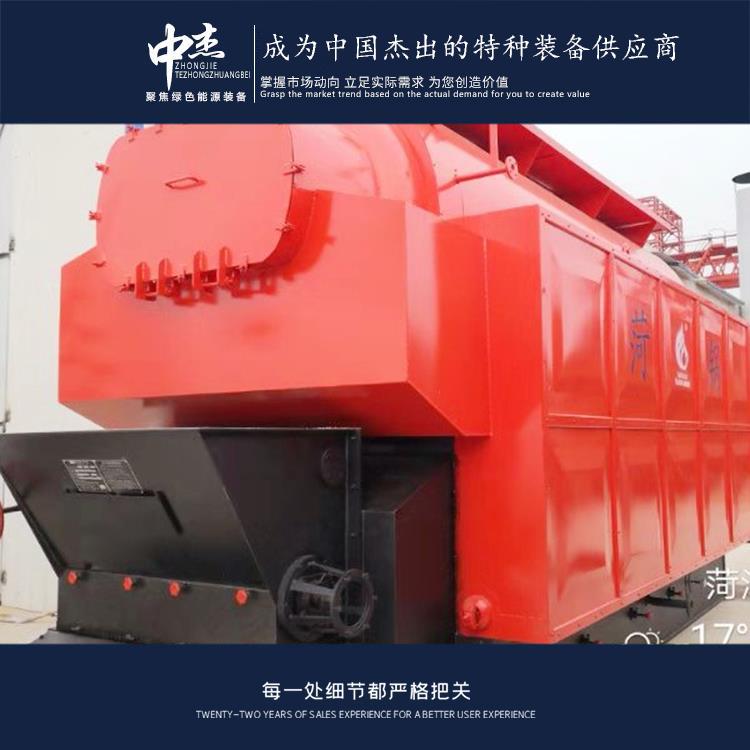


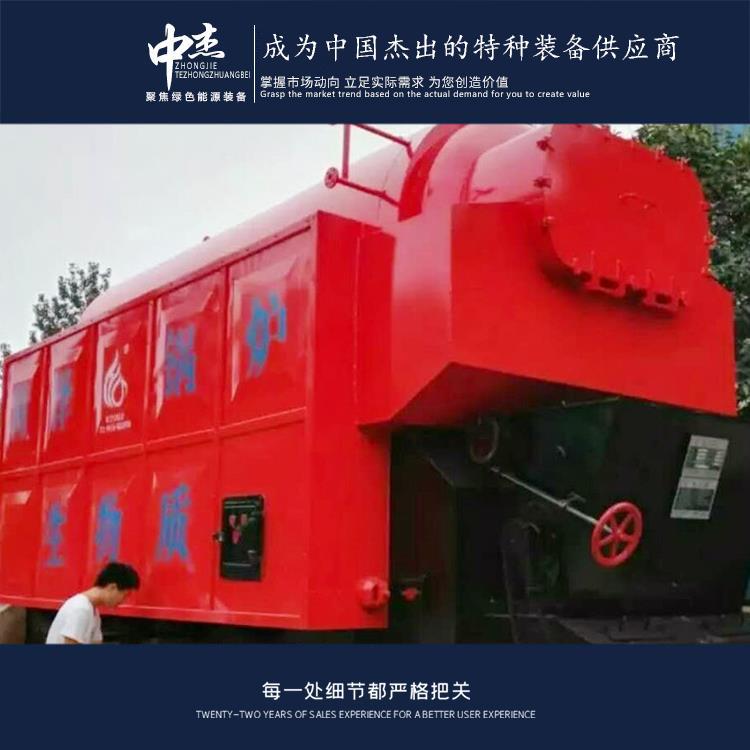


















Shandong Zhongjie Special Equipment's main products include: fuel (gas) boilers, organic heat carrier boilers, biomass boilers, waste heat boilers, and other boiler products; vacuum insulation cryogenic pressure vessels such as LNG tanks, oxygen/nitrogen/argon tanks, and CO2 tanks; pressure vessel products such as denitrification engineering equipment, heat storage and energy storage equipment, and complete chemical equipment; central air conditioning and HVAC equipment such as ground (water) source heat pumps, air source units, water-cooled screw units, and air-cooled modular units. Planned products include large-scale energy centers, LNG transport vehicles, LNG tank containers, and other green energy equipment.
Energy-saving methods for biomass hot water boilers mainly include the following aspects:
Fuel Selection: Opt for biomass fuels in bulk, such as wood chips and straw, ensuring the moisture content and particle size meet the boiler's requirements. Low moisture content and appropriate particle size of the fuel can enhance combustion efficiency and reduce energy waste.
Combustion Optimization: By optimizing the combustion process, enhance combustion efficiency. Adjust combustion parameters, such as combustion temperature and duration, to achieve more complete combustion and reduce fuel wastage.
Reclaimed Heat Utilization: Utilize waste heat from flue gas for energy recovery. By installing flue gas waste heat recovery systems, reclaim the heat from flue gas and use it for other heating needs such as heating and hot water, enhancing energy efficiency.
Boiler Insulation: Enhance the insulation of the boiler to reduce heat loss. Insulate the boiler shell and pipes to minimize heat dissipation and improve the thermal efficiency of the boiler.
Control System Optimization: Optimize the boiler's control system to achieve temperature and pressure control. Through reasonable control strategies, reduce energy waste and enhance the operational efficiency of the boiler.
Regular Maintenance: Perform regular maintenance on biomass hot water boilers to ensure normal operation. Clean the combustion chamber, heat exchangers, and other components, inspect and replace worn-out parts, and ensure the boiler's operation.
Energy Management: Establish a scientific energy management system, monitor and analyze energy consumption, and formulate reasonable energy-saving measures. Continuously optimize the operation of boilers through energy management methods to achieve energy-saving goals.
By integrating the above energy-saving methods, the energy utilization efficiency of biomass hot water boilers can be improved, energy waste reduced, and the goal of energy conservation and environmental protection achieved.
Slagging in biomass boilers refers to the solid residue formed from the ash and other impurities in the fuel during the combustion process at high temperatures. Slagging is a common issue in the operation of biomass boilers, which may affect the heat transfer and combustion efficiency. Here is a brief discussion on slagging in biomass boilers:
Coke formation reasons: The biomass fuel has a high ash content, and the ash may contain some sticky substances that melt easily at high temperatures and adhere to the heat exchange surface of the boiler, forming scale. Additionally, certain elements in the biomass fuel, such as calcium, also promote the formation of scale.
slagging impact: Slagging can obstruct heat transfer in boilers, reduce combustion efficiency, and increase energy consumption. It may also raise the temperature of the boiler, accelerate the corrosion of metal materials, and shorten the lifespan of the boiler.
Preventive and corrective measures: To prevent and address the slagging issue in biomass boilers, the following measures can be taken:
Fuel Pre-treatment: Pre-treat biomass fuel by methods such as drying, sieving, and removing impurities to reduce ash and salt content in the fuel, thereby lowering the risk of slag formation.
Control combustion conditions: Reasonably control parameters such as the temperature, oxygen content, and combustion rate of biomass combustion to avoid excessive temperatures and oxygen levels, reducing slag formation.
Cleaning and Maintenance: Regularly clean the internal ash and dirt in the boiler to maintain its cleanliness. During the cleaning process, use appropriate cleaning agents and tools to remove internal dirt, preventing slag formation.
Control methods for biomass boiler combustion systems can include the following aspects:
Fuel Supply Control: Regulate the supply quantity and speed of biomass fuel to ensure stable fuel supply. This can be achieved by adjusting the speed of the feeder or switching it on/off.
Air Supply Control: Adjusts the air supply during the combustion process to ensure complete fuel combustion. This can be achieved by regulating the speed or on/off switch of the fan.
Combustion Temperature Control: Monitors the temperature inside the combustion chamber and adjusts it according to set values. The combustion temperature can be controlled by altering the air supply or fuel supply within the combustion chamber.
Combustion Process Monitoring: Monitors parameters during the combustion process, such as combustion temperature and chamber pressure, to real-time monitor the combustion status and adjust accordingly based on the monitoring results.
Oxygen Content Control: By monitoring the oxygen level within the combustion chamber and adjusting it according to set values, we ensure complete combustion of the fuel. This can be achieved by installing an oxygen sensor and adjusting the air supply.
Ash Cleaning System Control: Monitors and controls the operation of ash cleaning equipment, promptly burning off the ash in the combustion chamber to ensure combustion efficiency and the normal operation of the system.
Above are some common control methods for biomass boiler combustion systems. Specific control strategies and methods will vary depending on the type of boiler and system design.
To burn biomass pellets and avoid coking issues, the following measures can be taken:
Appropriate Particle Size: The size of biomass pellets is crucial for combustion efficiency. The particle size should be maintained within an appropriate range, typically 3-5 millimeters. Larger particles can lead to incomplete combustion, while smaller ones tend to scatter and clog easily.
Sufficient Oxygen Supply: Adequate oxygen supply is required for combustion to ensure a complete combustion reaction. Biomass boilers should ensure that the combustion chamber has sufficient oxygen supply, which can be achieved by adjusting the ventilation system and the operating parameters of the burners.
Optimal Combustion Temperature: The combustion temperature of biomass pellets is also a critical factor affecting combustion efficiency. A low combustion temperature can result in incomplete combustion, while a high combustion temperature is prone to coking. Biomass boilers should adjust the combustion temperature to an appropriate range based on the fuel characteristics and combustion requirements.
Appropriate Combustion Time: The combustion time of biomass pellets should also be properly controlled. Insufficient combustion time can lead to incomplete combustion, while excessive combustion time may cause coking. Biomass boilers should adjust the combustion time according to the fuel characteristics and combustion requirements, to an appropriate range.
Regular Cleaning and Maintenance: Biomass boilers require regular cleaning and maintenance to keep the combustion chamber and flue passages clear. Regularly cleaning the ash and carbon buildup inside the combustion chamber, as well as the flue and heat exchanger, helps prevent coking issues.
Be mindful that there may be differences among various types of biomass fuel and biomass boilers. The specific operations and adjustments should be made based on the actual situation. When making adjustments and
Our company attaches great importance to technological innovation and R&D design. We have one municipal-level enterprise technology center in Heze City, equipped with testing facilities for non-destructive testing, physical and chemical testing, welding testing, hydrostatic testing, etc. We have over 600 various instruments and equipment, including CNC machine tools, X-ray flaw detectors, digital ultrasonic flaw detectors, mechanical property testing machines, chemical analyzers, spectrometers, tensile testing machines, plasma welding machines, and more. The key products we have developed, such as welding for temperature and pressure vessels, emissions reduction for biomass boilers, and waste heat utilization, have successively been included in multiple Shandong Provincial Department of Industry and Information Technology science and technology innovation projects, Shandong key projects, and Heze City innovation and excellence projects. We have cumulatively obtained 27 authorized utility models, 16 authorized inventions, participated in drafting 2 standards, 2 industry standards, and registered 15 trademarks. Our technical team, in collaboration with Professor Yajiang Li of Shandong University, has developed deep cryogenic container processing technology using the international plasma arc + wire filling tungsten inert gas arc welding (PAW-GTAW) technology. This technology has been appraised as reaching international standards in the field of deep cryogenic container manufacturing at the provincial level. Choose Zhongjie Special Equipment, and let's create brilliance together!
WeChat Official Account

Scan to follow Official Account



















