


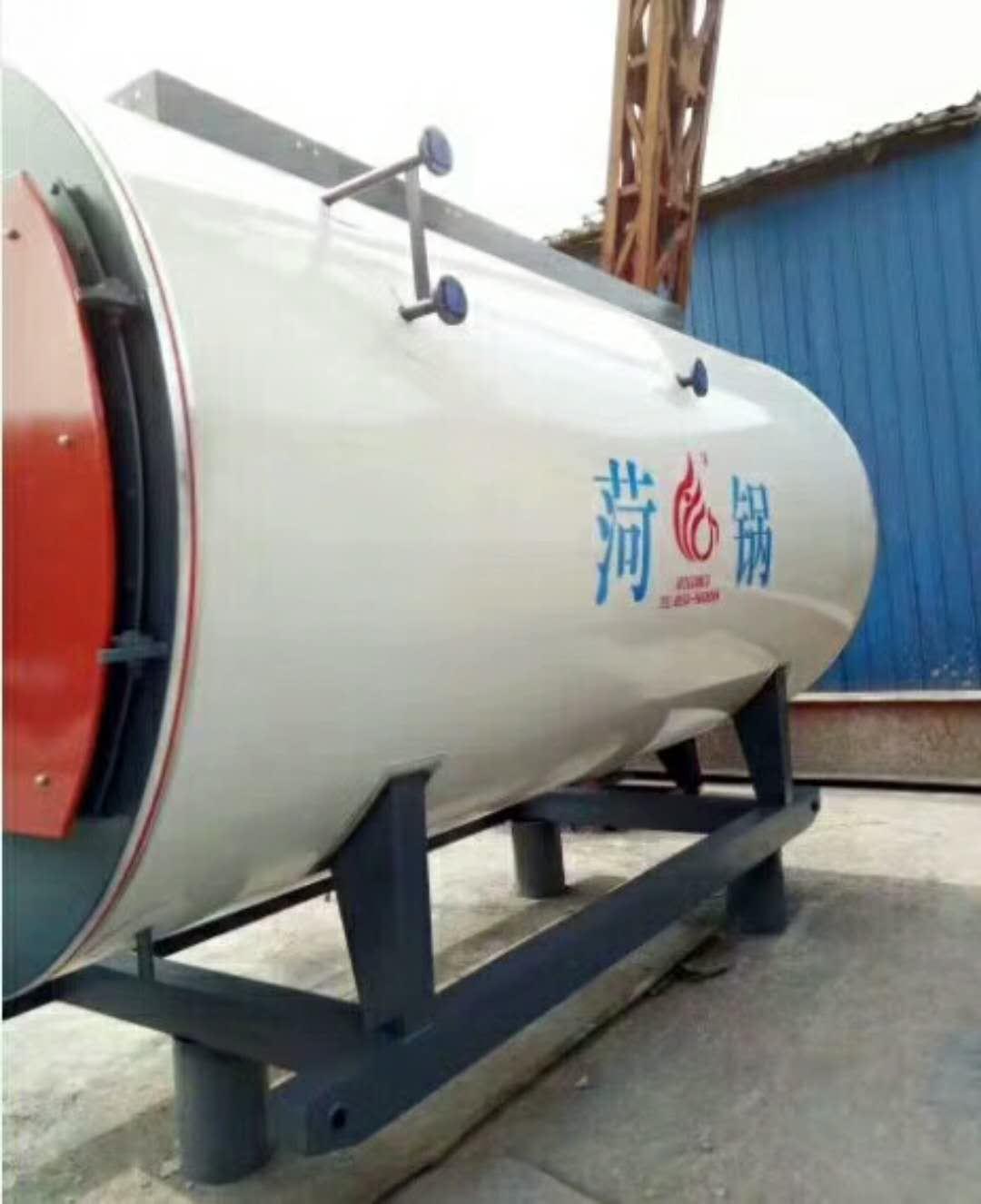

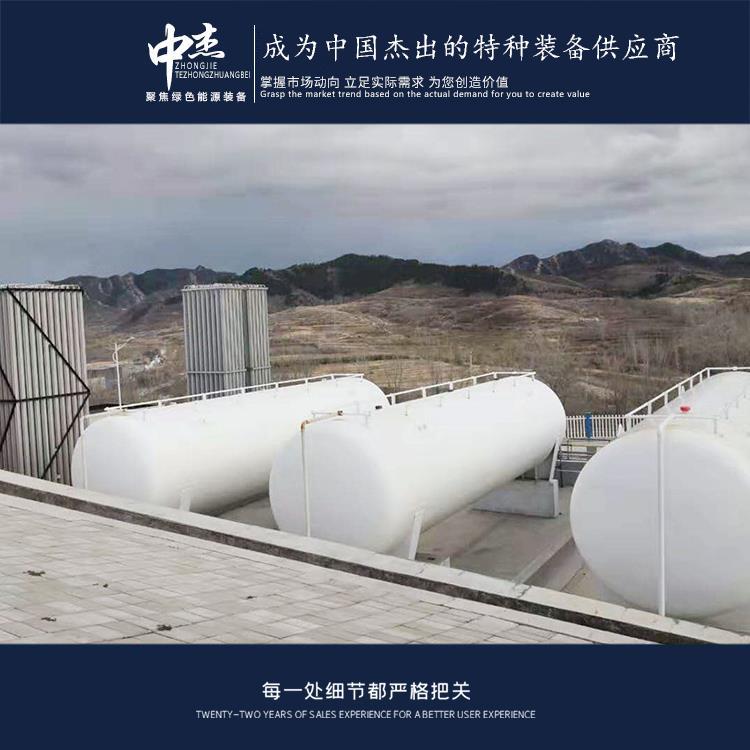
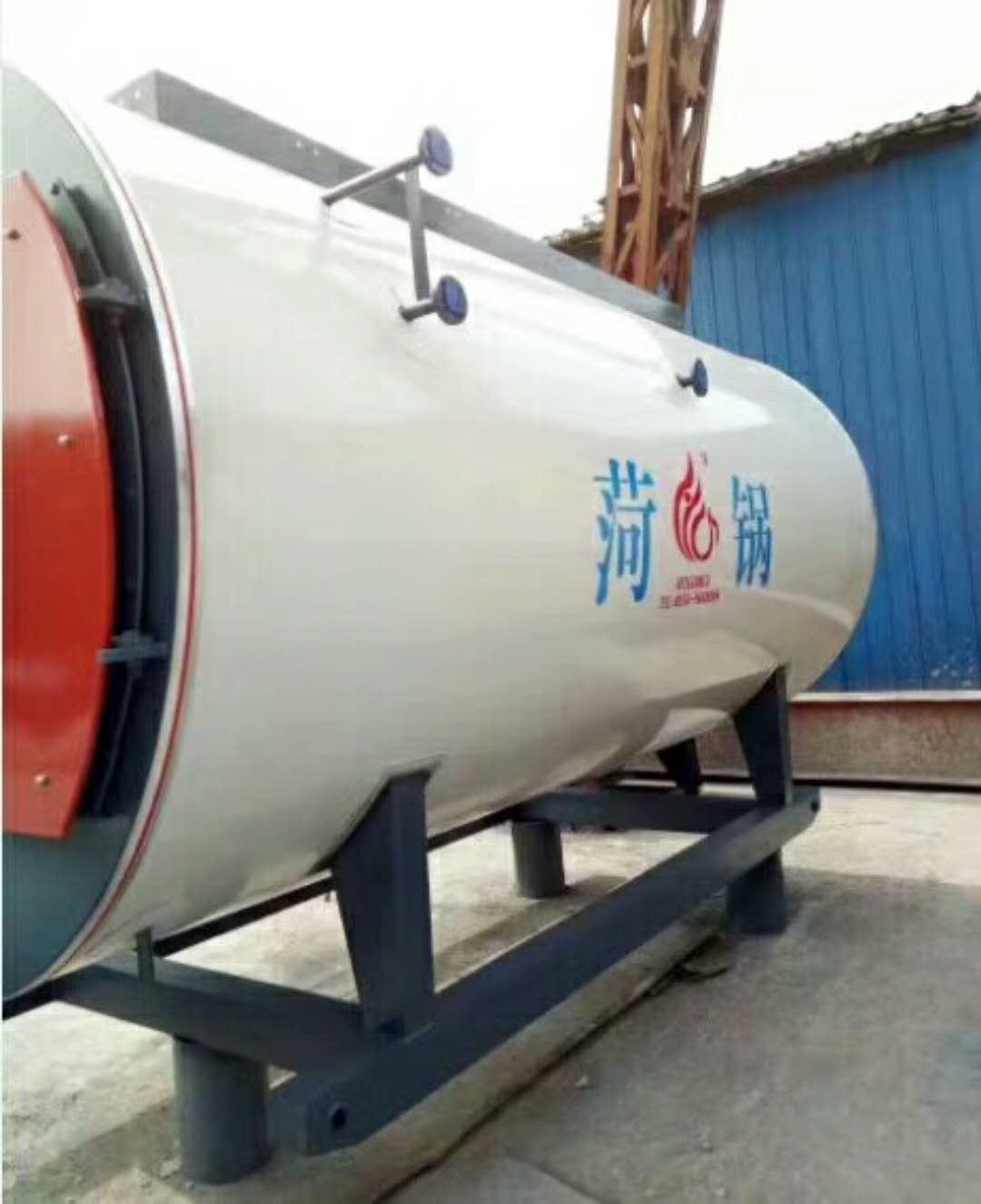


















Shandong Zhongjie Special Equipment (formerly Heze Boiler Factory Co., Ltd.) holds an A-grade boiler manufacturing license, an A2-grade pressure vessel manufacturing license, an A2-grade pressure vessel design license, a B-grade boiler installation license, and GB2/Class, GC2/Class pressure pipeline installation licenses, as well as a mechanical and electrical equipment installation contracting qualification. It is a member of the China Boiler and Water Treatment Association, the China Chemical Equipment Association, and the council member of the Shandong Equipment Manufacturing Association. The company has also passed the ISO9001 Quality Management System, ISO14001 Environmental Management System, OHSAS18001 Occupational Health and Safety Management System certifications, and the American ASME/U2 certification.
To extend the service life of low-temperature liquid storage tanks, the following measures can be taken:
Regular Inspections and Maintenance: Conduct periodic visual inspections of the storage tank, including the shell, welds, valves, and connections, etc. Check for any abnormalities such as cracks, corrosion, or deformation, and promptly repair or replace damaged parts.
Maintain Insulation: Insulation is crucial for the thermal preservation of low-temperature liquid storage tanks. Regularly inspect the integrity and insulating properties of the insulation, repair or replace damaged insulation materials to ensure the tank's insulating effectiveness.
Regulate Temperature and Pressure: The temperature and pressure of low-temperature liquid storage tanks should be maintained within a safe range. Avoid excessive or low temperatures and pressures that could damage the tank. Implement appropriate cooling or heating measures to ensure stable temperature and pressure of the liquid.
Corrosion Protection: The exterior shell and internal structure of the tank should be protected against corrosion and oxidation. Regularly inspect and maintain the protective coating to ensure it remains intact.
Avoid excessive pressure and over-filling: Prevent the internal pressure of the tank from being too high or too low, as well as over-filling with liquid. Excessive pressure and over-filling can lead to structural rupture or damage to the tank.
Regular cleaning and waste removal: Regularly clean the interior of the tank to remove accumulated impurities and dirt. Regularly remove waste to prevent damage to the tank from impurities and sediments in the liquid.
Safety Operation and Training: Ensure operators are knowledgeable and skilled in the safe handling of cryogenic liquid storage tanks. Enhance safety training to boost operators' awareness and emergency response capabilities.
Manage records and documents: Establish comprehensive management records and documentation, including the usage status of storage tanks.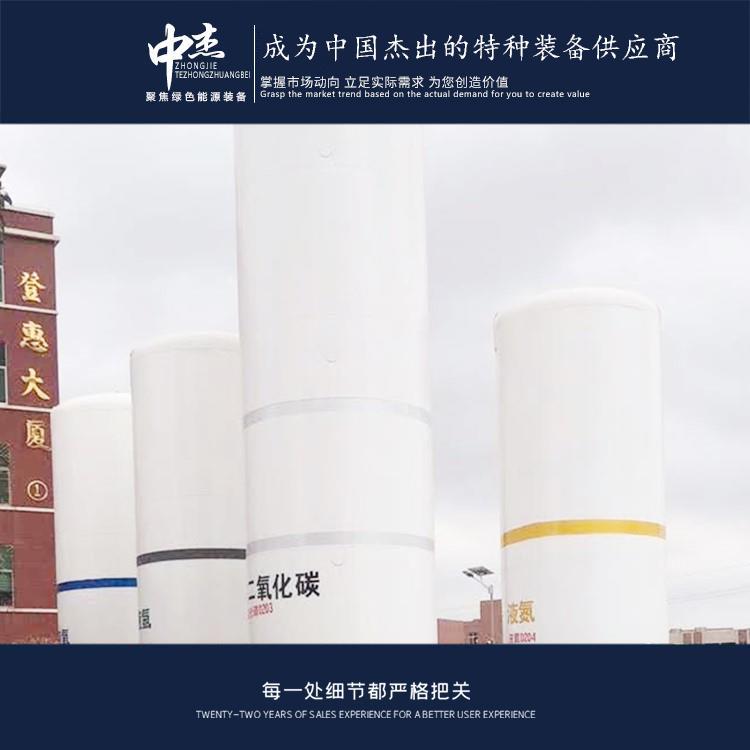
The spacing requirements between liquid oxygen tanks are typically governed by relevant safety standards and regulations to ensure safe distances and fire separation between the tanks. The following is a reference for general spacing rules for liquid oxygen tanks:
Horizontal spacing between tanks: The horizontal spacing between liquid oxygen tanks is typically required to maintain a certain distance to prevent heat transfer and mutual influence between tanks. The specific spacing should be determined based on factors such as tank capacity, pressure, and arrangement, with a general recommendation to maintain a safe distance to ensure safe operation and maintenance between tanks.
Tank and building or facility spacing: The spacing between liquid oxygen tanks and buildings, other facilities must also meet relevant safety requirements. This is to prevent the tanks from causing danger to surrounding buildings or facilities in the event of a leak or accident. Specific spacing requirements will be determined based on the tank's capacity, pressure, and surrounding environment, etc., with a general recommendation to maintain a certain safety distance.
Fire Separation: Adequate fire separation between liquid oxygen tanks and between tanks and buildings is crucial. Liquid oxygen has a high oxygen content and is flammable, which can lead to fires upon leakage or accidents. Therefore, liquid oxygen tanks must maintain a certain distance from other facilities to prevent fire spread or danger to the surrounding environment.
It's important to note that specific liquid oxygen tank spacing regulations may vary by region or industry. When designing, arranging, and operating liquid oxygen tanks, adhere to local safety standards and regulations, and consult with experts for accurate guidance.
When selecting the support for a liquid argon tank, consider the following factors:
Load Capacity: The support must be capable of bearing the weight of the liquid argon tank. Select a support with adequate load capacity based on the tank's capacity and dimensions. Typically, the weight of the liquid argon tank is specified in the design specifications, which can be used to determine the support's load capacity.
Stability: The support must provide sufficient stability to prevent the tank from tilting or swaying during use. The design of the support should take into account the center of gravity location and its changes of the tank to ensure stable support.
Corrosion Resistance: Liquid argon has low temperature and corrosive properties; the support material should have good corrosion resistance to prevent corrosion and damage. Common support materials include stainless steel, aluminum alloy, etc.
Thermal Insulation: Liquid argon storage tanks generally require thermal insulation, with the supports being equipped with certain insulation properties to reduce heat transfer and evaporation of liquid argon. The design of the supports should consider the installation and protection of the insulation layer.
Installation and Maintenance: The bracket should feature ease of installation and maintenance, facilitating the setup and daily upkeep of the storage tank.
When selecting the support for liquid argon tanks, it's advisable to consult with engineers or suppliers. Choose an appropriate support based on the specific tank requirements and operating environment. Also, adhere to relevant design specifications and safety standards to ensure the quality and reliability of the support.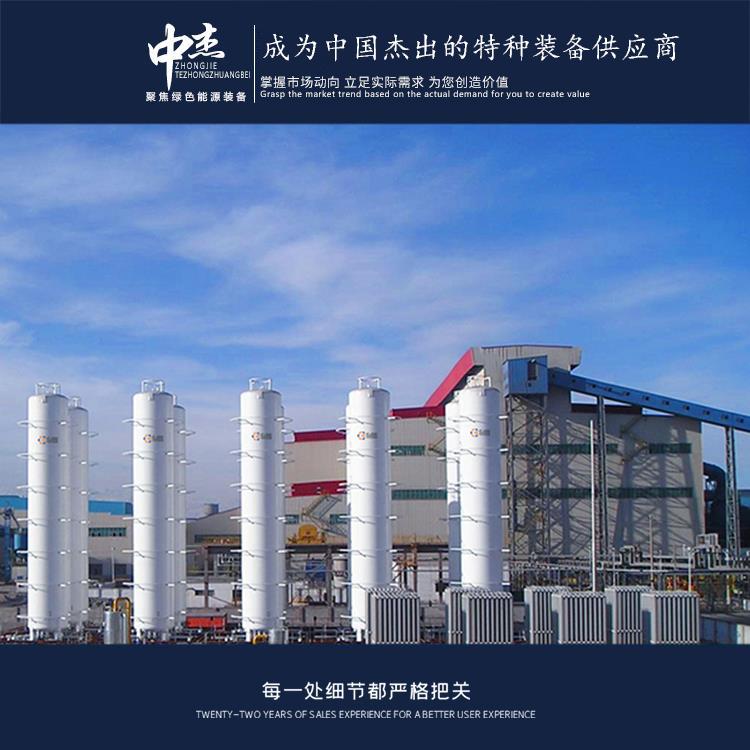
One common drawback of pressure vessels during use is corrosion. Corrosion refers to the reaction between the metal surface and chemical substances in the environment, leading to damage to the metal surface and thinning of the material. The following are common corrosion drawbacks of pressure vessels:
Pitting Corrosion: Pitting corrosion refers to localized凹坑or holes appearing on the surface of metal. This type of corrosion is often caused by corrosive substances present in the local environment, such as acids, salts, etc.
Bacterial Corrosion: Bacterial corrosion is a type of corrosion caused by microorganisms. These organisms can form biofilms inside pressure vessels and produce acidic substances, leading to corrosion of the metal surface.
Punch Corrosion: Punch corrosion refers to the phenomenon of穿透性 corrosion appearing on the metal surface. This type of corrosion usually occurs due to the damage or defect of the protective layer on the metal surface, allowing corrosive substances to come into direct contact with the metal.
Stress Corrosion Cracking: Stress corrosion cracking occurs when a metal surface is subjected to both stress and a corrosive environment, leading to the formation and propagation of cracks. This type of corrosion is commonly found in pressure vessels operating under high stress and corrosive conditions.
Corrosion can lead to material thinning and reduced strength in pressure vessels, potentially causing severe consequences such as leaks or ruptures. Therefore, the following measures should be taken to address corrosion issues in pressure vessels:
Regularly inspect and evaluate the corrosion condition of pressure vessels, including methods such as visual inspections and non-destructive testing.
Implement corrosion prevention measures such as coating protection, cathodic protection, and selecting appropriate materials to minimize the occurrence and progression of corrosion.
Regularly clean and maintain pressure vessels to remove dirt and impurities that may cause corrosion.
Comply with relevant safety regulations and operational guidelines to ensure the smooth and safe operation of pressure vessels.
For severely corroded pressure vessels, repair or replacement may be necessary to ensure their safety and reliability.
Shandong Zhongjie Special Equipment, welcome customers to our factory for business discussions.
WeChat Official Account

Scan to follow Official Account



















