


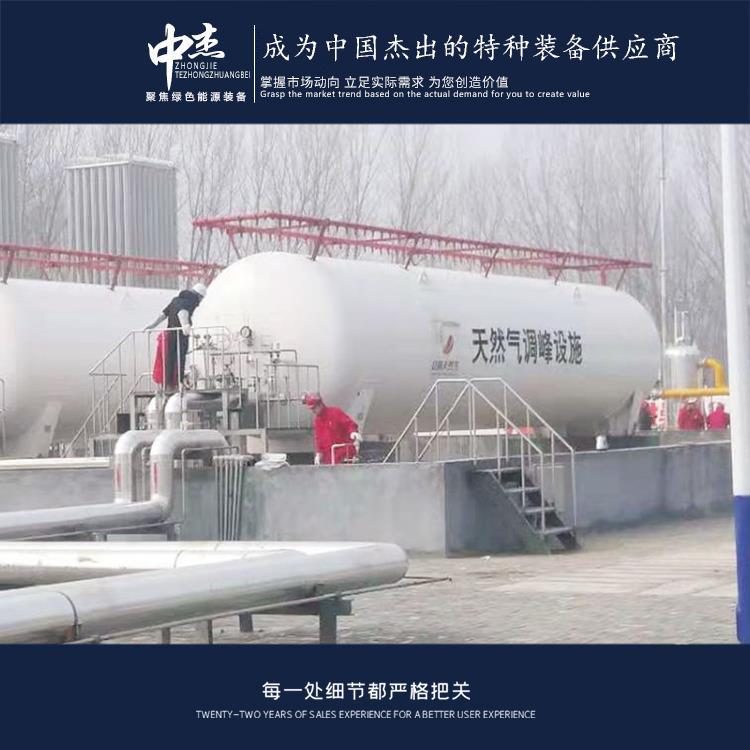


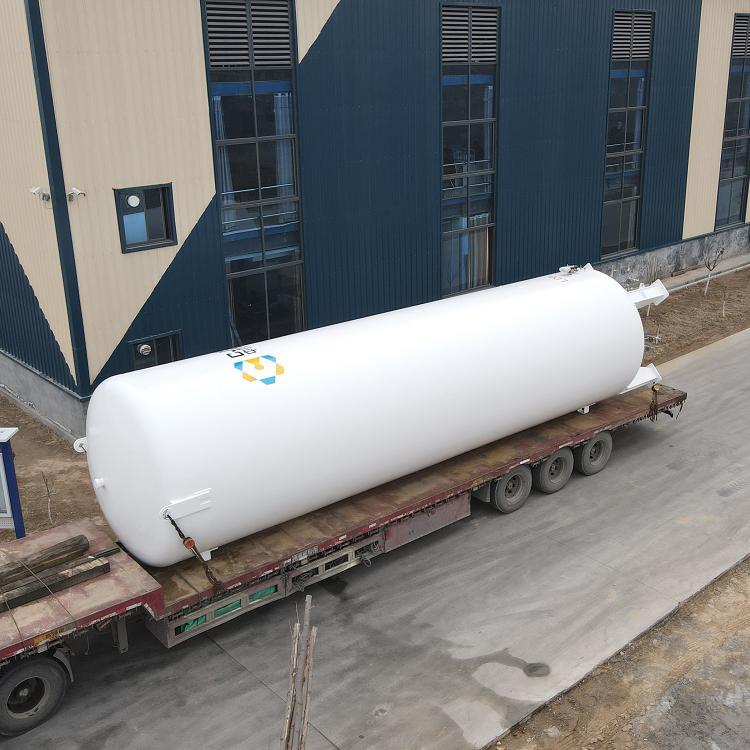


















Shandong Zhongjie Special Equipment's main products include: fuel (gas) boilers, organic heat carrier boilers, biomass boilers, waste heat recovery boilers, and other boiler products; vacuum insulation cryogenic pressure vessels such as LNG tanks, oxygen/nitrogen/argon tanks, and CO2 tanks; pressure vessel products such as denitrification engineering equipment, heat storage and energy storage equipment, and complete chemical equipment; central air conditioning and HVAC equipment such as ground (water) source heat pumps, air source units, water-cooled screw units, and air-cooled modular units. Planned products include large-scale energy centers, LNG transport vehicles, LNG tank containers, and other green energy equipment.
Protective tips for liquid nitrogen tanks include the following:
Wear Protective Gear: When handling liquid nitrogen tanks, it is mandatory to wear appropriate protective gear, including gloves, protective clothing, and non-slip shoes. This equipment protects the skin from the low temperature of liquid nitrogen and other hazards.
Avoid direct contact: Liquid nitrogen is extremely cold and can cause chilling. Therefore, it is essential to avoid direct contact with liquid nitrogen, especially with the skin. Use tools or equipment for handling to prevent hands from coming into direct contact with liquid nitrogen.
Note Ventilation: Ensure adequate ventilation in the operational area of the liquid nitrogen tank to expel gases produced by the evaporation of liquid nitrogen. Maintain air circulation to avoid excessive oxygen levels and reduce the risk of fire and explosion.
Prevent Leaks: Regularly inspect the liquid nitrogen tanks for leaks and equip them with leak detection and alarm systems. In the event of a leak, take immediate action to contain and repair it. Avoid potential hazards to personnel and the environment caused by liquid nitrogen leaks.
Fire Prevention Measures: Liquid nitrogen has a low boiling and freezing point, which can easily cause fires. Firewalls and fire-resistant coatings should be installed around liquid nitrogen storage tanks to prevent fires from occurring and spreading.
Static Protection: The accumulation of static electricity in liquid nitrogen tanks may cause sparks, increasing the risk of fire. Measures such as using static-conductive materials and anti-static equipment should be taken to reduce the accumulation and release of static electricity.
Regular inspections and maintenance: Conduct regular checks on the condition of liquid nitrogen tanks and associated equipment, including valves, pipes, pressure gauges, etc. Ensure the equipment is intact and promptly repair or replace any damaged parts.
Waste Gas Treatment: Liquid nitrogen tanks produce waste gas during operation, and appropriate waste gas treatment measures must be taken.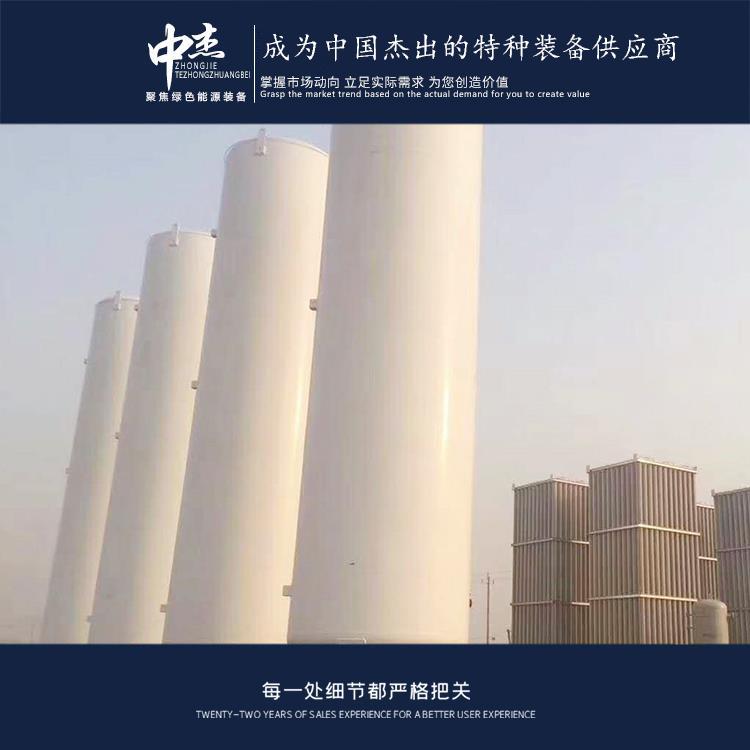
Liquid Argon Storage Tanks are equipment used for storing and transporting liquid argon, with the following scope and characteristics:
Application Range:
Industrial Applications: Liquid argon storage tanks are widely used in various industrial sectors, such as metal processing, electronic manufacturing, semiconductor production, and more.
Applications: Liquid argon storage tanks are used in the field for cryogenic preservation of biological samples, cells, tissues, and vaccines, etc.
Laboratory Applications: Liquid argon tanks are used in scientific research laboratories for low-temperature experiments, cryogenic preservation, and sample processing, etc.
Features:
Low-temperature Performance: Since liquid argon has a boiling point of -185.7°C, liquid argon storage tanks must have excellent low-temperature insulation to maintain the低温 state of liquid argon.
High-sealed integrity: Liquid argon storage tanks must have excellent sealing performance to prevent evaporation loss of liquid argon and the entry of external air.
Safety: Liquid argon is a flammable and explosive substance, hence the liquid argon storage tank must be equipped with safety valves, leak detectors, and other safety devices to ensure safe operation.
High Capacity: The capacity of liquid argon storage tanks ranges from a few liters to several thousand liters, allowing for selection of an appropriate capacity based on demand.
Cautionary Notes:
Protective Gear: When operating liquid argon tanks, it is mandatory to wear appropriate protective gear, including gloves, protective clothing, and non-slip shoes, to safeguard against the low temperatures of liquid argon and other hazards.
Ventilation Requirements: Please specify
The spacing requirements between liquid oxygen tanks are typically governed by relevant safety standards and regulations to ensure safe distances and fire separations between tanks. Below is a reference for general spacing rules for liquid oxygen tanks:
Horizontal spacing between tanks: The horizontal spacing between liquid oxygen tanks is typically required to maintain a certain distance to prevent thermal conduction and mutual interference between tanks. The specific spacing distance should be determined based on factors such as tank capacity, pressure, and arrangement, with a general recommendation to maintain a safe distance to ensure safe operation and maintenance between tanks.
Tank and building or facility spacing: The spacing between liquid oxygen tanks and buildings, other facilities must also meet relevant safety requirements. This is to prevent the tanks from causing danger to surrounding buildings or facilities in case of leakage or accidents. Specific spacing requirements will be determined based on factors such as the tank's capacity, pressure, and surrounding environment, with a general recommendation to maintain a certain safety distance.
Fire separation: It is crucial to maintain proper fire separation between liquid oxygen tanks and between tanks and buildings. Liquid oxygen has a high oxygen content and is highly flammable, which could lead to fires in the event of a leak or accident. Therefore, liquid oxygen tanks must be kept at a certain distance from other facilities to prevent the spread of fire or danger to the surrounding environment.
Note that specific oxygen liquid storage tank spacing regulations may vary by region or industry. When designing, arranging, and operating oxygen liquid storage tanks, adhere to local safety standards and regulations and consult with experts for accurate guidance.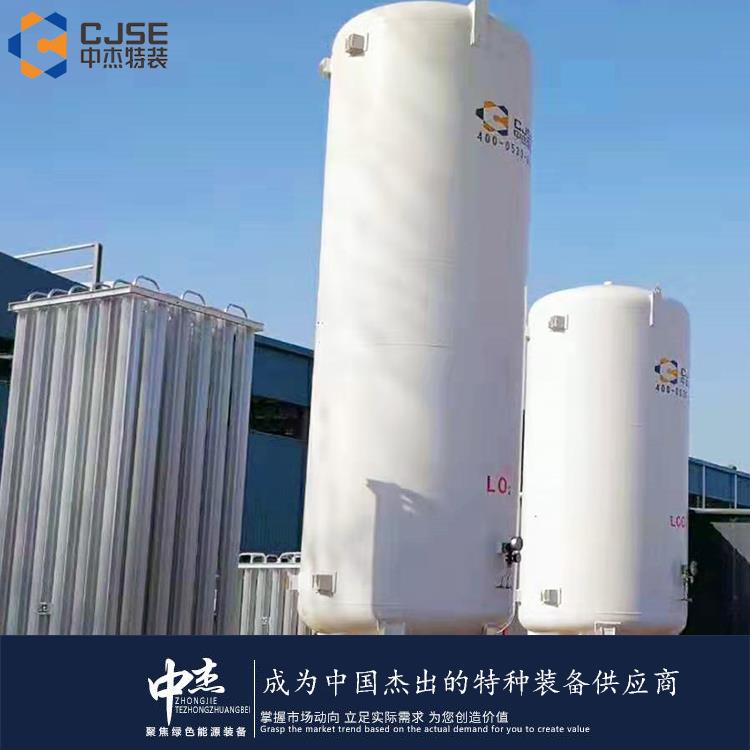
The safety distance between liquid oxygen storage tanks and buildings is typically specified by relevant safety standards and regulations to ensure the safe distance and fire separation between the tank and the building. The following are general reference safety distances for liquid oxygen storage tanks and buildings:
Horizontal Clearance: The horizontal clearance between the liquid oxygen storage tank and the structure is typically required to maintain a certain distance to prevent danger to the structure in case of tank leakage or accidents. The specific clearance distance should be determined based on factors such as the tank's capacity, pressure, and the nature of the structure, with a general recommendation to maintain a safe distance.
Vertical Clearance: The vertical clearance between the liquid oxygen tank and the building must also comply with relevant safety requirements. This is to prevent the tank from causing danger to the building in the event of a leak or accident. The specific clearance requirements will depend on factors such as the tank's capacity, pressure, and the height of the building, generally recommending maintaining a certain safety distance.
Fireproof Separation: Liquid oxygen has a high oxygen content and flammability. In the event of a leak or accident, it may cause a fire. Therefore, a certain fireproof separation must be maintained between the liquid oxygen storage tank and the structure to ensure that the fire does not spread or pose a danger to the structure. Specific fireproof separation requirements
Zhong Jie Special Equipment adheres to the grand vision of "realizing employees' dreams, creating customer value, and striving for the prosperity and strength of our motherland," wholeheartedly commits to the development of the green energy equipment industry, and dedicates high-quality, cost-effective products and services to society!
WeChat Official Account

Scan to follow Official Account



















