


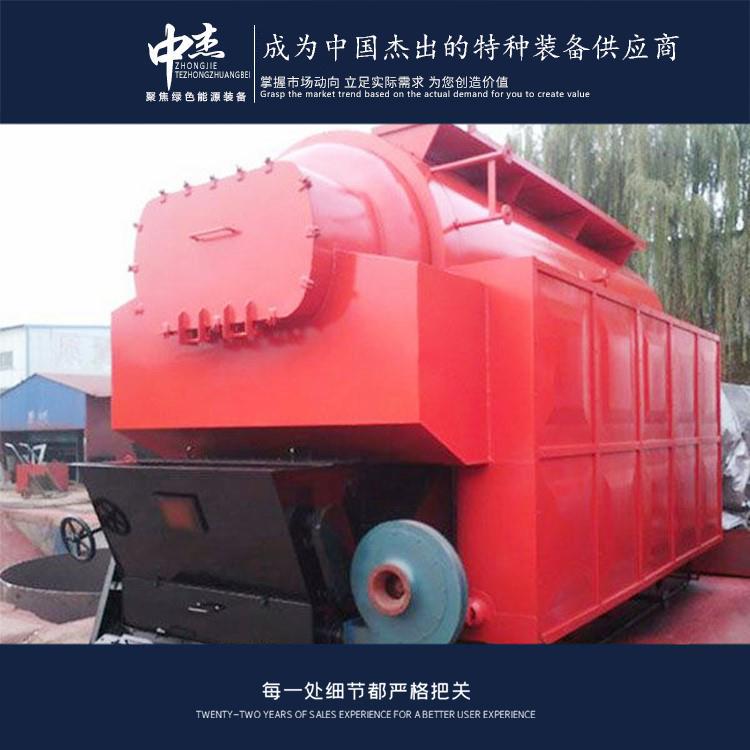


















Shandong Zhongjie Special Equipment's main products include: fuel (gas) boilers, organic heat carrier boilers, biomass boilers, waste heat boilers, and other boiler products; vacuum insulation cryogenic pressure vessels such as LNG tanks, oxygen/nitrogen/argon tanks, CO2 tanks; pressure vessel products such as denitrification engineering equipment, heat storage and energy storage equipment, complete chemical equipment; central air conditioning and heating ventilation equipment such as ground (water) source heat pumps, air source units, water-cooled screw units, and air-cooled modules. Planned products include large-scale energy centers, LNG transport vehicles, LNG tank containers, and other green energy equipment.
Water level control during the operation of biomass boilers is crucial, primarily to ensure the safe and normal operation of the boiler. The following are general methods of water level control:
Level Gauge Monitoring: Biomass boilers typically come equipped with level gauges to monitor the water level inside the boiler. These gauges can be glass tube level gauges, electrical level gauges, or pressure level gauges, among others. The readings from the level gauge provide real-time insights into the water level within the boiler.
Water Level Controller: Biomass boilers are usually equipped with a water level controller for automatic water level regulation. The controller adjusts the water level inside the boiler by controlling the operation of devices like feedwater pumps or drain valves, based on the set water level range.
Water Supply Control: When the boiler water level is too low, the water level controller sends a signal to start the water supply pump, refilling the boiler to maintain the water level within a safe range. Water supply control requires adjustments based on the actual needs of the boiler and the changes in water level.
Wastewater Control: When the boiler water level is too high, the water level controller sends a signal to activate the drain valve, expelling excess water to maintain the level within a safe range. The wastewater control must also be adjusted according to the actual needs of the boiler and changes in water levels.
Alarming Protection: If the boiler water level exceeds the high level or falls below the low level, the water level controller will emit an alarm signal to alert the operator to take action. Additionally, the boiler should be equipped with a water level protection device that automatically shuts off the burner's gas supply in case of abnormal water levels, ensuring the boiler's safety.
Note that the control of water level must be based on the specific design of the boiler and the operation manual to ensure correct and safe operation. Additionally, regular inspections and maintenance of the water level gauge, water level controller, and other equipment are necessary to ensure their normal operation and accuracy.
Yes, biomass hot water boilers hold significant implications for energy conservation and emission reduction. Here are some related implications and advantages:
Energy-saving: Biomass hot water boilers burn renewable biomass fuel, achieving higher energy utilization efficiency compared to traditional coal boilers. The heat energy produced during the combustion of biomass fuel can be more fully utilized, reducing energy waste, and achieving energy-saving effects.
Reduced emissions: The combustion process of biomass hot water boilers produces relatively low levels of pollutants, such as carbon dioxide, nitrogen oxides, and particulates. Compared to coal-fired boilers, biomass hot water boilers can significantly reduce the emission of greenhouse gases and air pollutants, which is of great importance for improving the quality of the atmospheric environment.
Sustainability: Biomass fuel is a renewable resource that can be cultivated and recycled through regenerative cycles. Compared to the limited coal resources, the sustainability of biomass fuel can meet long-term energy demands.
Supporting Rural Development: The use of biomass hot water boilers can promote the comprehensive utilization of agricultural and forestry waste such as crop straw and wood chips in rural areas. This not only reduces the open burning of crop straw, reducing environmental pollution, but also provides an additional source of income for farmers, promoting rural economic development.
In summary, biomass hot water boiler's energy conservation and emission reduction significance is substantial, as it not only reduces energy consumption and pollutant emissions but also promotes sustainable development and the prosperity of rural economies.
During operation, biomass thermal oil heaters are prone to scaling due to the high temperature of the thermal oil and long-term use. To prevent the formation of scale, manufacturers of biomass thermal oil heaters typically take the following measures:
Selecting the appropriate thermal oil: Manufacturers choose thermal oils with good thermal stability and antioxidant properties to minimize the formation of scale. The selection of thermal oil should be reasonably matched based on the actual operating conditions and requirements.
Regulate oil temperature and flow speed: Manufacturers will control the temperature and flow rate of the heat transfer oil based on its characteristics and operational requirements. Excessive temperature and rapid flow can easily lead to the formation of scale, so appropriate adjustments are necessary.
Regular Cleaning and Maintenance: Manufacturers recommend users to regularly clean and maintain the biomass thermal oil boiler to remove scale buildup. Cleaning agents and equipment that can be used during the cleaning process, as well as the scale removal, will restore the boiler to normal operation.
Install filters and descaling devices: Manufacturers may install filters and descaling devices in biomass thermal oil boilers to filter out impurities and scale from the thermal oil. These devices effectively prevent scale formation and extend the service life of the thermal oil boiler.
Regular Monitoring and Analysis: Manufacturers may advise users to regularly monitor and analyze the properties and quality of the thermal oil, to promptly identify any anomalies and take appropriate actions.
Controlling soot buildup in biomass boilers is crucial for ensuring smooth operation and extending the lifespan of the boiler. Here are some common measures for controlling soot formation in biomass boilers:
Select fuel wisely: Opt for high-quality, properly moisture-content biomass fuel, avoiding overly wet or excessively impure fuel to minimize the likelihood of coking.
Regulate Combustion Temperature: Reasonably control the combustion temperature of biomass boilers to avoid excessively high temperatures, reducing the fuel's residence time in the furnace and minimizing the risk of slagging.
Enhance furnace cleaning: Regularly clean the furnace to remove ash and dust inside, maintaining its unobstructed flow and reducing the likelihood of coking.
Regulate Excess Air: Properly control the air supply during the combustion process of biomass boilers to prevent excessive air from entering the furnace, thereby reducing the risk of fuel oxidation and coking.
Regular Ash Blowing: Perform regular ash blowing on components such as economizers and superheaters of biomass boilers to remove ash and soot, maintaining heat exchange efficiency and reducing the likelihood of fouling.
Enhanced Monitoring and Inspection: Regularly monitor and inspect biomass boilers, including parameters such as furnace temperature, flue gas composition, and furnace pressure, to promptly identify any anomalies and take appropriate actions.
These measures can help control the fouling issue in biomass boilers, maintain the normal operation of the boiler, and extend the service life of the boiler. Additionally, based on specific circumstances, other appropriate measures can be taken in conjunction with actual operating experience and technical requirements.
Shandong Zhongjie Special Equipment, welcome customers to visit our factory for business discussions.
WeChat Official Account

Scan to follow Official Account



















