


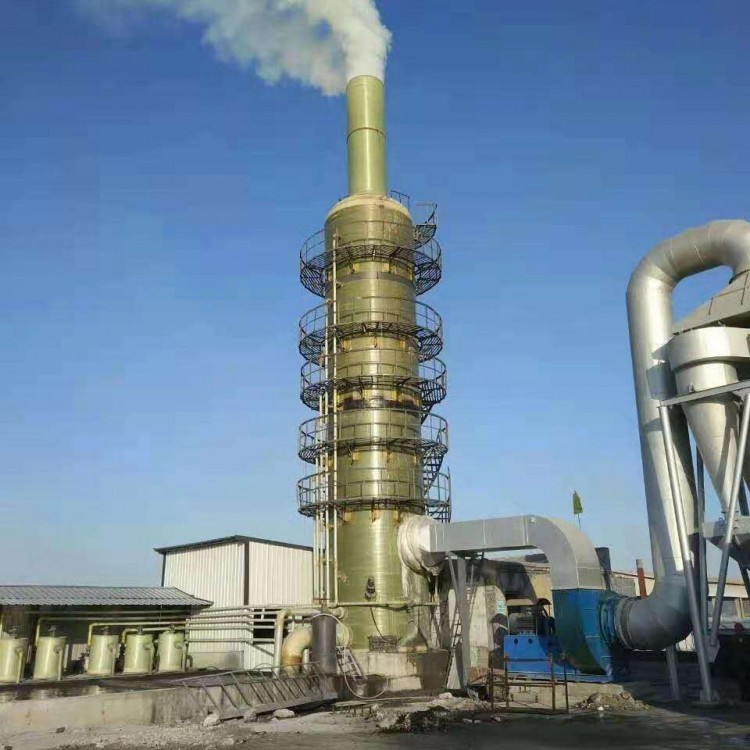

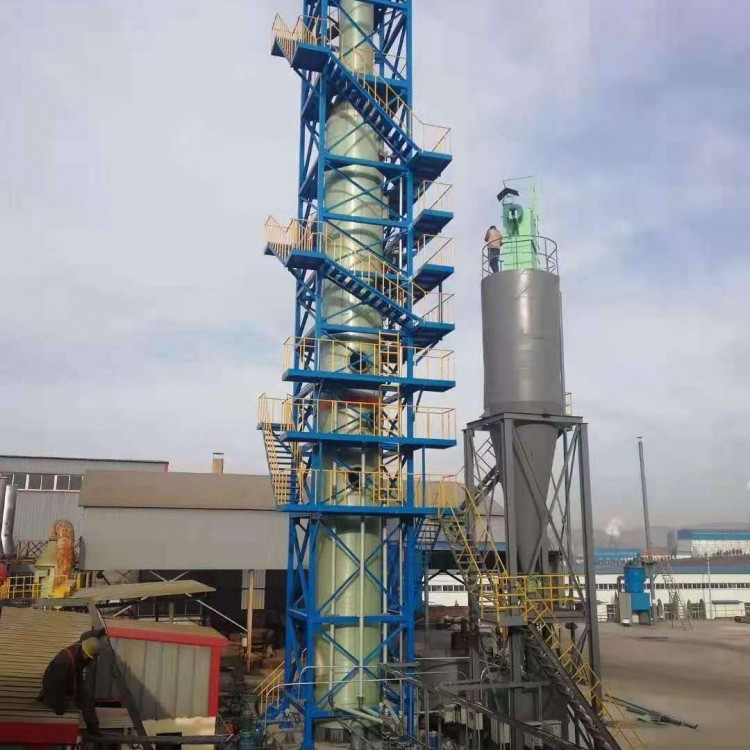
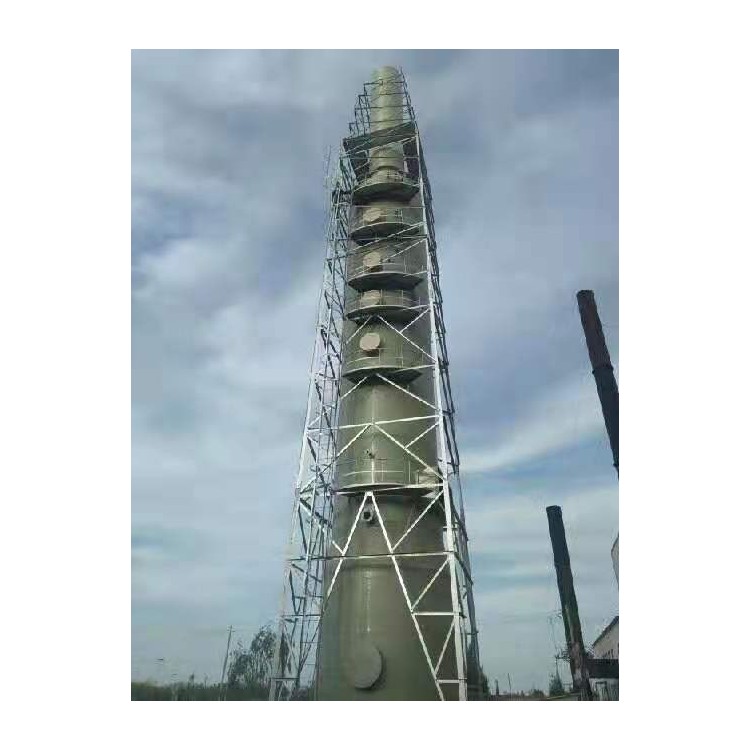
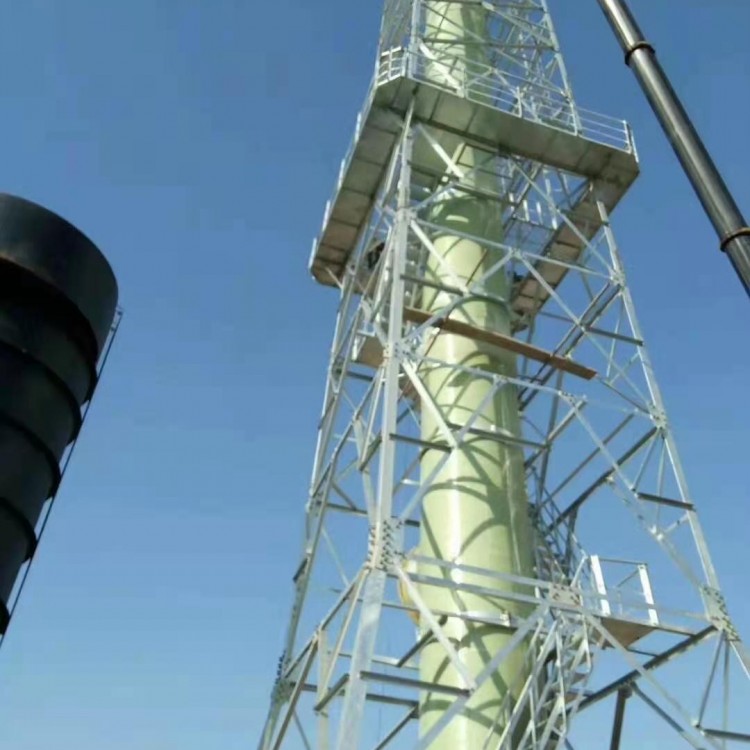














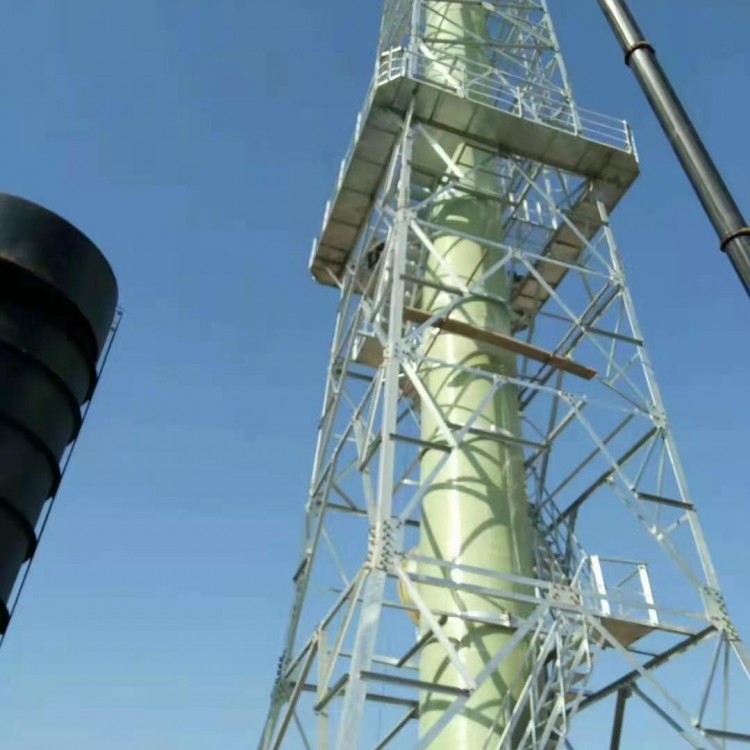
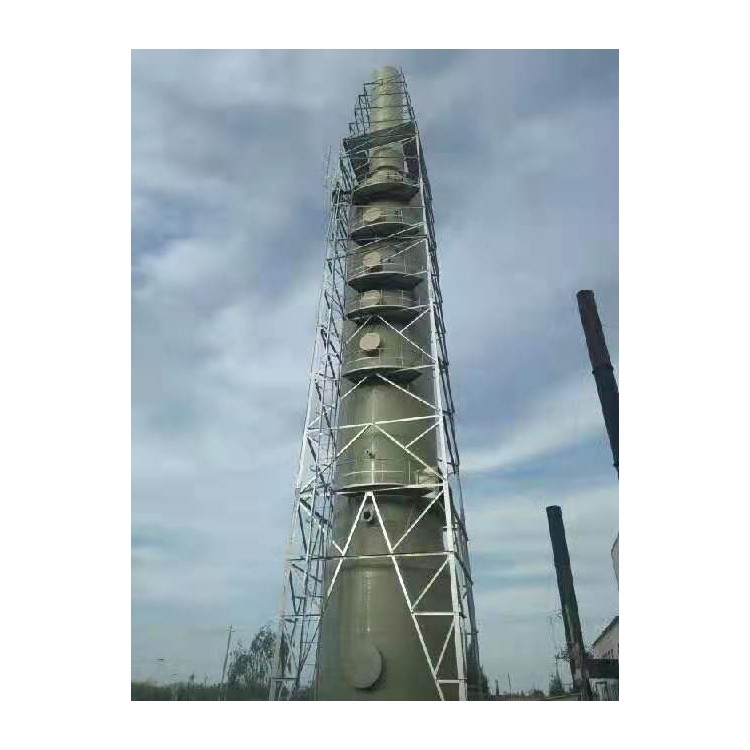
Firstly, understand the application of glass fiber chimney.
Fiberglass flue gas chimneys, also known as desulfurization towers, flue gas desulfurization towers, shift gas desulfurization, and natural gas desulfurization towers. This product is applicable to industries such as chemical, metallurgy, and electricity. Gases that can be polluted by fiberglass include harmless gases like hydrogen chloride (HCl) and hydrogen fluoride (HF), the smut area within the desulfurization tower, warm and hot smut areas, dry-wet interface smut areas in the entrance flue, smut areas in the receiving tower, and clean flue gas smut areas. The flue gas temperature discharged from the boiler is usually 180°C, with a relative humidity of 3%, containing ash and various corrosive substances such as SO2, HCl, NO2, and salt mist.
Glass fiber reinforced plastic chimney
Below, let's discuss the "advantages of glass fiber chimney" through the professional production of glass fiber chimneys.
High cost-performance ratio, low cost, long service life.
b. High-temperature resistance, long-term maintenance.
C. Products can be customized to meet the divergent needs of clients, featuring strong programmability.
D. Outstanding anti-corrosion features. Contains a large amount of HCL and H2SO4 in the smoke, with glass fiber reinforced plastic (GFRP) chimneys facing the wind, offering superior corrosion resistance for other harsh chemicals.
Labor and equipment construction with a short cycle.

















