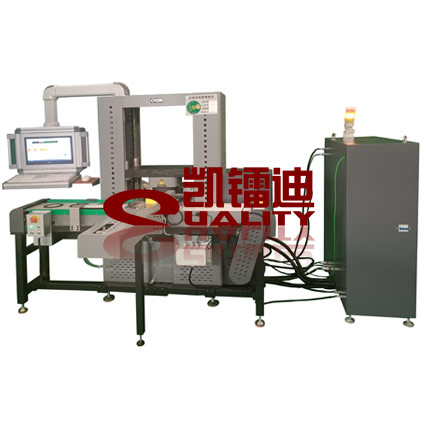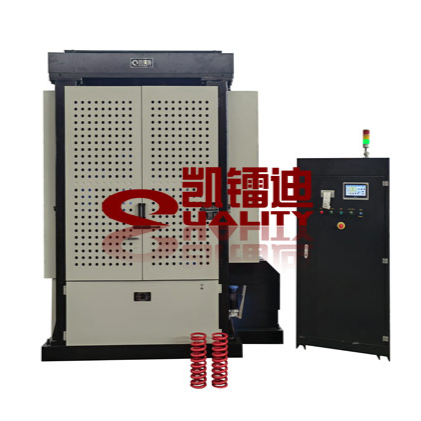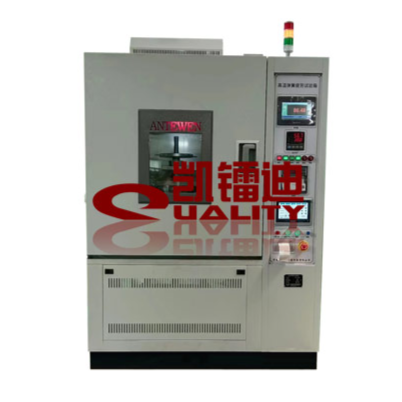


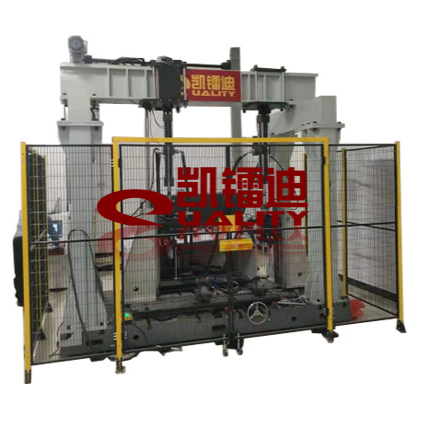
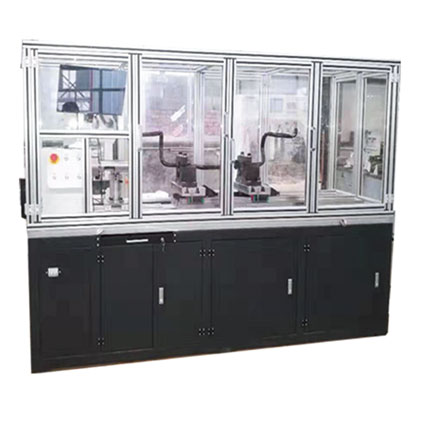
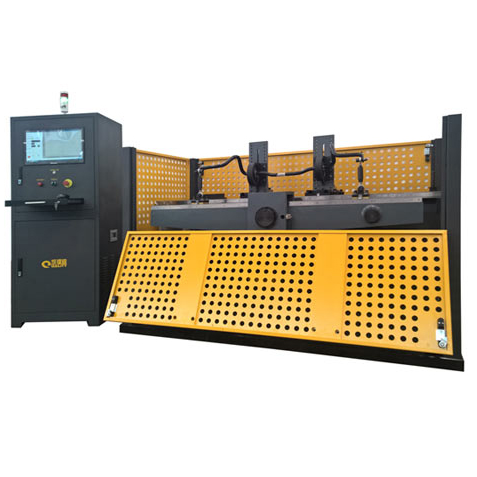
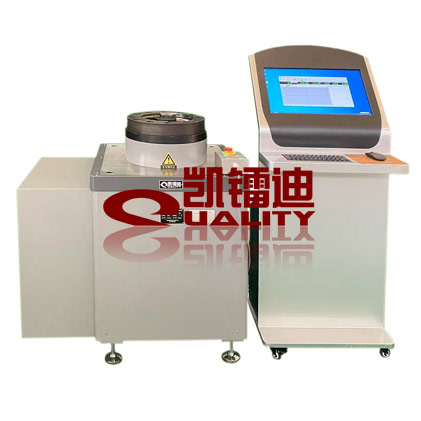







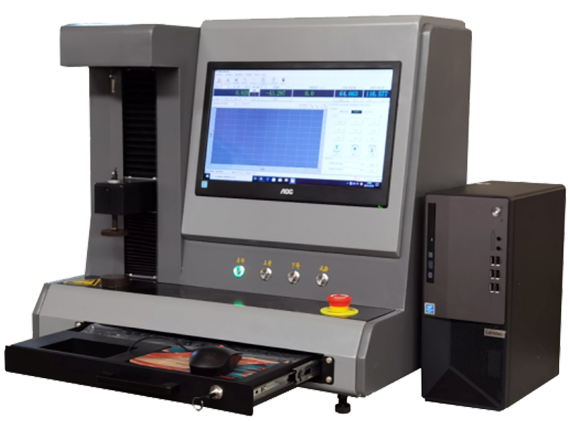
Equipment Model:KLD-500E(1421)、KLD-101E(1421)、KLD-201E(1421)KLD-501E(1421)、KLD-102E(1421)、KLD-202E(1421)
I. Product Introduction
The computer-controlled spring tension testing machine is manufactured in accordance with the technical requirements specified in JB/T7796-2005 "Technical Conditions for Spring Tension Testing Machines."
2. This type of spring tension testing machine is primarily used for testing the strength of various helical springs and elastic elements, i.e., measuring the test force of the spring under a certain deformation amount (or height) or determining the height or deformation amount of the spring under a certain test force.
Section IIProduct Features
1. The computer-controlled spring tension testing machine consists of the main unit, control system, software system, safety assurance device, and (auxiliary equipment).
2. The frame is ensured with sufficient stiffness and strength through finite element mechanical analysis, boasts strong overload resistance; critical components are processed in one setup on a machining center, guaranteeing permanent equipment accuracy; the transmission system consists of synchronous V-belts, precision ball screw pairs, and guiding parts, ensuring smooth operation; the drive system is powered by a Japanese Panasonic AC servo variable speed controller and motor, offering a wide speed range and high reliability. Special structure load sensors are used to prevent the spring's uneven loading from affecting test results.
3. Control System: The spring tension testing machine with microcomputer control is mainly based on a PC computer, utilizing PCI bus technology. It is equipped with a full digital test system control card, a dedicated control and monitoring software system, featuring full digital control. It integrates PCI adjustment, measurement amplification, screen display, data collection, and data processing into one unit, making it a highly integrated advanced unit of domestic static control technology.
4. Microcomputer-controlled spring tension testing machine safety protection devices: overload protection for 10% over rated load, beam limit position protection, overcurrent, voltage protection, and overspeed protection.
5. Diverse testing methods:
Set the test force F, measure the deformation of the spring f.
Set deformation variable f, and measure the test force F on the spring.
Set the test force F, measure the remaining height H of the spring.
Set the remaining height H of the spring, and measure the test force F of the spring.
Please contact us for detailed parameters!