








1Product Introduction
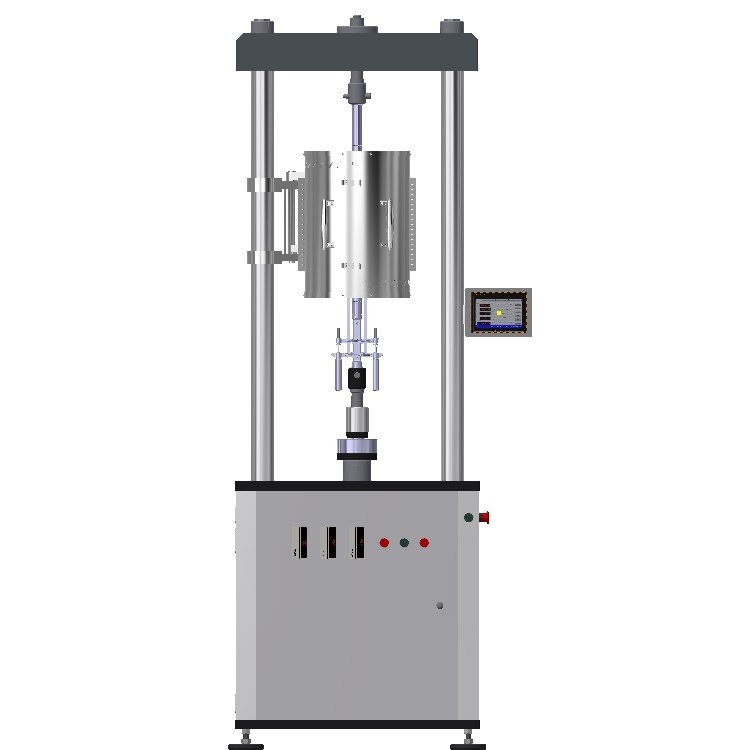
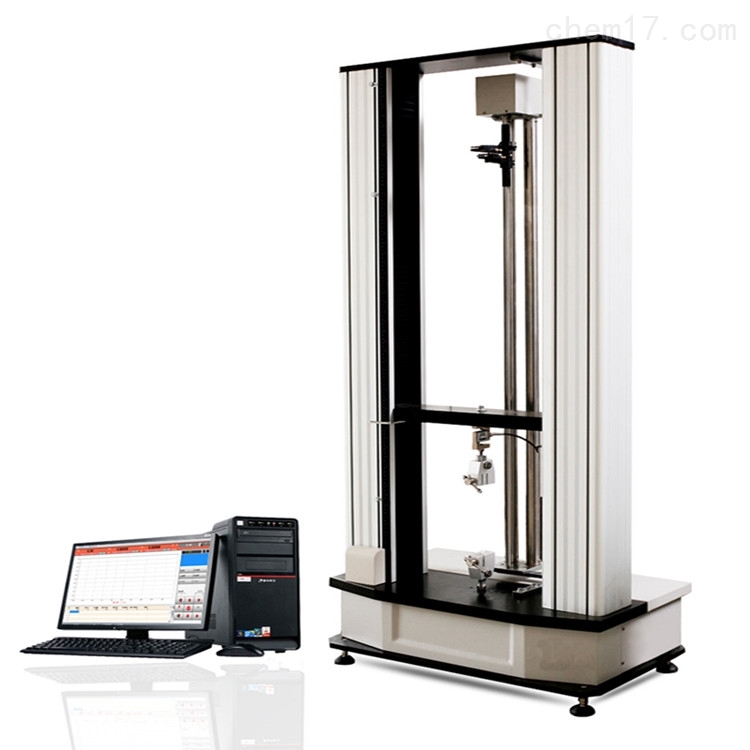
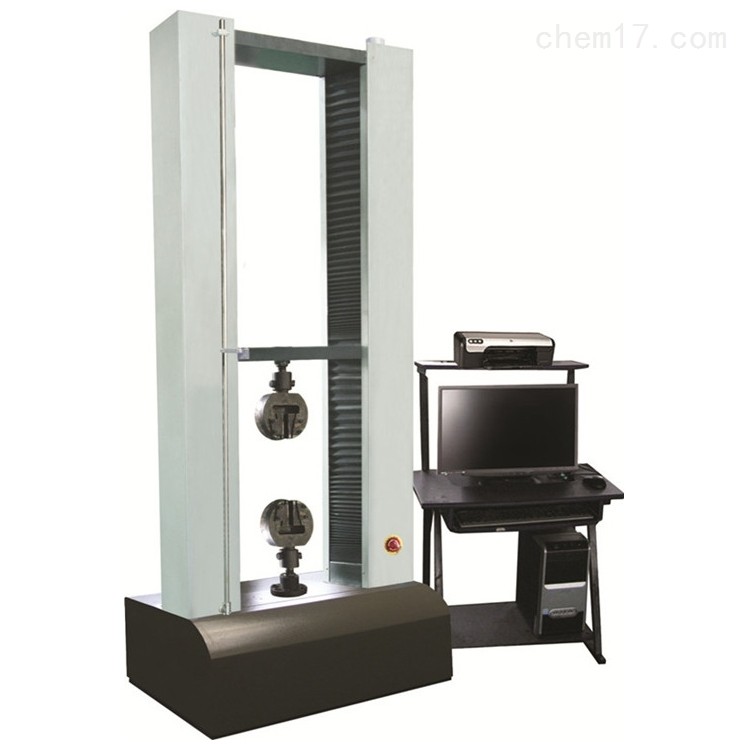
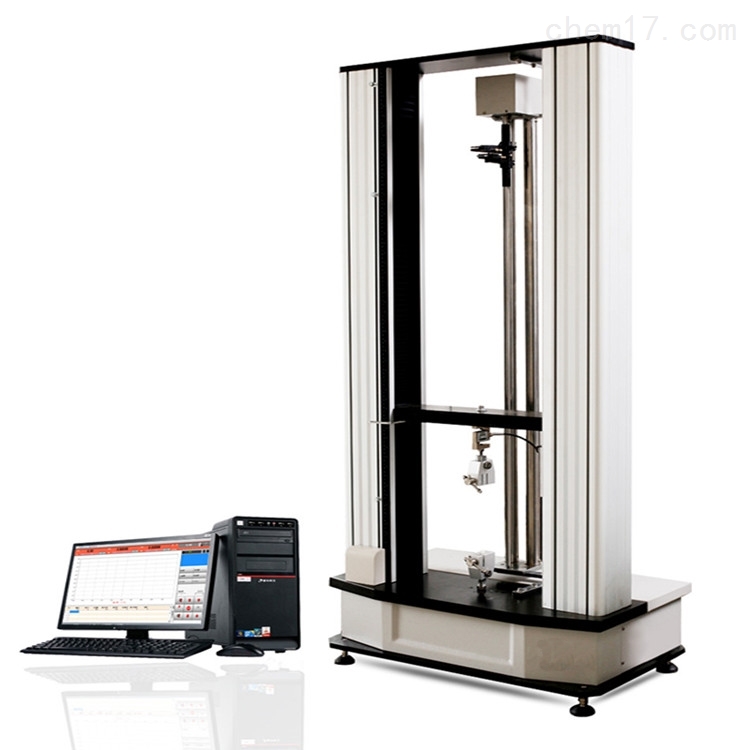
Electronically controlled high-temperature creep fatigue testing machinePrimaryUsed for measuring the phenomenon of slow plastic deformation of metal and alloy materials under long-term constant high temperature and constant stress, as well as the performance of specimens in fatigue state.Widely applied in metallurgy, aerospace, and related quality inspection institutions.
1.1Construction Conditions
(1)Voltage:380V/220V±10%Three-phase five-wire (neutral and ground cannot be mixed). Frequency:50HZFluctuation+0.5~-1.0)。
(2Environmental Conditions: Room Temperature:15℃~30Temperature: °C; Humidity: Relative humidity below80%。
(3In an environment free of electromagnetic field interference, without shocks or vibrations, and surrounded by no corrosive media.
(4Leave at least a clearance of0.7mSpace is ample, with a clean and dust-free working environment.
(5Mainframe and rack levelness not exceeding0.2‰。
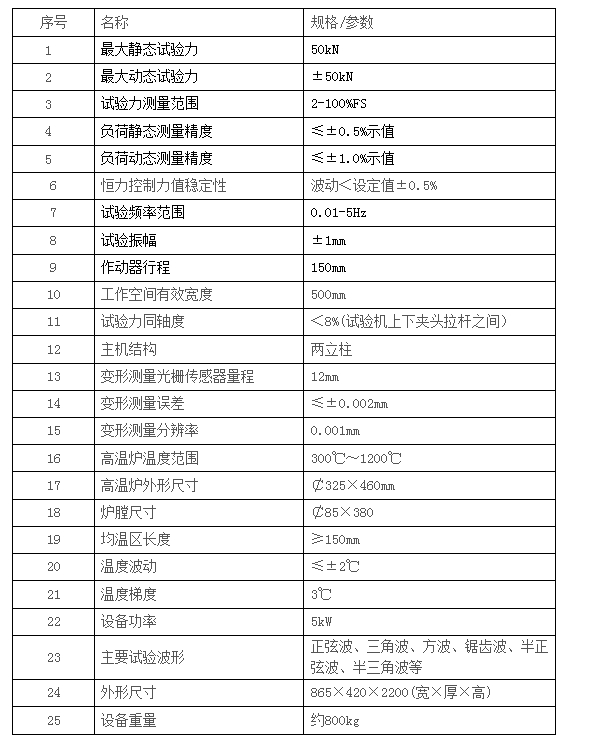
3.Key Technical Specifications
4.Testing MachineStructural Principle
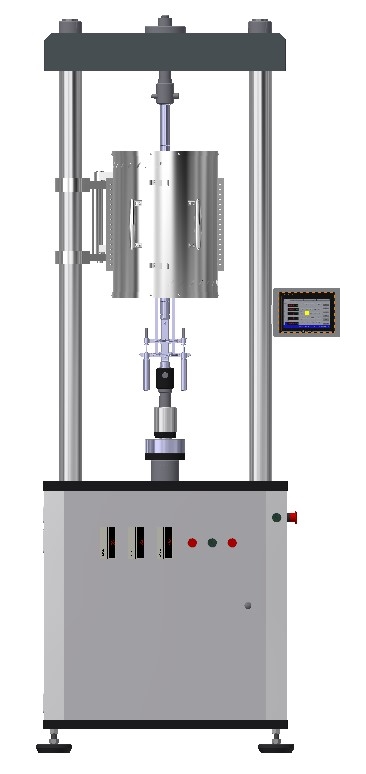
The testing machine is mainly composed of the main frame, high-temperature rods and clamps, high-temperature electric furnace, temperature control and measurement system, deformation measurement system, electrical system, computer control system, and testing software system.
The testing machine is equipped with comprehensive safety protection features to ensure the safety of the operator. It includes a main electrical switch, an emergency stop button, and a reliable upper and lower limit protection system. The machine is also fitted with a luminous and audible alarm system. The safety alarm functions cover various fault alerts such as temperature exceeding upper and lower limits, deformation exceeding range, and rod travel limit alarms, as well as sample breakage and test completion alarms.
4.1Test Machine Main Unit
The main testing machine is floor-standing.The upper beam is connected to the worktop with two upright posts, forming a door-type high-stiffness frame.The frame offers sufficient rigidity, allowing for negligible deformation under heavy loads, ensuring the testing machine remains deformation-free during long-term use. Additionally, the main unit provides ample operational space.Effective Test Width500mm,Convenient installation and operation of standard dynamometers, thermocouple temperature sensors, and creep deformation measurement devices; mounted below load sensors, positioned beneath a high-temperature furnace.Utilized temperature compensation technology to enhance the stability and reliability of the testing machine for long-term operation.
The upper and lower clamping jaws of the testing machine are equipped with an automatic coaxial alignment device, ensuring the coaxial alignment of the jaws is excellent. The omnidirectional self-alignment device has minimal friction, preventing any vibration, overload, torque, or eccentricity during adjustment, offering ultra-high stability and reliability. The use of the coaxial alignment device keeps the tensile specimen in an ideal two-force rod state, with an automatically centered ball joint ensuring the coaxial alignment of the testing force of the upper and lower jaws is <8%。
The testing machine is equipped with a high-precision, high-response-frequency AC electromechanical servo system controlled by a digital controller, paired with a high-precision prestressed ball screw.Automates the loading and unloading of the testing machine system, featuring fast frequency response and high repeat positioning accuracy.Servo motors, worm gear reducers, high-precision ball screw nuts, and loading actuators form the loading system. The servo motor is connected to the input end of the worm gear reducer via a synchronous timing belt, with the reducer's output end linked to the high-precision ball screw nut. The loading actuator is mounted on the ball screw nut, equipped with a non-rotational mechanism, allowing it to move vertically only and not rotate, thereby enabling the testing machine system to automatically load and unload the load.
4.2High-temperature furnace
300℃~1200Three-section independent heating furnaceEquipped with a split-cylinder furnace, high-quality stainless steel shell.3The furnace wire is independently heated. The high-temperature furnace features an adjustable arm system, a stainless steel high-temperature furnace body, furnace tube, and heater.Composed of thermal insulation cotton, electrodes, thermocouple connectors, etc. The high-temperature furnace is as shown in the figure below:

The high-temperature furnace body is crafted from high-quality stainless steel, with an air gap layer set between the inner and outer shells.Internally, the furnace tube is made of high-temperature-resistant alumina material, with insulation material filled between the furnace tube and the furnace wall.Ultra-fine ceramic fiber cottonExcellent thermal insulation.Double-layer insulation effectively reduces the temperature of the furnace shell, with the surface temperature of the furnace shell ≤90Heating furnace chamber diameter85mmEasy for heat conduction, ensuring uniformity of furnace temperature. Utilizes Cornell iron-chromium-aluminum resistance wire.Iron-chromium-aluminum resistance wire is embedded in the grooves of the furnace tube.Strictly manufactured according to the resistance wire design specifications, wound into shape, with stringent quality control to minimize surface damage on the heating wire, thereby extending its service life. The working life of the resistance furnace is1200Continuous operating time greater than under a constant temperature of ℃30000Hour(s)
To ensure uniform temperature within the effective working area of the furnace, a three-section independent heating resistor furnace is used, with each heating wire controlled by a temperature controller equipped with a microcomputerized digital regulator. It features automatic temperature rise and control functions, with a smooth heating process.High-temperature furnace test temperature:300℃~1200Three-section independent heating, effective even heating zone length: ≥150mm,Temperature fluctuations and temperature gradients within the uniform heating zone: Fluctuation ±2°C, temperature gradient3High-temperature furnaceInternally, the furnace tube is made of high-temperature-resistant alumina material, with the furnace tube and furnace wall separatedFilledUltra-fine ceramic fiber cottonExcellent thermal insulation performance.Rising temperature rateNot less than every minute20℃ (Chill Furnace)。
Temperature measurement is utilizedKType thermocouple, wire diameter φ0.8mmEach rod is not less than 30 cm in length.900mmWith protective porcelain casing.
4.3High-Temperature Pull Rods & High-Temperature Extensometers
The rod and fixture materials inside the furnace are made of high-temperature alloy.K465For both top and bottom2Segmented, with the exterior part made of heat-resistant stainless steelMaterials.Jig specifications are as follows:
(1)¢5×25Spacing, Sample Length74mmFerrule connectionM12;
(2)¢10×100Spacing, Sample Length185mm, threaded connectionM16;
Material for high-temperature tensile rods is high-temperature alloy.K465Material: The extensometer gauge length is fixed. Specific configuration as follows:
(1)¢5×25Spacing, MaterialK465;
(1)¢10×100Spacing, MaterialK465;
Deformation measurement utilizes the extrusion-type deformation measurement system, measuring deformation within the specimen gauge length. It consists of a cone sleeve, a collet, an extensometer, and a guiding mechanism. This structure is easy to operate, allowing the extensometer to move freely with the help of a tension spring. Long-term test deformation measurement is precise, stable, and reliable. Deformation measurement is conducted using a grating scale, offering high accuracy and no interference. There is no drift in long-term deformation during creep tests, and the measurement range of deformation is wide.0-12mm,Measurement Resolution0.0001mm±0.5%0.002mmThe testing machine is equipped with a dual-channel deformation measurement system, which allows for real-time observation of deformation.A、BTwo channels of deformation and average deformation, which can be automatically recorded according to the set method.A、BTwo-channel deformation and average deformation. The controller features an adjustment function for deformation sensors, and when creep tests are conducted, deformation exceeds the pre-set deformation adjustment.When activated, the controller emits an audible and visual alarm to remind the operator to adjust the deformation sensor. Adjustments do not affect the deformation measurement, and the deformation values are automatically accumulated.
The structural illustration is as follows.

4.4Control SystemServo Controller
u Multi-loop closed-loop control module supported.
u Signal conditioning unit with three sensors (force, displacement, deformation)
u Second-level servo valve drive unit
u Control Module: Enables closed-loop control function, capable of collecting signals freely for full digital closed-loop control, closed-loop control frequency10kHz;
u Servo Valve Drive Unit: Drive and control for nozzle servo valves.
u Waveform Generator Frequency Range:0.001-100HzFrequency Resolution:0.001Hz;
u Control Waveforms: sine wave, triangular wave, square wave, sawtooth wave, half-sine wave, half-triangle wave, random wave, and external input waveforms, etc.
u Control Methods: Force, displacement, and deformation closed-loop control, allowing for smooth transitions between any control modes.
u The system features sensor calibration and zeroing capabilities.
4.5Test Software
The trial software is intuitive and highly readable.

Program Test

User-friendly and easy-to-learn programming software

Professional static test analysis software

4.5Computer
Configured with Dell computers, offering stable performance. Capable of installing the necessary software for testing and other data processing, file organization, and related applications. The configuration parameters are as follows:
u I5Processor
u 8GMemory Capacity
u 2THard Drive
u 21.5Inch LCD monitor;
u Windows 10System.
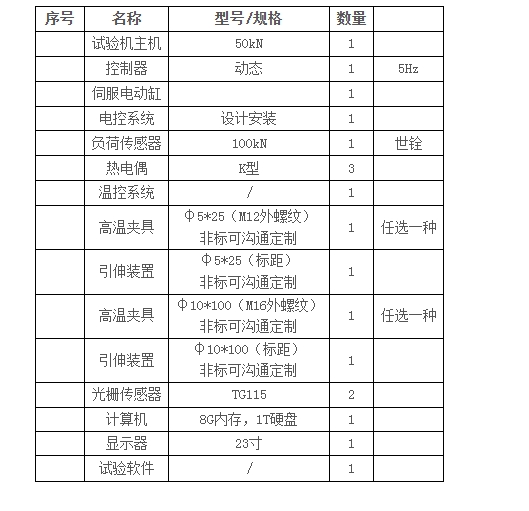
5. Configuration Details