



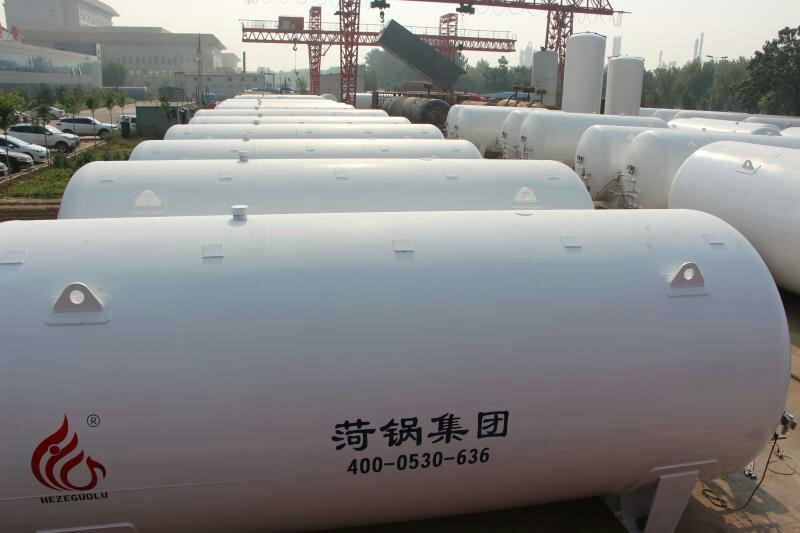


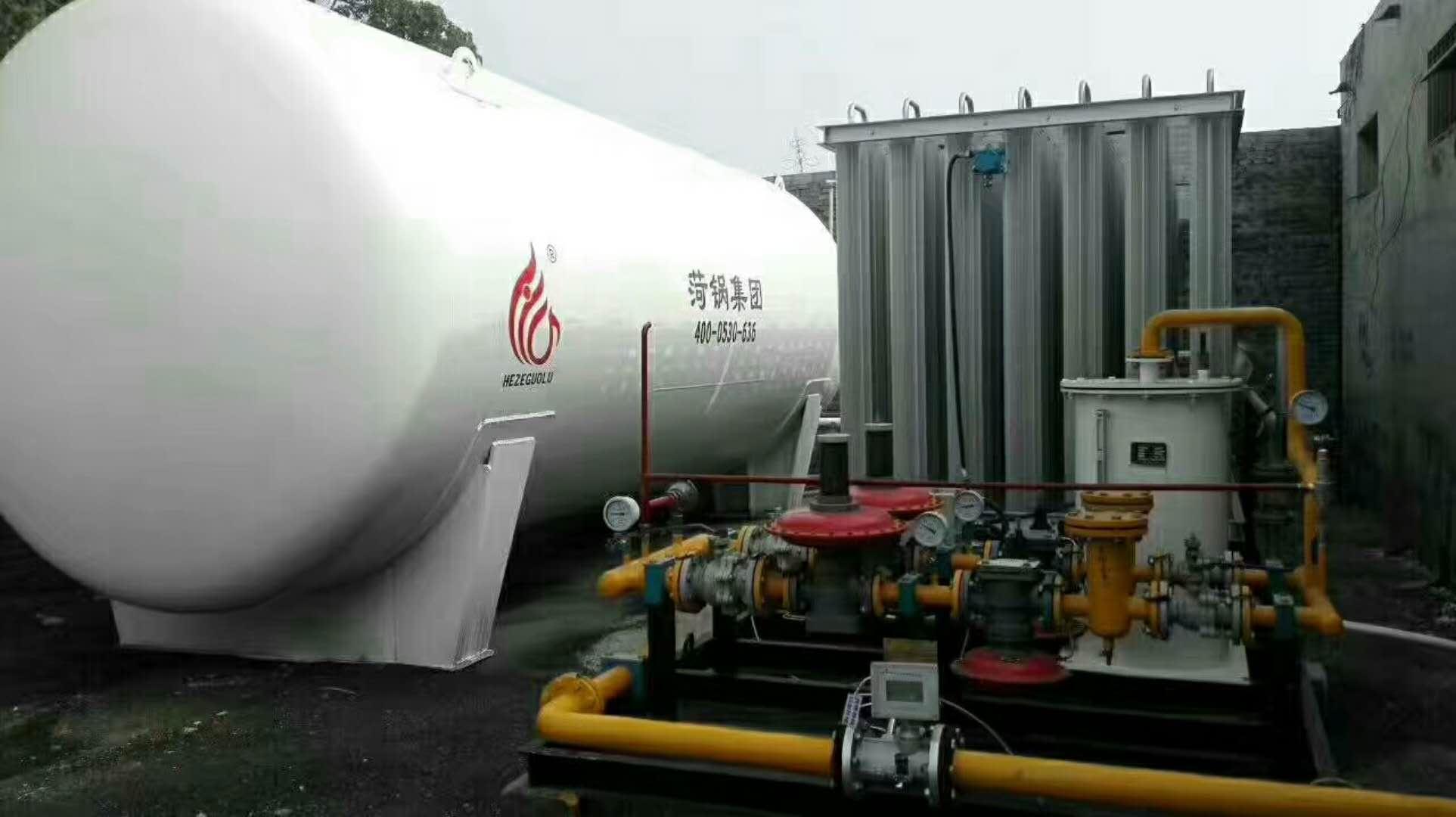


















Product Description
Brand Hegu Group Model CFW-60/0.8
Material: Stainless Steel, Diameter: 2916mm
Application Range -162℃ Volume 60000L
Heat Exchange Area - See drawing m², Ambient Temperature - See drawing °C
Wall Thickness: 8mm, External Dimensions: φ2916*14929mm
Origin: Shandong Heze
Jiangxi 60-cubic-meter LNG Storage Tank, Hunan 100-cubic-meter Natural Gas Storage Tank, 30-cubic-meter LNG Storage Tank Price

1.2 Pre-pressure Adjustment Preparation
1.2.1 Tool Preparation: explosion-proof wrench, two pairs of gloves, and two sets of protective equipment.
1.2.2 Work Preparation
Wear personal protective equipment, including static-resistant clothing, anti-static shoes, safety helmets, etc.
Ensure that electronic devices like mobile phones and computers, which may cause static electricity, are placed in a safe area. Check if the surrounding environment is secure and meets the operational requirements.
Before entering, touch both hands on the static discharge pad to release static electricity.
Inspect if the explosion-proof wrenches and other pressure regulating tools are fully equipped.
Inspect the tank's pressure gauge, level gauge, thermometer, flammable gas detector, and safety valve to ensure they are operating normally.
Inspect pipeline valves, pressure gauges, and safety valves to ensure they are in normal working condition.
(7) Prepare all explosion-proof tools
1.2.3 LNG Storage Tank Gas Supply Process:
All valves on the tanks to be pressurized, excluding the root valve and the emergency shutdown valve, are in the closed position.
Open the bottom inlet valve of the tank and the valves for increasing liquid and vapor pressure, check that both valves before and after the pressurized vaporizer are in the open position.
Open the low-temperature cut-off valve before the gasifier, the at-room-temperature flanged ball valve after the gasifier, and all valves in the pressure-regulating system that need to be opened.
When the gas supply is less than 1000-2000 Nm3/h, one storage tank is sufficient to meet the gas supply requirements.
5. Liquid discharge:
5.1 When the tank pressure exceeds the outlet pressure by more than 0.15 MPa, slowly open the outlet valve to initiate the gas supply operation.
5.2 Record the liquid storage tank number and the start of gas supply.
5.3 Pay close attention to the liquid level, pressure changes, and the variations in outflow and pressure at the storage tank during gas supply.
1.2.4 Procedure for Self-pressurization of LNG Tanks
During manual operation, open the valves: the boost liquid phase valve, the boost gas phase bypass valve, and the vaporizer inlet valve, allowing LNG to flow directly into the self-boosting vaporizer, where it is vaporized and then enters the LNG storage tank. At this point, closely monitor the pressure; close the boost liquid phase valve when the pressure in the LNG storage tank reaches the desired level.
Important Notes:
During LNG tank operation, the liquid level must be maintained at ≤90% for the upper limit and ≥15% for the lower limit. (2) When manually operating the self-pressurization system, the site must not be left unattended.
(3) When the self-pressurizing system is in operation, the pressure-reducing system should be in the off state.
Cautionary Notes:
During the operation of the LNG storage tank, the liquid level must be ≥15%.
(2) During manual operation, the site must be strictly supervised at all times.
1.2.5 Risk Analysis and Countermeasures
During LNG tanker loading and unloading, operators should wear masks, antistatic work clothes, and antifreeze gloves, etc.
Absolutely no vehicle movement during LNG tanker unloading to prevent snapping the loading/unloading hoses and causing significant LNG leakage.
When LNG is inside the pipeline, both ends' valves cannot be closed simultaneously.
Do not touch or step on low-temperature pipelines and facilities.
Under no circumstances shall moisture, oil, mechanical impurities, etc., enter the pipeline to avoid blockage.
No hammering, fire drying, or water spraying on the frozen areas.
To ensure the safety of the working environment, operators must wear personal protective equipment. Static electricity must be neutralized before entering the station. Open flames are strictly prohibited in the station's working area, and the use of non-explosion-proof tools and electronic devices is strictly forbidden.
Strictly adhere to the operation ticket system, follow the steps outlined in the operation ticket, and require at least two on-site operators: one to perform and one to supervise, ensuring operational safety.
Conduct safety training before operation, implement on-site safety precautions, and know how to evacuate and control emergencies in case of danger.
1.2.6 LNG Tank Maintenance and Care Procedure
Operation technicians at Liquefied Natural Gas (LNG) stations must be familiar with the structure and principles of the storage tanks and strictly adhere to the operational procedures for LNG-related activities.
LNG operation technicians must be familiar with the performance and principles of storage tank accessories (pressure gauges, level gauges, temperature gauges, vacuum test valves).
The outer shell of the liquefied natural gas storage tank is a vacuum vessel under external pressure, and it is strictly prohibited to perform welding operations under vacuum conditions. 4. Regularly inspect the outer shell of the storage tank for signs of icing or frost formation. Upon discovery of icing or frost, report it immediately to the duty supervisor and the station master. The duty supervisor or station master should immediately contact the manufacturer to investigate the cause and take immediate action. Throughout the process, closely monitor the changes in icing or frost. If there is a tendency for the accident to escalate, immediately proceed with tank emptying or halt the filling operation, and close the relevant emergency cut-off valves at the inlets and outlets.
Regularly inspect the storage tank's connecting pipes, valves, etc., for frost formation. Report any issues promptly to the on-duty supervisor, who will then arrange for personnel to address the situation.
Regularly inspect the pressure gauge, level gauge, and thermometer of the storage tank to ensure the displayed values are normal. 7. Regularly check the sealing performance and operation of the valves connected to the tank to ensure proper functioning.
Regularly calibrate safety valves, pressure gauges, level indicators, and thermometers in accordance with regulations to ensure proper operation and promptly update the equipment inventory records.
Regularly perform anti-corrosion treatments on the outer shell of storage tanks and conduct visual cleaning and maintenance of the pressure gauges, level gauges, and thermometers on the tanks.
Regularly descale and anti-corrosion treatment for the easy-rusting parts such as pressure and level control instruments, three-way valves of storage tanks.
11. Conduct annual or on-site operational vacuum level inspections of the tanks to monitor their operational status.

Jiangxi 60-cubic-meter LNG Storage Tank, Hunan 100-cubic-meter Natural Gas Storage Tank, 30-cubic-meter LNG Storage Tank Price
Product Description
Brand Hohe Group Model CFW-60/0.8
Material: Stainless Steel, Diameter: 2916mm
Application Range -162℃ Volume 60000L
Heat exchange area - See drawing m², Environmental temperature - See drawing °C
Wall Thickness: 8mm; Outer Dimensions: φ2916*14929mm
Origin: Shandong Heze

60-cubic-meter LNG Storage Tank, Horizontal LNG Storage Tank, Professional Manufacturer of Liquefied Natural Gas Storage Tanks
LNG storage tanks are atmospheric pressure, low-temperature, large-scale tanks, typically featuring a flat bottom and double-walled cylindrical design. The inner cylinder is usually made of 9% nickel alloy steel, but can also be all aluminum, stainless steel film, or prestressed concrete. The outer wall is constructed of carbon steel or prestressed concrete. The suspended thermal insulation support platform at the top of the wall is aluminum, while the tank roof is made of carbon steel or concrete. The main thermal insulation materials inside the LNG storage tank include expanded perlite, elastic glass fiber felt, and foam glass bricks.
LNG Tank Characteristics Requirements
Low-temperature resistance
The boiling point of liquefied natural gas at atmospheric pressure is -162°C. Therefore, LNG storage tanks require excellent low-temperature resistance and superior thermal insulation properties.
(2) High safety requirements
Due to the storage of low-temperature liquids inside the tank, in the event of an accident, the refrigerated liquid would evaporate in large quantities, with the vaporization amount being approximately 625 times that of the refrigerated state, forming an explosive mixture in the atmosphere. Therefore, the tank must be constructed with a double-walled structure and utilize the containment concept. In the event of a leak in the first layer, the second layer can completely contain the leaked liquid and evaporated gas, ensuring storage safety.
(3) Special Material.
The inner container requires low-temperature resistance and is made of austenitic stainless steel, while the outer cylinder is made from Q345R ordinary low-carbon alloy steel plate.
(4) Insulation measures are strictly implemented.
Due to the temperature difference between the inside and outside of the drum reaching up to 200℃, to maintain the internal temperature at -160℃, the drum must have excellent insulation properties, filled with high-performance insulation material between the inner and outer drums. The insulation material at the drum base must also have sufficient load-bearing capacity. (5) Good seismic performance
The seismic requirements for general buildings are to crack but not collapse under specified seismic loads. To ensure the safety of storage tanks under unexpected loads, they must possess excellent seismic performance. It is crucial to ensure that the tank does not sustain damage under the given seismic intensity. (6) Strict construction requirements
Tanks' weld seams must undergo 100% magnetic particle inspection (MT) and 100% vacuum tightness testing (VBT). Strict selection of insulation materials is required, and the specified procedures must be followed during construction.
Huzhou Boiler Factory Co., Ltd. is a key enterprise designated by the China National Certification and Accreditation Administration for the production of boiler pressure vessels, a vice-president unit of the China Industrial Boiler Association, a member of the China Association of HVAC and Drainage, and holds B-grade boiler manufacturing (serial number TS2110587-2011), third-class pressure vessel manufacturing (serial number TS2210916-2013) and design qualifications (serial number TS1237085-2011). It has also passed the ISO9001 international quality management system certification.
Heze Boiler Factory Co., Ltd. Main Products:
Chemical Storage Tanks (liquefied gas tanks, liquefied petroleum gas tanks, liquid ammonia tanks, propane tanks, propylene tanks, isobutane tanks, methyl chloride tanks, etc.); Non-standard Pressure Vessels (towers, heat exchangers, autoclaves, reaction vessels, stainless steel containers, etc.)
Refrigeration Auxiliary Equipment (evaporative coolers, ammonia storage tanks, drain drums, circulating drums, oil separators, separators, condensers, intermediate coolers, siphon tanks, economizers, etc.)
Boiler equipment (steam boilers, hot water boilers, thermal oil boilers, fuel gas boilers, waste heat boilers, etc.)
Low-temperature Storage Tanks (Liquid Oxygen Tanks, Liquid Oxygen Vessels, Liquid Nitrogen Tanks, Liquid Nitrogen Vessels, Liquid Argon Tanks, Carbon Dioxide Tanks, LNG Tanks, Liquefied Natural Gas Tanks)

60-cubic-meter LNG Tank, Horizontal LNG Storage Tank, Manufacturer Specializing in 60-cubic-meter Liquefied Natural Gas Tanks


燃气热水锅炉液化天然气储罐菏泽锅炉厂-特价液化天然气储罐制造商-专业制造液化天然气储罐电话-销售液化天然气储罐供应商



















