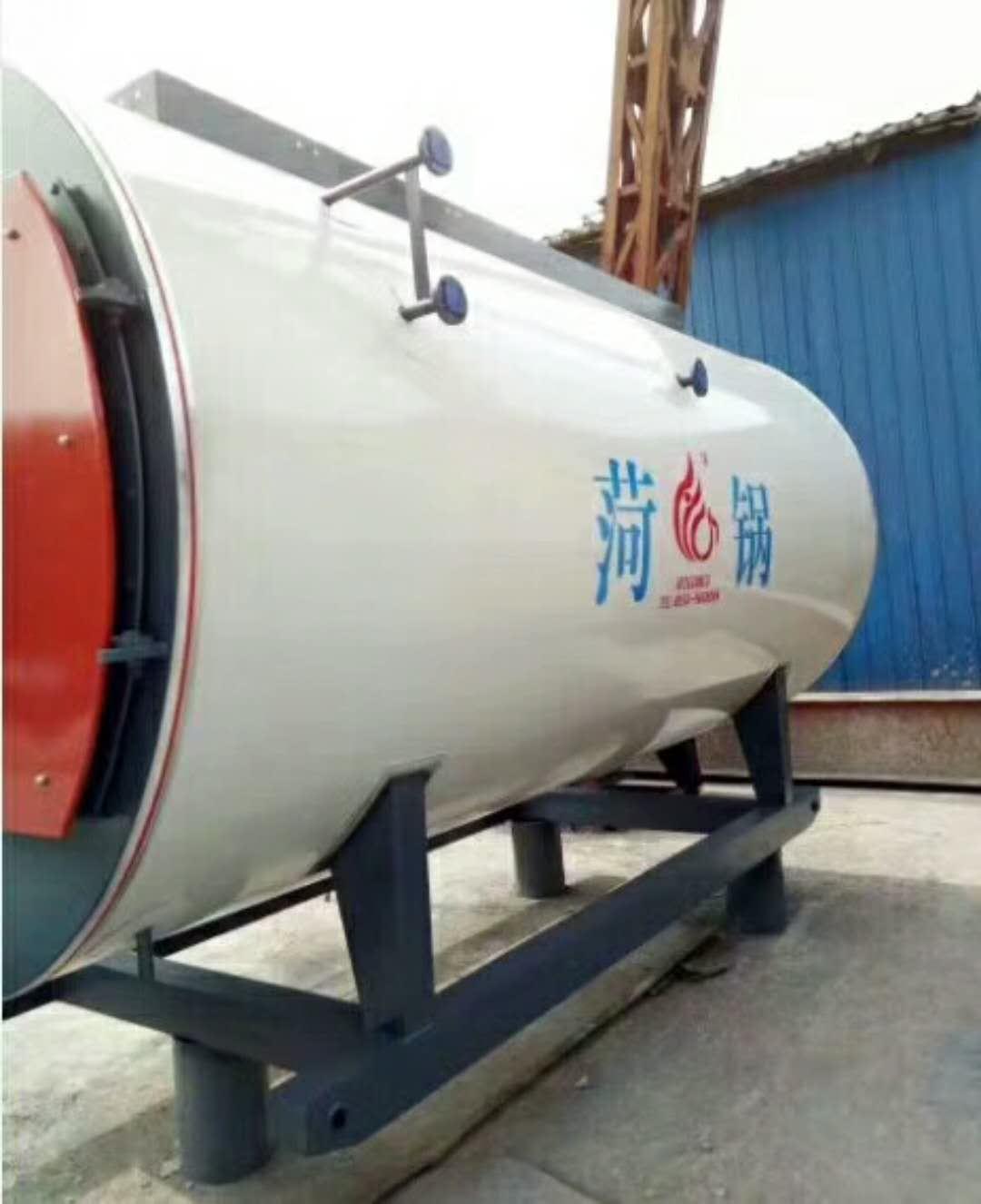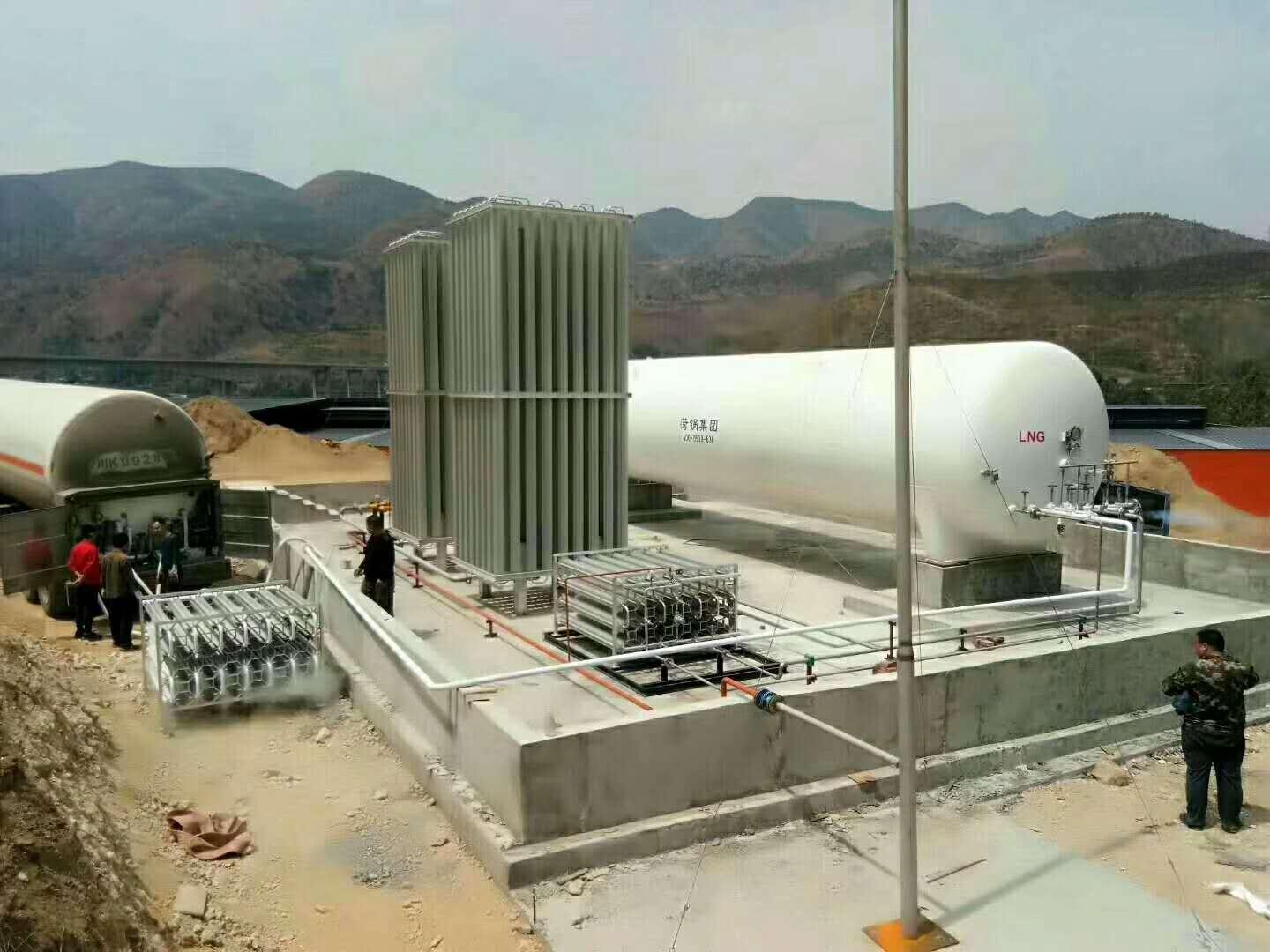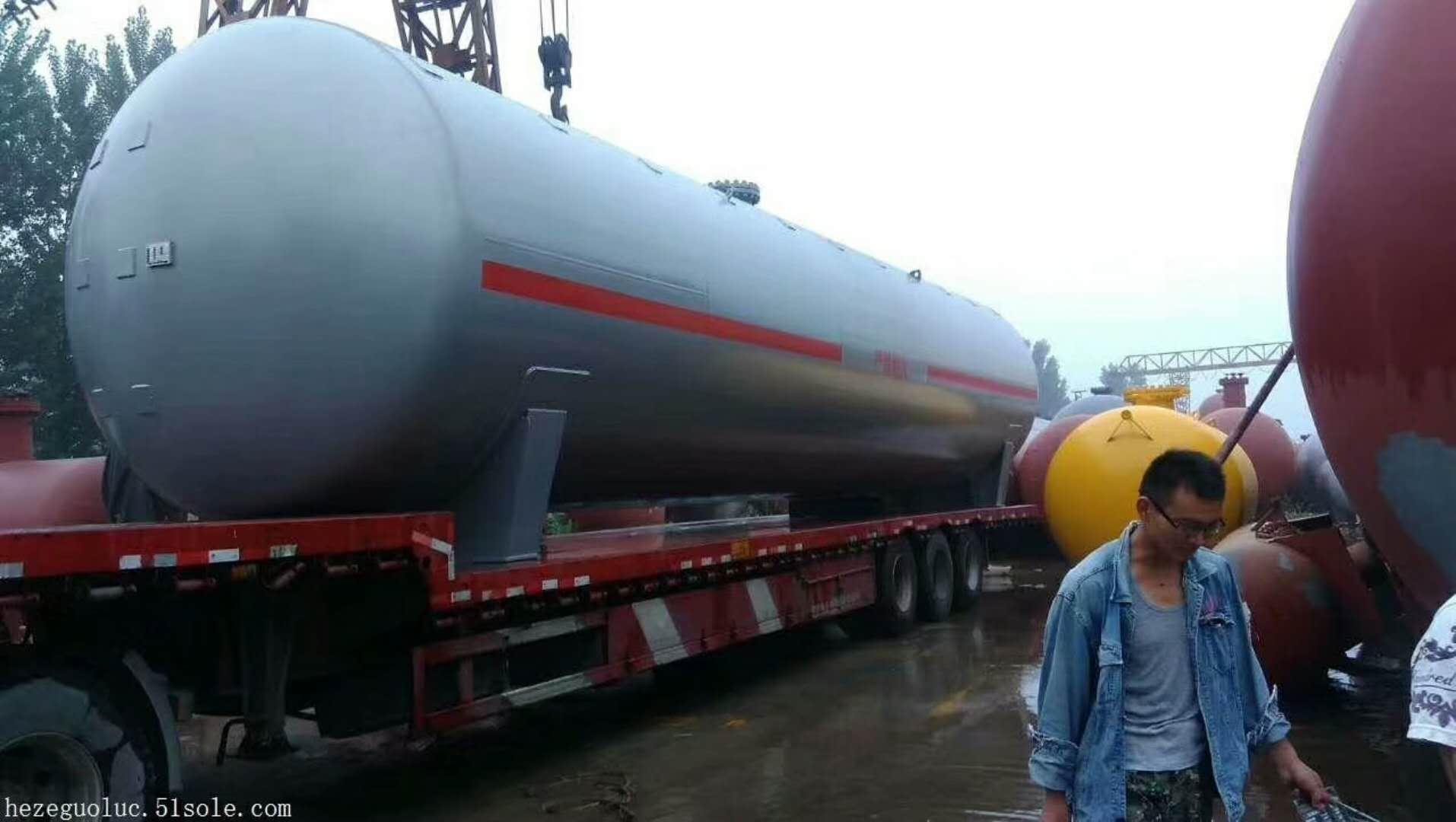


















Atmospheric Storage Tank:
We offer large and medium-sized atmospheric LNG tanks, as well as extra-large atmospheric LNG storage tanks.
2. Cautionary Notes
1. Cylinders must be stored in well-ventilated areas and kept at least 1.5 meters away from any fire or heat source. Cylinders are strictly prohibited from being heated with fire, boiled in water, or left exposed to direct sunlight. Regular inspections of cylinder valves and pipeline joints for airtightness are required to ensure no leaks. Leaks can be checked using soap water, and it is strictly forbidden to test for leaks with an open flame.
2. When igniting, always light the primer first, followed by opening the gas—do not reverse the order. There should be a person monitoring during use; do not leave the area to prevent boiling water from spilling and extinguishing the flame, which could lead to the gas stream bursting and causing an explosion. After use, ensure the valve is tightly closed to prevent any gas leakage.
3. The liquefied gas in the cylinder should not be completely exhausted; a certain residual pressure must be maintained. The residual pressure should generally be greater than 49.03 kPa (i.e., 0.5 kg/cm², gauge pressure) to prevent air from entering the cylinder. After the liquefied petroleum gas is used up, the remaining residue inside the cylinder is also a flammable material and must not be poured out arbitrarily to prevent fires caused by the flow and evaporation of the residue.
4. LPG cylinders are pressurized containers that require proper maintenance and regular inspections. Prevent the cylinders from falling or being struck during handling and use; do not use metal tools to敲击 open the valve; protect them from direct sunlight and prolonged exposure to rain. Cylinders should be inspected every 2 years.
5. Although the explosive range of liquefied petroleum gas (LPG) is not very wide, its lower limit is small, making it easy to ignite and explode upon leakage. Moreover, as LPG is heavier than air, it tends to flow downward upon leakage in the air, accumulating in low-lying areas and posing a hidden danger of gas explosion. Therefore, in areas where gas is prone to leak, relying solely on window ventilation is insufficient; attention must also be given to proper ventilation at the lower levels.
6. Upon discovering a liquefied gas leak indoors, immediately open windows and doors for ventilation, allowing it to disperse away from any open flame. Strictly prohibit any fire nearby. Use the gas only after the fault is resolved and the distinctive odor has dissipated. Dispose of any leaked liquid on the ground by covering it with sand and soil before removing it to a safe location. In case of a gas cylinder fire, promptly close the valve, move it to an open area outdoors, and extinguish the fire using dry powder extinguisher, CO2 extinguisher, or by covering it with a wet sack.
7. Children should be educated not to tamper with gas cylinders carelessly, and users must be aware of the safety knowledge for using gas cylinders.
Global natural gas conversion projects are inevitably on the horizon.
With the advancement of the times, the development of the social economy, and the demand for environmental protection, the drawbacks of coal-to-gas production are increasingly being exposed comprehensively. Advanced countries have successively phased out coal-to-gas production in the 1950s, 1960s, 1970s, 1980s, and 1990s. Oil-to-gas production also has many insurmountable drawbacks. LPG will become a transitional energy source as the future depletion of oil approaches. The global shift to natural gas as a replacement for all other energy sources will inevitably become a revolution in the development of gas energy.
Partial Natural Gas Conversion Schedule for Some Countries
Country
Achieve natural gas conversion (year)
Gas Source
USA
1945-1958
Pipeline natural gas predominant
Former Soviet Union
1948-1960
Pipeline natural gas predominant
United Kingdom
1964-1977
Initially use LNG, later shift to pipeline natural gas primarily.
France
1962-1982
LNG and Pipeline Natural Gas Integration
Germany
1960-1970
Pipeline natural gas为主,some LNG
Australia
1976-1986
Pipeline Natural Gas
Japan
1969-1998
All LNG Supply
天然气的利用途径可采取管道输送和液化后用船运输、公路槽车和铁路槽车运输多种途径来实现。长输管道输送受到铺设管道需要穿过崇山峻岭、农田村庄以及征用村镇土地赔偿费用等限制,超过一定长距离,从经济角度来考虑是很不合算的。而将天然气液化后用大船(13.5万立方米)通过海上运输,送至城市边沿建设的LNG接收基地是非常经济合算的事。LNG在美国、欧洲、日本早就得到广泛的应用,而日本是世界上使用LNG最成功的国家,年用量达到了5000万吨,占世界LNG贸易量8000万吨的62.5%。亚洲的日本、韩国和台湾地区LNG消费数量,占了世界总消费量的四分之三还多。
The launch of the 3 million tons LNG project in Guangdong, China, the construction of the 2 million tons LNG project in Fujian, and the commissioning of the LNG project in India, along with the completion of the Dongding LNG receiving base in Taiwan, will lead to a significant increase in Asia's LNG consumption.