



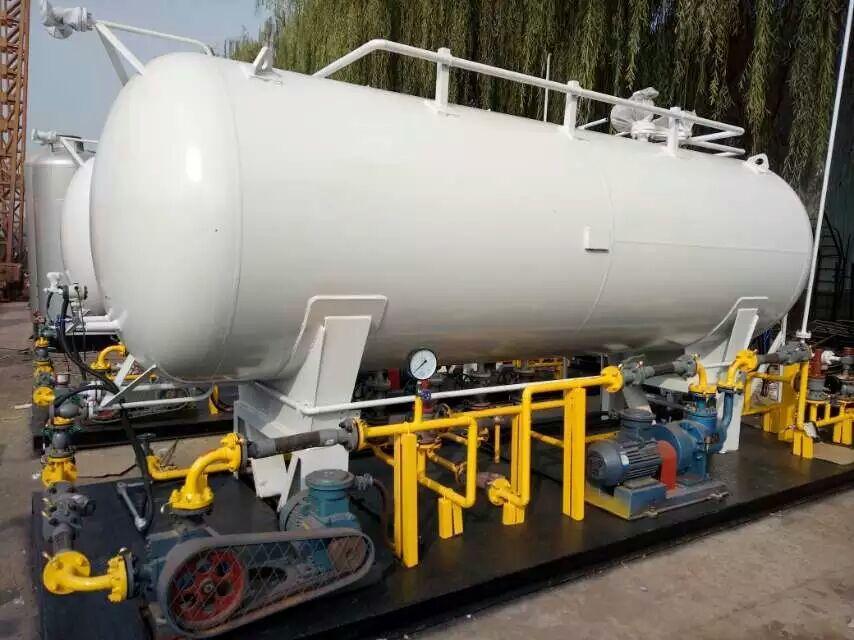

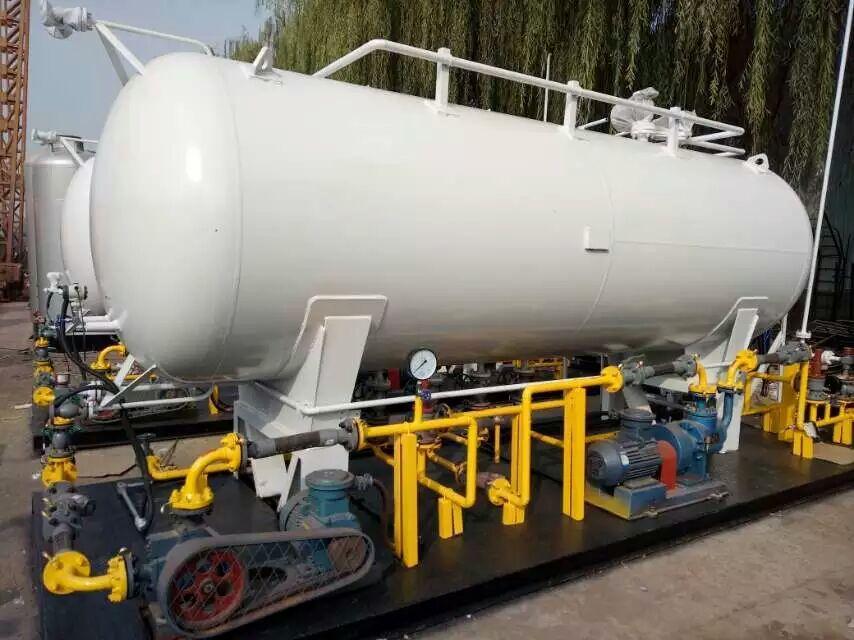
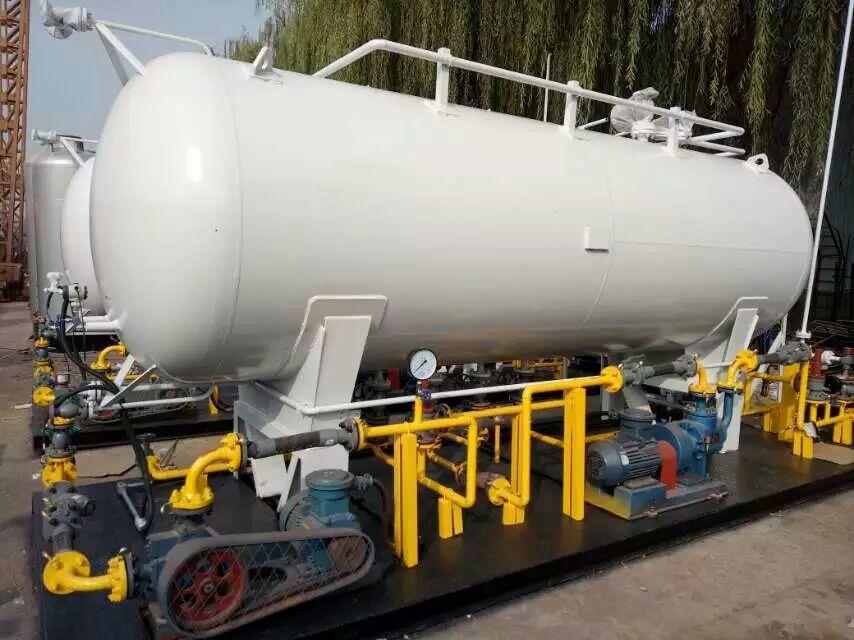


















Liquefied Natural Gas (LNG) Storage Tanks | Manufacturer of LNG Storage Tanks--Heze Boiler Factory Co., Ltd.

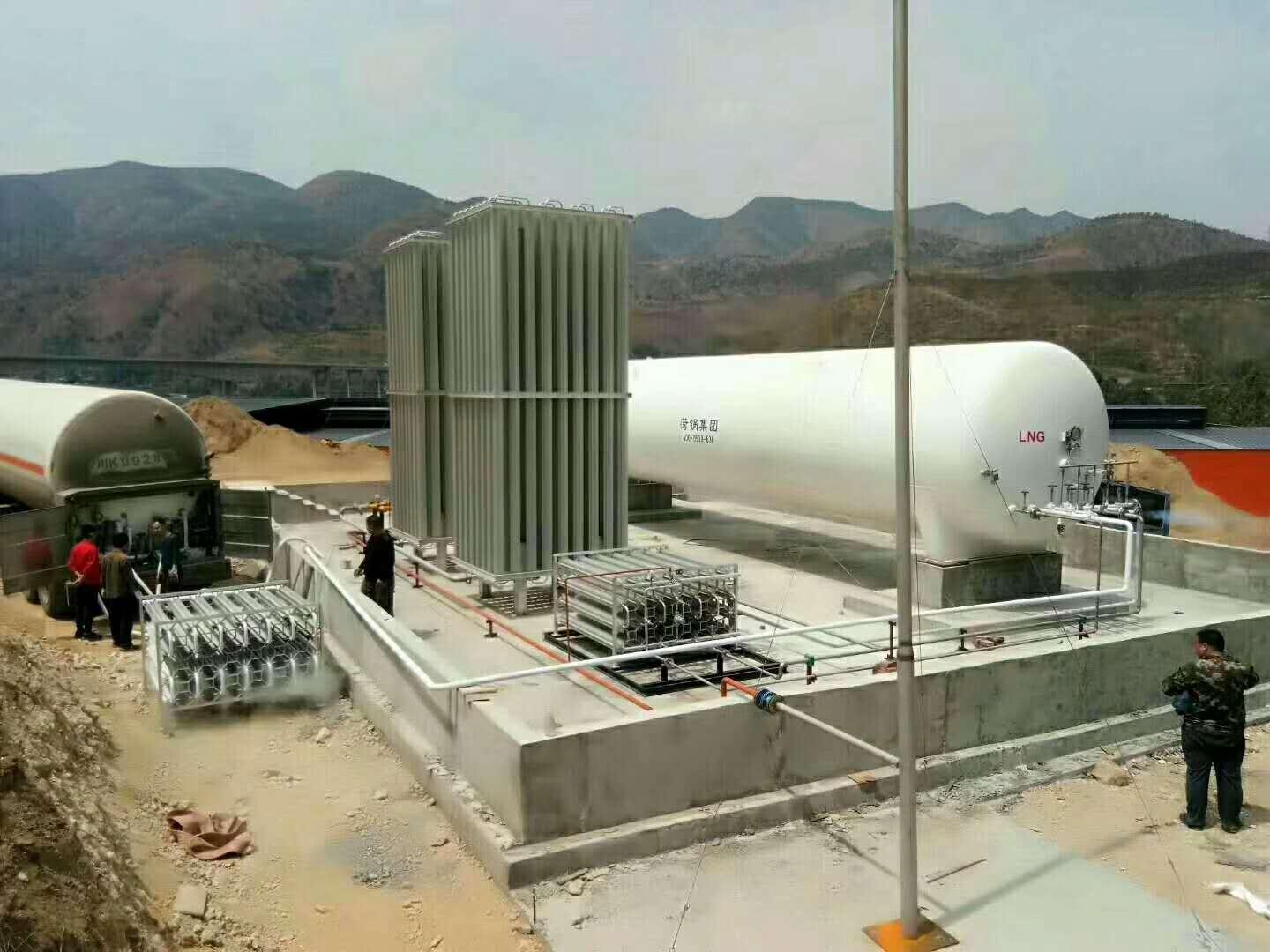
LNG storage tanks are specialized equipment designed for storing liquefied natural gas.TwoCategory pressure vessels, on-site inspection by the Technical Supervision Bureau, issuance of pressure vessel inspection certificate, completion of processes such as external rust removal and painting. The liquefied gas storage tank undergoes strict quality assessment of the material, appearance dimensions, weld quality, operational quality, installation quality, internal equipment, and safety accessories. Widely used in industries such as industrial gases and gas, including units with high gas consumption like machinery, chemicals, metallurgy, etc., serving as a centralized gas supplyMostHigh-quality equipment. Features include long service life, small footprint, easy operation, and centralized control. The gas that leaks from LNG tanks is also very cold, and contact with the skin can cause frostbite-like blisters. Natural gas is an asphyxiant. The oxygen content in the atmosphere is approximately 21%, and when the oxygen content in the air falls below 18%, it can cause human asphyxiation.

LNG Storage Tank Operation Process:
Wear antistatic suits, shoes, helmets, etc., and place devices prone to static, such as cell phones and computers, in a safe area.
2. Check if the tank's thermometer, level gauge, pressure gauge, flammable gas alarm, and safety valve are functioning properly.
All valves on the tanks to be pressurized, except for the root valve and the emergency shut-off valve, are in the closed position.
4. The lower tank inlet valve and the pressurized liquid and gas phase valves are open, as well as the valves before and after the pressurized vaporizer.
5. Open the low-temperature cutoff valve before the vaporizer, the normal temperature flange ball valve after the vaporizer, and all valves in the pressure regulating system that need to be opened.
6. A single storage tank is sufficient to meet the gas supply requirements when the gas flow rate is less than 1000Nm3/h up to 2000Nm3/h.
7. When the tank pressure reaches above 0.15 MPa higher than the outlet pressure, gradually open the liquid outlet valve and start to supply gas.
8. The LNG tank must ensure that the liquid level is no higher than 90% during operation, and the lower limit of the liquid level must be no less than 15%.
8. Attendants must regularly patrol during the gas supply, monitor the liquid level and pressure changes in the storage tanks, and ensure at least three records per day.
9. Regularly inspect the tank, welds, valves, etc., and take immediate action in case of any gas leakage to ensure that LNG meets production specifications.
LNG Storage Tank
LNG stands for Liquefied Natural Gas. Its primary component is methane. LNG is colorless, odorless, non-toxic, and non-corrosive. It occupies about 1/600th the volume of an equivalent amount of gaseous natural gas, with a weight of approximately 45% of that of water in the same volume. Its calorific value is around 52 MMBtu per ton (1 MMBtu = 2.52 x 10^8 calories).
Model:
CFL-5/0.8,CFL-10/0.8,CFL-15/0.8,CFL-20/0.8,CFL-30/0.8,CFL-50/0.8,CFL-60/0.8,CFL-100/0.8,CFL-150/0.8...
CFW-5/0.8,CFW-10/0.8,CFW-15/0.8,CFW-20/0.8,CFW-30/0.8,CFW-50/0.8,CFW-60/0.8,CFW-100/0.8,CFW-120/0.8,CFW-150/0.8…
Low-temperature storage tanks are designed and manufactured in strict accordance with national standards, widely used for the storage and use of cryogenic liquids such as liquid oxygen, liquid nitrogen, liquid argon, liquid carbon dioxide, liquid natural gas, and liquid ethylene. They come in various working pressures and specifications. Equipped with unique high-vacuum insulation technology, they offer superior insulation properties, long-term vacuum maintenance, and extremely low operational costs. Modular piping systems and high-configured components enhance the equipment's performance and durability, reduce maintenance costs, and significantly boost your competitive edge.
Introduction:
Low-temperature thermal insulation tanks are of the vacuum powder insulation type, consisting of a double container structure composed of an inner container and an outer container, which can be divided into vertical and horizontal types. The inner container, selected based on the medium it contains, is made of Austenitic stainless steel, specifically S30408. The outer container material varies depending on the user's location and is typically Q345R. The space between the inner and outer containers is filled with thermal insulation material, Pearlite sand, and then vacuumed.
Usage:
Liquid Oxygen (LO2), Liquid Nitrogen (LN2), Liquid Argon (LAr), Liquefied Natural Gas (LNG), Liquid Carbon Dioxide (LCO2)
Thermal Insulation Performance:
Insulation materials are filled with pearlescent sand under heat conditions and then evacuated. The standard vacuum degree after the sandwich is sealed is:
Seal Vacuum Gauge
Design Parameters:
Design Pressure: 0.84 Mpa, 1.32 Mpa, 1.68 Mpa
Operating Pressure: 0.8 MPa, 1.2 MPa, 1.6 MPa
Design Temperature: -196℃
Operating Temperature: -196°C
Effective Volume: 2.5m³, 3.5m³, 5m³, 10m³, 15m³, 20m³, 30m³, 50m³, 60m³, 100m³
Definition:
LNG stands for Liquefied Natural Gas.
The main component is methane. LNG is colorless, odorless, non-toxic, and non-corrosive, with a volume approximately 1/600th of the same amount of gaseous natural gas. Its weight is about 45% of the same volume of water, and its calorific value is around 52MMBtu/t (1MMBtu = 2.52×10^8 cal).
Formed:
The natural gas produced from the gas field is first purified and then liquefied under ultra-low temperature (-162℃) and atmospheric pressure to form liquefied natural gas.
The critical temperature of LNG between its gaseous and liquid states at atmospheric pressure is -162℃.
The standard commonly used in LNG manufacturing is API 620 of the American Petroleum Institute.
Meaning:
Liquefied Natural Gas (LNG) storage tanks are specialized products designed for storing LNG, and they are classified as special equipment.TwoPressure vessel category, 06Ni9DR material, completed with flaw detection, hydrostatic and pneumatic testing, on-site inspection by the Technical Supervision Bureau, issuance of pressure vessel inspection certificate, and processes such as external rust removal and painting. The liquefied gas storage tank undergoes rigorous quality assessment for the material, dimensions, weld quality, operational quality, installation quality, internal equipment, and safety accessories of the pressure-bearing components.
Routine physical and chemical tests for the material of the drum, such as mechanical properties and chemical composition.
Rigorous X-ray non-destructive testing and magnetic particle inspection are conducted on the welding joints, welds, tank heads, and the mutual geometric positions of all pressure components. Testing and verification of the product's sealing, pressure resistance, and all technical indicators that may affect the safe operation of the product.
1. Natural Gas Storage Tank LNG Storage System: The LNG storage system consists of low-temperature storage tanks, auxiliary pipelines, and control instruments.
2. By capacity classification:
Small natural gas storage tanks, 5-50 cubic meters, commonly used in residential gas liquefaction stations, LNG vehicle refueling stations, etc.
Medium-sized natural gas storage tanks, 50-100 cubic meters, commonly used in satellite liquefaction units, industrial gasification stations, etc.
3. Natural gas storage tanks, typically use austenitic stainless steel pipes for LNG pipelines. Austenitic stainless steel pipes offer excellent low-temperature properties.
4. Vertical natural gas storage tanks (LNG tanks) featuring vacuum powder insulation technology. The inner cylinder and pipeline materials are made of OCr18Ni austenitic stainless steel, while the outer cylinder is constructed from high-quality carbon steel Q345R pressure vessel steel plate. Our company offers a variety of specifications, including 50-100 cubic meters of liquefied natural gas storage tanks.
5. Applications of Natural Gas Storage Vessels: Chemical fuel, residential fuel, automotive fuel, cogeneration, heat pumps, fuel cells, etc.
6. Natural Gas Storage Tank Liquefaction Process: Cascade Liquefaction Process, Mixed Refrigerant Liquefaction Process, Liquefaction Process with Expander.
7. The natural gas liquefaction unit consists of a natural gas pretreatment process, liquefaction process, storage system, control system, and fire protection system.

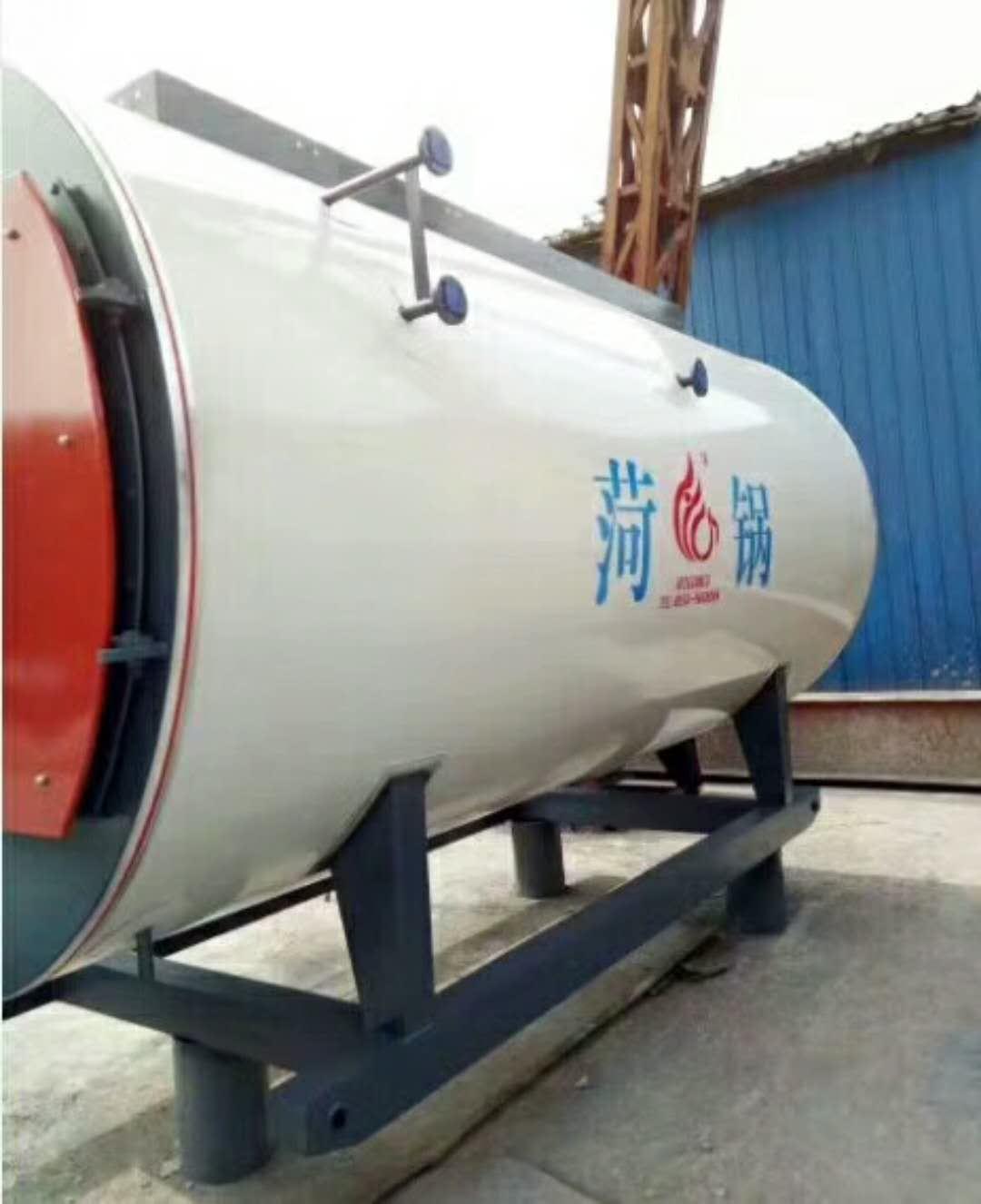
专用LNG储罐批发-现货LNG储罐哪家质量好-专业LNG储罐哪里有卖-专用LNG储罐制造商



















