






















LNG stands for Liquefied Natural Gas, a premium natural gas product primarily composed of methane. Known for its high calorific value, low pollution, and ease of storage and transportation, it has become one of the preferred high-quality energy sources in modern society. LNG is a purified and processed form of natural gas from gas fields, free of impurities, cooled to approximately -162°C at atmospheric pressure, and condensed into a safe, colorless, odorless, and non-toxic low-temperature liquid. It boasts high purity, safety, storage efficiency, and flexible transportation. Its volume is about 1/600th of the same amount of gaseous natural gas, and its weight is approximately 45% of the same volume of water.

Safety Advantages of LNG
Due to excellent physical and chemical properties, it is safe: with a higher ignition point and an auto-ignition temperature of 590 degrees Celsius, the combustion range is narrow, at 5-15%, lighter than air and easy to disperse. LNG will quickly heat up and vaporize upon leakage, and the gas density of the natural gas after vaporization is approximately half that of air, making it highly volatile but non-flammable. Methane has a relatively stable chemical nature, which can quietly burn in the air without supporting combustion.
Due to optimal storage conditions, the tank material maintains its mechanical strength, such as tensile and compressive strength,低温impact toughness, and thermal expansion coefficient under low-temperature operating conditions. The foundation of the tank can withstand the low temperatures from direct contact with LNG, the insulation material is non-flammable, and it has sufficient durability to withstand the impact force of fire-fighting water, with a reliable safety protection system. Automotive LNG is stored in insulated containers at pressures ranging from 0.05 to 0.5 MPa, offering higher safety compared to the storage pressure of 20 MPa for CNG. The low-temperature vehicle-mounted cylinders have undergone strict inspections, including high-temperature tests, impact tests, and vehicle simulation tests by the National Quality Supervision and Inspection总局. Even in the event of traffic accidents, LNG leakage is unlikely to occur.
Economic Advantages of LNG
High calorific value and economic. Compared to coal, natural gas, and liquefied petroleum gas, LNG has a higher calorific value and a relatively stable price that is less affected by international fluctuations. LNG's calorific value is 12,000 kcal, while good coal only has about 8,000 kcal per kilogram. LNG vehicles with the same displacement can save about 20% in fuel costs compared to gasoline and diesel vehicles, and their maintenance costs can also be reduced by about 10%. Although there is a price difference of about 80,000 yuan between LNG heavy trucks and diesel trucks, the operating advantage is significant due to lower fuel expenses. The driving distance equivalent to 1 cubic meter of LNG (after gasification) is equivalent to 0.95 liters of diesel (Number 0). Calculations show that a trailer can save about 80,000-140,000 yuan in fuel costs annually. Dump trucks can save about 100,000 yuan in fuel costs annually.
Advantages of LNG Transportation
Low temperature, high gas-liquid expansion ratio, high energy efficiency, easy to transport and store. Natural gas is transported through pipelines, continuously and reliably, with simple and easy-to-operate equipment. It is straightforward, convenient for long-distance transportation, and cost-effective. With the rapid development of the global natural gas industry, liquefied natural gas (LNG) has become an important part of international natural gas trade. Compared to ten years ago, the global LNG trade volume has doubled, showing a strong growth momentum.
Convenience advantages of using LNG
Convenient due to the LNG refueling time, which is even shorter than fueling. Long-distance LNG buses equipped with two gas bottles can safely travel over 1,000 kilometers, requiring only a few minutes for a refill.
Convenient due to LNG's power performance. LNG's power performance is not inferior to diesel vehicles, with a longer driving range. A LNG truck equipped with two 450-liter gas cylinders can travel 800-1,000 kilometers.
Due to the well-developed LNG industry chain. China has established a complete technical and industrial chain for LNG vehicle development. Core technologies for natural gas engines and cryogenic vehicle tanks are mature, with whole vehicle assembly, spare parts production, and maintenance technologies all meeting international standards.
Clean and environmental advantages of LNG
LNG is considered to be a clean fossil fuel on Earth, offering good environmental benefits.
Clean due to the chemical properties of the main component of natural gas. Compared to coal as a fuel, it can significantly reduce the emissions of carbon dioxide, carbon monoxide, sulfur monoxide, sulfur dioxide, dust, and other hydrocarbon compounds and nitrogen oxides, as well as coal slag and other pollutants, which is conducive to a great improvement in environmental quality and brings about substantial social benefits.
Cleaned due to the liquefied natural gas production process. During the process of natural gas being cooled to a liquid, it first passes through a gas-liquid filter to remove mechanical impurities and free liquid droplets from the gas; then, a raw gas heater uses MDEA to effectively absorb CO2 and H2S from the natural gas; followed by processes such as decarbonization, dehydration, dehydrocarbonation, and mercury removal; and finally, a dust filter is used to remove dust from the gas, among other purification steps, resulting in LNG at -162 degrees Celsius. Data shows that using engines that burn LNG reduces overall emissions by about 85% compared to gasoline and diesel, with a 72% reduction in hydroxides in vehicle exhaust, a 97% reduction in carbon monoxide, a 39% reduction in nitrogen oxides, a 24% reduction in CO2, a 90% reduction in sulfur dioxide, a 40% reduction in noise, and the absence of lead and benzene, which are carcinogenic substances. Essentially, it contains minimal sulfur compounds.
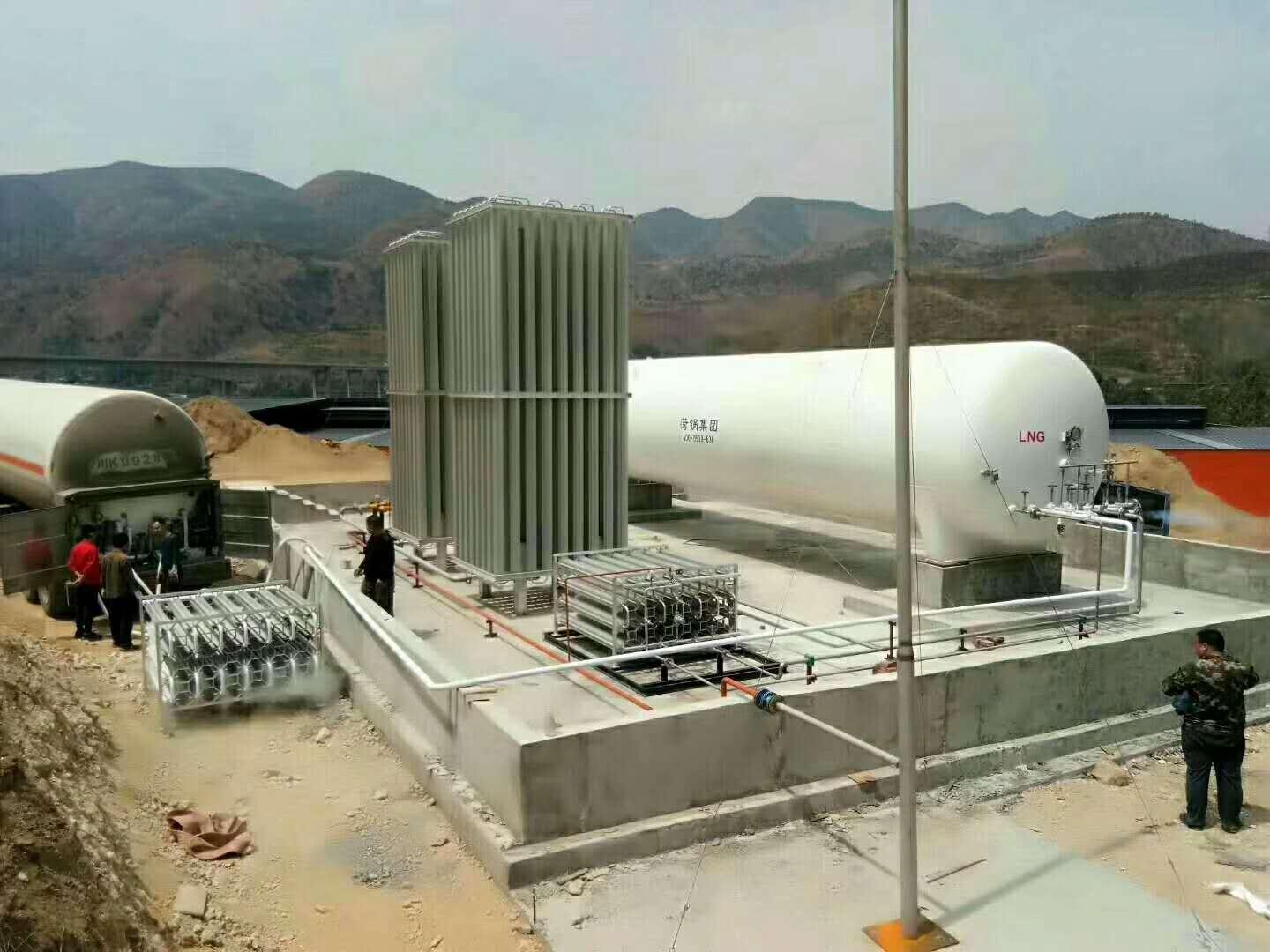
Natural gas tanks, also known as low-temperature tanks, are vertical or horizontal double-layer vacuum insulated tanks. The inner shell is made of austenitic stainless steel, while the outer shell material varies by user location, following national regulations to use 345R. The annular space between the inner and outer shells is filled with insulating material, pearl sand, and vacuumed. The product undergoes on-site inspection by the National Technical Supervision Administration and is issued with a pressure vessel supervision and inspection certificate.

Natural gas tanks are the main equipment of LNG gasification stations, directly affecting the normal production of the stations and occupying a significant portion of the construction cost. They can be classified into underground tanks, above-ground metal tanks, and metal prestressed concrete tanks. For LNG tanks, there are currently vacuum powder insulation tanks, positive pressure accumulation insulation tanks, and high vacuum layer insulation tanks. Medium and small-sized gasification stations typically choose vacuum powder insulation type low-temperature tanks. The tanks are divided into inner and outer layers, with the gap filled with mica sand and evacuated to reduce the heat transfer from the outside, ensuring that the daily gasification rate of LNG inside the tank is less than 0.3%.

Natural Gas Storage Tank
The operating pressure of the natural gas storage tank is 0.6-1.44 MPa, with an operating temperature of -162°C. (Available in vertical or horizontal configurations) The tank consists of two layers for its body. To minimize the transfer of external heat into the tank, a vacuum-insulated sandwich structure filled with diatomaceous earth for thermal insulation is used between the layers, isolating it from the atmosphere. This prevents the impact of atmospheric pressure or temperature changes and the entry of humid air into the insulation layer between the inner and outer tanks, effectively ensuring and enhancing the performance of the insulation material.
Natural gas storage tanks have high safety requirements. As they store low-temperature liquids, any accident could lead to a massive release of the refrigerated liquid, with the vaporization amount reaching about 300 times that of the original refrigerated state, forming explosive gas clouds in the atmosphere. Therefore, standards such as API and BS require double-walled tank structures and the use of containment concepts. In case of a leak in the first layer, the second layer can completely seal off the leaked liquid and evaporated gas, ensuring storage safety.

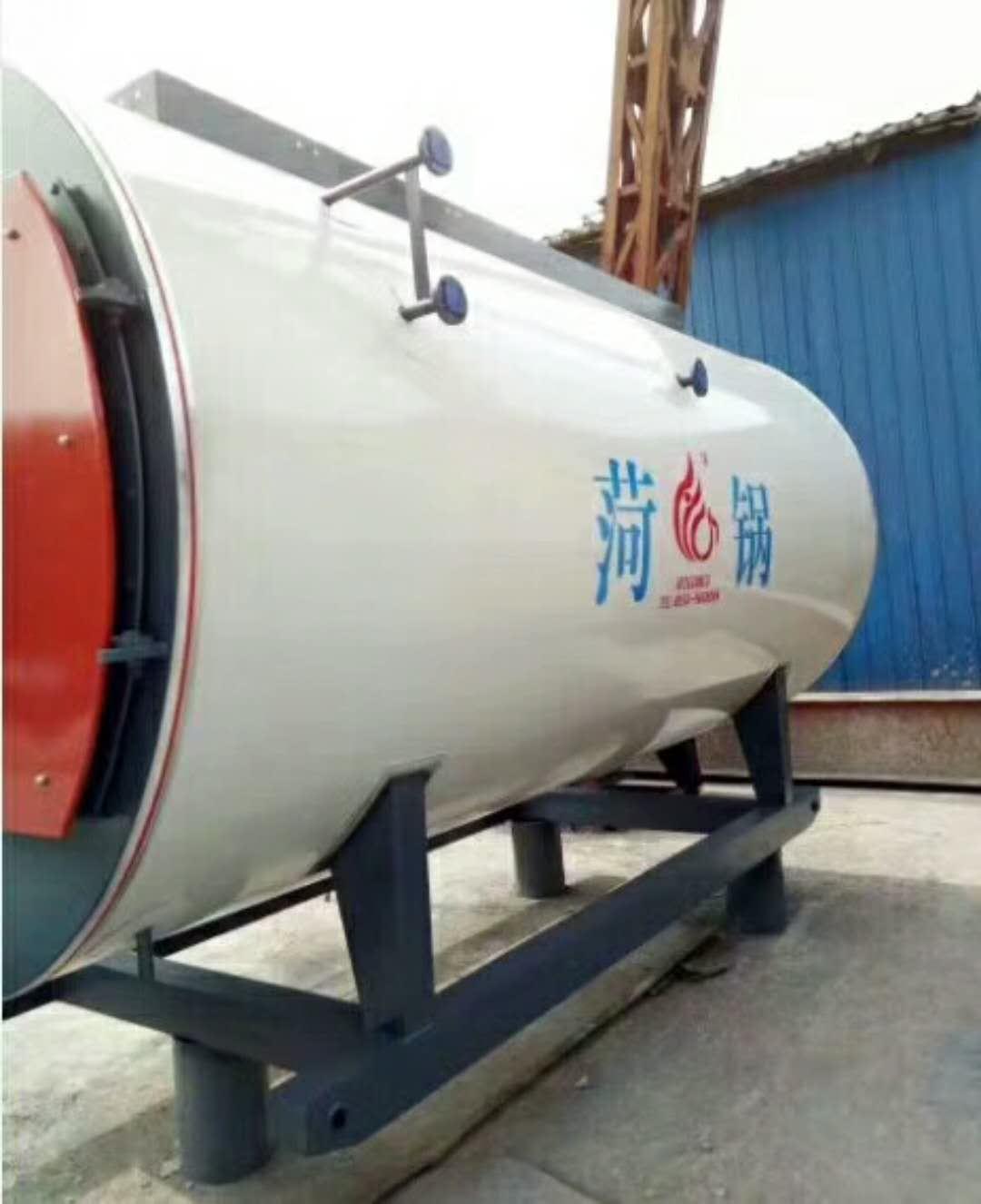
专业生产LNG储罐价格-优质LNG储罐生产-专业制造LNG储罐定做-专业制造LNG储罐加工



















