



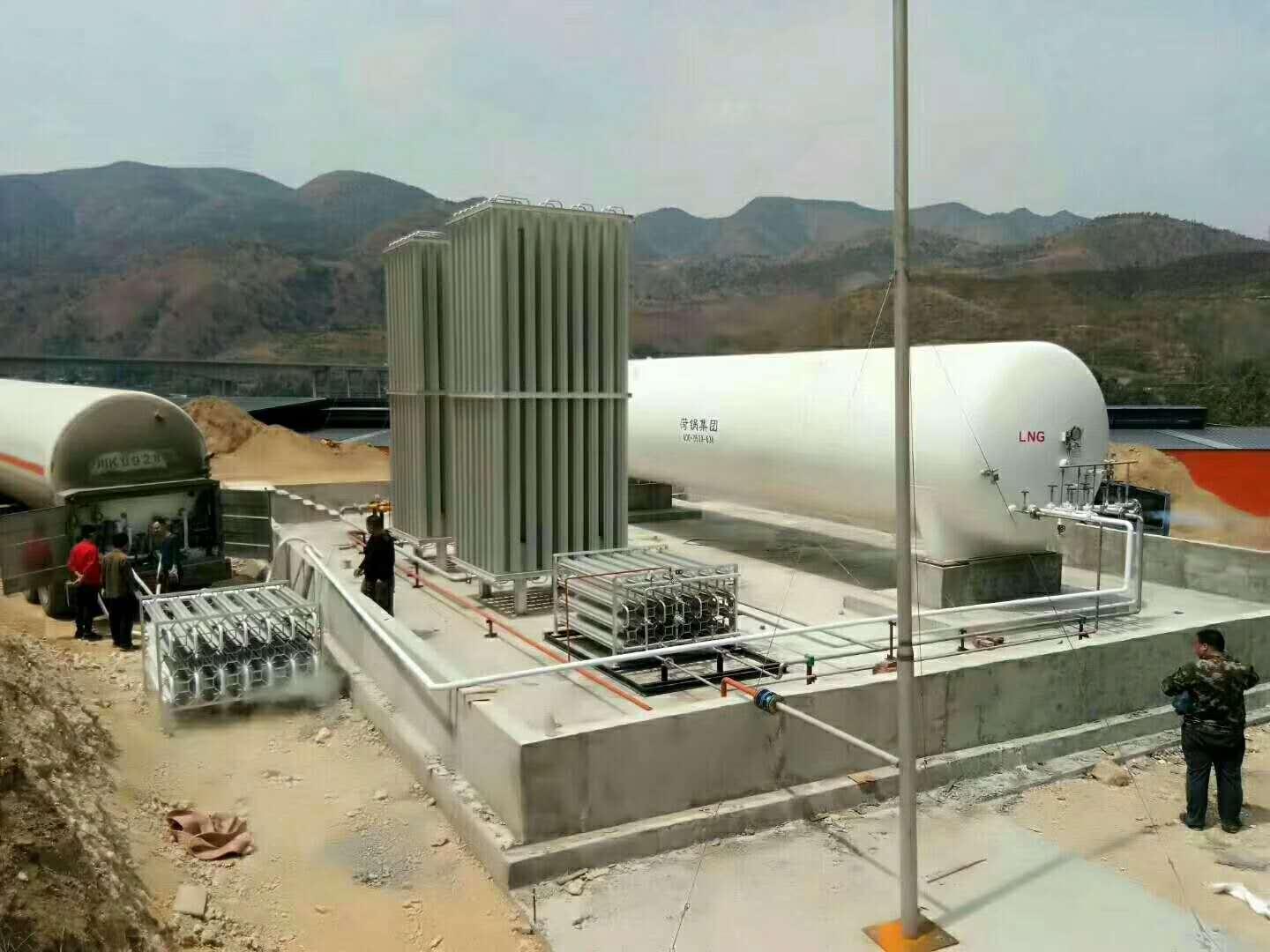

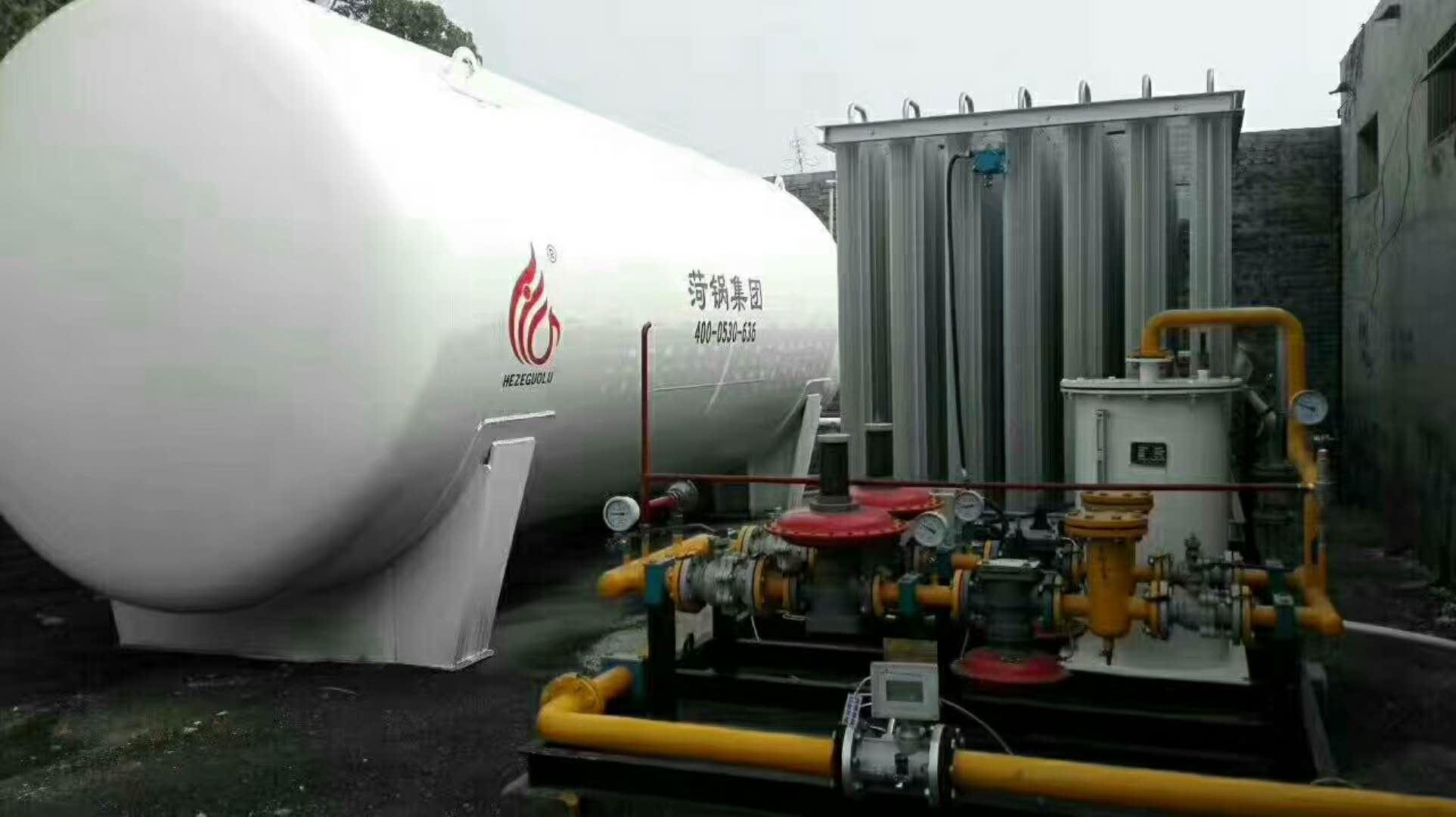



















LNG Low-Temperature Storage Tank Detailed Description:
The LNG storage tank is a horizontal double-walled structure, comprising an inner tank, an outer tank, internal and external supports, an insulating layer, a pressure safety system, a vacuum pump, and a pipeline system. All vacuum-insulated structures rely on vacuum. Due to the high degassing rate and suction resistance of the insulating space materials, and the inability to use high baking temperatures for sealing materials that degas slowly, suction is difficult. To achieve the required vacuum level within the design-specified vacuum time, in addition to the vacuum pump and suction process, it also depends on the flow area of the annular suction pipes. To ensure a high vacuum level and improve the suction rate, a vacuum pump is installed at both ends of the equipment. One vacuum pump consists of three suction pipes, placed in the lower part of the annular space and extending from the bottom, while the other vacuum pump, also with three suction pipes, is placed in the upper part of the annular space and extends from the top. The two sets of suction pipes cross and overlap along the length of the tank. By increasing the flow area of the suction pipes and using various auxiliary methods such as heating and nitrogen displacement, the vacuum time for the annular insulating space with a volume of 100 m³ is reduced to one-third of the conventional structure.
LNG storage tanks are essential storage containers for LNG fueling stations, an indispensable component of such stations. As a professional in the LNG industry, do you truly understand them? Let's delve into a detailed introduction below:
1. Form of packing
LNG tanks typically come in vertical and horizontal types. Vertical tanks have the advantage of requiring less land area, are convenient to use, and reduce the power consumption of submersible pumps due to the gravitational difference, saving on electricity. However, vertical tanks usually exceed 10 meters in height, which can cause fear among nearby residents, making them unsuitable for urban areas. Horizontal tanks are the most commonly used type currently. Their drawback is that they occupy more land space, and there are safety distance requirements between the storage tanks and surrounding buildings and facilities both inside and outside the station. According to GB50156, this increases the design complexity.
2. Insulation form
Common insulating forms for LNG tanks include high-vacuum multi-layer winding insulation and pearlite sand powder insulation. The latter is more commonly used in practice due to its lower cost.
3. Materials
The container is made from high-quality Austenitic stainless steel 0Cr18Ni9 sheet or imported 304 sheet; the outer container is made from high-quality carbon steel Q345R plate.
4. Safety Protection System
The safety protection system consists of tank accessories including: pressure gauges, level gauges, a full set of redundant and sealed safety valves, overflow ports, and bursting disks.
5. Filling Form
The LNG storage tanks have two methods: filling from the top and filling from the bottom. Top filling can liquefy the BOG gas inside the tank using cold liquid. Both methods can be used. This selection needs to be made based on the on-site conditions during the unloading process, which is complex and cannot be explained in just a few sentences. Friends with questions can discuss privately.
6Level Conversion
LNG液位换算质量容积及质量需要按照储罐厂家提供的数据,结合液厂的气质报告数据综合确定。
7Technical Requirements
General technical agreements require the design pressure of LNG tanks.0.8MPA, designed for temperatures down to -196°C, with a daily evaporation rate of less than or equal to 0.20%. The actual working pressure of the tank is generally less than 0..8MPA's, the operating temperature is generally determined by the quality of the liquid, around -100°F.
A seemingly simple white large drum, but the waters are deep. How to choose the right storage tank to minimize investment while meeting usage requirements, and how to use the tank efficiently to reduce losses at the gas station and maintenance costs? Welcome to private message.


知名LNG储罐出售-专业承接LNG储罐生产商-哪里有LNG储罐生产-供应LNG储罐哪家专业



















