




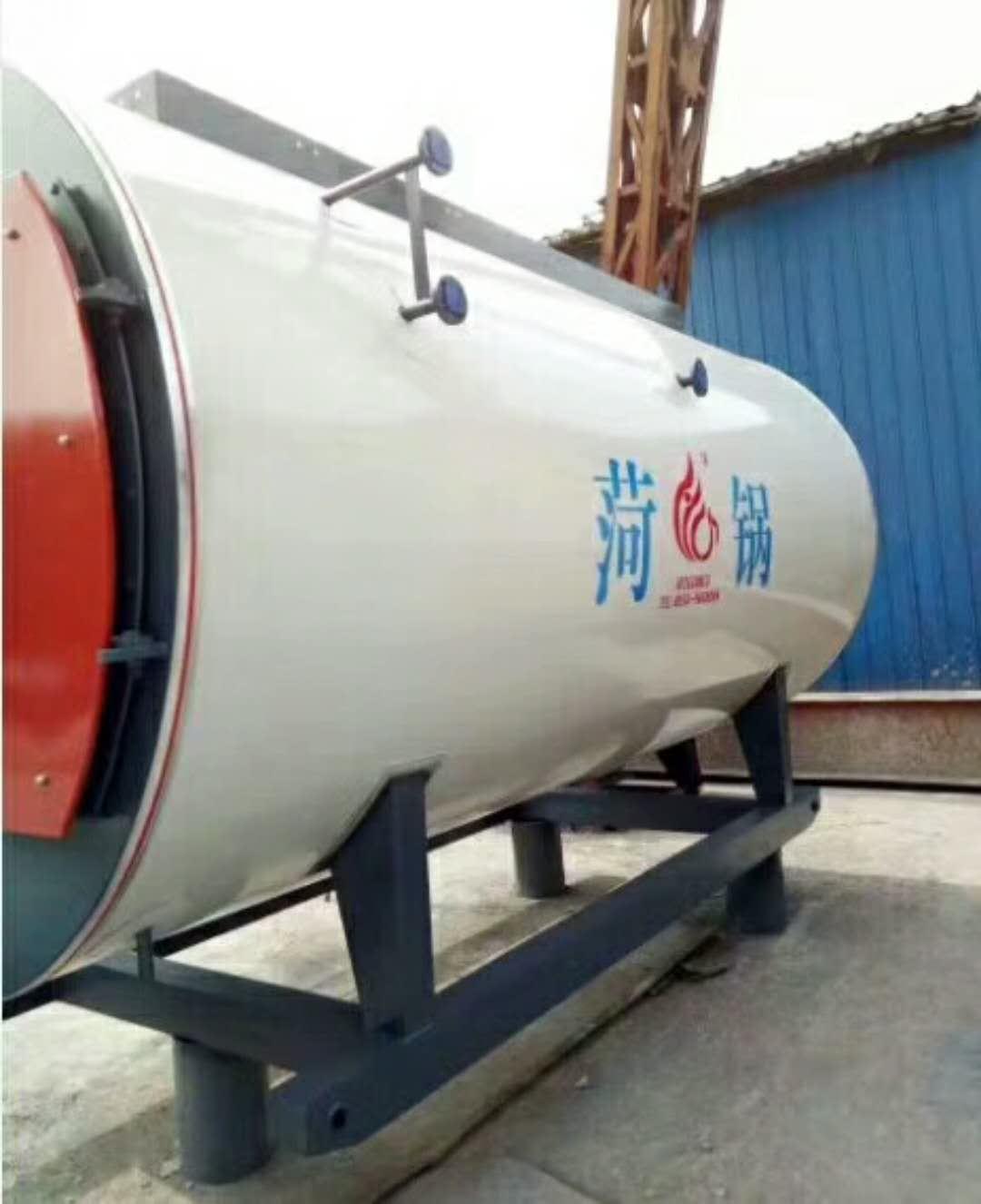
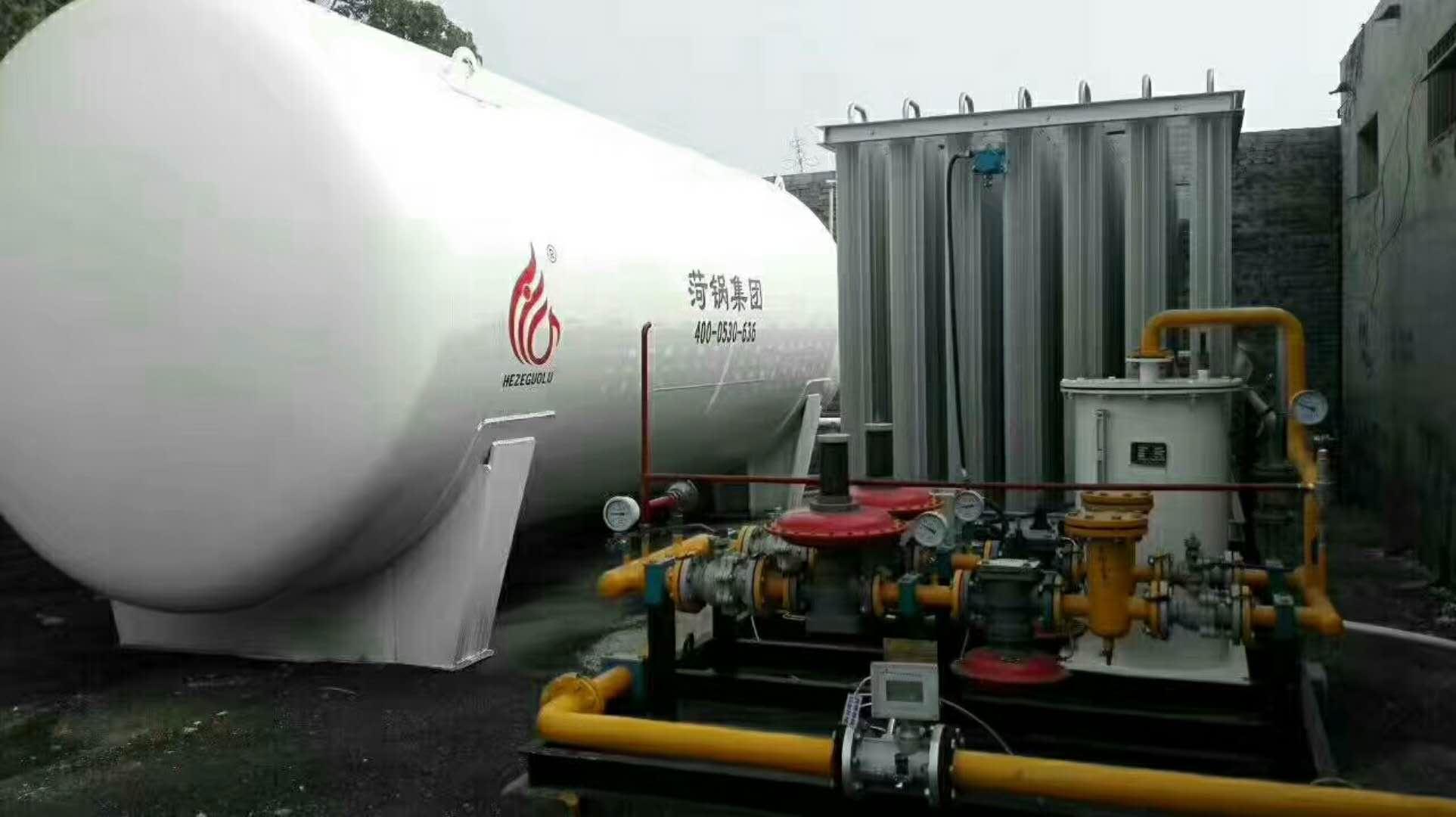


















LNG Storage Tank
LNG stands for Liquefied Natural Gas. Its primary component is methane. LNG is colorless, odorless, non-toxic, and non-corrosive. Its volume is approximately 1/600th that of an equivalent volume of gaseous natural gas, and its weight is about 45% of the same volume of water. The calorific value is around 52 MMBtu per ton (1 MMBtu = 2.52×10^8 calories).
Model:
CFL-5/0.8,CFL-10/0.8,CFL-15/0.8,CFL-20/0.8,CFL-30/0.8,CFL-50/0.8,CFL-60/0.8,CFL-100/0.8,CFL-150/0.8...
CFW-5/0.8,CFW-10/0.8,CFW-15/0.8,CFW-20/0.8,CFW-30/0.8,CFW-50/0.8,CFW-60/0.8,CFW-100/0.8,CFW-120/0.8,CFW-150/0.8…

Low-temperature storage tanks are designed and manufactured in strict accordance with national standards, widely used for the storage and use of cryogenic liquids such as liquid oxygen, liquid nitrogen, liquid argon, liquid carbon dioxide, liquid natural gas, and liquid ethylene. They come in various working pressures and specifications. Equipped with unique high-vacuum insulation technology, they offer superior insulation properties, long-lasting vacuum maintenance, and extremely low operating costs. Modular pipeline systems and high-configured components enhance the equipment's performance and durability while reducing maintenance costs, significantly boosting your competitive edge.
Introduction:
Low-temperature thermal insulation tanks are of the vacuum powder insulation type, consisting of a double container structure with an inner container and an outer container, which can be divided into vertical and horizontal types. The inner container, selected based on the medium it contains, is made of Austenitic stainless steel, specifically S30408. The outer container material varies depending on the user's location and is typically Q345R. The space between the inner and outer containers is filled with insulating material, Pearlite sand, and then evacuated to create a vacuum.
Usage:
Storage of Liquid Oxygen (LO2), Liquid Nitrogen (LN2), Liquid Argon (LAr), Liquefied Natural Gas (LNG), Liquid Carbon Dioxide (LCO2)
Insulation Performance:
Insulation materials are filled with pearlescent sand under heat conditions and then evacuated. The standard vacuum degree after the sandwich is sealed is:
Seal Vacuum Gauge
Design Parameters:
Design Pressure: 0.84 Mpa, 1.32 Mpa, 1.68 Mpa
Operating Pressure: 0.8 MPa, 1.2 MPa, 1.6 MPa
Design Temperature: -196℃
Operating Temperature: -196℃
Effective Volume: 2.5m³, 3.5m³, 5m³, 10m³, 15m³, 20m³, 30m³, 50m³, 60m³, 100m³
Definition:
LNG stands for Liquefied Natural Gas.
The primary component is methane. LNG is colorless, odorless, non-toxic, and non-corrosive, with a volume approximately 1/600th of equivalent gaseous natural gas. Its weight is about 45% of the same volume of water, and its calorific value is around 52 MMBtu/t (1 MMBtu = 2.52×10^8 cal).
Formed:
The natural gas produced from the gas field is first purified and treated, then liquefied under super-low temperature (-162℃) and atmospheric pressure to form liquefied natural gas.
The critical temperature of LNG between gas and liquid phases at atmospheric pressure is -162℃.
The standard commonly used in LNG production is API 620 of the American Petroleum Institute.
Meaning:
Liquefied Natural Gas (LNG) storage tanks are specialized products designed for storing liquefied natural gas, a type of special equipment.TwoCategory pressure vessel, 06Ni9DR material, fully inspected for defects, passed hydrostatic and pneumatic testing, inspected on-site by the Technical Supervision Bureau, issued pressure vessel inspection certificate, and completed with external rust removal and painting processes. The liquefied gas storage tank undergoes strict quality assessment for the material, dimensions, weld quality, operational quality, installation quality, internal equipment, and safety accessories of the pressure-bearing components.
Routine physical and chemical tests of the drum material, such as mechanical properties and chemical composition.
The welding joints, welds, tank end caps, and the mutual geometric positions of all pressure elements are rigorously inspected through X-ray non-destructive testing and magnetic particle inspection. Tests are conducted on the product's sealing, pressure resistance, and all technical indicators that could affect the safe operation of the product.
1. Natural Gas Storage Tank LNG Storage System: The LNG storage system consists of low-temperature storage tanks, auxiliary pipelines, and control instruments.
2. By capacity classification:
Small natural gas storage tanks, 5-50 cubic meters, commonly used in residential gas liquefaction stations, LNG refueling stations, etc.
Medium-sized natural gas storage tanks, 50-100 cubic meters, commonly used in satellite liquefaction units, industrial gas vaporization stations, etc.
3. Natural gas storage tanks, LNG pipelines typically use austenitic stainless steel pipes. Austenitic stainless steel pipes exhibit excellent low-temperature properties.
4. Vertical natural gas storage tanks (LNG tanks) featuring vacuum powder insulation technology. The inner cylinder and pipeline materials are made of OCr18Ni Austenitic stainless steel, while the outer cylinder is constructed with high-quality carbon steel Q345R pressure vessel steel plate. Our company offers a variety of sizes ranging from 50 to 100 cubic meters for liquefied natural gas storage tanks.
5. Applications of Natural Gas Storage Tanks: Chemical fuel, residential fuel, automotive fuel, co-generation, heat pumps, fuel cells, etc.
6. Natural Gas Storage Tank Liquefaction Process: Cascade Liquefaction Process, Mixed Refrigerant Liquefaction Process, Liquefaction Process with Expander.
7. The natural gas liquefaction unit consists of pre-treatment process, liquefaction process, storage system, control system, and fire protection system.
Heze Boiler FactoryLimited Company
60-cubic-meter LNG tank
Product Category: LNG Storage Tanks
LNG stands for Liquefied Natural Gas. It is primarily composed of methane. LNG is colorless, odorless, non-toxic, and non-corrosive. Its volume is approximately 1/600th of the equivalent gaseous natural gas, with a weight of about 45% of the same volume of water. Its calorific value is approximately 52 MMBtu/ton (1 MMBtu = 2.52×10^8 calories).
Model:
60 cubic meters0.8MPa
Detailed Description
【Product Name】: LNG Storage Tank
[Manufacturer:]Heze Boiler FactoryLimited Company
LNG Storage Vessel
Hekou Group
An LNG storage tank is a jacketed vacuum powder-insulated pressure vessel specifically designed for storing and supplying low-temperature liquefied gases (such as liquid nitrogen, liquid oxygen, liquid argon, liquid carbon dioxide, etc.). It has been widely used in industrial production and daily life. This article briefly discusses the basic requirements and safety usage points by analyzing the hazardous characteristics of low-temperature liquids and combining various gas supply modes for low-temperature liquid storage tanks.
1. Analysis of Low-Temperature Liquid Hazardous Characteristics
Low-temperature liquids possess hazardous characteristics such as lower boiling points, greater expansibility, stronger asphyxiating properties, and strong oxidizing properties.
1.1 Boiling Points of Low-Temperature Liquids at 101.3 KPa Pressure: Liquid nitrogen at -196°C, liquid oxygen at -183°C, and liquid argon at -186°C. Contact with the human body can cause severe frostbite to the skin and eyes. In cases of minor leaks or internal leakage in valves and pipes, the low-temperature liquids absorb heat from the surrounding environment, causing rapid condensation and frost formation at the leak point, which may lead to freezing in severe cases.
1.2 Low-temperature liquids absorb energy from the surrounding environment due to high heat or large leaks, causing their volume to expand rapidly as they vaporize. At 0°C and a pressure of 101.3 KPa, the volume of gases produced from 1L of low-temperature liquids upon vaporization is: nitrogen at 674L, oxygen at 800L, and argon at 780L. Inside sealed containers or pipelines, the increase in internal pressure due to the vaporization of low-temperature liquids can easily lead to overpressure explosions.
1.3 In the surrounding environment of low-temperature liquid storage tanks, the leaked low-temperature liquid can easily vaporize and form a rich gas area. If the concentrations of nitrogen, argon, or carbon dioxide are high, asphyxiation injuries can occur easily. Additionally, oxygen-rich injuries can also occur when the oxygen concentration is high.
1.4 Oxygen is a powerful oxidizer with extremely strong oxidizing properties. Liquid oxygen, when in close proximity to combustible materials, is highly flammable upon contact with an open flame; contact with combustible materials can easily lead to detonation due to vibrations or impacts; mixing with combustible materials poses a potential explosion hazard. Liquid oxygen can adhere to clothing fibers and ignite easily upon contact with a heat source, posing a risk to personal safety.
2. Low-temperature Liquid Storage Tank Gas Supply Mode and Basic Requirements
According to different usage scenarios and user requirements, the gas supply modes for low-temperature liquid storage tanks are primarily...
We offer services such as high-pressure cylinder refilling, low-temperature insulated cylinder partitioning, centralized gas supply through pipelines, and supply of low-temperature liquid via spray irrigation.
LNG60 cubic meters @ 0.8 MPa parameter value:
60-cubic-meter LNG storage tank
Formed:
The natural gas produced from the gas field is first purified and then liquefied under super-low temperature (-162℃) and atmospheric pressure to form liquefied natural gas.
The critical temperature of LNG between gas and liquid phases under atmospheric pressure is -162℃.
The standard commonly used in LNG manufacturing is API 620 of the American Petroleum Institute.
LNG Storage Vessel
Supplying gas for high-pressure cylinders, utilizing low-temperature liquid storage tanks as the gas source, suitable for a wide range of applications.
Individual scattered gas users' requirements are generally implemented by professional production and filling units in a standardized manner. According to the current national administrative licensing requirements, filling units must hold a designated production (storage) approval for hazardous chemicals, an安全生产 license, and a gas cylinder filling license, collectively known as "one document and two licenses," before they can proceed with high-pressure gas cylinder filling. At the liquid outlet of low-temperature liquid storage tanks, low-temperature liquid pumps and high-pressure gasifiers are installed, and the high-pressure filling system is used to fill high-pressure gases into specialized gas cylinders. In the gas cylinder filling process, it is mandatory to set up an automatic shutdown protection system for pipeline low temperatures and overpressure. If there is still low-temperature liquid at the gasifier outlet or the pipeline pressure exceeds the cylinder's high working pressure, the low-temperature liquid pump should automatically shut down, and the low-temperature liquid storage tank should cease gas supply to prevent the direct filling of low-temperature liquid into the cylinder or overpressurization during filling that could cause an explosion.
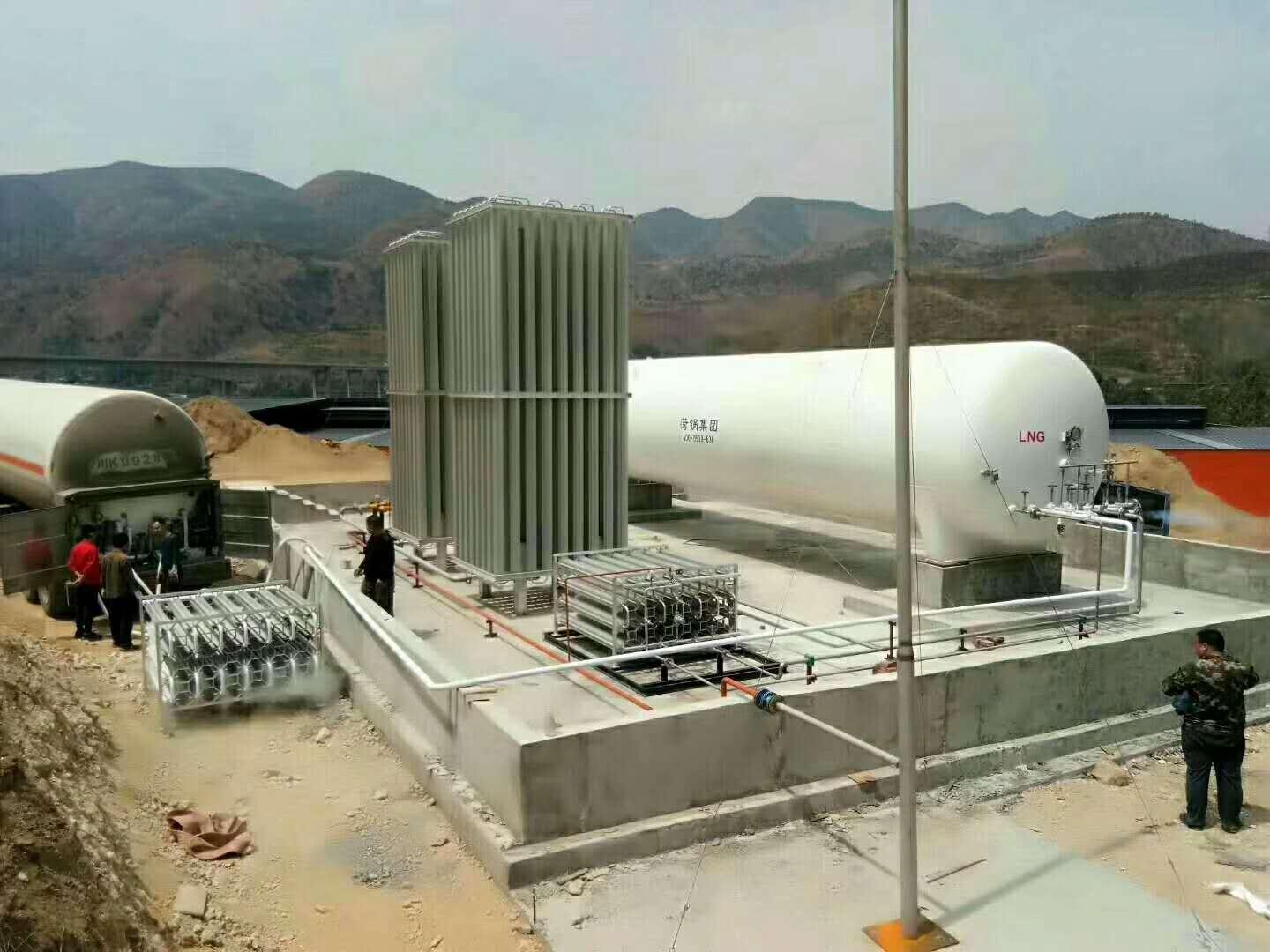


知名LNG储罐生产-专业制造LNG储罐定制-专业生产LNG储罐销售价格-知名LNG储罐出售



















