


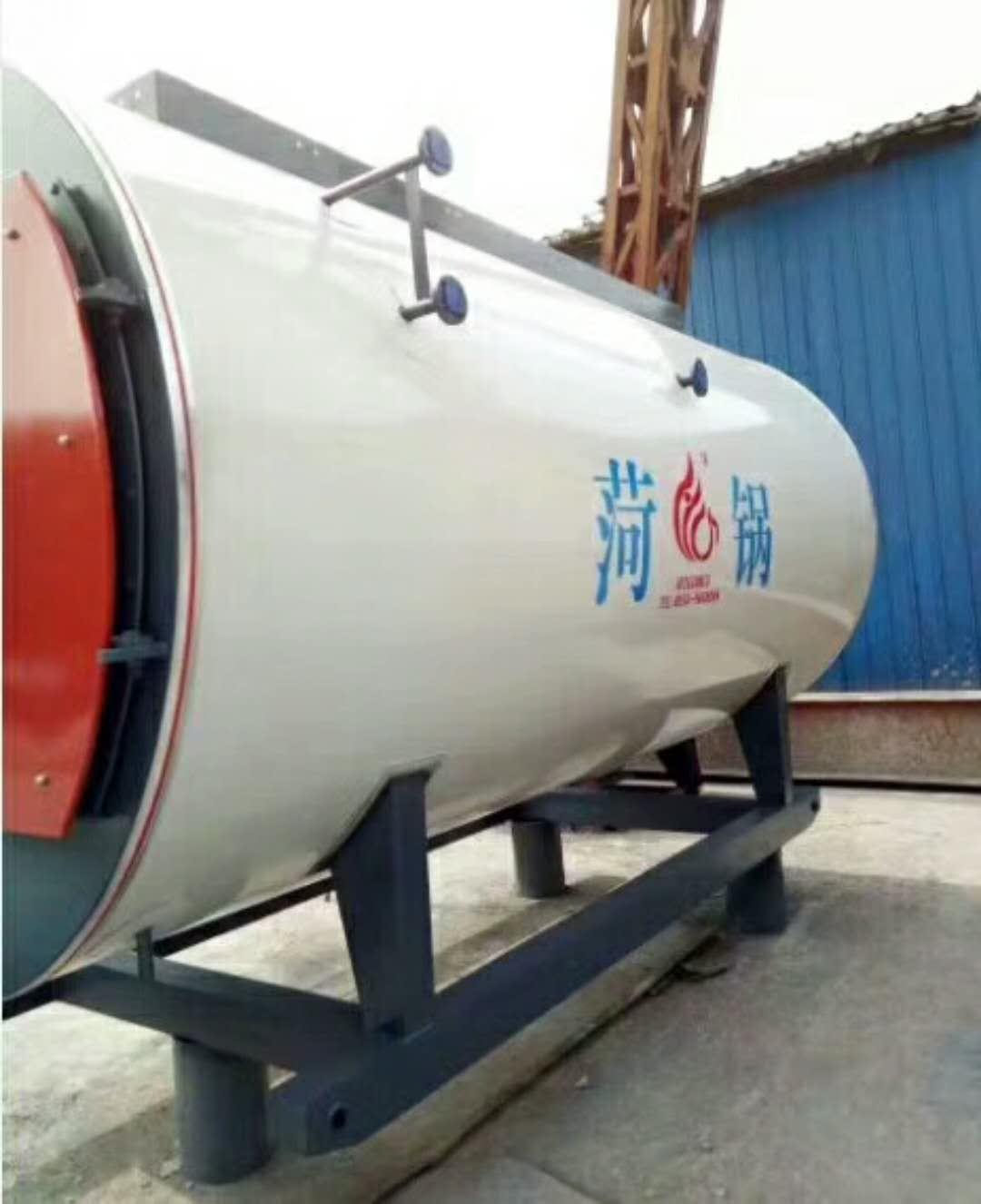

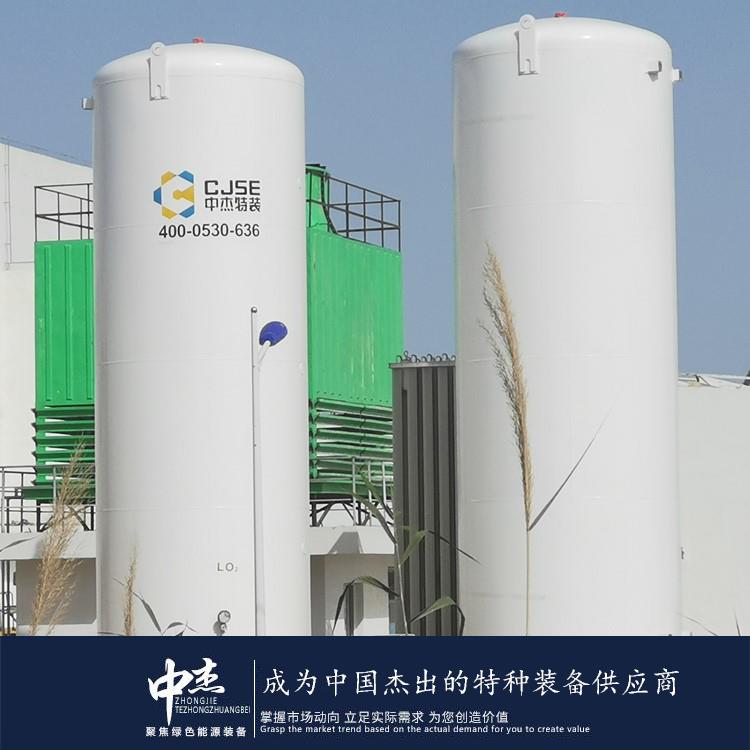
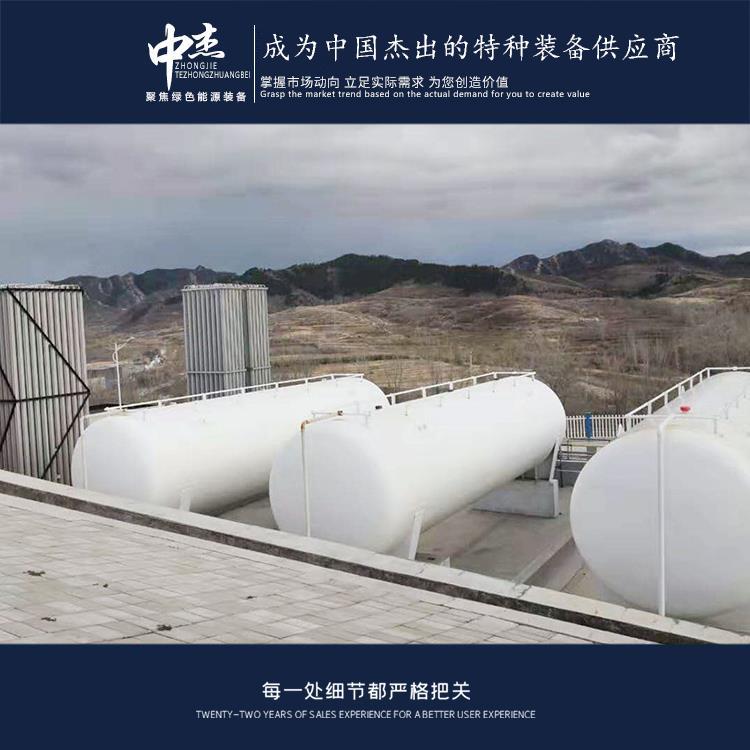


















Shandong Zhongjie Special Equipment (formerly Heze Boiler Factory Co., Ltd.) holds an A-grade boiler manufacturing license, an A2-grade pressure vessel manufacturing license, an A2-grade pressure vessel design license, a B-grade boiler installation license, and GB2/Class and GC2/Class pressure pipeline installation licenses, as well as a mechanical and electrical equipment installation contracting qualification. It is a member of the China Boiler and Water Treatment Association, the China Chemical Equipment Association, and the council member of the Shandong Equipment Manufacturing Association. The company has also passed the ISO9001 Quality Management System, ISO14001 Environmental Management System, OHSAS18001 Occupational Health and Safety Management System certifications, and the American ASME/U2 certification.
Carbon dioxide storage tanks, differing in design and application, can be categorized into the following types and structures:
- Vertical Tanks: Commonly used carbon dioxide storage tanks, with a cylindrical shape and vertical placement. These tanks typically have a large capacity and are used for large-scale storage and supply.
- Horizontal Tanks: Another common type of carbon dioxide storage tank, with a rectangular or cylindrical shape and horizontal placement. Suitable for smaller-scale storage and supply, they are ideal for limited spaces.
- Spherical Tanks: A specialized type of carbon dioxide storage tank with a spherical shape. Known for their high strength and pressure-bearing capacity, they are used for high-pressure storage and transportation.
- Vertical Tanks: Smaller capacity carbon dioxide storage tanks with a cylindrical shape and vertical placement. Typically used for small-scale storage and supply, such as for commercial and residential use.
- Underground Tanks: A unique structure where the carbon dioxide storage tank is buried underground. They save space, minimize visual impact, and provide safety and environmental protection.
These tanks are usually made of pressure-resistant materials (like carbon steel or stainless steel) with certain thermal insulation properties and accessories such as safety valves, pressure gauges, and level indicators. The interior often features baffles or partitions to separate different liquids or gases. Additionally, they are equipped with safety systems like pressure maintenance systems, leak detection systems, and fire detection systems.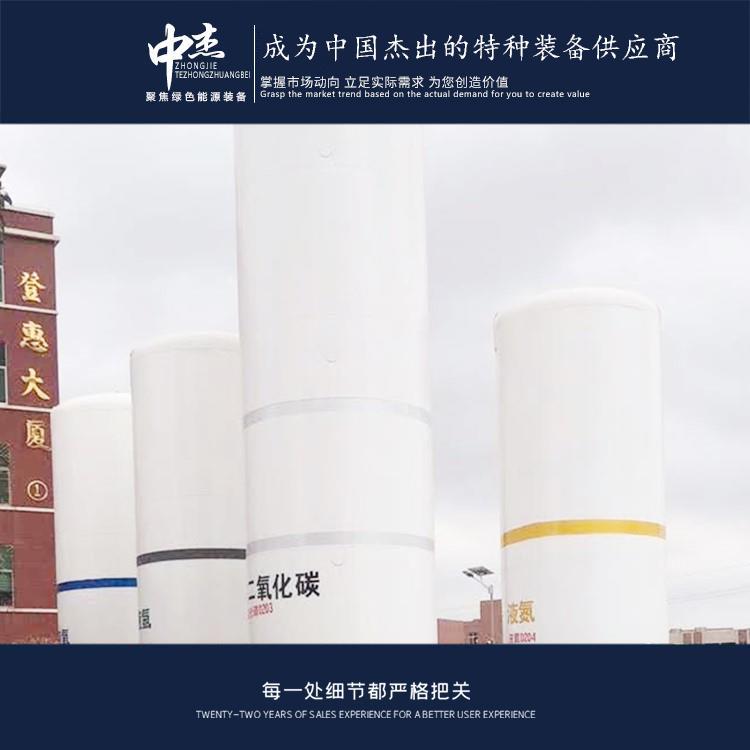
Here are some common protection techniques for carbon dioxide storage tanks:
- Fire and Explosion Prevention Measures: A fire-resistant buffer zone should be established around the tank, keeping it away from fire sources and flammable materials. The tank itself should adopt fire and explosion prevention measures, such as fire-resistant coatings and explosion-proof devices, to prevent fires and explosions.
- Leak Detection and Alarm System: The tank should be equipped with a leak detection and alarm system to promptly detect and alert of any leaks. Regularly inspect and maintain the leak detection equipment to ensure proper functioning.
- Regular Inspections and Maintenance: Regularly check the tank's appearance, valves, fittings, etc., to ensure they are undamaged. Conduct regular leak detection and pressure tests to ensure the tank's safety performance meets requirements.
- Emission Treatment: Treat the exhaust gases produced by the carbon dioxide storage tank to prevent environmental pollution. Implement appropriate emission treatment measures, such as collecting and treating the exhaust gases.
- Static Electricity Protection: Take static electricity protection measures to avoid static accumulation and discharge. Use anti-static equipment and tools to ensure static safety during operations.
- Safety Training and Awareness: Train operators on safety procedures to enhance their awareness and ability to handle carbon dioxide storage tanks safely. Regularly conduct safety training and drills to respond to emergencies.
- Management Records and Documentation: Establish comprehensive management records and documentation, including the tank's usage, inspection, and maintenance records. Regularly review and update management records to ensure safe management and maintenance of the tank.
Note that these are common protection techniques, and specific methods may vary depending on the type of tank and application. When using carbon dioxide storage tanks, operate according to relevant regulations and standards, and consult experts to ensure safety and effectiveness.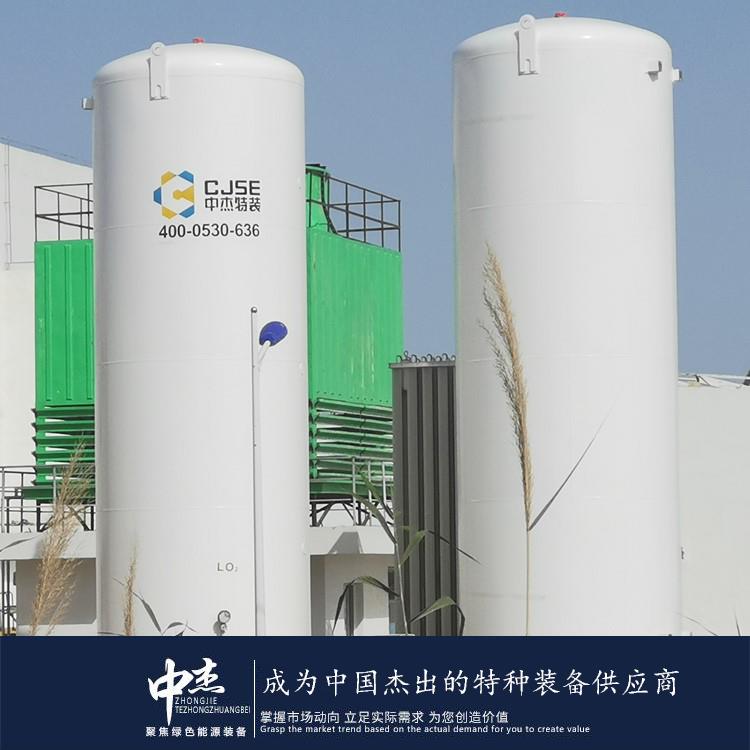
The automatic maintenance system for CO2 storage tanks typically includes the following main components:
- Pressure Maintenance System: Monitors and regulates the internal pressure of the tank to ensure CO2 is maintained within a safe and stable pressure range. This system includes pressure sensors, control systems, pressure regulating valves, and pressure reserve devices.
- Temperature Control System: Monitors and regulates the internal temperature of the tank to keep CO2 within an appropriate temperature range. The system includes temperature sensors, control systems, and temperature regulation devices.
- Level Monitoring System: Measures and monitors the liquid level inside the tank to ensure CO2 levels remain within a safe range. This system can utilize float level gauges, pressure level gauges, ultrasonic level gauges, etc.
- Leak Detection System: Monitors leaks in the tank and pipeline systems, detecting and alerting to leaks promptly. The system can employ gas sensors, liquid sensors, and leak detectors.
- Fire Detection and Extinguishing System: Monitors fire conditions in the tank area and takes appropriate fire-fighting measures. The system includes fire detectors, alarms, and fire-fighting equipment.
- Remote Monitoring and Control System: Monitors and controls the operational status and parameters of the tank remotely, enabling remote operation and management. The system can connect via the network to provide real-time data and remote control functions.
The above are the main components of a typical automatic maintenance system for CO2 storage tanks. The specific configuration and functions can be customized according to the tank's design requirements and application scenarios. These automatic maintenance systems enhance the tank's safety, stability, and reliability, reducing the need for manual intervention and operational risks.
When using CO2 storage tanks, the following safety procedures must be adhered to ensure safety:
Tank Operator Training: All operators must undergo training to understand the characteristics, operational requirements, and safety measures of CO2 storage tanks. Training should include safe tank operation, leak handling, emergency response plans, etc.
Safety Operating Procedures: Establish and follow relevant safety operating procedures, including tank startup, shutdown, inspection, and maintenance. Operators should operate in accordance with the procedures to ensure safe tank operation.
Leak Handling: Develop a leak handling program, including leak detection, emergency shutdown, and isolation of the leak source. Operators should be familiar with the leak handling procedures and able to respond quickly and correctly to leak incidents.
Fire Prevention Measures: CO2 is flammable; therefore, fire prevention measures must be observed when in use. Smoking, open flame operations, or placing flammable materials near the tank are prohibited. Ensure that fire protection equipment around the tank is in good working order and conduct regular fire drills.
Waste Emission: Properly discharge waste gases produced during the use of CO2 storage tanks to avoid CO2 buildup in enclosed spaces, which can lead to asphyxiation and safety risks. Ensure that the waste emission system is unobstructed and functioning properly.
Regular Inspection and Maintenance: Conduct regular inspections of the tank's exterior, seals, valves, and pipe connections. If any anomalies or damage are found, repairs or replacements should be made promptly. Also, regularly inspect and maintain the tank's safety valves, pressure sensors, and other accessories.
Emergency Response Plans: Develop and implement emergency response plans, including procedures for handling leak incidents, evacuation, and first aid measures. Operators should be familiar with the emergency response plans and conduct drills regularly.
Monitoring and Alarm Systems: Install and maintain monitoring and alarm systems for the tank.
Our company attaches great importance to technological innovation and research and development. We have one municipal-level enterprise technology center in Heze City, equipped with testing facilities for non-destructive testing, physical and chemical testing, welding testing, hydrostatic testing, etc. We possess over 600 types of equipment, including CNC machine tools, X-ray flaw detectors, digital ultrasonic flaw detectors, mechanical property testing machines, chemical analyzers, spectrometers, tensile testing machines, plasma welding machines, and more. The key products and technologies we have developed, such as temperature and pressure vessel welding, biomass boiler emission reduction, and waste heat utilization, have successively been selected for multiple Shandong Provincial Department of Industry and Information Technology science and technology innovation projects, Shandong Provincial key projects, and Heze City innovative excellence projects. We have累计 obtained 27 authorized utility model patents, 16 authorized invention patents, participated in drafting 2 standards, 2 industry standards, and registered 15 trademarks. The technical team of our company, in collaboration with Professor Li Yajiang of Shandong University, has developed deep cryogenic container processing technology, which utilizes the international plasma arc + wire filling argon arc welding (PAW-GTAW) technology. After being appraised as a provincial-level scientific and technological achievement, the technology has reached an international level in the field of deep cryogenic container manufacturing. Choose Zhongjietech, let's create brilliance together!
WeChat Official Account

Scan to follow Official Account



















