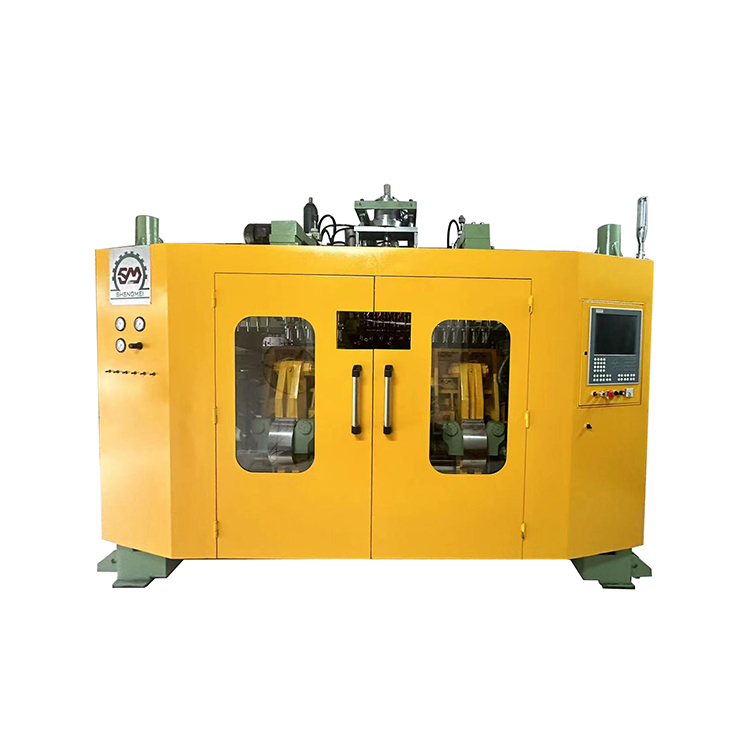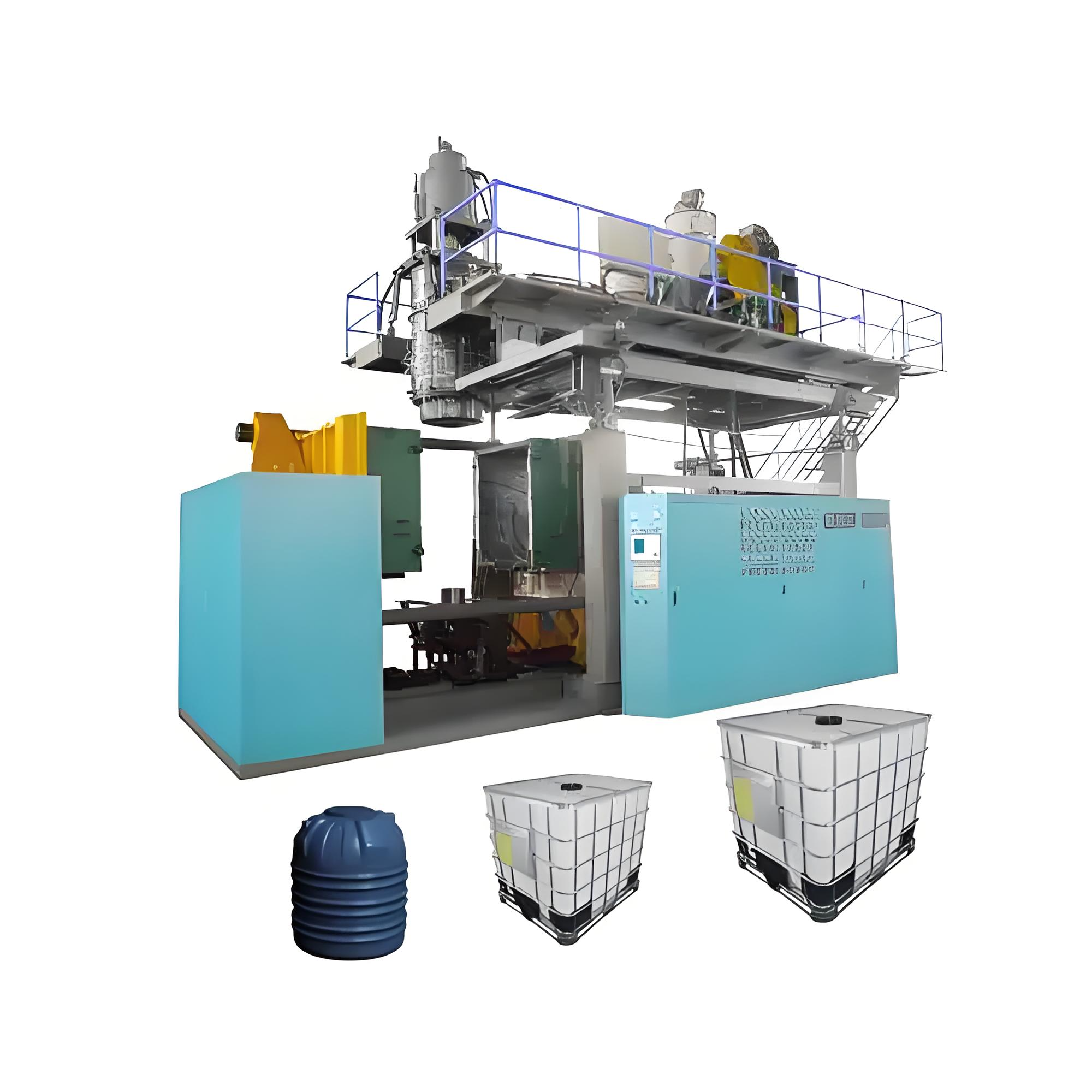


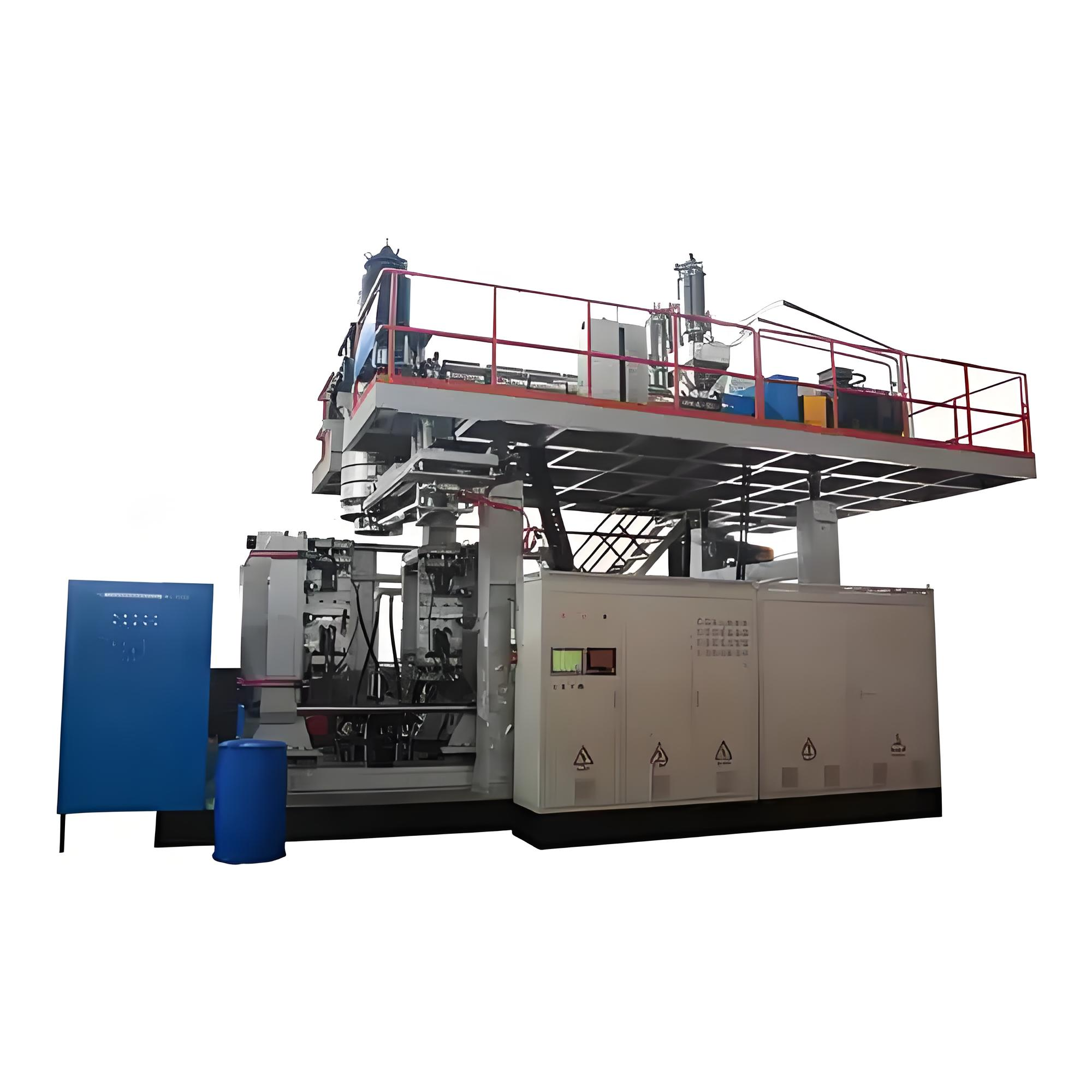
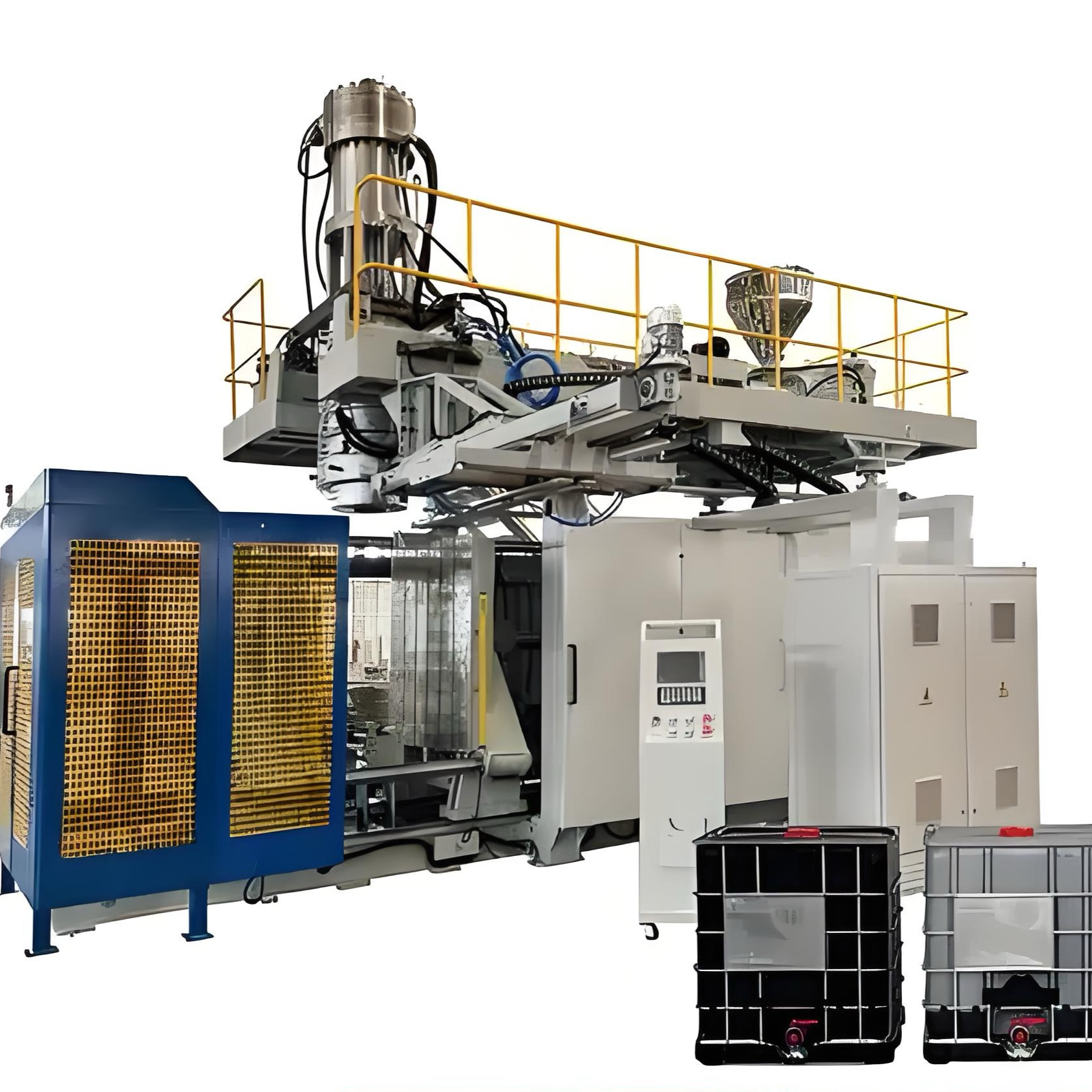





Blow-molded IBC drums (Intermediate Bulk Containers) are widely used packaging containers in industries such as chemicals, food, and pharmaceuticals, featuring large capacity, high strength, ease of transportation, and storage. The following is a detailed introduction:
---
### **1. Basic Structure and Material**
- **Material**: Typically made of high-density polyethylene (HDPE), resistant to corrosion and impact, with some products enhanced with UV stabilizers to resist ultraviolet rays.
- **Structure**:
- **Inner Liner**: Blown molding, seamless design, leak-proof.
- **Exterior Frame**: Metal (such as galvanized steel) or plastic mesh, providing support and stackability.
- **Base**: Tray design for easy forklift handling.
- **Accessories**: Inlet ports, drain valves, vent caps, etc., some are compliant with food/pharmaceutical grade standards.
---
### **2. Key Features**
- **High Capacity**: Standard sizes include 500L, 1000L, 1200L, etc., bridging the gap between traditional drums and large storage tanks.
- **Lightweight and Durable**: Significantly lighter than metal drums, HDPE resists acids, alkalis, and organic solvents.
- **Stackable Design**: Empty drums can be nested and stacked, saving storage space.
- **Reusable**: Can be used multiple times, reducing packaging costs.
- **Meets Standards**: Certified by UN (hazardous goods packaging), FDA (food contact), GMP (drugs), etc.
---
### **3. Typical Application Fields**
Chemical Industry
- Load liquids such as acids, alkalis, solvents, paints, inks, etc.
- Hazardous material transportation must comply with UN standards.
- Food & Beverage
- Edible oils, syrups, food additives, etc., require food-grade HDPE material.
- **Pharmaceuticals & Cosmetics**
- Raw materials, glycerin, fragrances, etc., must be sterile and clean.
Agriculture
- Storage and transportation of pesticides, fertilizers, and vegetable oils.
Environmental Protection Industry
- Temporary storage for waste liquids and wastewater.
---
### **4. Comparative Advantages (vs. Traditional Packaging)**
| **Comparison Item** | **Blow Molding IBC Drums** | **Traditional Steel/Plastic Drums** |
|------------------|--------------------------------|-----------------------------|
| Capacity | 500-1200L | Typically ≤200L |
| Handling Efficiency | Forklift operation, large volume per trip | Manual handling predominant |
Space Utilization | Stackable, Low storage costs | Limited stacking capability
Durability | Corrosion-resistant, long lifespan | Steel drums are prone to rust, plastic drums are prone to deformation
| Cost | High initial cost, but more economical in the long run | Low per-unit cost, but poor repeatability |
---
### **5. Usage Precautions**
- Clean Maintenance: Thorough cleaning is required after containing food or pharmaceutical raw materials to prevent cross-contamination.
- **Temperature Range**: HDPE typically withstands -40℃ to 60℃, avoid exposure to high temperatures or freezing.
- **Transportation Fixed**: Must be secured with straps to prevent tipping.
- **Regular Inspections**: Discontinue use if signs of aging, cracks, or frame deformation are observed.
---
### **6. Market Trends**
- **Greening**: Increased proportion of recyclable materials, in compliance with the requirements of the circular economy.
- **Intelligent**: Equipped with RFID tags or sensors for tracking the status of contents.
Customized: Develop dedicated models for specific industry needs (such as anti-static, anti-bacterial).
---
### **Summary**
Blow-molded IBC drums have become the mainstream choice for bulk liquid packaging in modern industry due to their efficiency, safety, and economy. Users should select materials, capacities, and certification standards based on actual needs and operate them properly to extend their lifespan.