




Introduction
Nanomaterial science and engineering has become a global research hotspot. When studying the surface modification of nanomaterials, the concept of contact angle often comes into play. The contact angle refers to the angle formed by the two tangents to the gas-liquid interface and the solid-liquid interface at the three-phase boundary of solid-liquid-gas on a horizontal solid surface, where a droplet of liquid is placed, enclosing the liquid phase in between.
Surface energy is a measure of the energy required to disrupt intermolecular chemical bonds during the creation of a material's surface. In solid-state physics, surface atoms have more energy than those within the material, causing them to spontaneously tend towards the interior rather than the surface. Another definition of surface energy is the excess energy of a material's surface compared to its interior.
The force of attraction between any two adjacent parts of a liquid surface, perpendicular to their unit length boundary. The formation of surface tension is closely related to the special state of stress experienced by the molecules within the thin layer of the liquid surface. The existence of surface tension gives rise to a series of special phenomena observable in everyday life.
Section II: Instrument Application Fields
TFT-LCD Panel Industry: Measurement of glass panel cleanliness and coating quality; measurement of TFT printed circuit, color filter film, ITO conductor film, and other pre-coating quality
Surface cleanliness and adhesion quality measurement for printing and plastic industries; ink adhesion measurement; adhesive colloidal property compatibility measurement; dye tightness
Semiconductor Industry: Wafer cleanliness measurement; HMDS processing control; CMP research measurement, photoresist and developer research
S Research on chemical materials: exploration of waterproof and hydrophilic material properties; surface tension and wetting of surfactants and detergents; measurement of viscosity enhancement and adhesion surface energy
IC Package: Matrix Surface Cleanliness; Atomic Composition Oxide Identification; BGA Soldering Surface; Adhesion Measurement of Epoxy Resin
III. Instrument Introduction
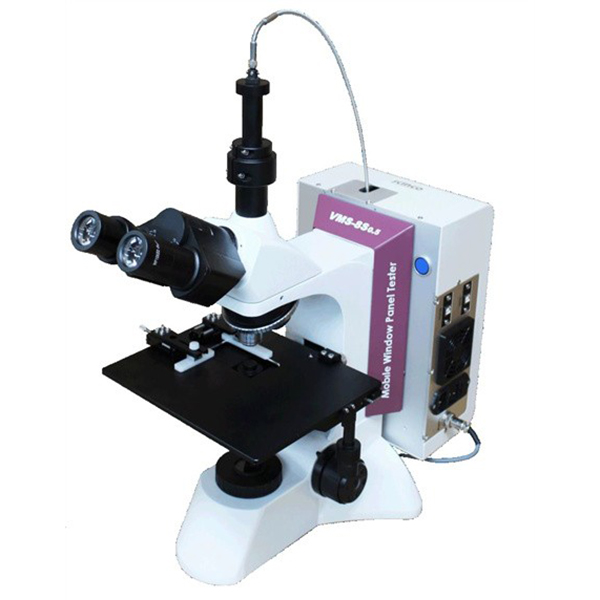
This instrument is manufactured using modern technology, featuring an advanced dedicated CCD digital camera, paired with a high-resolution zoom microscope and a high-brightness LED background lighting system. It is equipped with a three-dimensional sample stage that allows for movement in up, down, left, and right directions. It achieves precise micro-sample insertion and vertical and horizontal movements. Additionally, an extendable rod structure worktable is designed to accommodate increased material thicknesses for different users. The instrument frame can be adjusted in size to fit various sample sizes, expanding the instrument's application range. The software includes a correction function, allowing multiple test results to be saved under the same report, facilitating better material data management for users. The instrument is designed to be aesthetically pleasing, easy to operate, and meets user requirements. It is suitable for users in various industries who need to measure contact angles.
Section 4: Product Features
High-precision professional-grade injection system, fully computer-controlled, droplet control accuracy up to 0.1μl
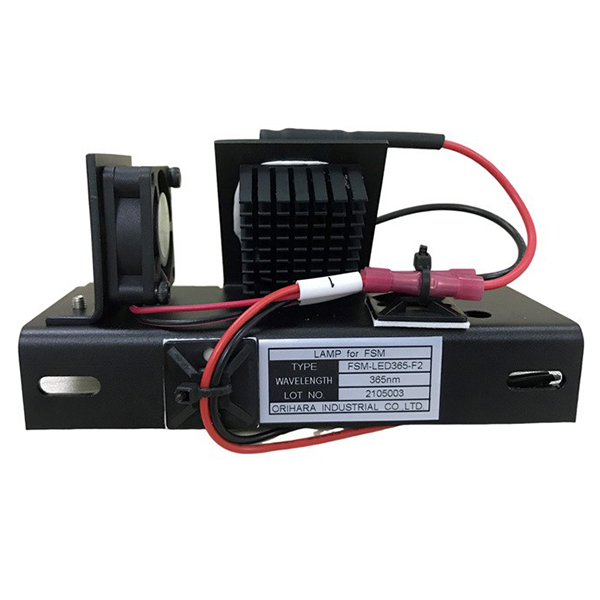
Industrial-grade adjustable LED cool light source system ( lifespan over 20,000 hours), offering clearer imaging while preventing tiny droplets from evaporating due to additional heat.
S features a high-performance, genuine Japanese imported industrial core, a distortion-free telecentric lens, ensuring excellent imaging quality.
S features a USB 2.0 standard interface, offering fast data transfer and high compatibility.
High-strength aerospace aluminum alloy structure, modular design concept, configurable with various common measuring accessories
Self-developed integrated circuit control for chip circuits ensures the operation of the instrument
Multiple auxiliary module selections to meet more external testing conditions
S China's first to offer German-imported contact angle calibration samples, ensuring instrument accuracy
Top-side method for optical systems, suitable for ultra-low angle measurement and hydrophobic material measurement
Multiple contact angle analysis methods, more suitable for measuring contact angles of various materials
High-speed fully automatic operation with intuitive data results reading
S Surface Contact Angle Analysis Module, simpler operation, more accurate results
Quick test data of S video, capable of continuous testing for contact angle morphology changes
One-touch software operation: [Press the spacebar] -- Open the camera; [Press the 1 key] -- Precise control of the dropper; [Press the 2 key] -- High-precision automatic measurement.
May - Instrument Parameters
Contact Angle Measurement Range: 0-1800
Contact Angle Measurement Precision: ±0.10
S Surface Tension Measurement Range: 0-1000 mN/m; Measurement Accuracy: 0.01 mN/m
High-Precision Automatic Droplet System: High-precision industrial micro-injection pump; Droplet accuracy: 0.1 μl
High-Precision Contact Angle Calibration Sheets: Imported from Germany, Contact Angle Calibration Standards in 3°, 5°, 8°, 60°, 90°, 120°, 115°
Contact Angle Professional Measurement Method
sessile drop
S Pendant Drop Method
S Lamella Method
S Captive Bubble Method
S Wrapped Fiber Method (wetted fiber)
S fiber seat drop method (sessle fiber drop)