



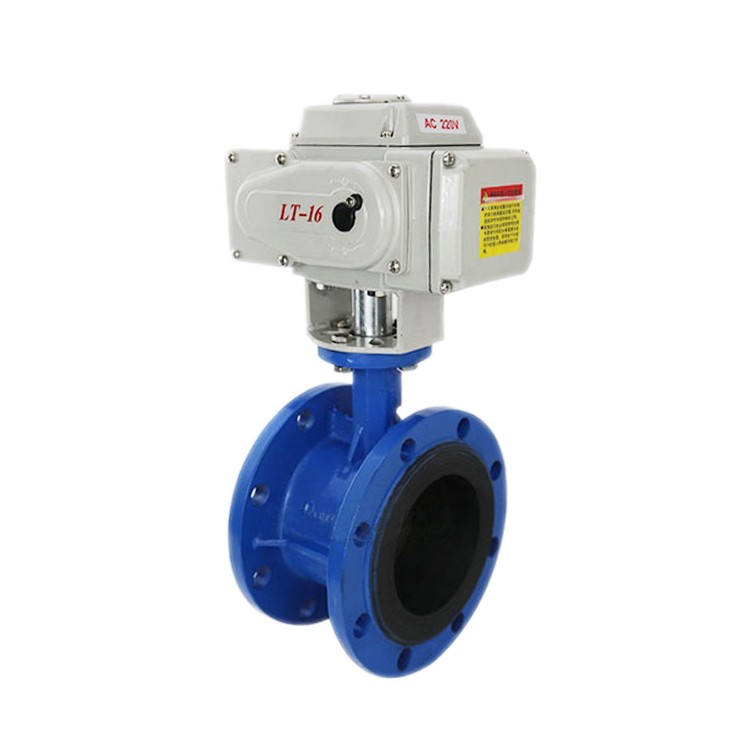














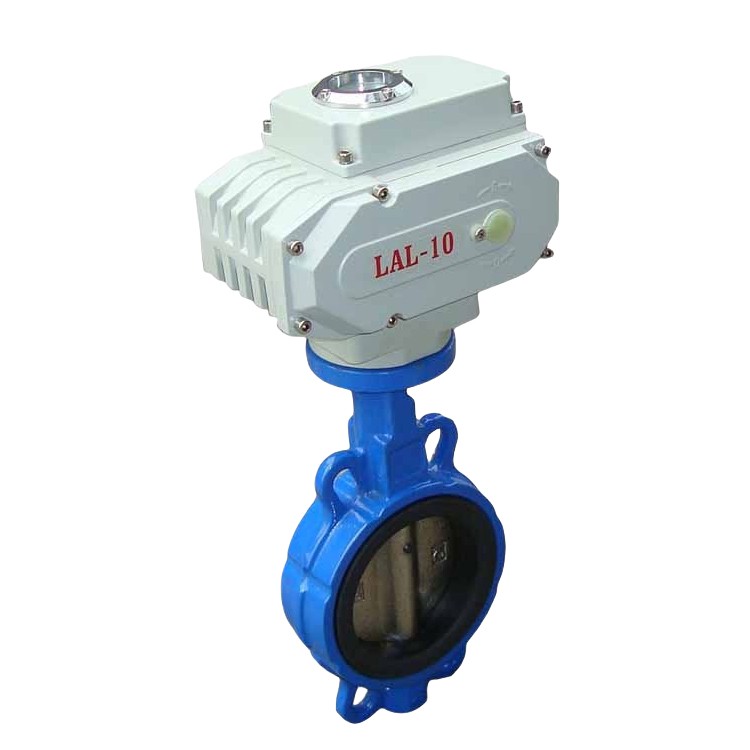
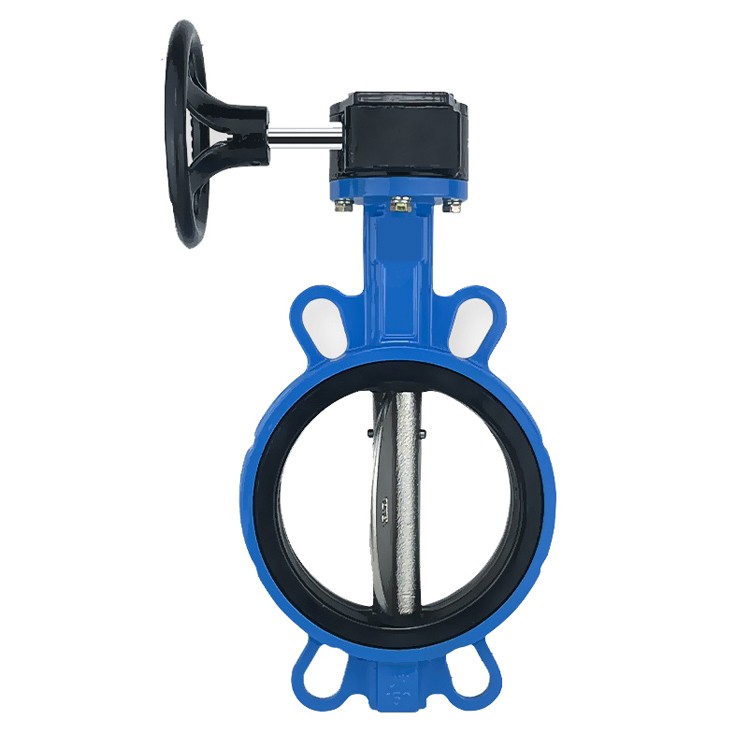

Electrical flanged butterfly valves are devices used for controlling fluid flow and are widely applied in industries such as oil, gas, petrochemicals, and water treatment. They consist of an angular motion electric actuator and the butterfly valve body, mechanically connected for simplicity, compactness, and light weight. They are easy to operate and offer excellent fluid control characteristics.
Working Principle
Electromagnetic butterfly valves operate by rotating the butterfly plate through an electric actuator (such as an angular position actuator) to control the opening, closing, and adjustment of the fluid passage. The butterfly plate rotates from 0° to 90° around its axis, with full opening at 90° and full closing at 0°. This design allows for simple control of fluid flow.
Structural Features
Electrical flanged butterfly valves typically consist of an angular actuator and the butterfly valve body. The angular actuator provides the power to rotate the butterfly plate around its axis, enabling the valve's opening, closing, and regulating functions. The structure is simple with fewer parts, making it easy to install and dismantle. Additionally, it is compact and lightweight, convenient for transport and installation.
Application Scenarios
Electrical flanged butterfly valves are suitable for temperatures not exceeding 400°C and are widely used in various industries such as oil, chemical, power, environmental protection, water conservancy, heating, and water supply and drainage. They can control a variety of fluids, including water, oil, steam, and gases.

















