








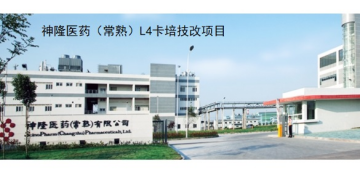

Petroleum chemical engineering supervision and acceptance is a critical phase ensuring project safety, quality, and compliance. It involves comprehensive supervision and systematic inspections throughout the process to ensure the project meets design standards and industry regulations. The supervision and acceptance work spans the entire lifecycle of the project, with key focus areas including:
Pre-construction Supervision Preparation Phase
Thoroughly review design documents, construction plans, and contractor qualifications. Verify the quality certificates of equipment and materials, ensuring compliance with standards such as GB50184 "Construction Quality Acceptance Code for Petroleum and Chemical Industry Metal Pipelines." For special processes, organize a special argumentation to confirm the completeness of the HSE (Health, Safety, Environment) management system.
**II. Quality Control During Construction Process**
Monitoring key processes such as pipeline welding, equipment installation, and corrosion protection through on-site supervision, inspections, and parallel inspections. Utilizing NDT non-destructive testing to check weld quality and adhering to SH/T3543 "Technical Document Regulations for Construction Projects in the Petroleum and Chemical Industry." Paying close attention to high-risk aspects such as gas tightness tests for high-pressure equipment and electrical equipment installation in explosion-proof areas.
Section 3: Safety and Environmental Protection Special Acceptance
Based on the "Fire Prevention Design Code for Petrochemical Enterprises" (GB50160), verify the linkage test results of fire protection facilities and check the lightning protection grounding system resistance. Inspect the operation efficiency of the wastewater treatment plant and the VOCs recovery system to ensure compliance with the "Comprehensive Management Plan for Volatile Organic Compounds in the Petrochemical Industry." Review emergency response plans and exercise records, and establish a complete acceptance file for the Safety Instrumented System (SIS).
Section 4: Technical Assessment for Completion and Acceptance
The organization designs, constructs, and inspects units to perform 'Three Inspections and Four Determinations,' verifying the consistency between the project entity and the completed drawings. The system conducts single-machine trials, interlocked trials, and a 72-hour performance assessment to confirm whether the equipment's processing capacity and energy consumption meet the contracted values. Ultimately, a receipt file is established, including a quality assessment report, HSE special certificate, and completed measurement data, providing a legal basis for the project's operation.
The supervision and acceptance work must strictly comply with the "Code for Construction Project Supervision" (GB/T50319). Process records are achieved through a digital management platform, ensuring the authenticity and traceability of acceptance data, laying a foundation for the long-term safe operation of petrochemical facilities.
Petroleum & Chemical Engineering Supervision Report
Petroleum & Chemical Engineering Supervision Report
I. Project Overview
This project is an expansion of XX Petrochemical's 600,000 tons/year ethylene production, situated in XX Chemical Industrial Park, with a total investment of 2.86 billion yuan. The construction scope includes ethylene cracking units, raw material pretreatment units, and supporting storage and transportation systems. The main construction commenced in March 2023 and is scheduled for completion in September 2024. The project is executed under the EPC turnkey model, with the supervisory unit implementing comprehensive quality, safety, and progress management throughout.
II. Supervision Work Implementation
Quality Control Aspect
Conducted a total of 38 special inspections, focusing on monitoring pressure vessel welding (with a UT pass rate of 98.7%), pipeline pressure tests (up to standard), and vertical alignment of equipment installation (deviation ≤ 2‰). Utilized BIM technology to review 132 steel structure nodes, identified 5 design conflicts and coordinated resolutions.
2. Security Management
Established a three-level risk management and control system, compiled 9 chemical supervision reports, identified 9 major hazard sources. Conducted 21 special inspections for confined spaces and high-altitude work, issued 17 improvement notices, and ordered corrections twice. Achieved 298 consecutive days of safe and production without accidents, with an injury rate of 0.12 per million working hours.
3. Progress Management
Utilizing P6 software for dynamic tracking, the chemical supervision report company has completed 64.3% of the overall progress, 7 days ahead of schedule. Coordinated and resolved 3 equipment delivery delays, optimizing construction sequence to save 15 days of time.
III. Issues and Solutions
Two non-melted defects were found in the furnace tube welding of the cracking furnace's radiant section; repairs have been ordered and welding parameters have been adjusted.
2. Some construction workers are not using safety ropes properly; organized 3 special training sessions.
3. Issue of missing concrete curing records; establish an electronic patrol system for full traceability.
Section 4: Focus in the Next Phase
Enhance quality control for the cold insulation layer construction of low-temperature storage tanks
2. Preparation of supervision plan for integrated commissioning of equipment linkage
3. Enhance the digital supervision archive management system
The supervisory unit will continue to fulfill its responsibilities of 'three controls, two management, and one coordination' to ensure the project is completed on schedule. The current quality of the project is under control, and the safety risk assessment is rated at the blue controllable level.
(498 words)

Petroleum and chemical supervision companies are specialized third-party engineering technical service institutions serving the petrochemical industry, primarily responsible for the supervision and management of petrochemical engineering projects throughout their entire lifecycle. As a crucial force for high-quality development in the petrochemical sector, these enterprises play a pivotal role through their standardized supervision services, compiling chemical supervision reports, ensuring project quality, controlling risks, and optimizing project benefits.
### Functions and Value Demonstration
The business scope of the petrochemical supervision company covers the entire process, including project feasibility studies, engineering design reviews, construction supervision, equipment installation and debugging, as well as final acceptance inspections. Its key focus areas include:
1. **Quality Control**: Strictly inspect raw materials, construction techniques, and equipment parameters in accordance with national petrochemical industry standards to ensure the project meets design specifications.
2. **Safety Oversight**: Establish an HSE management system, implementing dynamic monitoring over high-risk operations such as高空作业(high-altitude work), hazardous chemical storage, and pressure vessel installation.
3. **Progress Coordination**: Utilize project management software to track engineering milestones, coordinate resources among design, construction, and procurement, and mitigate risks of schedule delays.
4. **Investment Control**: Review project change orders, monitor budget execution, and prevent unreasonable expenditure.
### Industry Characteristics and Requirements
Petroleum projects feature high temperatures, high pressures, and complex processes. Supervision work requires:
- Qualifications: Possesses certification for oil and petrochemical engineering supervision as well as specialized certificates for safety evaluation.
- Technical Team: Equipped with registered chemical engineers, safety engineers, and technicians proficient in API, ASME, etc.
- Smart Supervision: Enhance supervision efficiency through BIM modeling, IoT measurement, and inspection tours
Market Trend Development
As the 'Dual Carbon' goal advances, modern petrochemical supervision is transitioning from traditional quality control towards green and intelligent directions. Leading companies are establishing engineering big data platforms to achieve real-time monitoring of carbon emissions and energy consumption, and are involved in the supervision of modular construction and the application of emerging technologies like CCUS. Industry statistics show that supervision can reduce the accident rate of petrochemical projects by over 60% and shorten the construction period by 15%-20%. Hubei's chemical supervision reports demonstrate significant economic and social benefits.
Selecting a supervisory unit with extensive experience in large projects such as refining bases and LNG receiving stations has become a crucial decision for owners to mitigate engineering risks and create top-quality projects. Such companies provide meticulous services throughout, effectively supporting the petrochemical industry's transformation and upgrading towards industrialization, intelligence, and green development.
China Construction Design (Image) - Chemical Supervision Report Writing Agency - Hubei. Chemical supervision reports in Hubei are provided by Jiangsu Zhongjian Suzhou Engineering Design Co., Ltd. The company dedicates much enthusiasm and passion to architectural drawings and model design. Zhongjian Engineering Design has always been centered around the customer, creating value for them, winning the market with quality and service, and sincerely hopes to cooperate with all sectors of society to achieve success and glory. For related business inquiries, please contact Zhou Jianming.