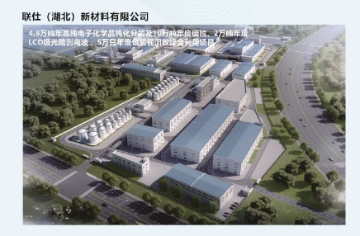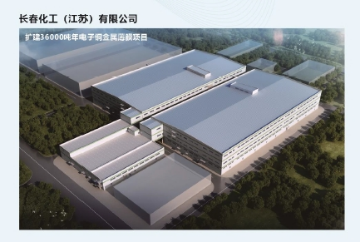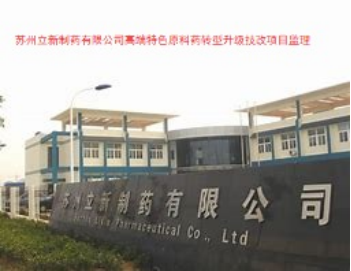

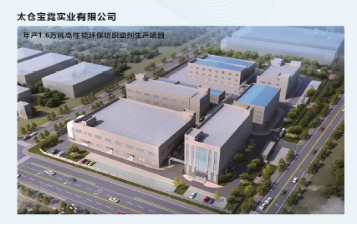



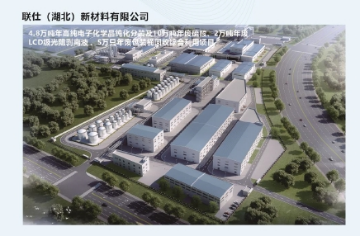
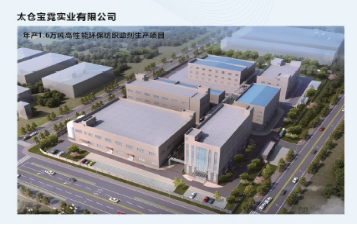
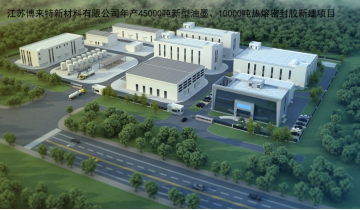





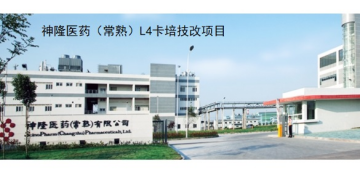

Chemical engineering supervision and acceptance is a crucial step to ensure project compliance, safety, and quality standards. Chemical engineering supervision services involve systematic reviews and on-site inspections to guarantee that construction meets design specifications, industry standards, and legal requirements. As a key supervisory party in construction projects, the supervision unit must fulfill its duties during the acceptance process. The chemical engineering supervision institution lays a reliable foundation for the project's operation.
### I. Inspection Process and Key Points
1. **Stage-by-Stage Inspection**: Divide the construction progress into stages such as foundation work acceptance, concealed work acceptance, equipment installation and commissioning acceptance, and linkage trial run acceptance. Focus on reviewing quality documents for critical processes and material inspection reports.
2. **Technical Compliance Review**: Verify the quality of welding in process pipelines, equipment tightness, explosion-proof devices, and other indicators to ensure compliance with standards such as GB50235 "Code for Construction of Industrial Metal Pipelines."
3. **Safety Special Assessment**: Focuses on inspecting lightning protection grounding systems, flammable gas alarm devices, and emergency evacuation facilities to ensure compliance with the "Regulations for Safety Supervision and Administration of Hazardous Chemical Construction Projects."
### II. Key Points of Supervision Work
1. **Full Process Tracking**: Monitor the entire process from raw materials to trial operation, establishing a traceable quality档案 library, with a focus on high-risk phases such as pressure vessel inspections and corrosion protection engineering.
2. **Digitized Acceptance**: Utilize infrared thermal imaging equipment for seal integrity checks, employ ultrasonic thickness gauges to verify pipe wall thickness, and enhance acceptance through digital means.
3. **Issue Closure Management**: Establish a 'Discover-Rectify-Review' system, requiring timely rectification and retention of image records for typical issues such as weld porosity and flange leakage.
### III. Common Questions and Solutions
Design Change Management: In cases where the on-site conditions do not match the drawings, the construction unit is required to complete the change approval procedures and conduct a new HAZOP analysis.
2. **Cross-Construction Coordination**: Organize special coordination meetings to optimize construction plans for conflicts between electrical instruments and process installations.
3. **Final Phase Project Management**: Establish a list of incomplete projects, clearly define responsible entities and deadlines, to prevent omissions that could affect overall acceptance.
The supervisory unit should maintain an objective stance, strictly control acceptance standards, and firmly demand corrections for non-compliant items. Through systematic acceptance management, effectively eliminate quality risks, and ensure the stable long-term operation of chemical facilities. A comprehensive acceptance report must be prepared, signed and confirmed by parties involved in construction, construction, and design, then archived to complete the legal acceptance procedures.
Petroleum Engineering Supervision and Acceptance

Petroleum engineering supervision and acceptance is a crucial phase ensuring the quality, safety, and compliance of the project construction, encompassing the entire process of project design, construction, and debugging. It lies in adhering to national standards, industry norms, and contract requirements, through scientific and systematic supervision and management, to ensure the project meets the expected technical specifications and operational efficiency.
**I. Basis and Process for Acceptance**
Supervision and acceptance must be based on the "Code for Acceptance of Construction Quality of Petroleum and Chemical Engineering Construction Projects" (GB50483), in conjunction with engineering design documents, technical agreements, and special plans. The process covers three stages: pre-construction review (qualification verification, material testing), process supervision (acceptance of concealed works, verification of process parameters), and comprehensive acceptance upon completion (联动试车, performance testing).
**II. Key Control Points**
1. **Safety and Compliance**: Focus on inspecting high-risk aspects such as explosion-proof equipment installation, pressure pipeline welding quality, and fire-retardant coating thickness, ensuring compliance with the "Design Fire Standard for Petroleum and Chemical Enterprises" (GB50160).
2. **Process Integrity**: Verify consistency between pipeline layout and design through 3D model comparison and non-destructive testing (RT/UT), inspecting critical parameters such as dynamic equipment alignment accuracy (≤0.05mm) and static equipment levelness (≤1‰).
3. **System Integration**: Implement DCS system alignment to ensure the pass rate of instrument loop testing; conduct strength verification such as hydrostatic tests (1.5 times design pressure) and airtightness tests (1.1 times design pressure).
**III. Document Management Requirements**
The supervisory party must establish a comprehensive quality traceability system, including 17 specialized files such as material re-inspection reports (with third-party testing coverage ≥30%), welding procedure qualification records (WPS/PQR), pressure vessel supervision and inspection certificates, to ensure the completeness of construction documents reaches a high rate.
**Section 4: Common Issue Management**
For common issues such as incomplete fusion at welds and excessive protective coating, supervisors should strictly adhere to the "No Passing Without" principle (no passing without clarifying the cause, no passing without assigning responsibility, no passing without completing the rectification), establish a defect ledger, and implement closed-loop management.
Through a systematic supervision and acceptance system, production risks can be effectively reduced. Statistics show that for projects that strictly adhere to the supervision and acceptance process, the failure rate during the trial run phase can be reduced by over 40%, laying the foundation for the long-term stable operation of petrochemical facilities.
Petroleum & Chemical Engineering Supervision Report
I. Project Overview
This project is an expansion of XX Petrochemical's annual 600,000 tons of ethylene production, situated in XX Chemical Industrial Park, with a total investment of 2.86 billion yuan. The construction scope includes ethylene cracking units, raw material pretreatment units, and supporting storage and transportation systems. The main construction commenced in March 2023 and is scheduled for completion in September 2024. The project is executed under the EPC (Engineering, Procurement, and Construction) turnkey model, with the supervisory unit implementing comprehensive quality, safety, and progress control throughout.
II. Supervision Work Implementation
Quality Control Aspect
Conducted a total of 38 special inspections, focusing on monitoring pressure vessel welding (UT pass rate 98.7%), pipeline pressure tests (up to standard), and equipment installation verticality (deviation ≤ 2‰). Utilized BIM technology to review 132 steel structure joints, identified 5 design conflicts and coordinated resolutions.
2. Security Management
Established a three-level risk management and control system, identifying 9 major hazard sources. Conducted 21 special inspections for confined spaces and high-altitude work, supervised and accepted chemical engineering projects, issued 17 rectification notices, and conducted 2 follow-ups. Achieved continuous safe production for 298 days, with a百万hour injury rate controlled at 0.12.
3. Progress Management
Using P6 software for dynamic tracking, the overall progress is currently completed at 64.3%, ahead of schedule by 7 days. Resolved 3 equipment delivery delays, supervised Zhejiang Chemical Engineering, optimized construction sequence to save 15 days.
Section 3: Issues and Solutions
Two un熔焊 defects were found in the radiant section tube welding of the cracking furnace; repairs have been ordered and welding parameters have been adjusted.
2. Some construction workers are not using safety harnesses properly; organized 3 special training sessions.
3. Issue of missing concrete curing records; establish an electronic patrol system for full traceability.
Section 4: Focus in the Next Phase
Enhance the quality control of the refrigeration layer construction for low-temperature storage tanks.
2. Preparing the Supervision Plan for the Commissioning Test of the Equipment Linkage
3. Refine the digital supervision document management system
The supervisory unit will continuously fulfill its responsibilities of 'three controls, two management, and one coordination', ensuring the project is completed on schedule. The current quality of the project is under control, with the safety risk level assessed as blue, indicating controllable.
(498 words)
Zhejiang Chemical Engineering Supervision - Chemical Engineering Supervision Acceptance - CCIC Engineering Design (Recommended Supplier) provided by Jiangsu CCIC Suzhou Engineering Design Co., Ltd. Located at No. 8 Jinfeng South Road, Muhu District, Suzhou City, Jiangsu Province, China, in Building 13, 14th Floor,招商花园坊. Navigating the waves of market economy, CCIC Engineering Design has earned a good reputation in architectural drawings and model design. The company's achievements across the web signify a new height in our service and management capabilities. All employees of CCIC Engineering Design are eager to work with distinguished individuals from all walks of life to jointly develop and create a brighter future.