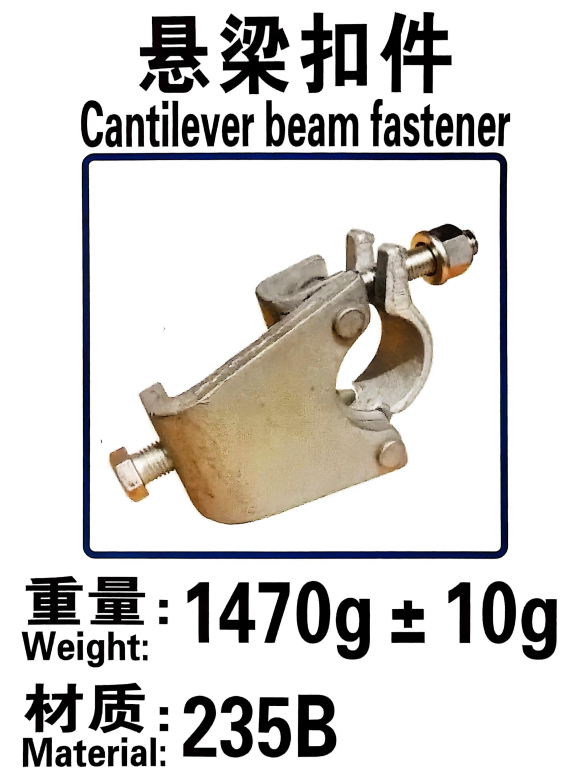

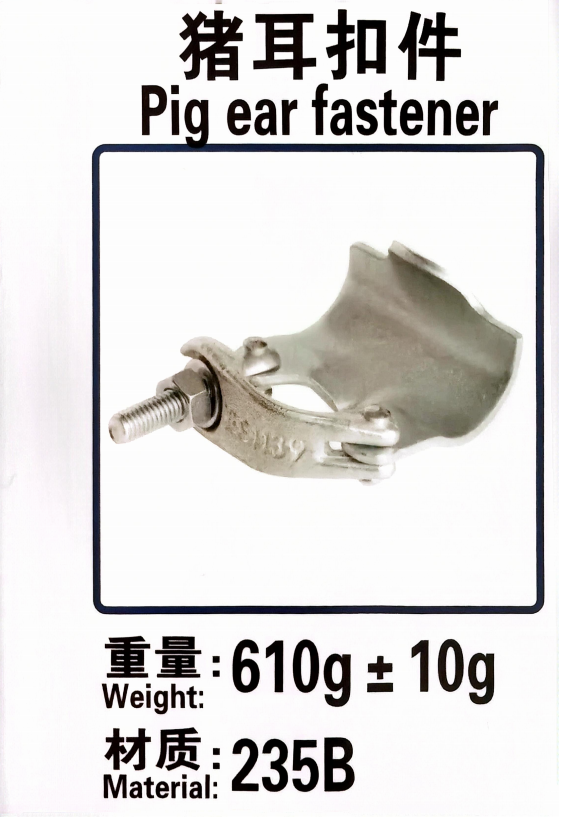







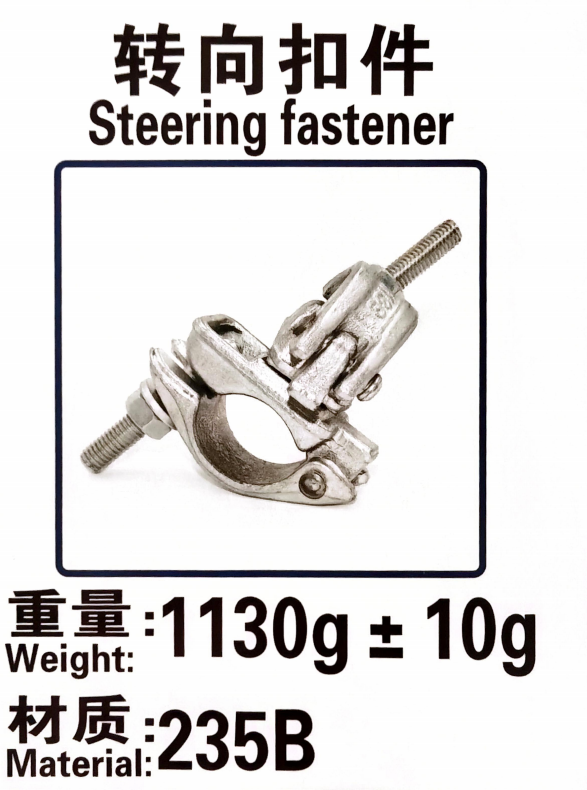

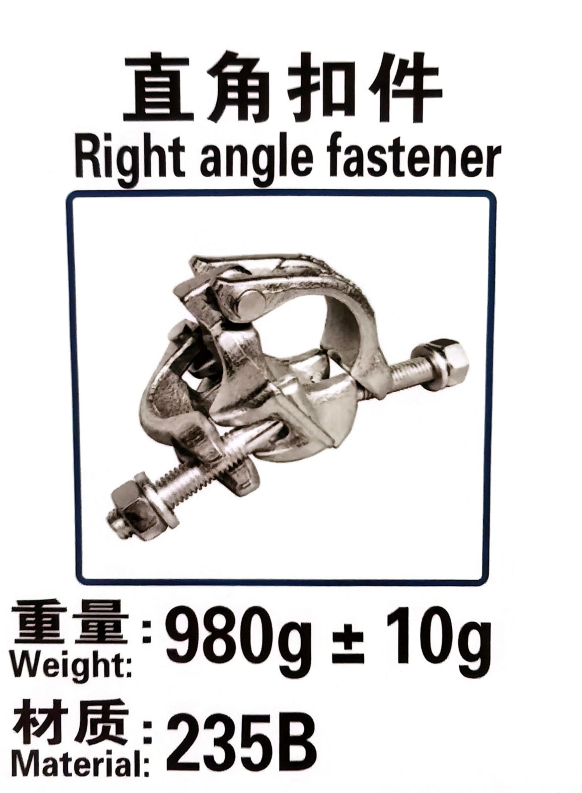
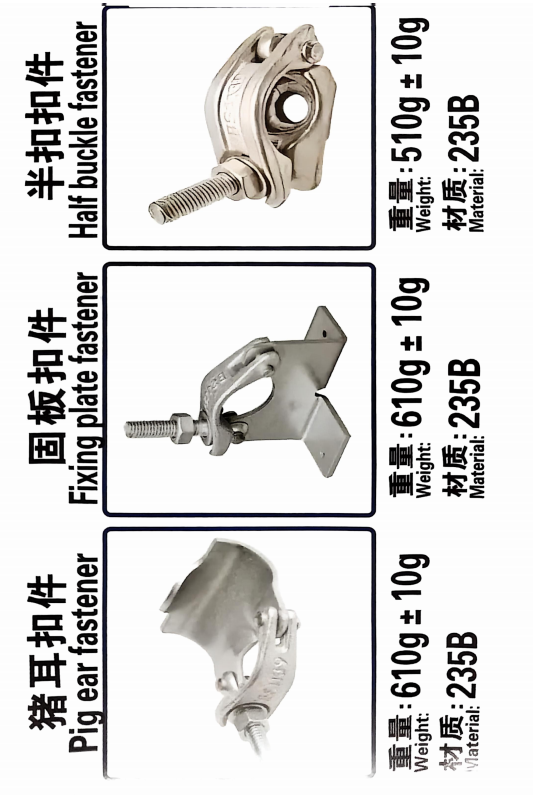

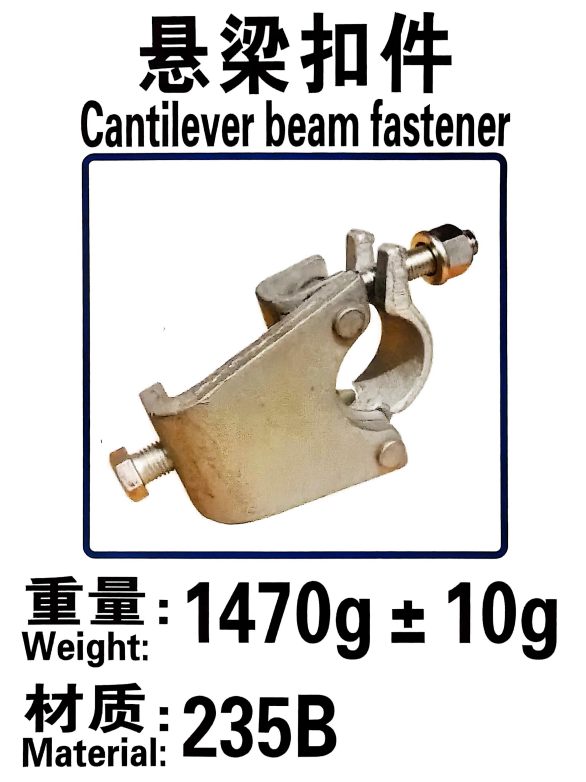
"Hanging Beam Connectors" generally refer to fasteners used in hanging beam structures or cantilever beam support systems, commonly found in construction projects, bridge construction, industrial equipment, and other fields. They are mainly used to fix, connect, or support beams that are suspended or cantilevered. Below is a detailed analysis of hanging beam connectors: --- ### **1. Common Types** - **Cantilever scaffolding connectors**: Used for fixing I-beams in cantilever scaffolding on high-rise buildings, common types include: - **U-bolt connectors**: Anchor I-beams to the building structure. - **Pre-buried anchor rings**: Pre-buried in concrete for fixing the ends of cantilever beams. - **Tension wire rope connectors**: Adjust the stability of cantilever beams through wire ropes and turnbuckles. - **Hanging track connectors**: Used for fixing tracks of suspended cranes, conveyors, etc., such as: - **Track clamps**: Secure the track to the hanging beam using high-strength bolts. - **Elastic connectors**: Reduce vibration and noise (common in rail transit suspension systems). - **Steel structure hanging beam connectors**: Used for suspended connections of steel beams and trusses, such as: - **High-strength bolt sets**: Connect hanging beams to support columns. - **Welding node plates**: Achieve rigid connections between hanging beams and the main structure through welding. --- ### **2. Key Features** - **Ultra-high strength**: Capable of withstanding the self-weight and external loads (such as wind load, construction load) of cantilever structures, materials are often selected as Q345B steel or alloy steel. - **Anti-loosening design**: Uses double nuts, spring washers, or thread lock to prevent loosening due to long-term vibration. - **Corrosion resistance**: Surface hot-dip galvanized, Dacromet treatment, or anti-corrosion coating for outdoor environments. - **Adjustability**: Some connectors support length or angle fine-tuning (such as turnbuckles). --- ### **3. Typical Application Scenarios** - **Construction Engineering**: - Anchoring I-beams for cantilever scaffolding. - Connecting beams for suspended corridors, canopies, etc. in steel structures. - **Bridge Engineering**: - Fastening of cable clips and main beams in suspension bridges and cable-stayed bridges. - Support connectors for temporary construction hoists. - **Industrial Equipment**: - Fixing tracks for suspended conveyors. - Installing workshop trolley tracks. --- ### **4. Selection and Installation Points** - **Load Calculation**: Select the connector specification based on the cantilever length and design load (static load + dynamic load). - **Installation Methods**: - Pre-buried: Anchor fasteners are pre-buried in concrete structures. - Welding/Bolt connection: Ensure the quality of welds or bolt torque meets standards. - **Safety redundancy**: Dual insurance is required for key locations (such as U-bolt + wire rope diagonal tension). --- ### **5. Maintenance and Inspection** - **Regular Inspection**: Pay attention to rust, deformation, and cracks (especially at welding joints). - **Anti-rust maintenance**: Regularly repaint anti-rust paint; shorten inspection cycles in humid environments. - **Dynamic monitoring**: Stress or displacement monitoring of large cantilever structures (such as using sensors). --- ### **6. Relevant Standards and Specifications** - **National Standards**: - GB 15831-2006 "Steel Pipe Scaffolding Connectors" - JGJ 130-2011 "Safety Technical Code for Scaffold Construction Using Steel Pipe Connectors" - **International Standards**: - ASTM A325 (High-strength structural bolts) - EN 1090 (Steel structure construction requirements) --- **Tip**: If you have specific application scenarios (such as building cantilevers, bridge construction, or equipment suspension), please provide more details for targeted selection or construction problem-solving!