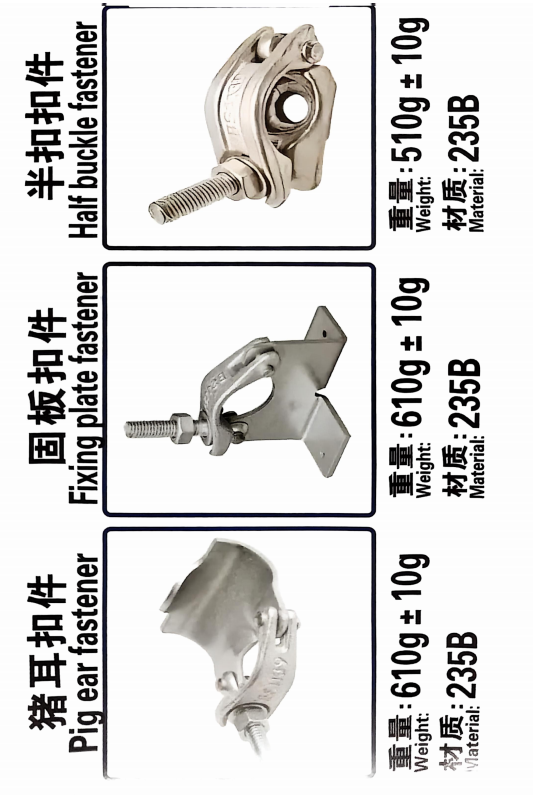










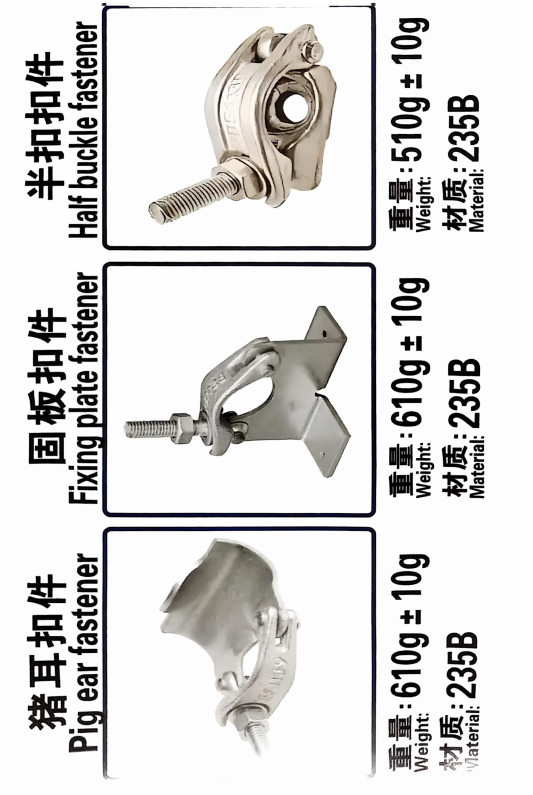
"Solid Plate Fasteners" typically refer to fastening components used for **securing sheet materials or panel structures**, widely used in construction, mechanical manufacturing, furniture assembly, and other fields. Their core function is to reliably connect sheet materials (such as metal sheets, wood sheets, composite materials, etc.) to supporting structures or other panels. Below is a detailed analysis of solid plate fasteners: --- ### **1. Common Types** - **Construction Solid Plate Fasteners**: - **Roof Panel Fasteners**: Used for fixing metal roof panels (such as color steel, aluminum magnesium manganese panels), usually in combination with self-tapping screws and waterproof washers. - **Façade Hangers**: Fix glass, stone façade panels to the skeleton using aluminum or stainless steel fasteners (such as "T-type hangers" or "back bolt hangers"). - **Insulation Board Anchors**: Secure exterior insulation boards (such as EPS/XPS panels) with nylon or plastic expansion bolts. - **Industrial Solid Plate Fasteners**: - **Clamping Bolts**: Used in machine tools or equipment to clamp metal sheets (such as "U-shaped clamp + bolt" assembly). - **Quick-Clamping Fasteners**: Can fix panels without tools (such as lever clamps, spring clips). - **Sheet Metal Connecting Fasteners**: Rivets, pull rivet nuts (such as Pop Rivet) used in vehicles, enclosures, for joining metal panels. - **Furniture Assembly Fasteners**: - **Offset Connecting Fasteners (Three-in-One Fasteners)**: Secure panels using bolts, embedded parts, and offset wheels (such as for wooden furniture). - **Angle Code Fasteners**: Metal or plastic right-angle connectors for reinforcing cabinets, table corners. --- ### **2. Key Characteristics** - **Tensile Strength**: Must withstand the weight of the panels and external loads (such as wind pressure, vibration), materials are typically stainless steel, carbon steel, or engineering plastics. - **Sealing and Waterproofing**: Construction fasteners often integrate rubber gaskets or sealing adhesives to prevent leakage (such as roof panel screws). - **Corrosion Resistance**: Outdoor or humid environments use galvanized, Dacromet-coated, or 304/316 stainless steel materials. - **Ease of Installation**: Some fasteners support tool-free installation (such as snap-on, pre-assembled designs). --- ### **3. Typical Application Scenarios** - **Construction Engineering**: - Fixing metal roof and wall panels. - Installation of curtain wall systems (stone, glass, aluminum panels). - Anchoring exterior insulation boards, decorative panels. - **Mechanical Manufacturing**: - Sheet metal assembly of equipment enclosures, protective covers. - Clamping and fixing of machine tool workbench panels. - **Home and Decoration**: - Assembly of custom furniture (wardrobes, bookshelves). - Quick disassembly and connection of display cabinets, partition walls. --- ### **4. Selection and Installation Points** - **Sheet Material Matching**: - Metal thin plates prefer self-tapping screws or rivets, thick plates can choose bolts + clamping plates. - Wood and composite materials require pre-buried nuts or wide-head fasteners to avoid cracking. - **Load Requirements**: - Façade hangers need to calculate wind loads and seismic requirements, choosing fasteners with the appropriate strength grade. - Roof fasteners need to consider wind uplift resistance (such as FM certification). - **Installation Precautions**: - Self-tapping screws should be driven vertically to avoid tilting and failure of sealing. - Rivets must match the sheet thickness to ensure tight fitting after riveting.