







1.1 Introduction
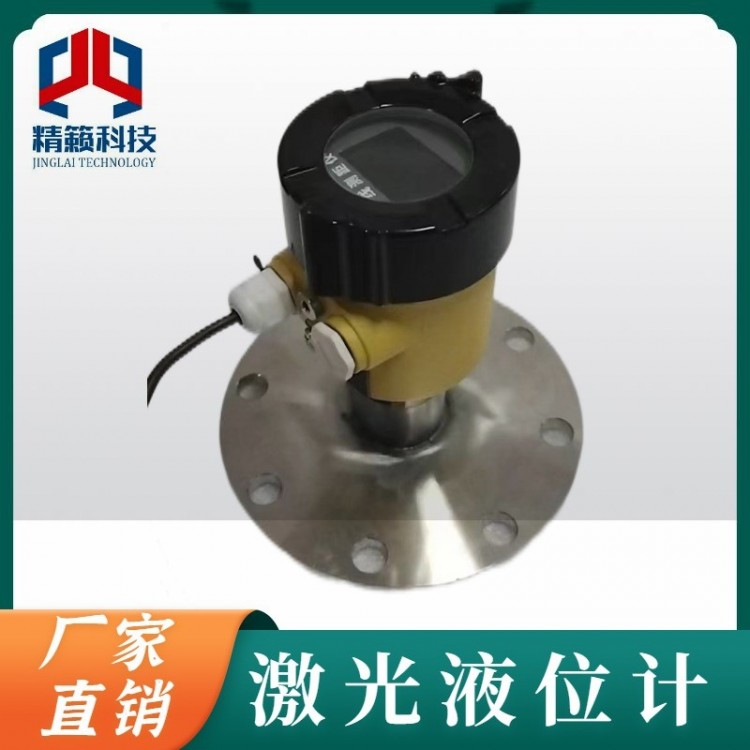
The JERD series sensors are radar level gauges, capable of measuring distances up to 35 meters. They are suitable for measuring the level in storage tanks, intermediate buffer tanks, or process containers, and provide a 4…20mA analog signal output.
1.2 Applied
● Contactless measurement
Manufactured with stable materials.
● Measure the level of liquids and solids mediums
Can measure all media with a dielectric constant greater than 1.8.
Measurement range: 0…20m (expandable to 35 meters)
Utilizing a two-wire system with loop power supply technology, supply voltage and output signals are transmitted through a two-core cable.
4...20mA output or digital signal output
Resolution: 1mm
● Not affected by noise, steam, dust, vacuum, etc. working conditions
● Not affected by variations in medium density, viscosity, and temperature.
Process pressure up to 40 bar
Process temperature can reach up to 250°C.
1.3Principle of Measurement
High-frequency microwave pulses are transmitted and received through an antenna system, radar waves travel at the speed of light, and the running time can be converted into level signals by electronic components. A special time extension method ensures stable and precise measurements in extremely short durations.
Even in complex operating conditions with false echoes, the microprocessing technology and debugging software used can accurately identify the echo of the material level.

1.4 Input
The antenna receives microwave pulses reflected from the material surface and transmits them to the electronic circuit. The microprocessor processes this signal, identifying the echoes generated by the micro-pulses on the material surface. Accurate echo signal identification is performed by intelligent software, achieving precision down to the millimeter level. The distance D from the material surface is proportional to the pulse's travel time T: D = C × T / 2 (where C is the speed of light)
Since the distance to the empty tank, E, is known, the level, L, is: L = E - D
1.5 Output
Set by entering the empty tank height E (= zero point), full tank height F (= full scale), and some application parameters, which will automatically adjust the instrument to the measurement environment. Corresponds to the 4-20mA output.
2. Instrument Introduction
JERD81Series Smart Radar Level Gauges
Application | The process conditions are simple, involving corrosive liquids, slurries, and solids such as: wastewater tanks, acid and alkali storage tanks, slurry storage tanks, solid particles, and small oil storage tanks. |
Measurement Range | 20 feet |
Process Connection | G11/2 Thread or 11/2 NPT |
Medium Temperature | :-40-120℃ |
Process Pressure | :-1.0-3bar |
Repetitive | :± 2mm |
Accuracy | :< 0.1% |
Frequency Range | :6.8GHz |
Intrinsically Safe/Protection Class | :Exia II CT6/IP67 |
Signal Output | 4...20mA/HART (Two-wire) |
JERD81
Application | Corrosive liquids, slurries, or solids for storage or process containers. Water Storage Tanks, Acid & Alkali Storage Tanks, Slurry Storage Tanks, Solid Granules, Small Oil Storage Tanks |
Measurement Range | 20 feet |
Process Connection | Flange |
Medium Temperature | :-40-150℃ |
Process Pressure | :-1.0-20bar |
Repetitive | :± 2mm |
Accuracy | :< 0.1% |
Frequency Range | : 6.8GHz |
Intrinsically Safe/Protection Class | :Exia II CT6/IP67 |
Signal Output | 4...20mA/HART (Two-wire) |
JERD82
Application | Adaptable to various storage containers or process measurement environments, including liquids, slurries, and solids, such as: crude oil and light oil storage tanks, raw coal and powdered coal storage, volatile liquid storage tanks, coke level, slurry storage tanks, solid particle storage. |
Measurement Range | 35 meters |
Process Connection | Flange |
Process Temperature | :-40-250℃ |
Process Pressure | :-1.0-40bar |
Repetitive | :± 2mm |
Accuracy | :< 0.1% |
Frequency Range | :6.8GHz |
Intrinsically Safe/Protection Class | :Exia II CT6/IP67 |
Signal Output | 4...20mA/HART (two-wire) |
3. Installation Guide
3.1 Installation Location Instructions ● It is recommended that the distance (1) from the inner wall of the drum to the outer wall of the installation short pipe should be greater than 1/6 of the drum's diameter. ● The distance from the tank wall is 300mm. Do not install above the feeding opening (4). ● Cannot be installed in the center position (3). Installation in the center will produce multiple false echoes, which may lead to signal loss due to interference from the echoes. If the distance between the gauge and the tank wall cannot be maintained, the medium on the tank wall will adhere, causing false echoes. When adjusting the gauge, false echo storage should be performed. |

3.2 Installed inside the can
Within the signal beam, the following installations should be avoided (1): e.g., limit switches, temperature sensors, etc.
● Asymmetric Device (2), such as vacuum rings, heating coils, baffles, etc.
If there are interference objects (1) and (2) inside the can, waveguide measurement should be used.
3.3 Installation Options
● Antenna Size: Larger antennas have smaller beamwidths, resulting in weaker interference echoes.
Antenna Adjustment: Adjust the antenna to the measurement position.
● Waveguide: Waveguides are used to avoid interference echoes.

3.4 JERD81、JERD82Installed inside the can
3.4.1 Standard Installation
● The radar antenna must not incline towards the can wall.
To minimize the temperature effect, spring washers must be used at the connection of the flanged joints.
● The radar wave emitting point of the rod antenna must extend beyond the installation short tube.
● Vertical rod antenna, do not allow the radar beam to point towards the tank wall.

3.4.2 JERD81Series Typical Installations
● PTFE (polytetrafluoroethylene) rod antennas are particularly suitable for measuring corrosive media such as acids and alkalis. In the food industry, sterile containers require non-reactive materials and small-sized instruments. PTFE rod antennas not only do not react but also require minimal container openings, only 50mm or G11/2A threaded holes.

● If measuring liquid, the rod antenna can be directly mounted on the container's opening, with opening sizes ranging from G11/2A to DN150. The pipe length must not exceed 150mm (if a longer antenna is used, the pipe length cannot exceed 250mm). Note: The mechanical load-bearing capacity of PTFE rod antennas is limited; if subjected to bending forces, they may deform or break.
3.5 JERD83Installed within the can
3.5.1 Standard Installation
● The horn antenna must extend beyond the installation short tube.
Otherwise, an antenna extension tube should be used.
● The horn antenna must be adjusted to a vertical position.
Do not allow the radar beam to point towards the can wall.

3.5.2 Use antenna extension tube when the installation short tube is too long.
When the antenna length is shorter than the installation reducer, an antenna extension tube should be used.
If the bell mouth diameter is larger than the diameter of the installation short pipe, including the extension pipe, the antenna needs to be removed from the container.
Install on the face and elevate the gauge. Choose an extension pipe to elevate the gauge by at least 100mm.

Special Extended Pipe
● If the antenna needs to be tilted or mounted perpendicular to the tank wall, a 120° or 90° extension pipe can be used.

Measure through the plastic drum wall externally
● Dielectric constant εr > 10
●The highest liquid level should be below the tank top by 500px
● The distance to H should be greater than 100mm
● Recommend using a bracket installation for adjustment to the ideal H
Avoid installation in refrigerated or adhesive conditions if possible; protective measures should be in place between the antenna and the container.
Choose container construction materials with low dielectric constant and the corresponding thickness; do not use conductive plastics.
If possible, use antenna DN250/10"
Do not install any components that may cause interference (such as pipes) outside the beam range of the can.