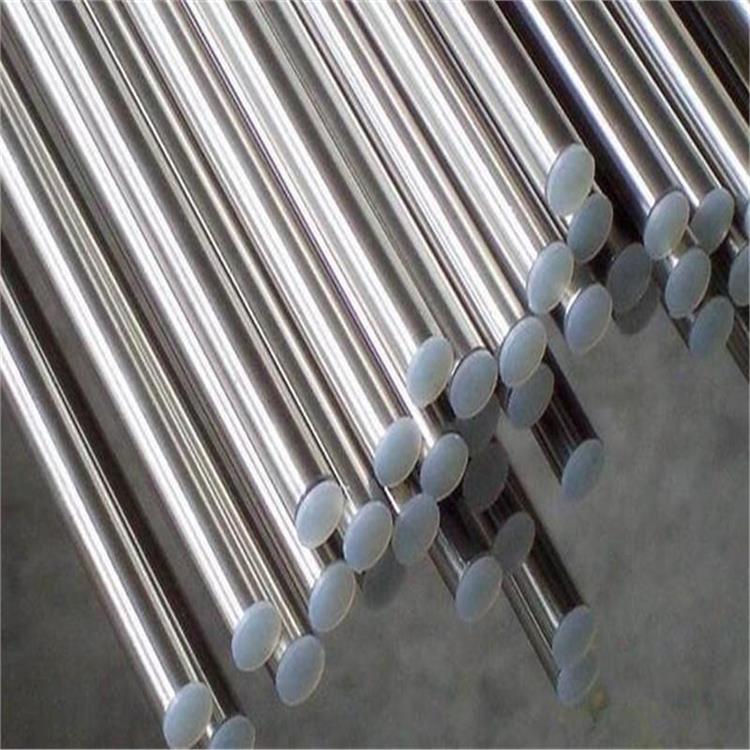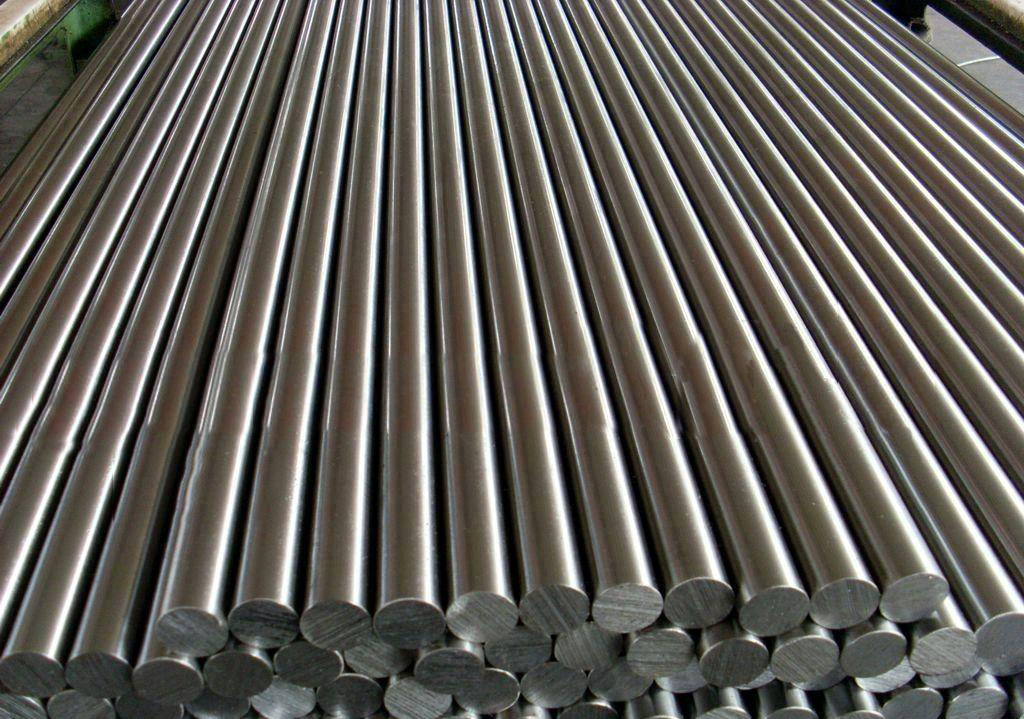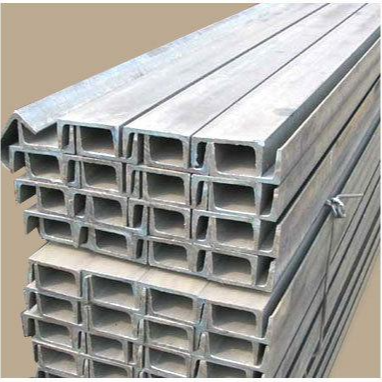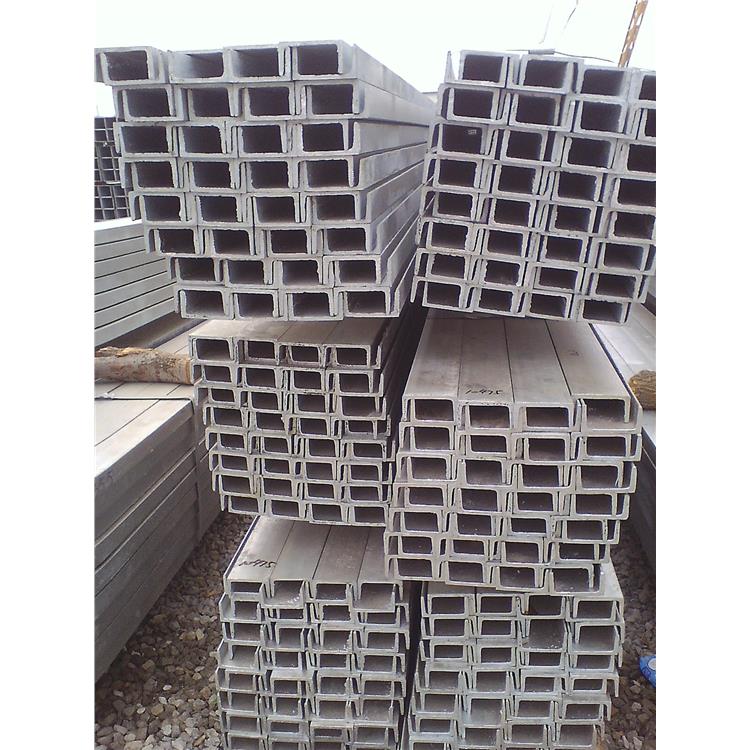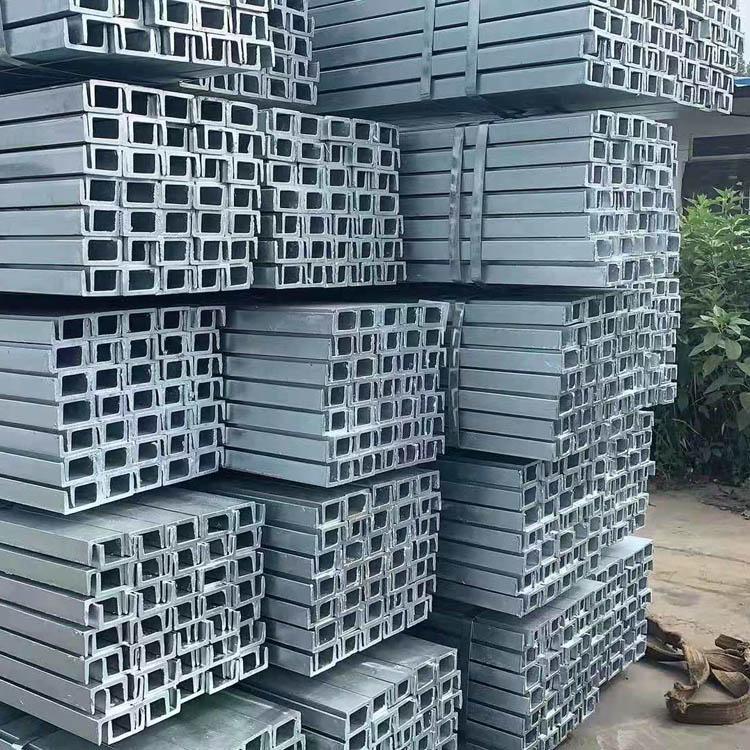


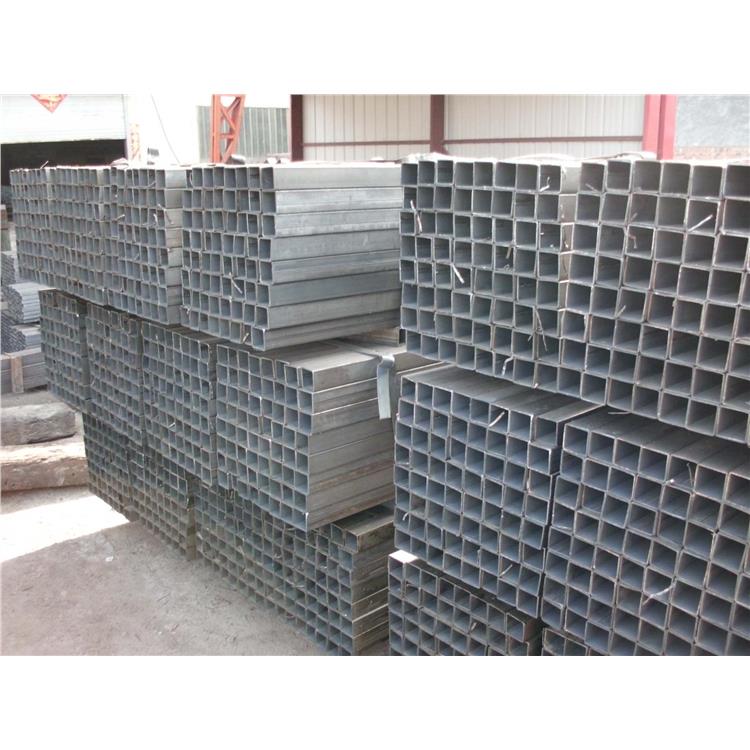
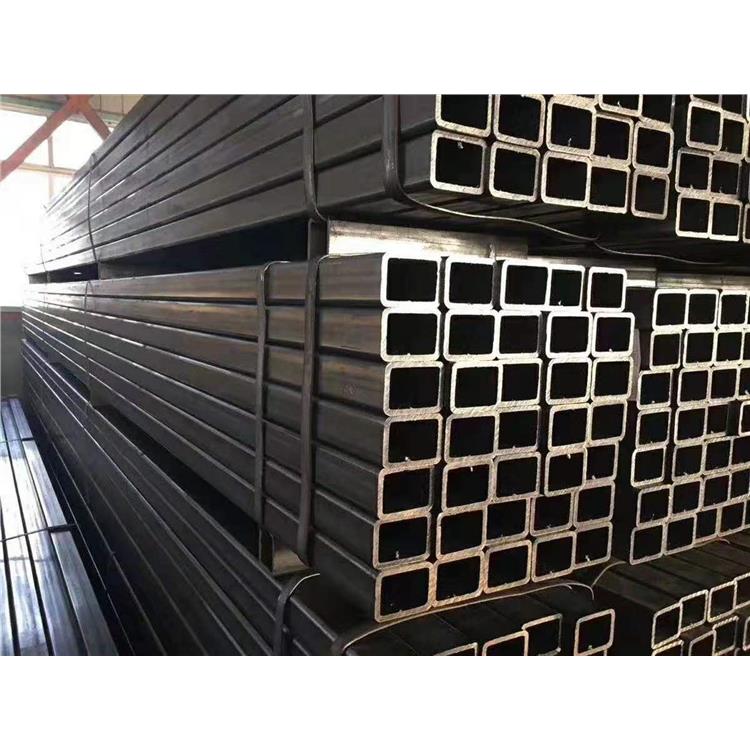
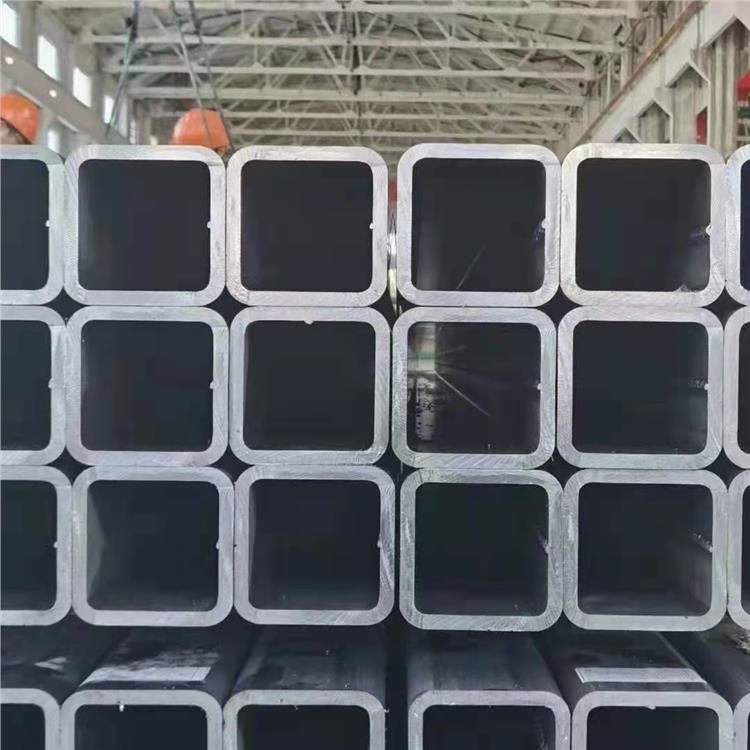
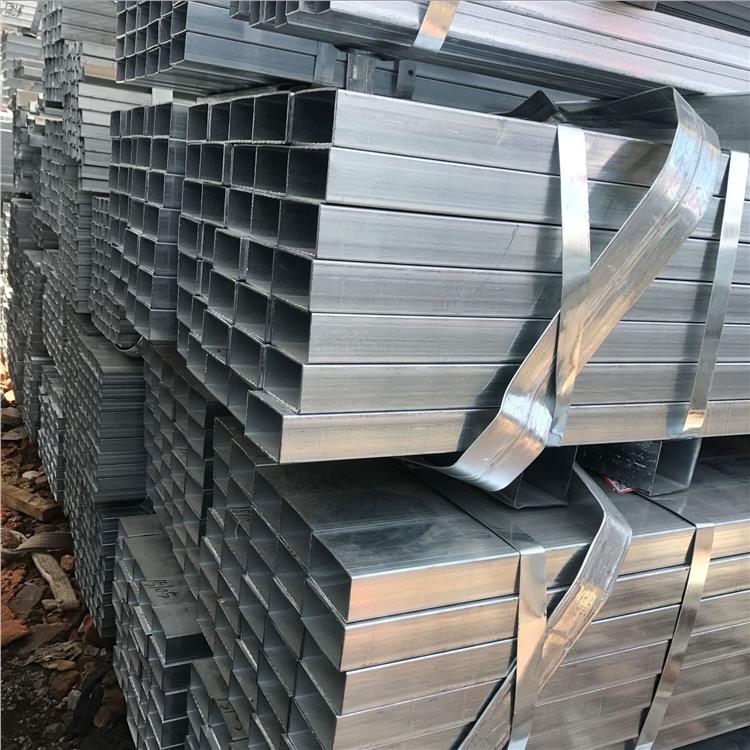
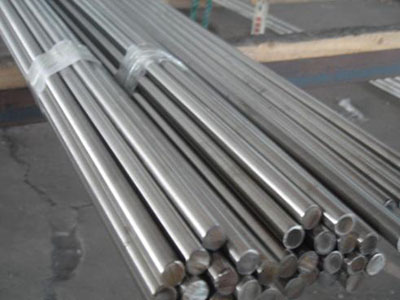





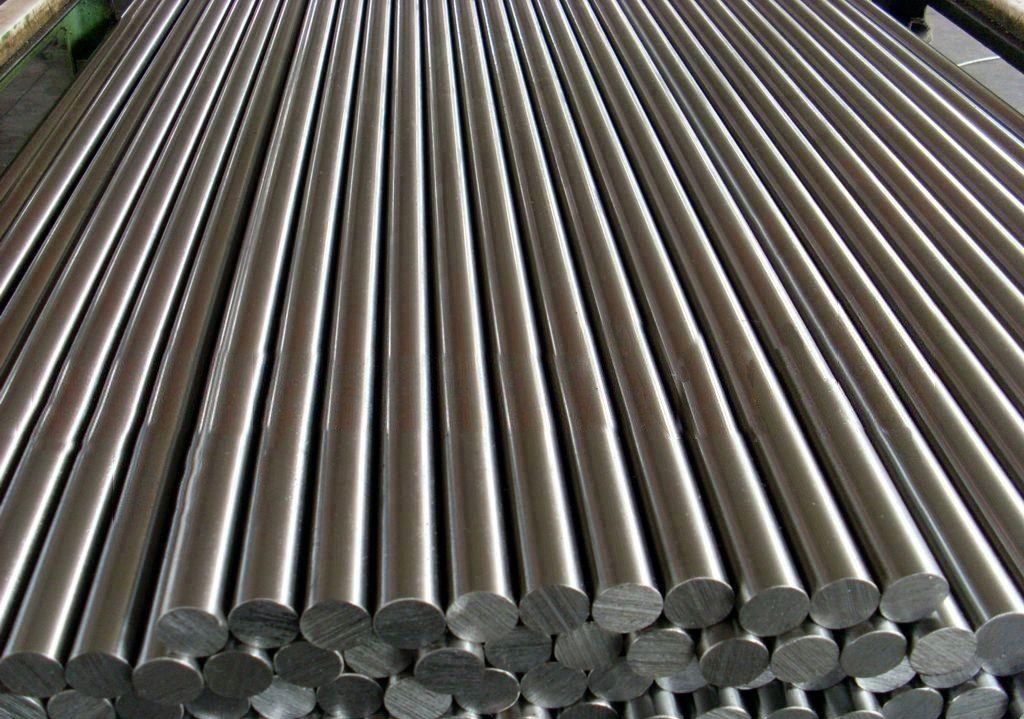
Our company maintains a substantial inventory year-round, striving for a comprehensive range of products with superior quality and competitive pricing. We emphasize customer and market orientation, continuously expanding our service scope, enhancing service depth and accuracy, and have become a preferred supplier for numerous steel end-users.
Company's Operating Philosophy:
"Integrity for survival, win-win for development" ---------- "Keep pace with the times, create a win-win future"
Channel steel classification:
1. Channels are categorized into standard channels and light channels. The specifications for hot-rolled standard channels range from 5# to 40#. The specifications for hot-rolled alternative channels, supplied upon agreement between both parties, range from 6.5# to 30#. Channels are primarily used in construction structures, vehicle manufacturing, other industrial structures, and fixed cabinets, and are often used in conjunction with I-beams.
2. Channel steel can be further divided into four types based on shape: Cold-formed Equal-leg Channel Steel, Cold-formed Unequal-leg Channel Steel, Cold-formed Internal Rolled Channel Steel, and Cold-formed External Rolled Channel Steel.
3. According to the theory of steel structures, the flanges of the channel steel should bear the load, meaning the channel steel should be standing, not lying down.
Channel steel number:
1. Chemical components are represented by international chemical element symbols and domestic symbols, while component content is denoted using Arabic numerals.
China, 12CrNi3A
2. Represent steel series or numbers with fixed-digit figures; e.g., USA, Japan, 300 Series, 400 Series, 200 Series.
3. Composed of Latin letters and sequence numbers, used solely for identification purposes.
Channel steel specification settings:
1. The specifications of channel steel are mainly indicated by dimensions such as height (h), flange width (b), and web thickness (d). The domestic specifications of channel steel range from 5-40 numbers, corresponding to heights of 5-40 cm.
2. At the same height, light I-beams are narrower, thinner, and lighter than standard I-beams. Sizes 18-40 are large I-beams, while sizes 5-16 are medium I-beams. Imported I-beams are marked with actual dimensions and relevant standards. The ordering of I-beams for import/export generally focuses on the specifications required for use after determining the corresponding carbon structural steel (or low-alloy steel) grade. Besides the size number, I-beams do not have a specific composition and property series.
3. The delivery length of channel steel is divided into fixed length and multiple length, with permissible tolerance values specified in the relevant standards. The length selection range of domestic channel steel varies according to the specification number, with three options: 5-12m, 5-19m, and 6-19m. The length selection range of imported channel steel is generally 6-15m.

Choose Transportation Company: To ensure that the channels are not damaged during transit, it is advisable to select a metal product transportation company for the operation. These companies generally possess extensive experience and expertise, capable of formulating appropriate transportation plans for channels of various specifications and materials, ensuring safe delivery to the destination.

According to various market surveillance reports, the likelihood of a significant adjustment in the annual H-beam steel prices is low. It is expected that next week, prices for pipes, special steels, and coke will remain stable with a slight upward trend. The H-beam steel prices may struggle to rise further and could weaken, with an expectation that next week will continue in a lukewarm state.
Reportedly, amid falling steel prices and weak demand, market quotations have continuously retraced. Recently, due to tight funding, some merchants have had to lower their prices to recoup capital. However, under the prolonged impact of low transactions, the retracement trend has rapidly swept across the entire market. Despite steel mills maintaining high prices and low inventory, it's inevitable that this affects merchant sentiment. There is a high possibility of the short-term market remaining weak and stable in the absence of a rebound in demand. But as the "Golden September" approaches, it's believed that with a slight improvement in the macroeconomic situation, the release of demand is merely a matter of time. Whether the upward trend can be sustained, however, depends on the situation of capacity release.
So, in summary, the recent market for channel steel has shown significant signs of weakness, driven by short-term negative factors and heightened concerns. A comprehensive analysis suggests that mainstream prices are expected to continue weakening, with limited declines but high volatility, so merchants should also be vigilant.

Channel steel is a common metal material with extensive applications in construction and manufacturing. To ensure the quality and safety of channel steel, proper storage and transportation precautions are crucial. This article will detail the storage and transportation considerations for channel steel.
Our company adheres to the principle of "abiding by contracts, providing excellent service" and the corporate spirit of "unity, collaboration, rigorousness, realism, and innovation," offering satisfactory services to both new and existing clients.