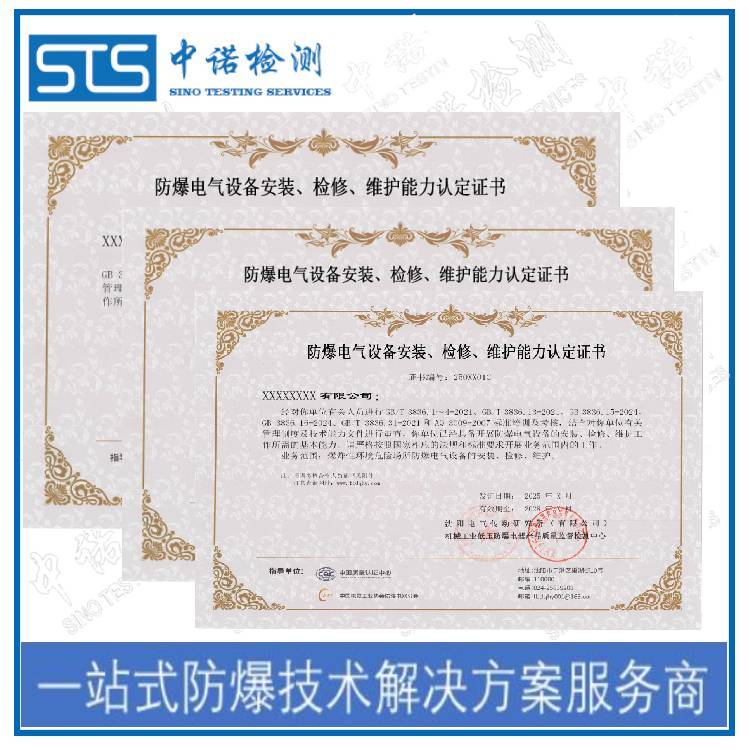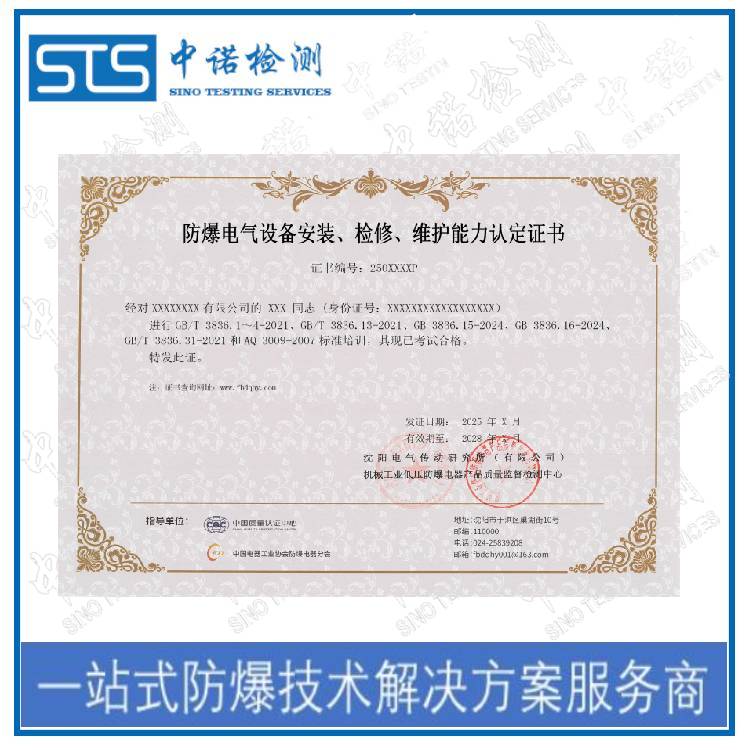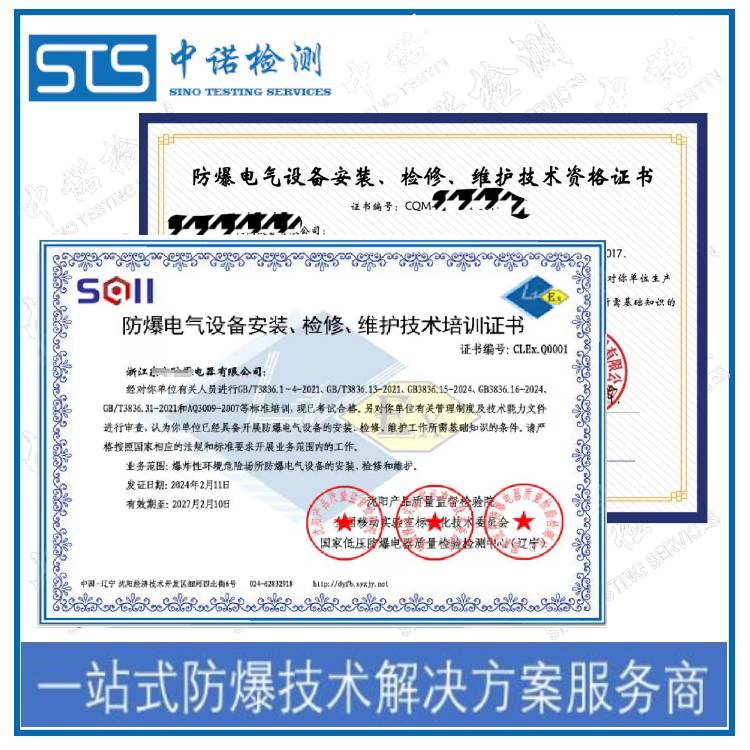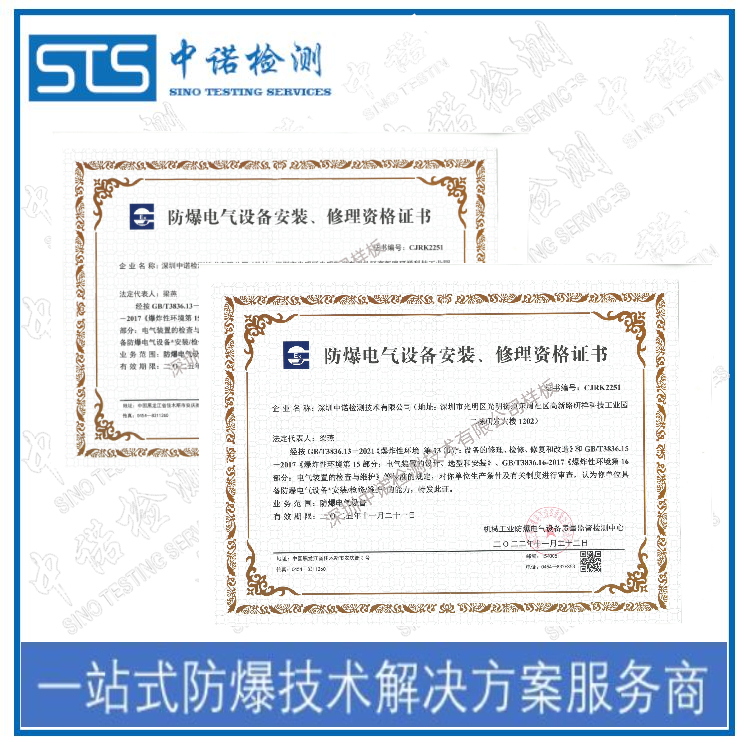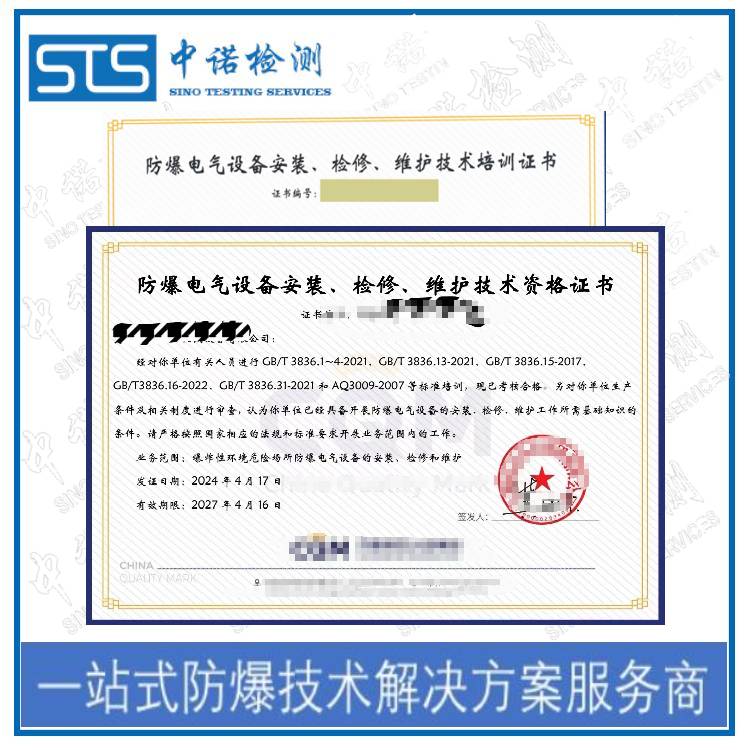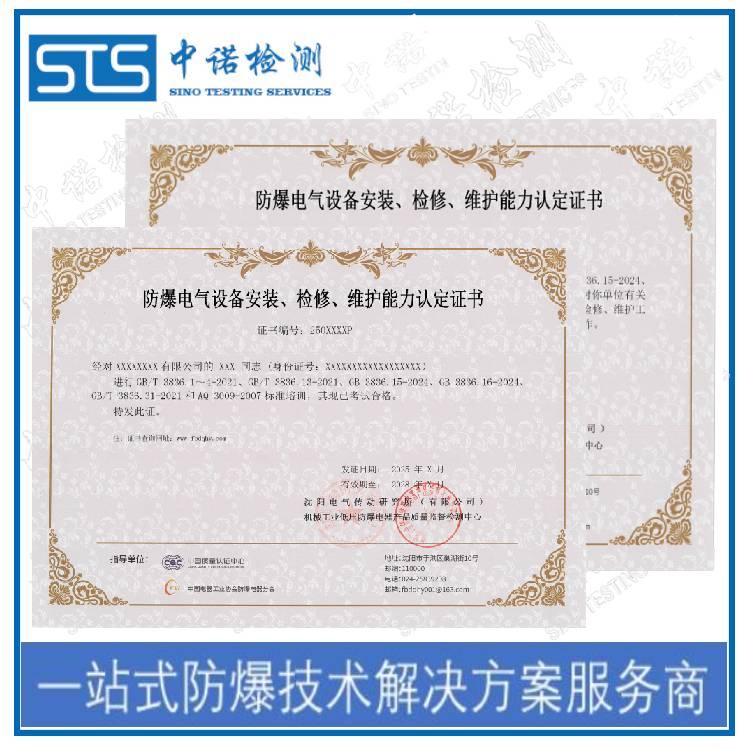
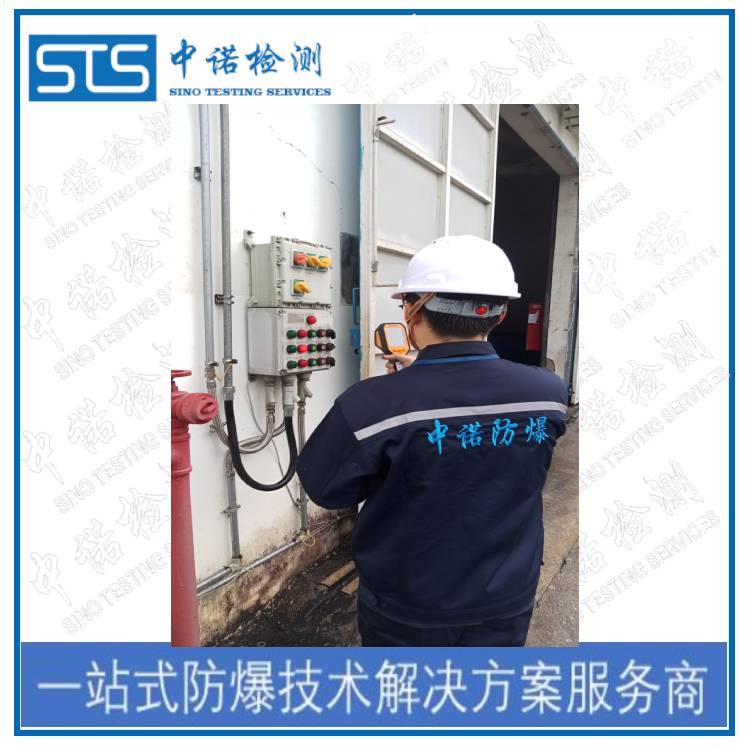
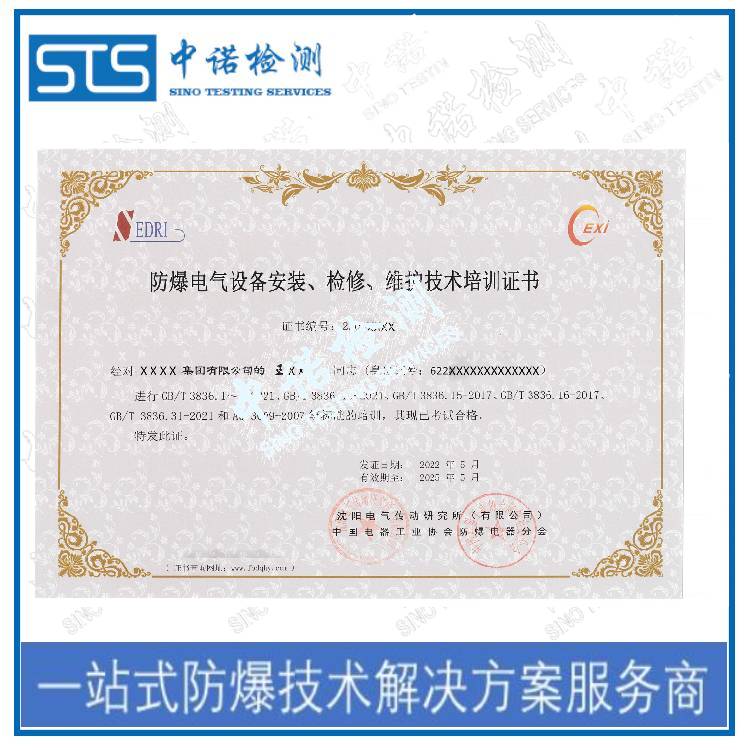
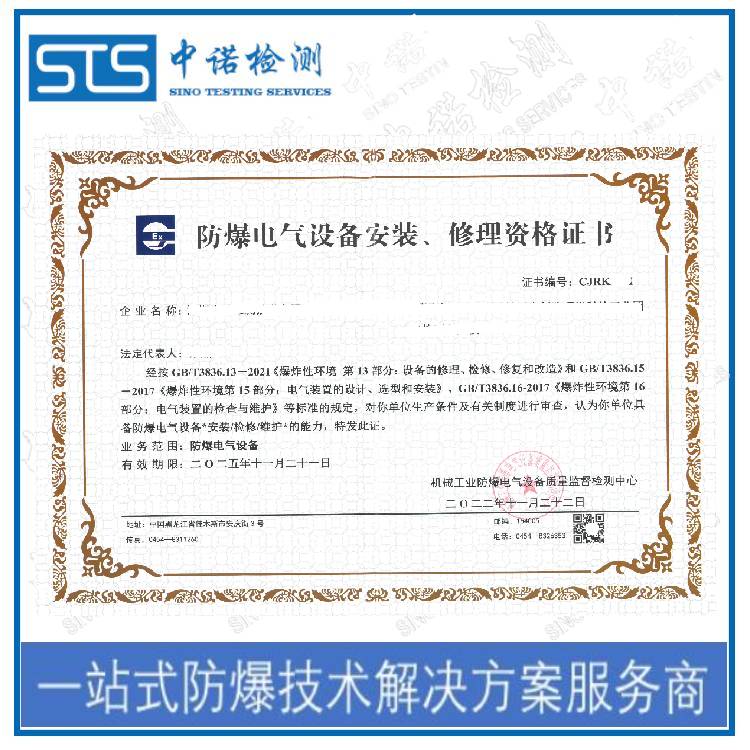
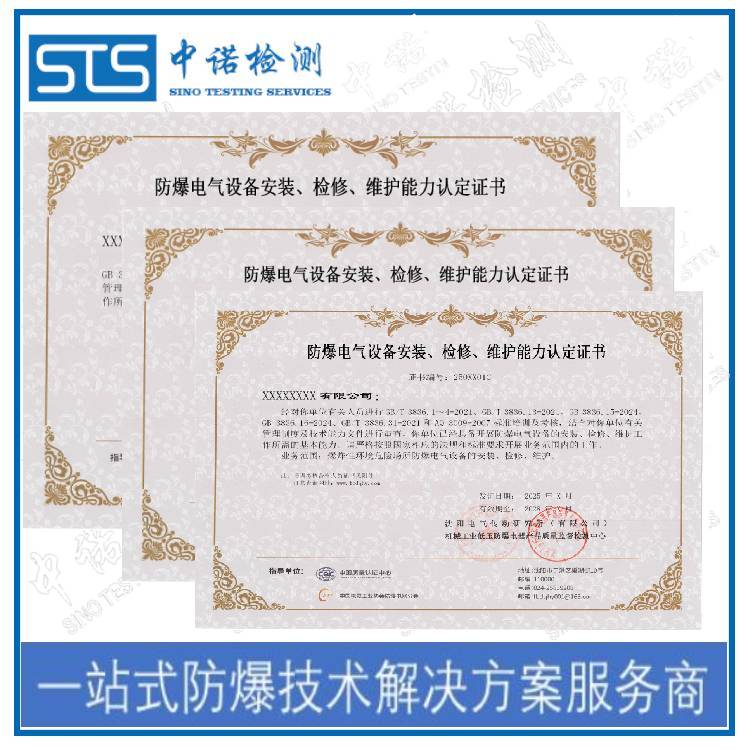





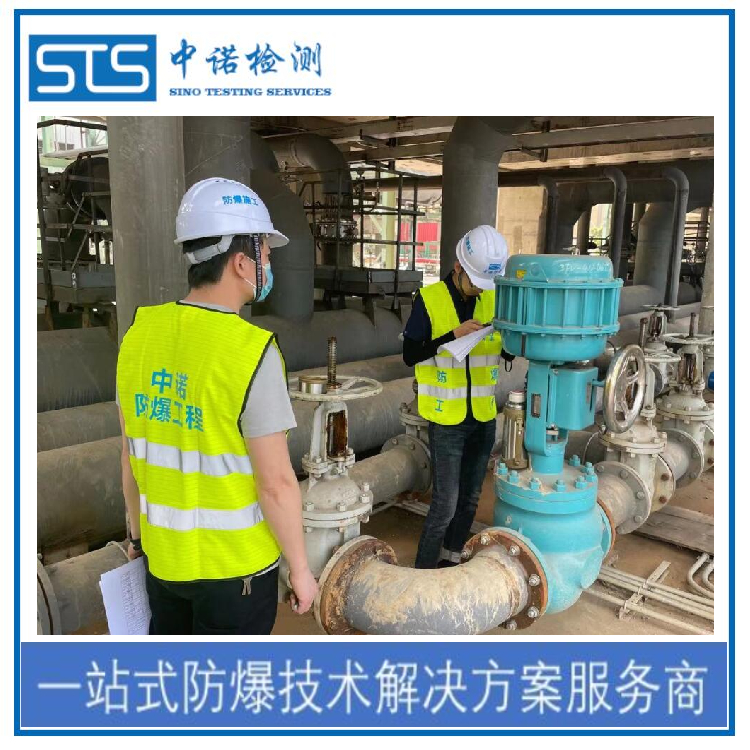
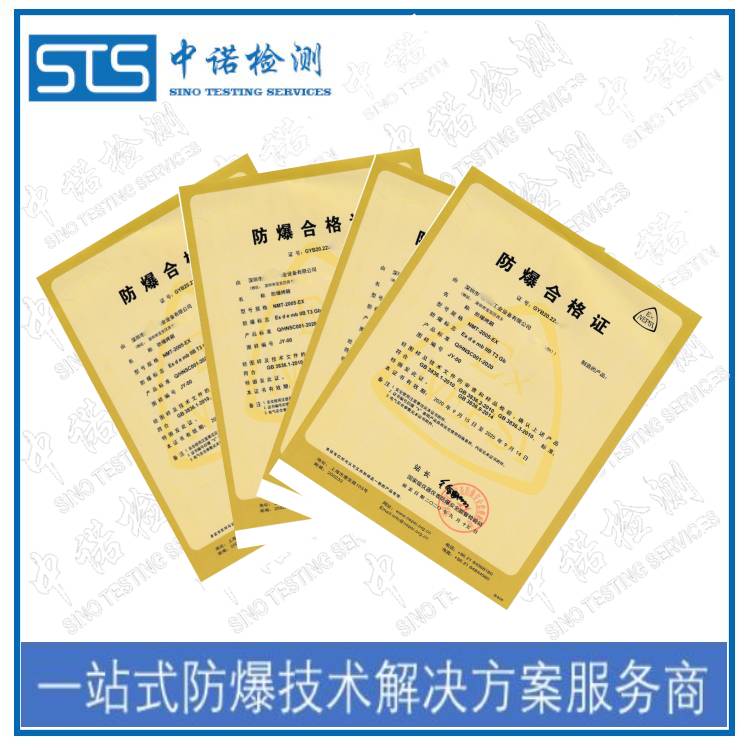
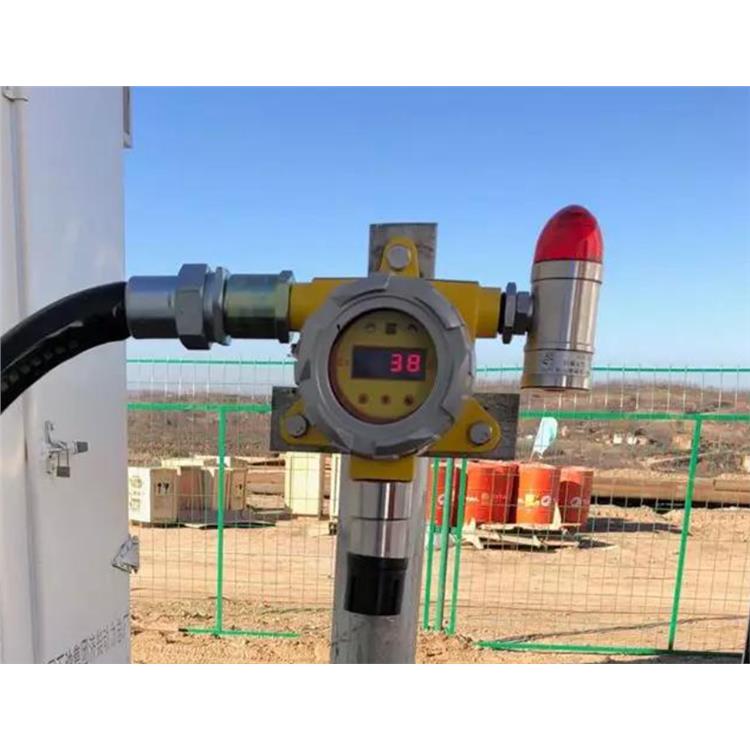
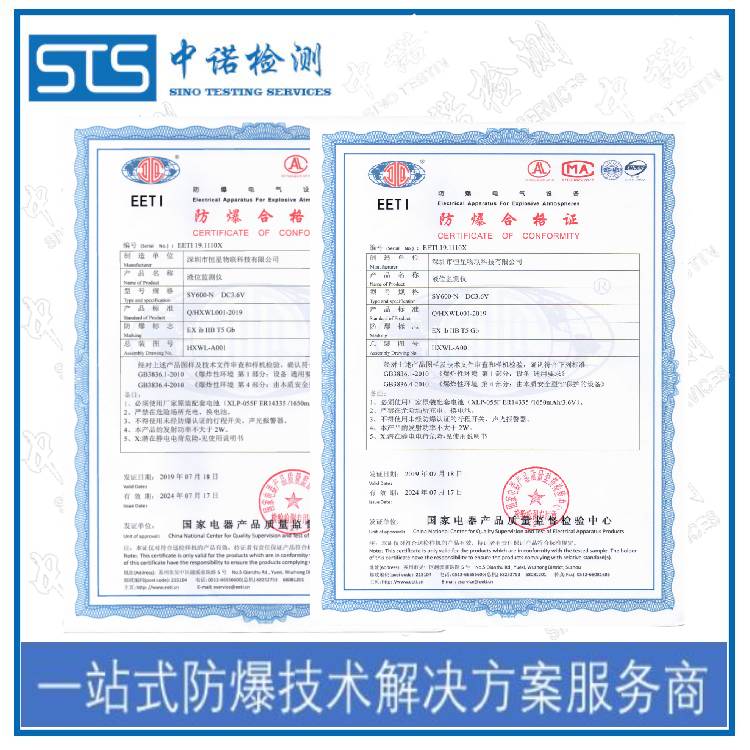
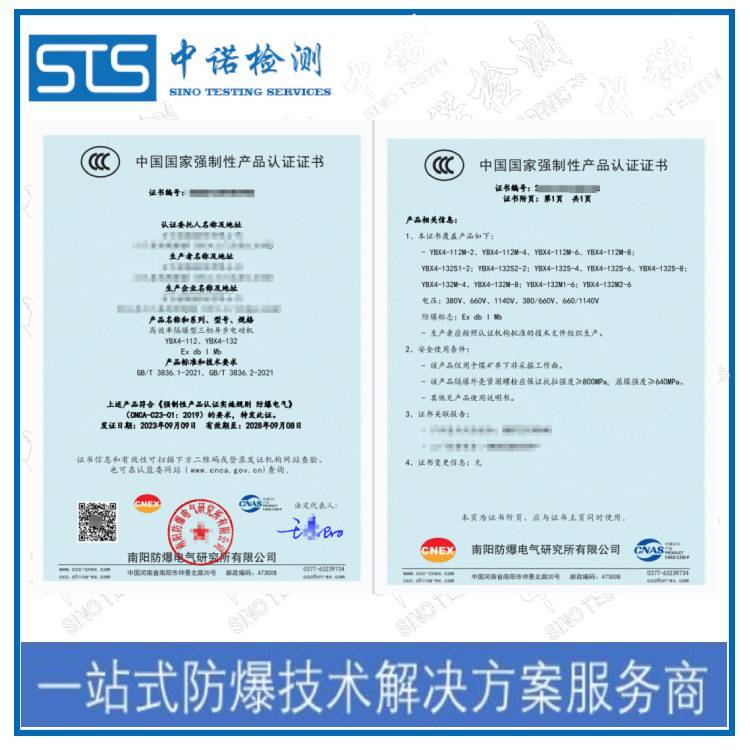
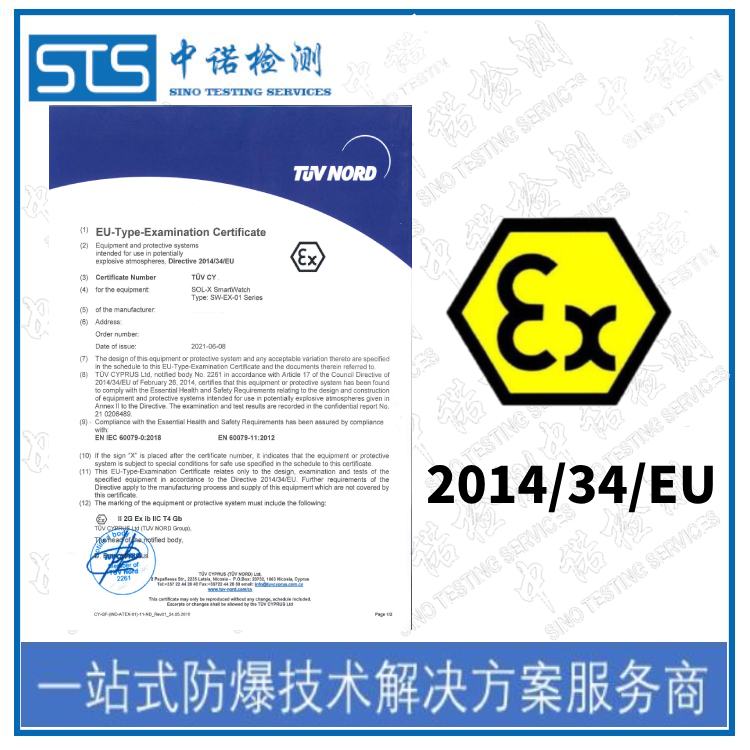
Shenzhen ZhongNuo Testing Technology Co., Ltd. is based in South China and specializes in explosion-proof certification and coal safety certification application consulting services, offering a one-stop explosion-proof technology consulting service.
Products with explosion-proof certification:
The new implementation details are divided into 17 product units:
Explosion-proof motors: Center height ≤ 160mm or rated power ≤ 15kW, Explosion-proof motors: 160mm < center height ≤ 280mm or 15kW < rated power ≤ 100kW, Explosion-proof motors: 280mm < center height ≤ 500mm or 100kW < rated power ≤ 500kW, Explosion-proof motors: Center height > 500mm or rated power > 500kW.
2. Explosion-proof electric pumps
3. Explosion-proof distribution equipment
4. Explosion-proof switches, control, and protection products
5. Explosion-proof starters
6. Explosion-proof transformers
7. Explosion-proof electric actuators, solenoid valves
8. Explosion-proof connector assembly
9. Explosion-proof surveillance products
10. Explosion-proof Communication and Signal Devices
11. Explosion-proof Air Conditioners, Ventilation Equipment
12. Explosion-proof electric heating products
13. Explosion-proof accessories, Ex components
14. Explosion-proof instruments and meters
15. Explosion-proof sensor
16. Safety Fencing
17. Explosion-proof instrument cabinets
Limitation requirements for surface resistance of non-metallic casings of explosion-proof equipment
In hazardous areas with explosive dust or gases/vapors, such as coal dust and flour, static electricity can cause fires or explosions, posing significant danger. Therefore, it is advisable to minimize the use of insulating materials in explosive hazard zones. When selecting electrical insulating materials, consider maintaining low insulation resistance to prevent discharge when non-metallic components come into contact with charged components. For non-metallic insulating materials, the antistatic capability of the equipment can be assessed by measuring the surface resistance of the equipment housing.
Surface Resistance, measured in ohms (Ω), refers to the resistance between two electrical contacts on the measuring surface.
In accordance with the requirements of the IEC 60079 series standards:
1. In Class II explosive gas environments, when the surface area of the non-metallic housing of electrical equipment exceeds a certain limit value (as shown in Table 1), a surface resistance test must be conducted on the non-metallic material to ensure that: by selecting the material, the surface resistance meets at least one of the following requirements when measured according to IEC 60079-0 26.13:
At ≤1 GΩ, (505)% relative humidity;
At ≤100 GΩ, (305)% relative humidity.
2. In environments with Class III explosive dust, if the surface area of the non-metallic housing of electrical equipment does not exceed 500mm², the risk of static electricity can be disregarded; if it exceeds this limit, a surface resistance test must be conducted for verification. The assessment requirements are the same as those for the surface resistance test limits in Class II gas environments. For fixed installations that cannot meet the surface resistance limits, an "X" can be added after the "Explosion-Proof" marking, a corresponding warning sign should be placed on the equipment, and the user should be informed in the operating instructions.
Why choose tempered glass for explosion-proof transparent parts?
Transparent parts are a crucial material for explosion-proof electrical equipment. When selecting transparent parts, customers always inquire about the material to be used? Can glass be used? Can plastic be used?
Below, Shenzhen Zhongnuo Testing Technology Co., Ltd. explains to you.
GB/T3836.1 explicitly stipulates the thermal shock test for transparent parts, which aims to verify the thermal stability of glass under rapid cooling conditions. Currently, tempered glass is a material that not only meets this requirement but also offers high cost-performance.
普及 the fact that tempered glass, after being heated and quenched, forms an even layer on the surface.
The compressed stress layer counteracts the tensile stress generated on the surface during rapid cooling. Therefore, qualified tempered glass, even when subjected to the stresses caused by rapid cooling, will have the compressive stress to offset its effects.
What is the difference between ATEX certification and CE certification?
CE certification is a mandatory certification in the EU market, and all equipment and products entering the EU market must pass the relevant CE directive certification.
For instance, there are EMC directives, LVD directives, MD directives, ATEX directives, etc.
Different products are subject to different certification directives; the ATEX directive is specifically for explosion-proof equipment and products.
ATEX certification can be likened to the CE certification for explosion-proof products.
Each directive has different applicable standards; the ATEX directive adheres to the EN60079 series.
Different explosion-proof types are applicable to different standard series.
For instance, EN 60079.1 is the standard for explosion-proof, EN 60079.7 is for increased safety, and EN 60079.11 is for intrinsic safety, etc.
Learn more about ATEX certification, feel free to send a private message to Shenzhen ZhongNuo Testing Technology Co., Ltd. anytime!
Explosion-proof Certification Application Consulting Services - Shenzhen ZhongNuo Testing Technology Co., Ltd.
WeChat Official Account

Scan to follow Official Account