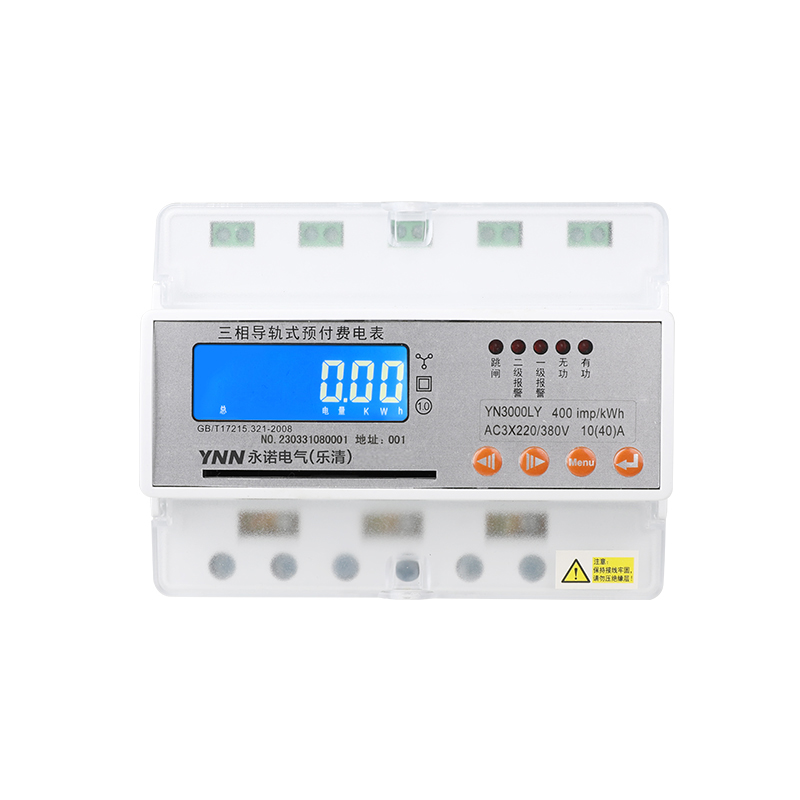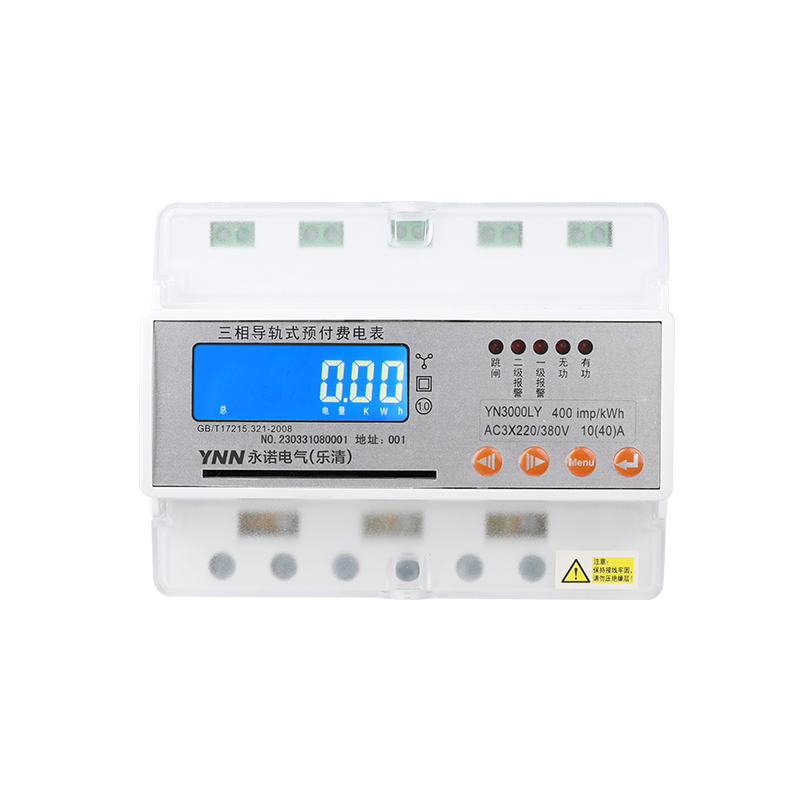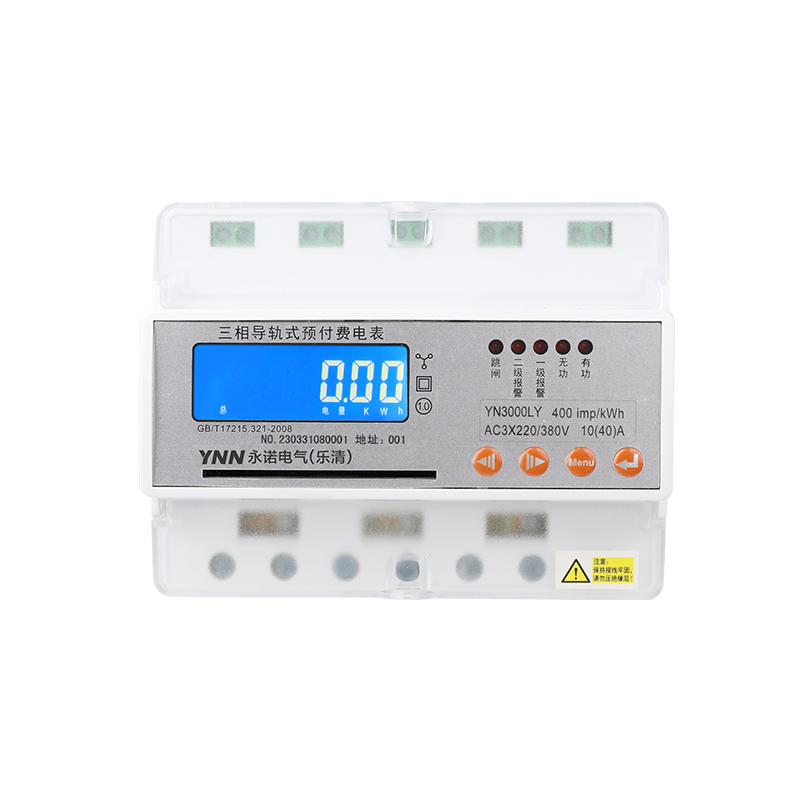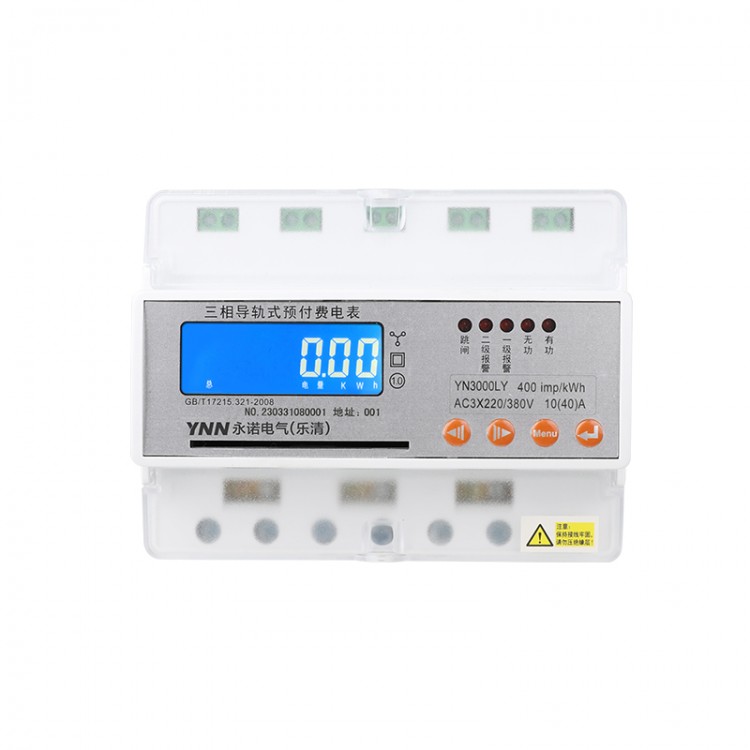

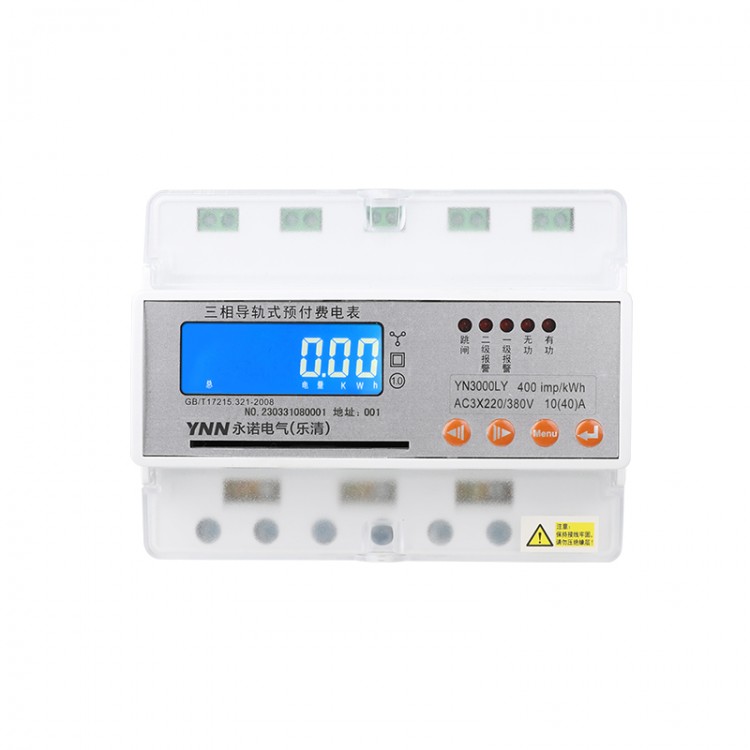
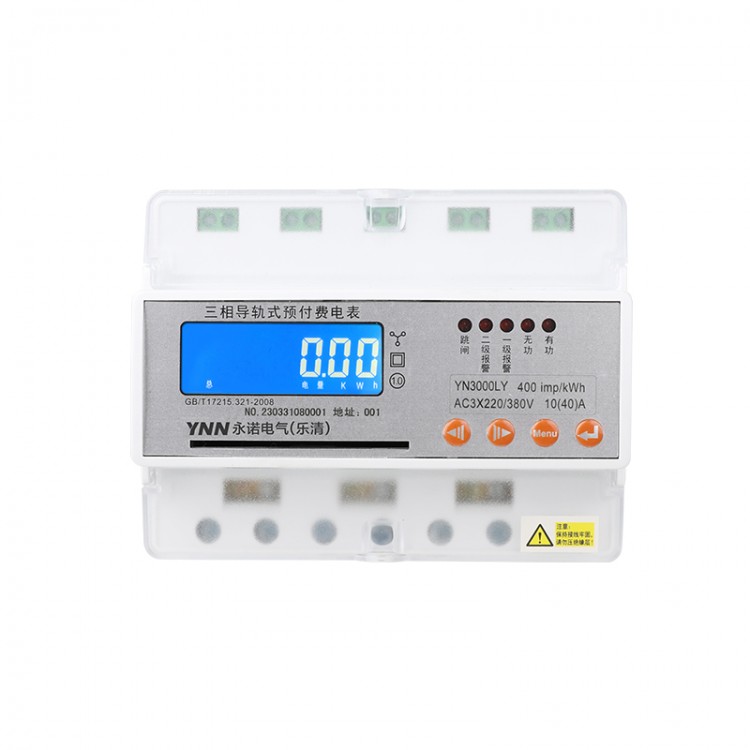
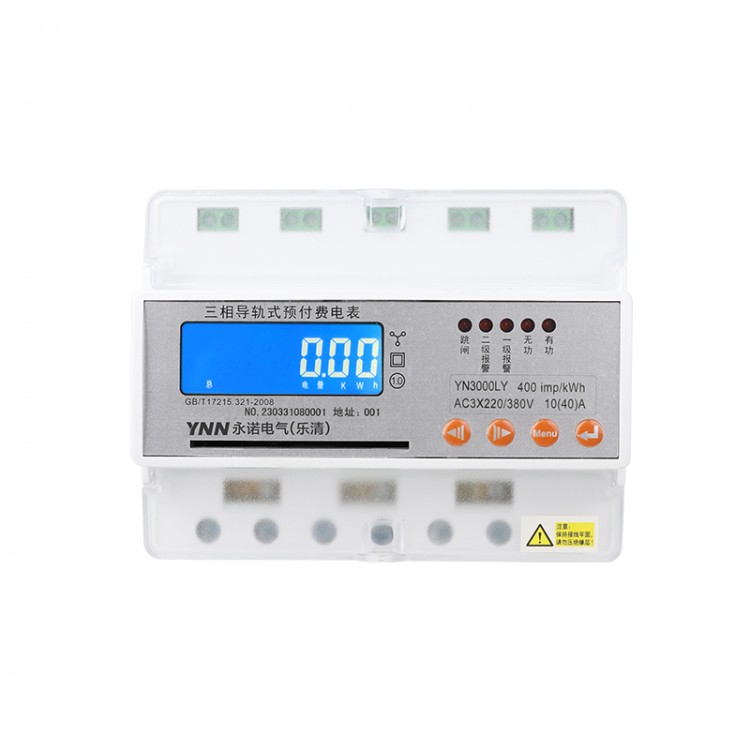







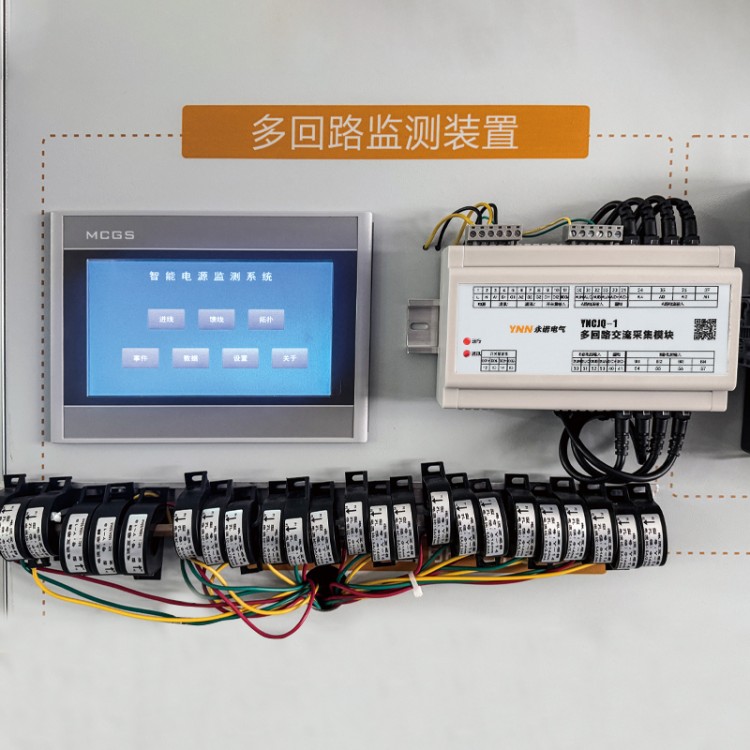
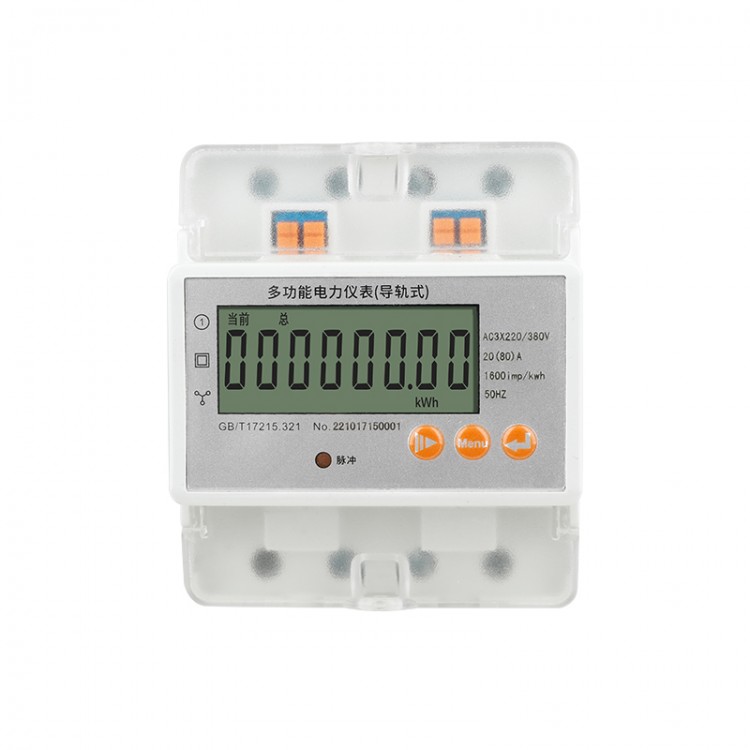
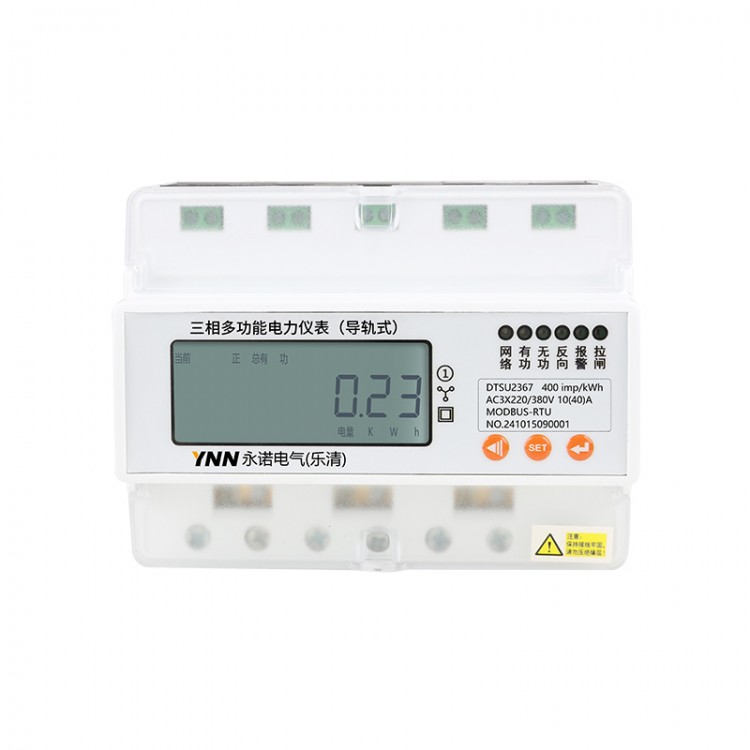
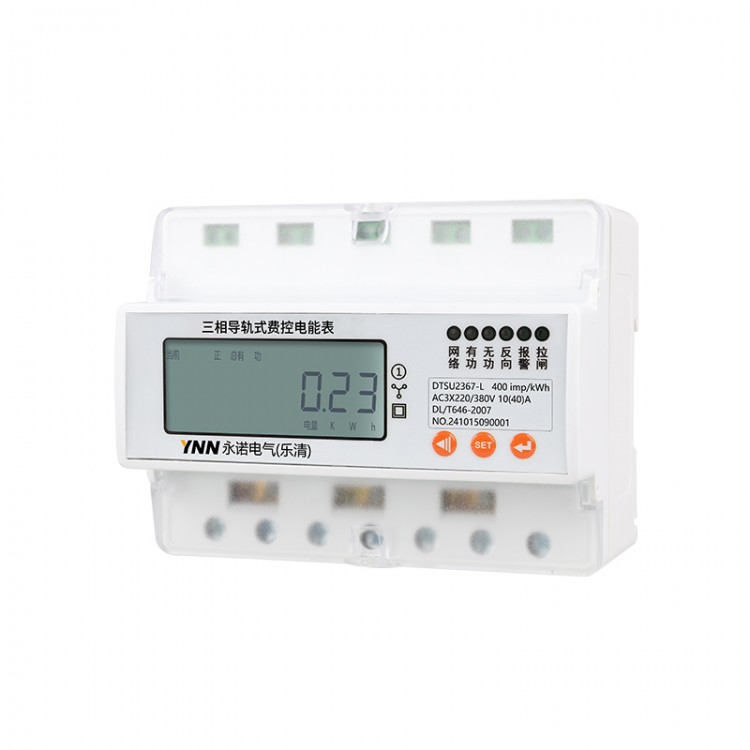
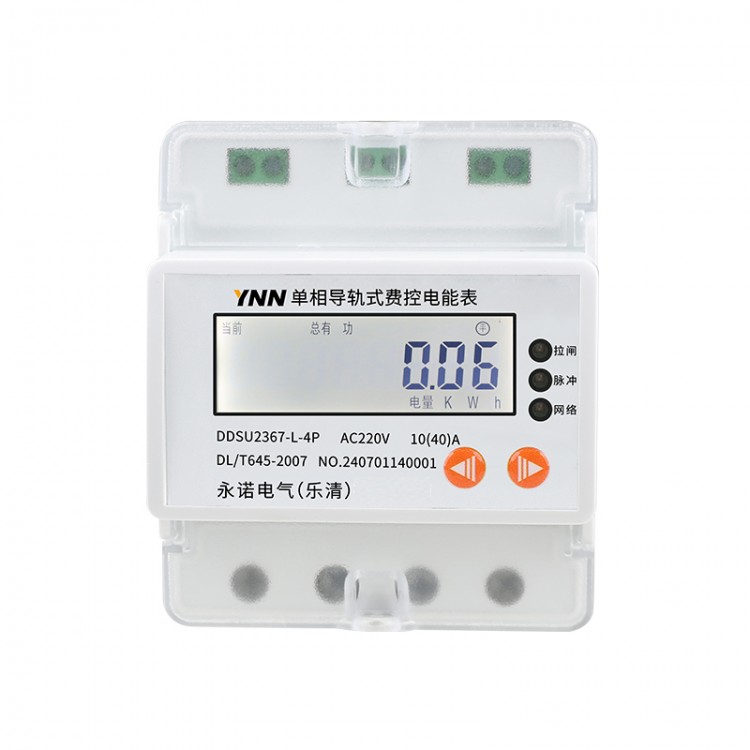
The track-type three-phase pre-paid electricity meter is primarily used in the field of electricity management for three-phase four-wire networks with frequencies ranging from 45 to 65 Hz. It can measure electricity information in the power grid and interact with the upper computer via encrypted IC cards or 485 communication. The meter's built-in high-power relay allows for local tripping and closing operations, thereby enabling pre-paid functionality; users can set internal parameters of the meter based on actual on-site conditions, offering ease of use, simple operation, and high accuracy; it is widely used in various residential, intelligent buildings, marketplaces, collective dormitories, and schools. For direct input models with primary current specifications of 100A or less, no external circuit breaker is required, and the on-off operation is achieved through the meter's built-in relay. When the primary current specification exceeds 100A, an external current transformer and circuit breaker are needed, and the on-off operation is controlled through the dry contact signal output by the meter. The product complies with GB/T17215, GB/T17883 and related standards, making it an ideal meter for reforming traditional electricity use systems and improving electricity management levels.
Real-time Monitoring: Voltage, Current, Power, Frequency, Power Factor, Energy
LCD Liquid Crystal Display
Communication: 1-way RS485 communication function, MODBUS-RTU protocol or DLT645-2007 protocol
Installation Method: Rail mounting, enhancing work efficiency
Power Failure Protection: Data is automatically saved and records are not lost after power failure.
Application Fields: Industrial Manufacturing, Commercial Buildings, Complete Plants, Substations, Public Utilities, etc.
Customization: Offers logo, appearance, and functionality customization services for businesses.
Product Specifications
| Product Name | Accuracy Grade | Rated Voltage | Current Specifications | Pulse Constant |
| Track-type Three-Phase Pre-Paid Energy Meter | 1.0 | 3X220/380V | 3X1.5(6)A | 6400imp/kWh |
| 3X5(20)A | 400imp/kWh | |||
| 3X10(40)A | 400imp/kWh | |||
| 3X15(60)A | 400imp/kWh | |||
| 3X20(80)A | 400imp/kWh |
Technical Specifications
| Project | Technical Specifications |
| Power accuracy grade | 1.0 Level |
| Electrical Energy Measurement Range | 0~999999.9KWh |
| Rated Voltage | AC110V AC 220V |
| Current Specifications | 1.5(6)A、5(20)A、10(40)A、20(80)A |
| Working Voltage | Normal: 0.9~1.1 Un; Limit: 0.7~1.2 Un |
| Reference Frequency | 45~65Hz |
| Starting Current | 0.004Ib |
| Power Consumption | ≤5VA |
| Pulse Output | Pulse Width: 80±20ms Optocoupler Isolated Output |
| Digital Communication | RS485 interface, Modbus-RTU protocol, baud rate 9600 bps, no parity |
| Temperature Range | -10℃~+55℃ |
| Relative Humidity | ≤95% No Dew Point |
| Dimensions | 126×94×84 |
Dimensions and wiring diagram
Exterior dimensions

Installation Diagram
The installation is via a 35mm standard rail system, as shown below:

Wiring diagram

Note:
Ensure the screws are tightly tightened during wiring to prevent the instrument from malfunctioning due to poor contact.
2. When the input current exceeds 100A, an external 5A current transformer is required. In this case, the user's opening and closing operations must be performed using an external circuit breaker or contactor.
3. The alarm output is a relay passive dry contact output. When the remaining battery power of the user falls below the second-level alarm power or is 0, the relay closes to output the disconnection signal (relay capacity: AC 250V, 5A).
4. The wiring method for current specifications greater than 100A is shown as follows: