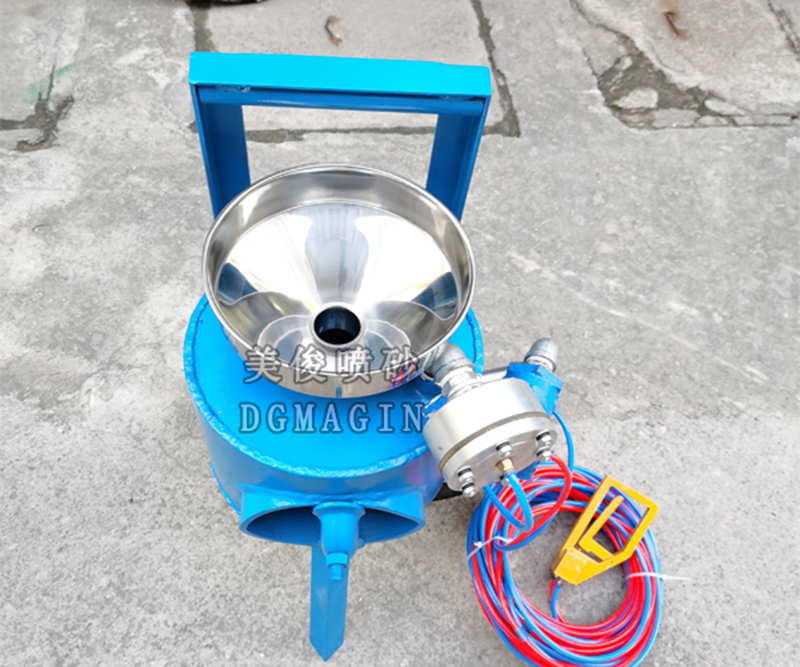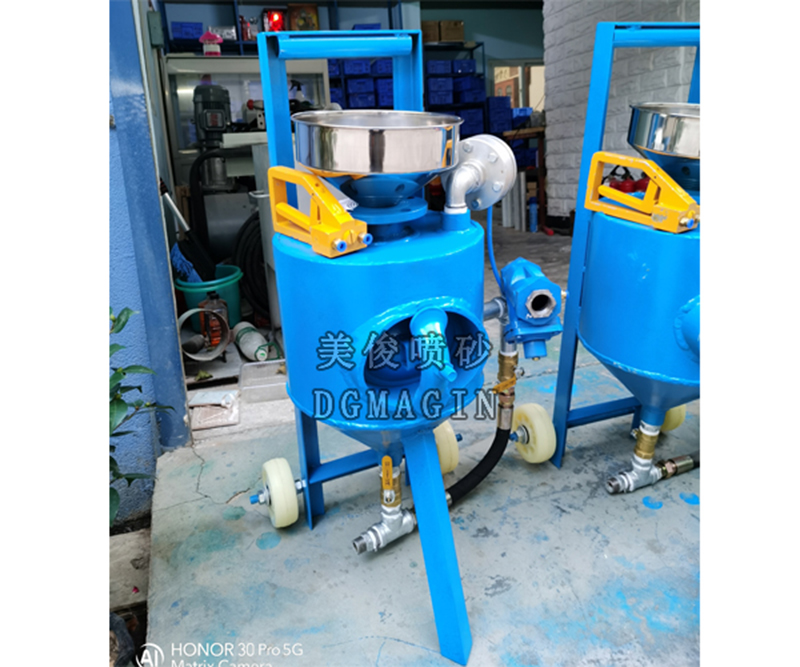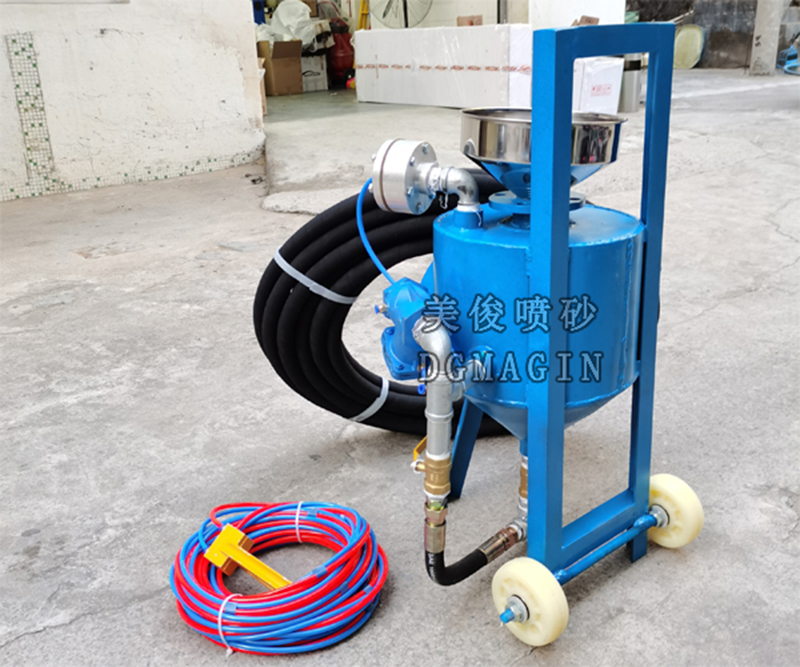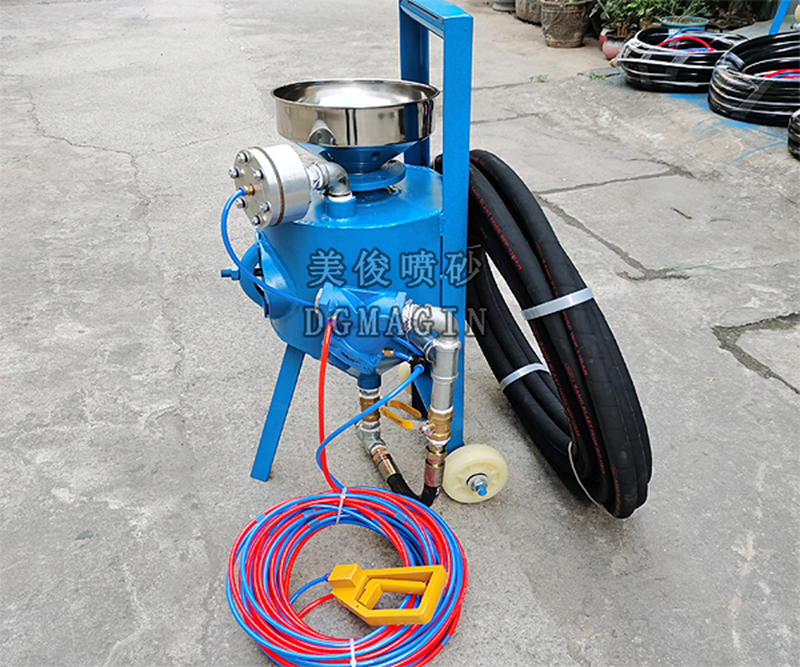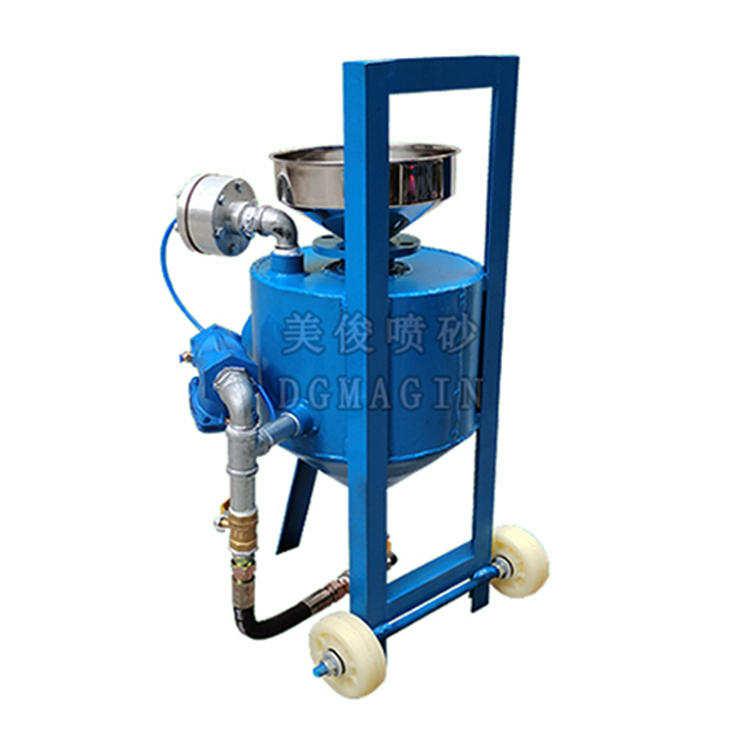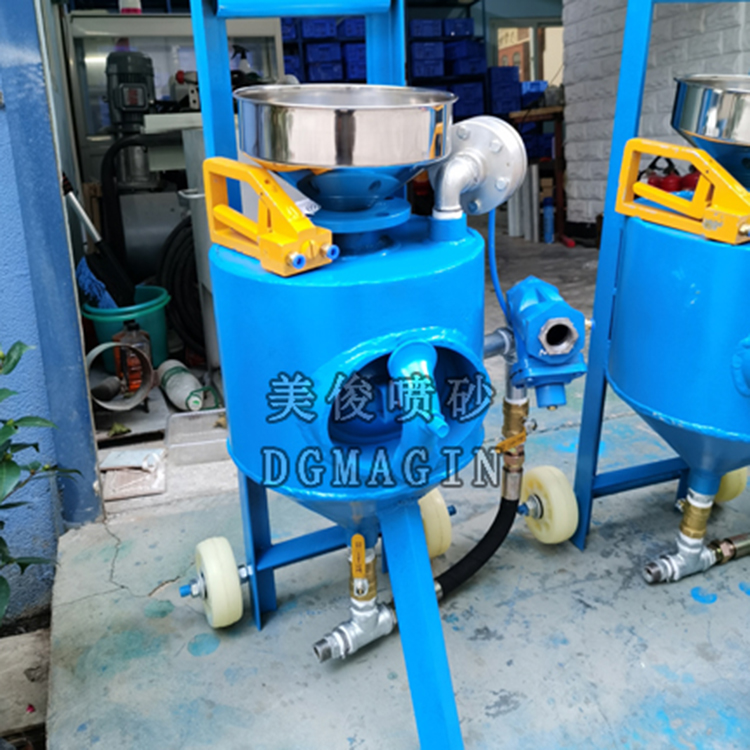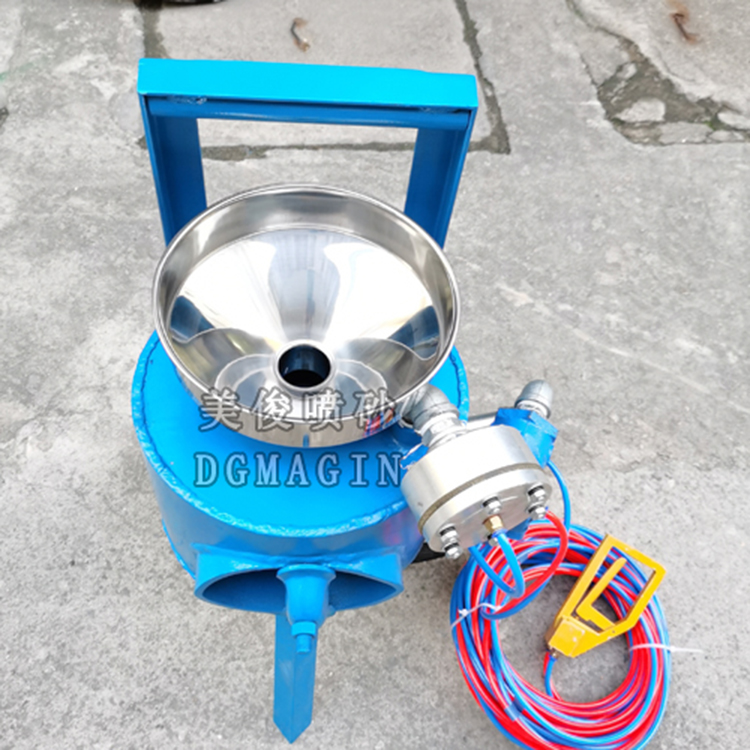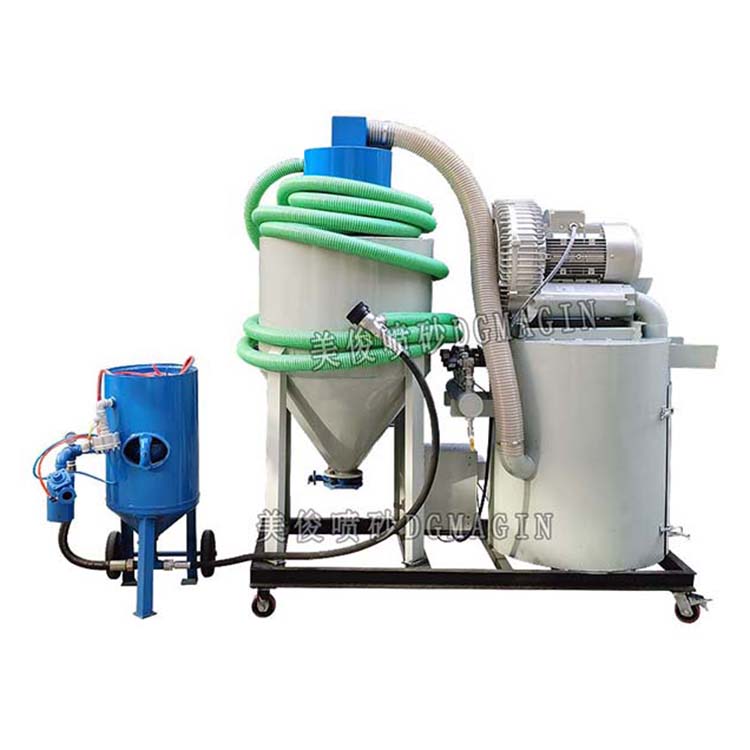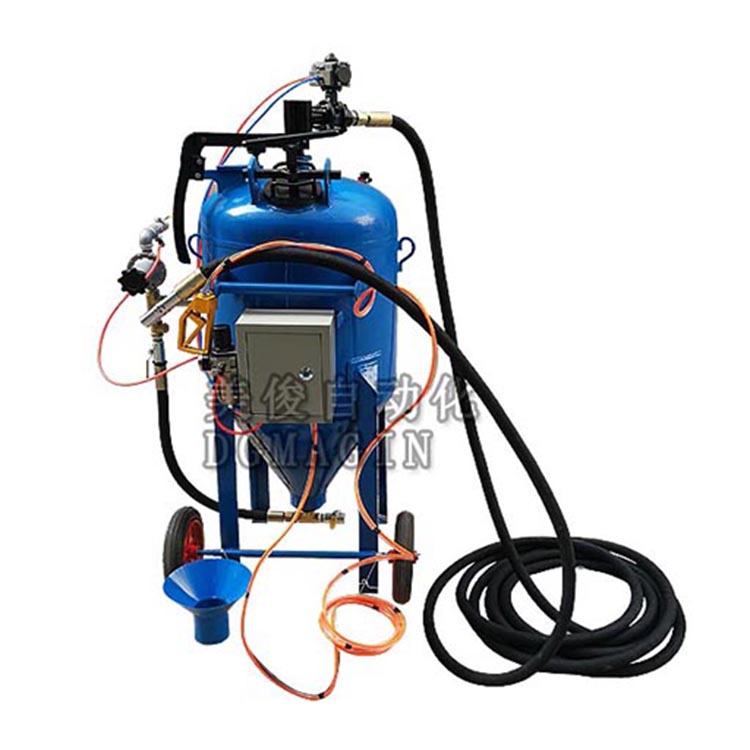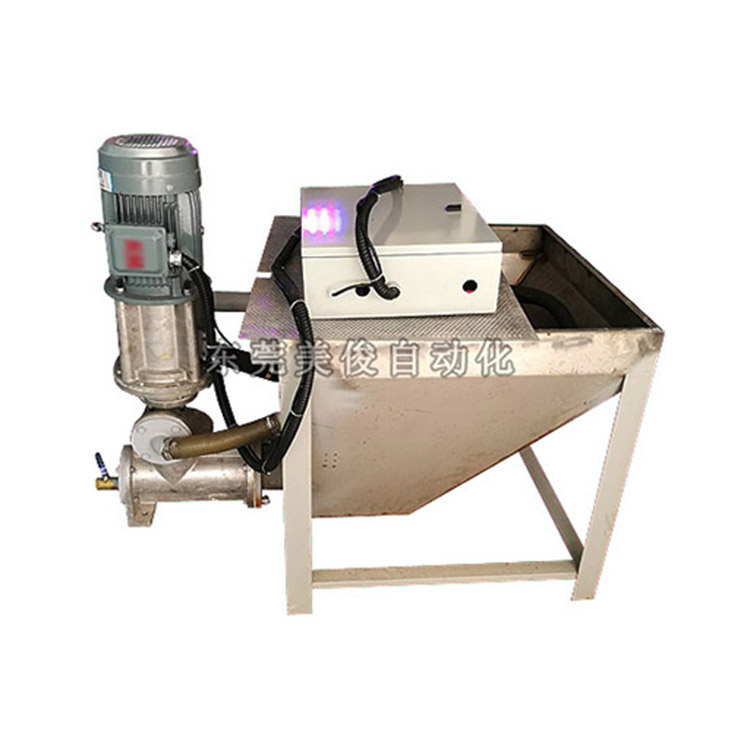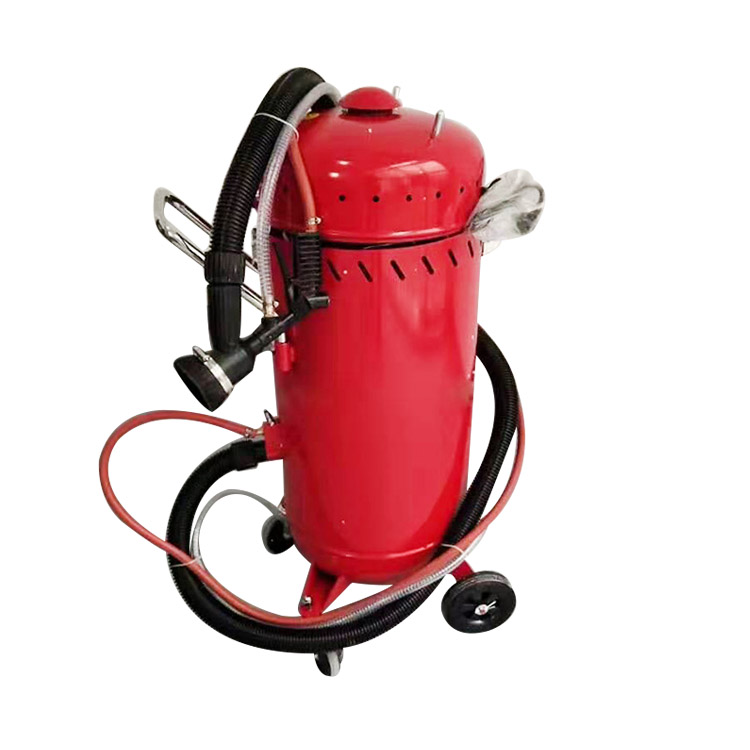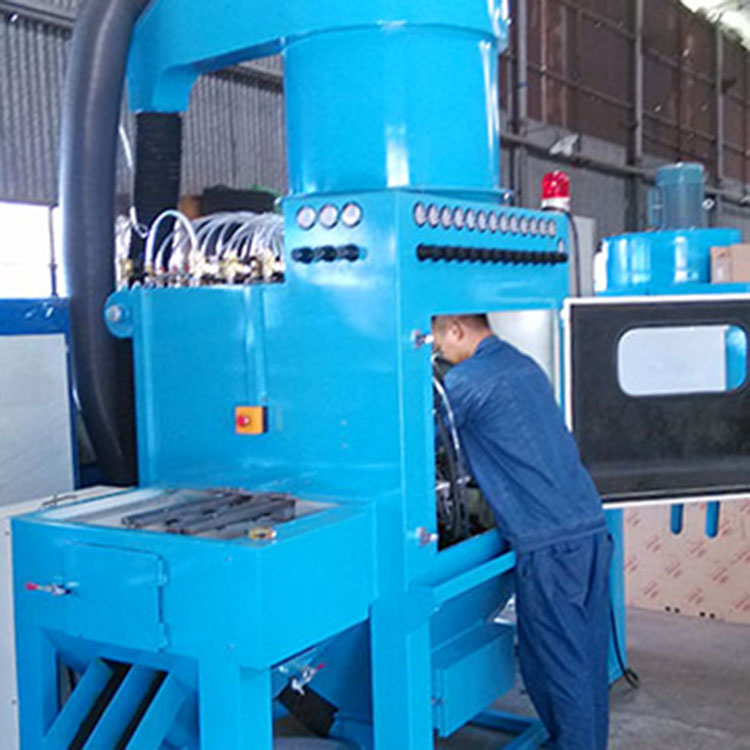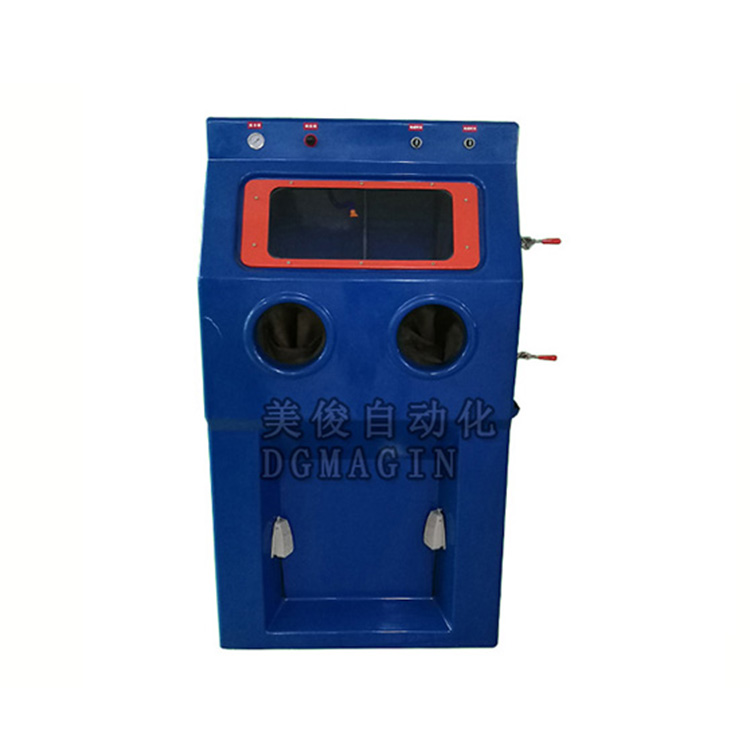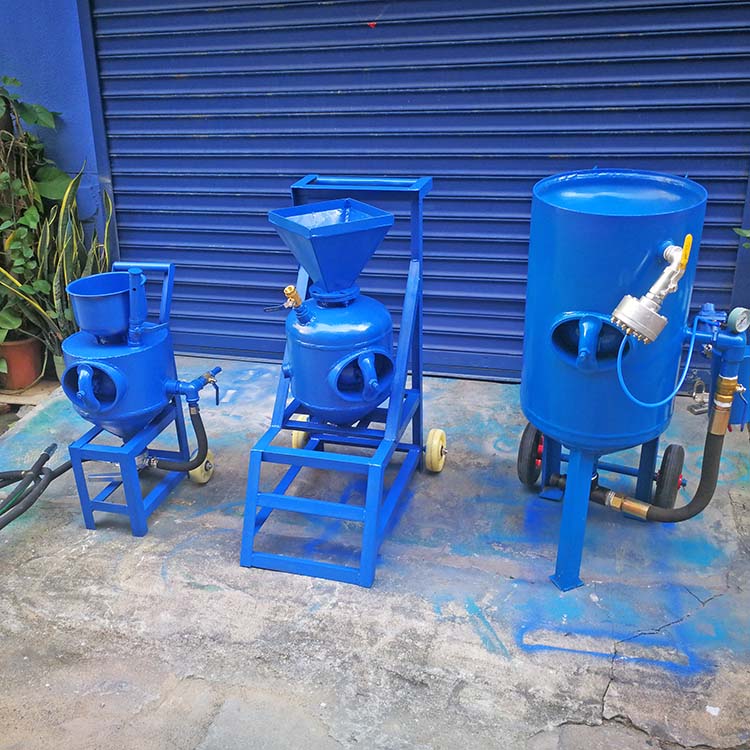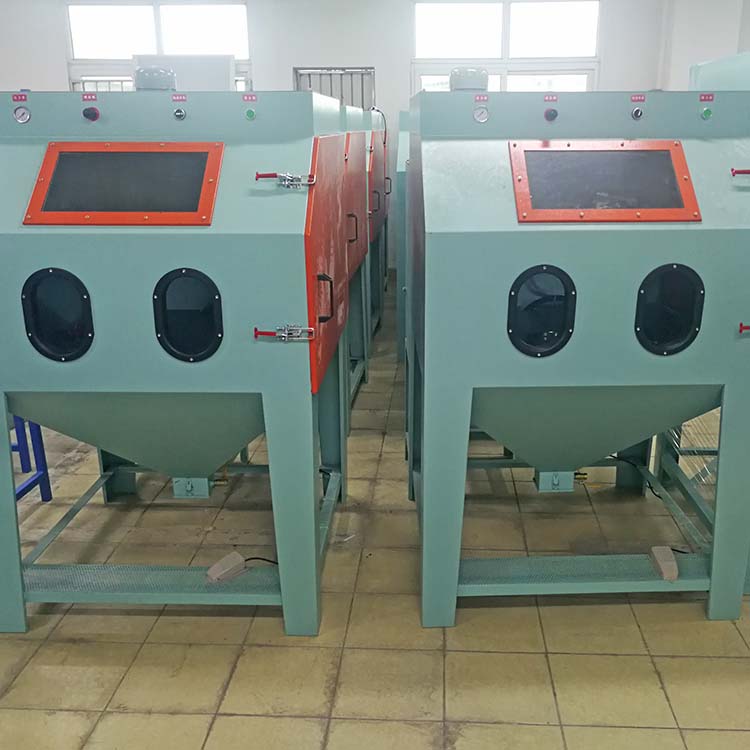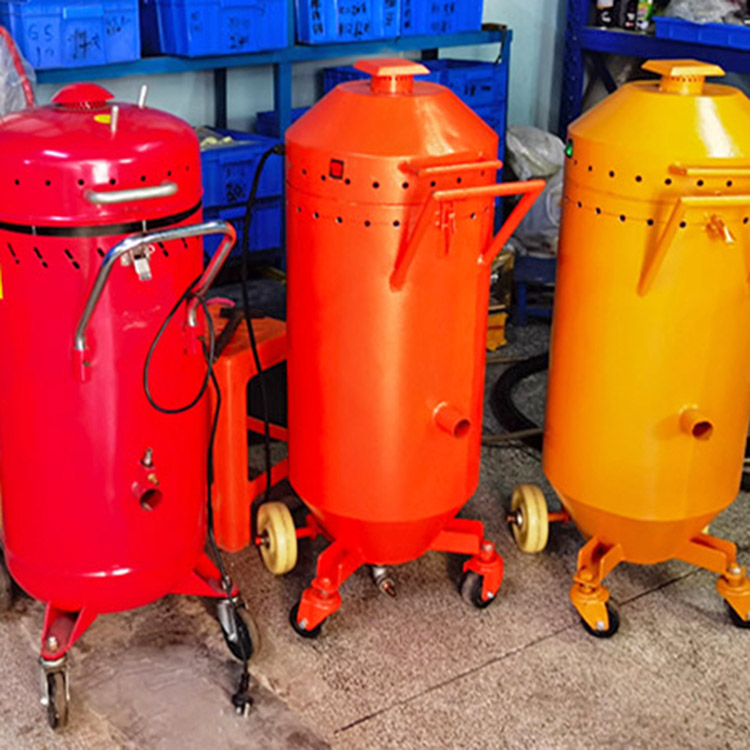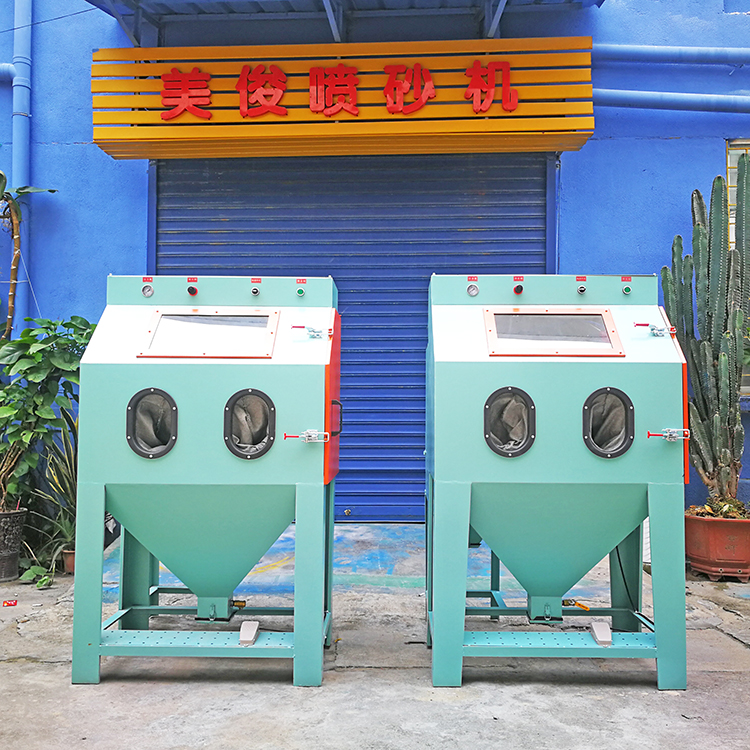

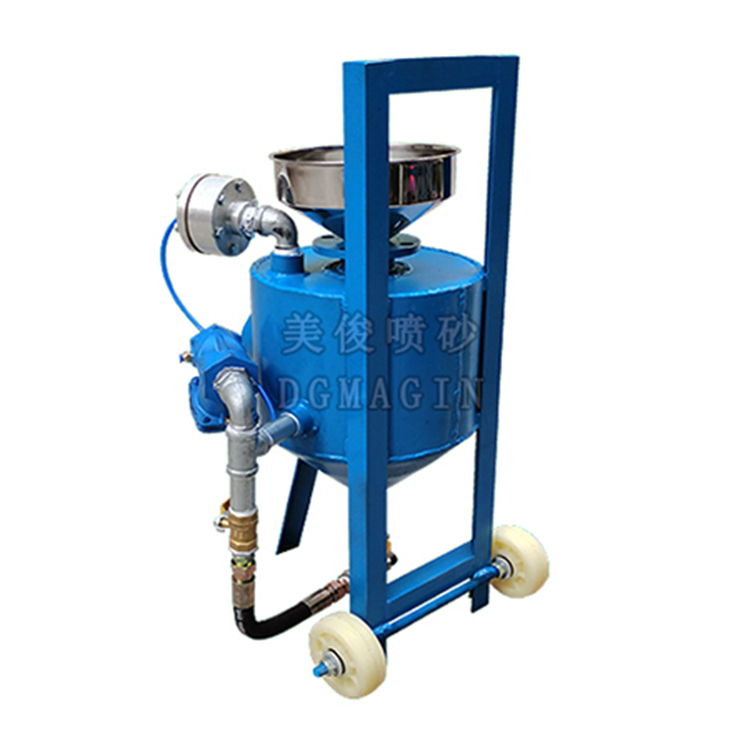

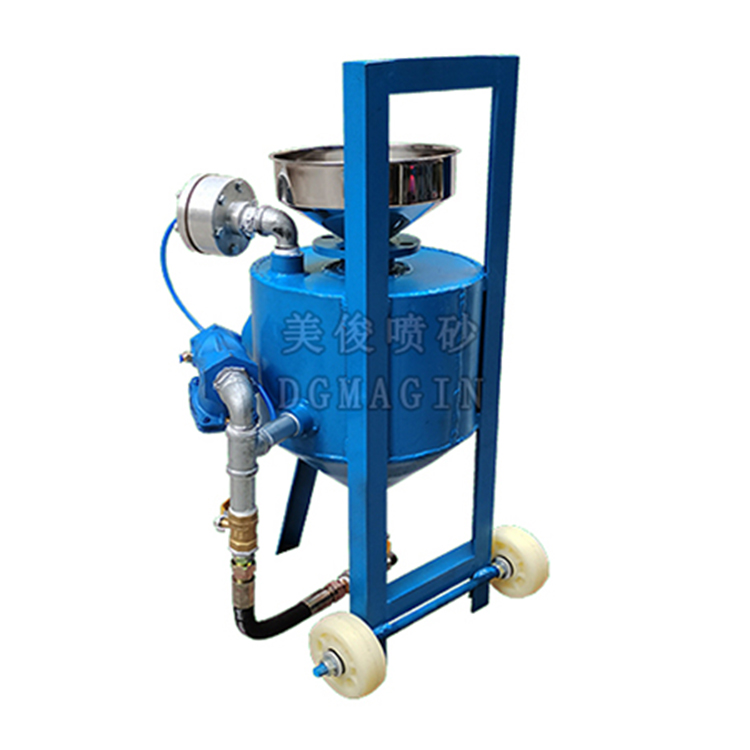
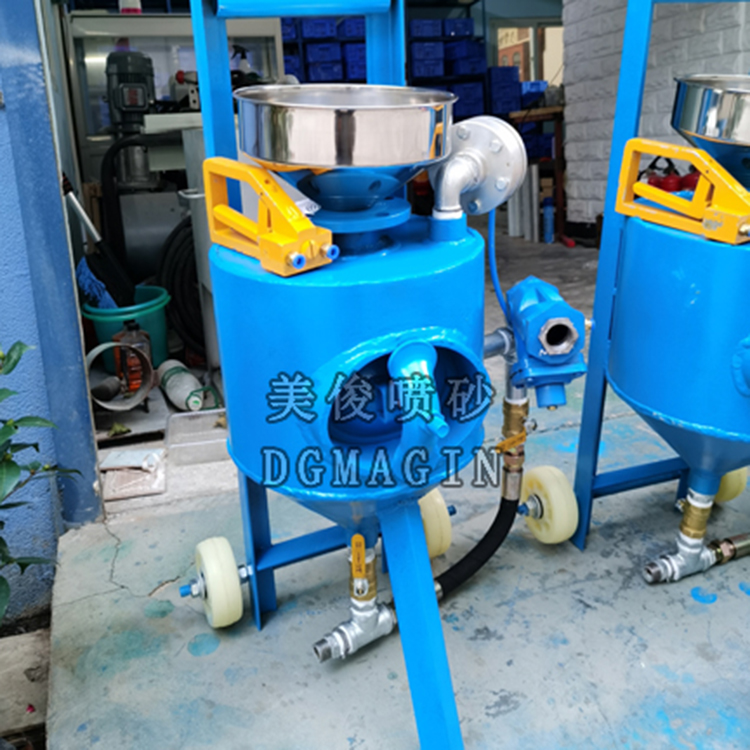
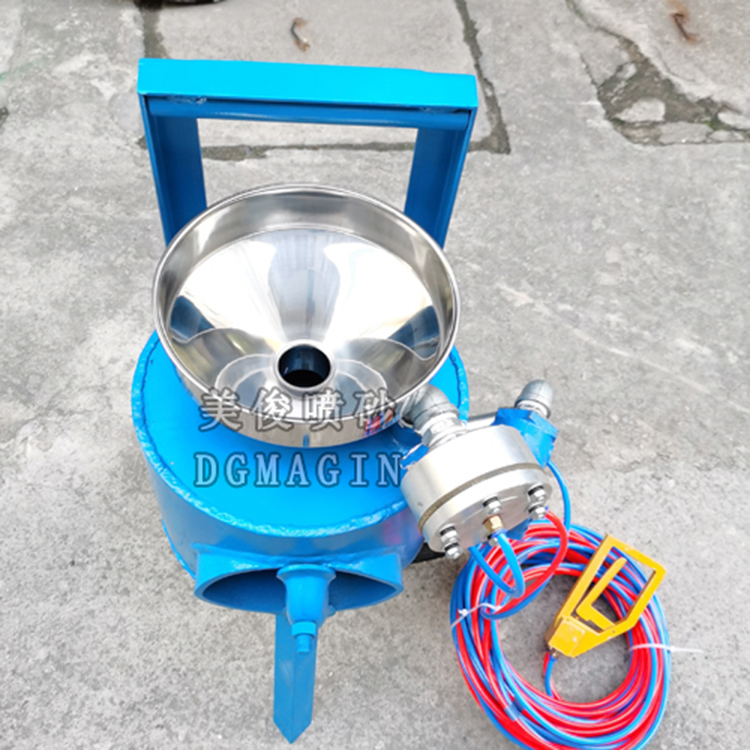


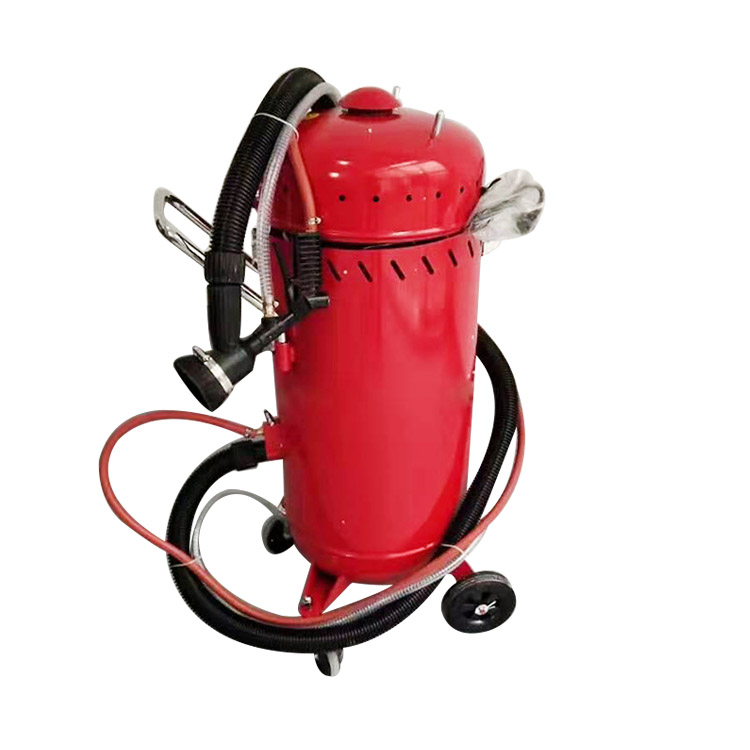
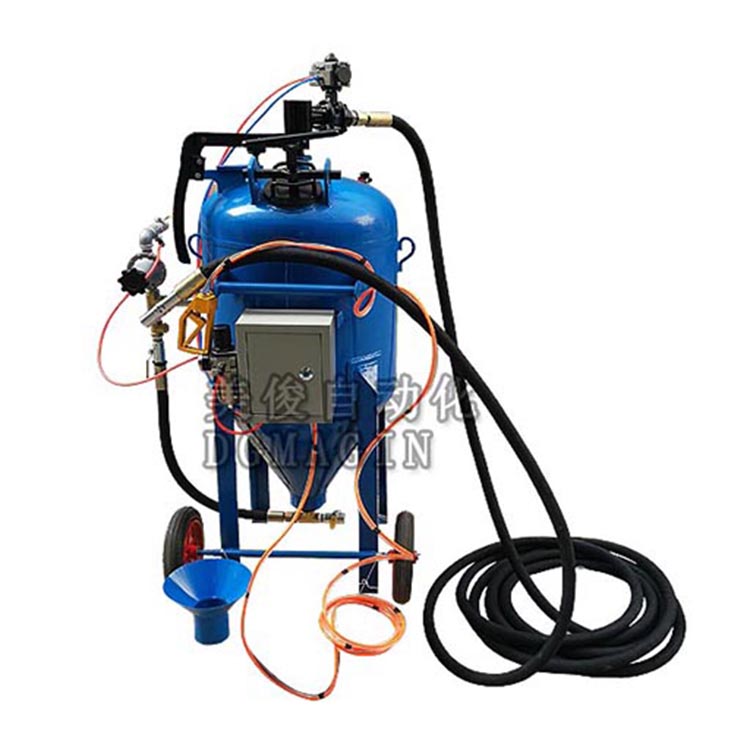
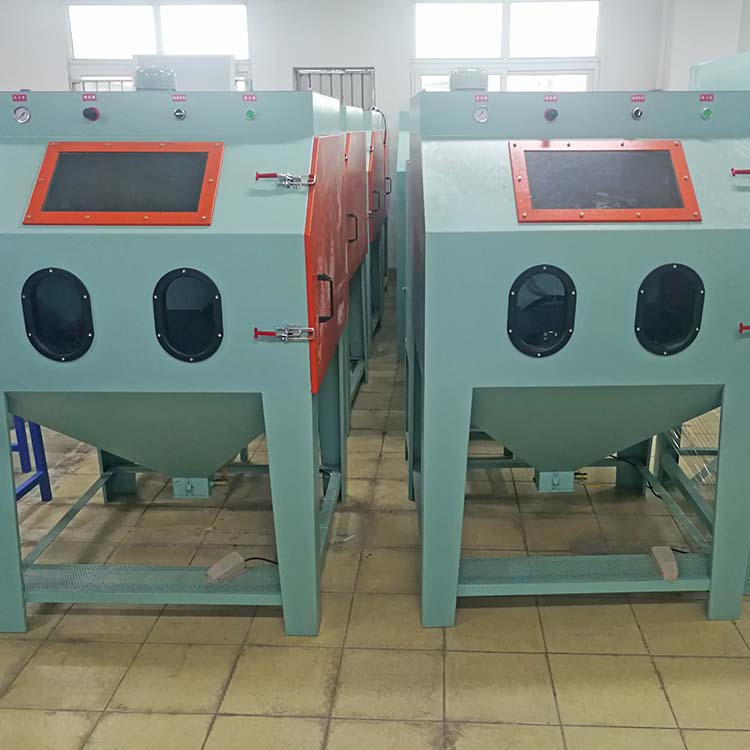





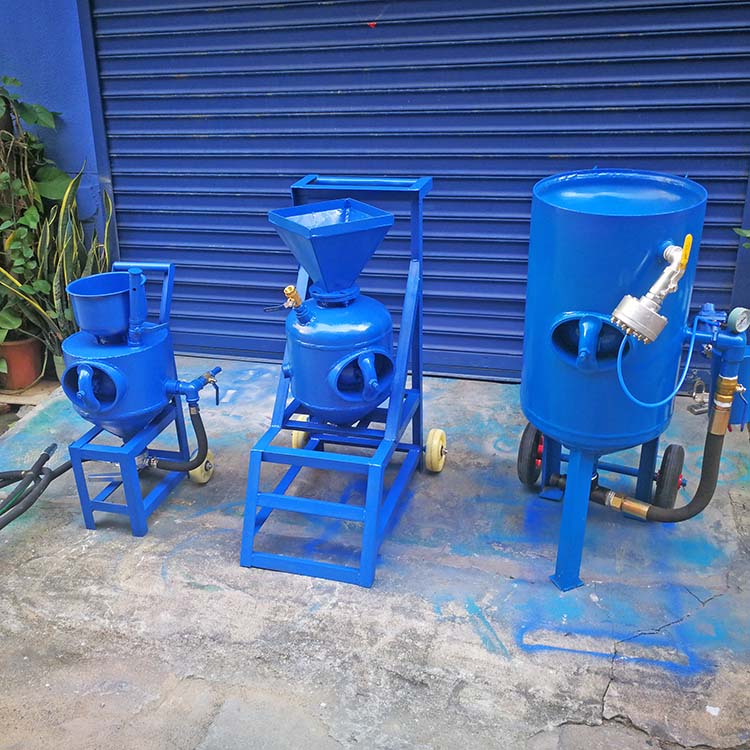
This unit is equipped with a 19MM inner diameter sandblasting tube for air supply and sand ejection, as well as wear-resistant straight hole boron carbide sandblasting nozzles (not Venturi-type large sandblasters), primarily suitable for glass and stone carving, and narrow area sandblasting.
Compared to other pressure blasting machines with an inner diameter of 32MM, this model features savings in gas source and cost.
Sandblasting Grade: SA2.5-3.0
Air Compressor Power: 15 HP
Pressure-Feed Mobile Sandblasting Machines are widely used in the sandblasting and three-dimensional carving of glass, marble, and other stone materials, shipbuilding sandblasting, surface treatment for steel structures before painting on bridges, railways, containers, petrochemical facilities, and rust and corrosion treatment, as well as pattern sandblasting on denim clothing.
Compact structure, superior performance, easy operation, convenient.
2. The cylinder design and production adhere to pressure vessel standards, ensuring safety and reliability.
3. Standardized components used for easy replacement and lower costs.
4. Features instant control capability, available with either electric or pneumatic control to cater to diverse customer needs. Operable by a single individual.
5. The housing is sandblasted and coated with rust-proof paint, ensuring no corrosion.
6. Wheel addition for easy mobility.
Installation
Please give a general check of the machine's screws and parts, ensuring there are no loose or damaged areas. If any are found, please replace them with new ones or secure them firmly.
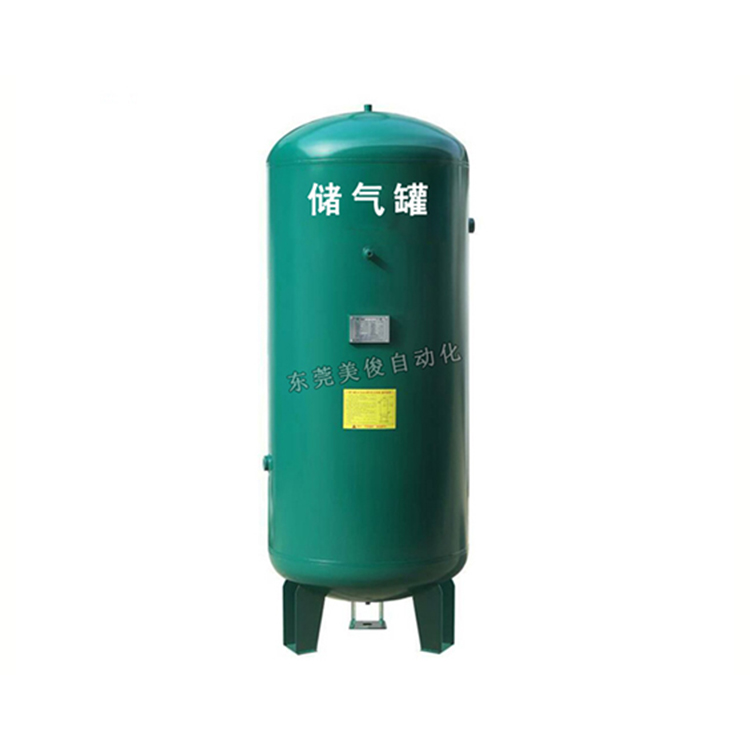
2. Connect the high-pressure pipe between the air compressor and the sandblasting machine, and properly attach the piping of the instant control switch according to the corresponding test number. (Note: Prior to connecting the air pipe, it is essential to remove any debris or excessive moisture inside the pipe [by holding the air tube tightly with your hand, pointing it upwards, and then opening the air source to blow out the debris, and then closing the air source], before attaching the air pipe to the machine to avoid potential damage from pressure adjustment and water filtration, or to the shot control system. It is also recommended to use a manufacturer-installed freeze-drying machine to ensure air quality and reduce avoidable malfunctions).
3. [Separation of Sandblasting Tube and Instantaneous Control Device] Keep the compressed air tank intake valve closed, then open the intake valve to allow the air compressor to supply air. Press the instantaneous control lever, lifting the control rod, and insert the sandblasting tube through the hole of the instantaneous control switch. Push the sandblasting tube through the instantaneous control switch. (For hinged instantaneous control switches, lift the control mechanism and insert the sandblasting tube.)
4. Once these steps are completed, add the sand material, close the exhaust valve, open the pressure tank, and the machine is ready for use.
Adjust Sand Yield Standard Operating Procedure
Note: After adjusting the sanding amount, it takes an additional one minute per meter of sand pipe to observe the change in the adjusted sanding amount based on the length of the sanding volume.
Please note the working condition of the pipe bender if equipped.
In most cases, the sand valve handle is fully open, at which point the sand output is large, the sand material flow is dense, and the flow rate is fast.
2. Fully closed, usually no sanding occurs; during normal operation, the handle is only slightly opened; typically, about 30 degrees are opened during general operations for ease of use. However, the angle should be adjusted based on the nozzle diameter, the operator's skill, the operating conditions, and the required sanding amount.
3. The angle varies between fully open and fully closed based on actual conditions, with the sand output adjusting accordingly.