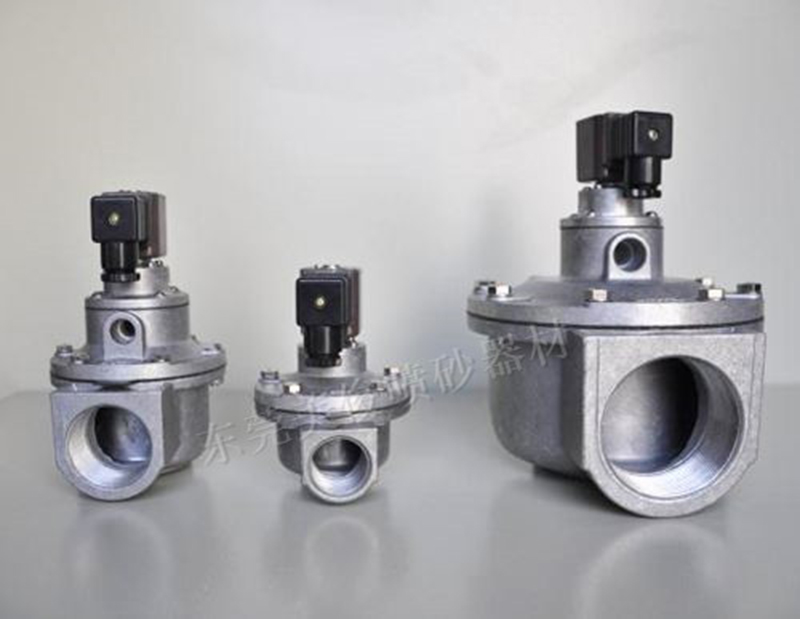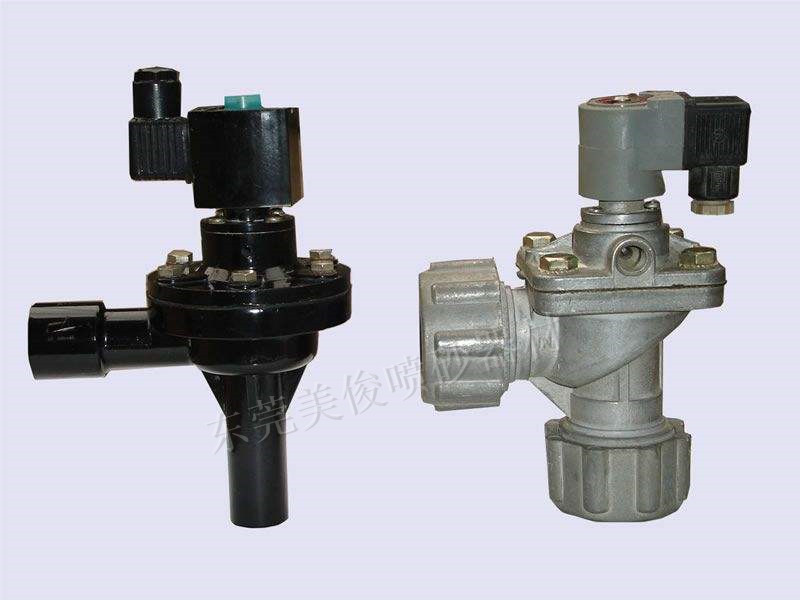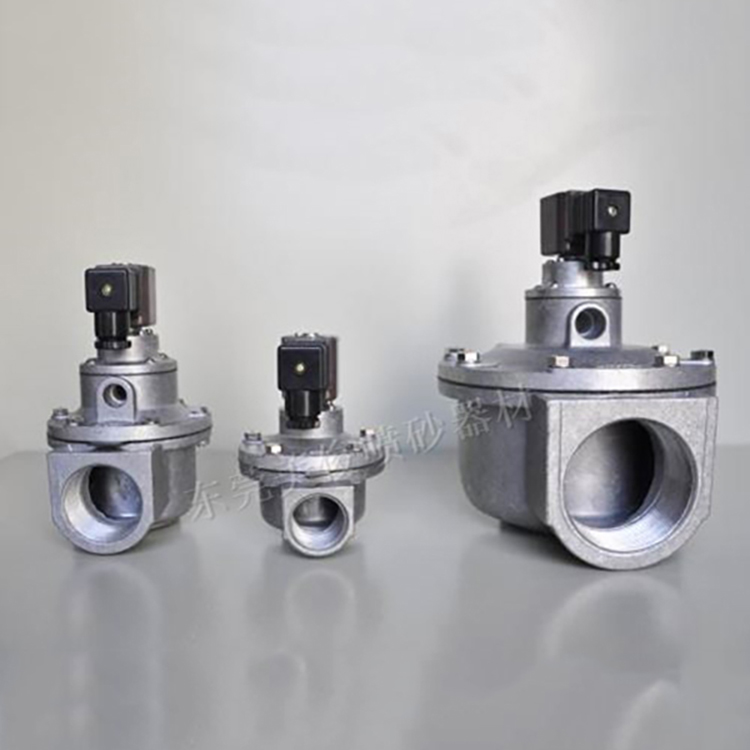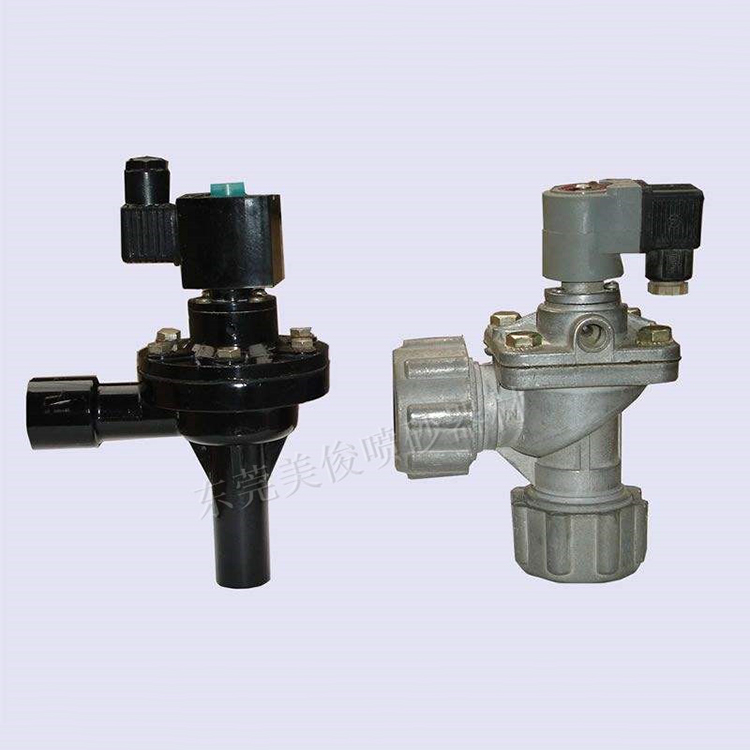

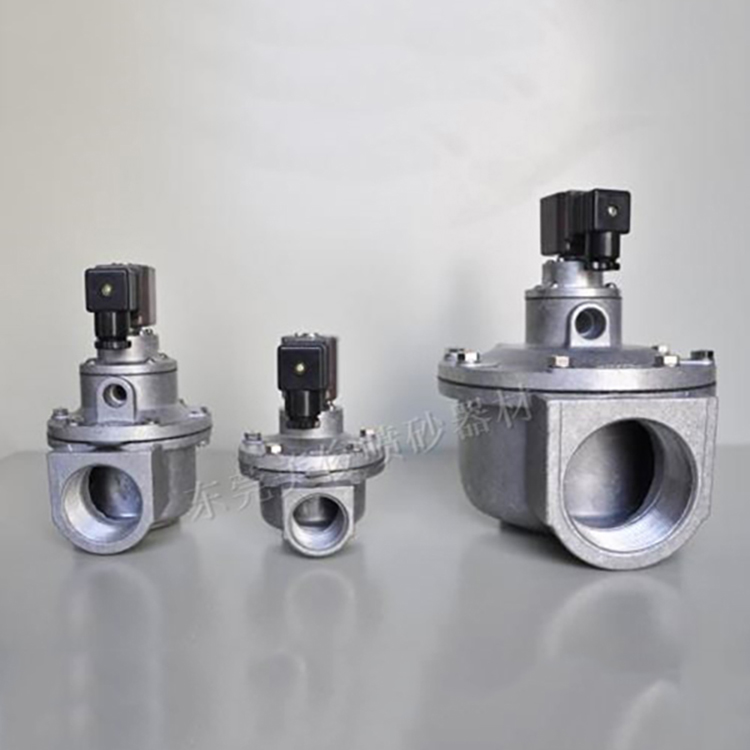

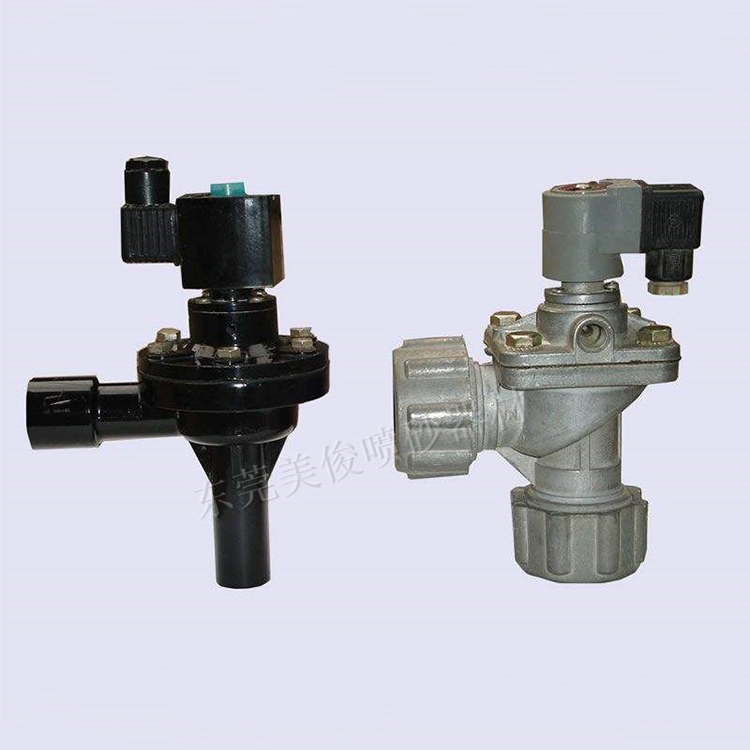
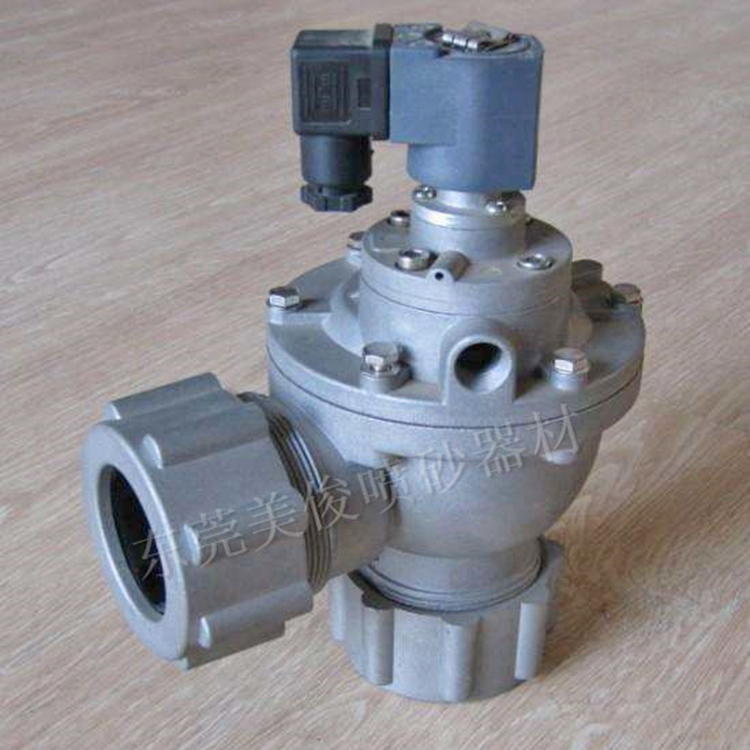














Bag dust collector pulse valves types and functions - Pulse valves are the actuating mechanism and key components of the pulse-jet cleaning device, mainly categorized into three types: right-angle, submersion, and straight-through, each with 6 specification interfaces ranging from 20 to 76mm (0.75 to 3in). Each valve consumes 30 to 600m³/min (0.2 to 0.6MPa) of gas per pulse. It is worth noting that the working pressure of domestic pulse valves is as follows: right-angle and straight-through valves are 0.4 to 0.6MPa, while submersion valves are 0.2 to 0.6MPa; for imported products, regardless of the valve type, the working pressure range is always 0.06 to 0.86MPa, with no difference in pressure bearing and application pressure levels between the two types of valves.
① Right-angle pulse valve structure and working principle
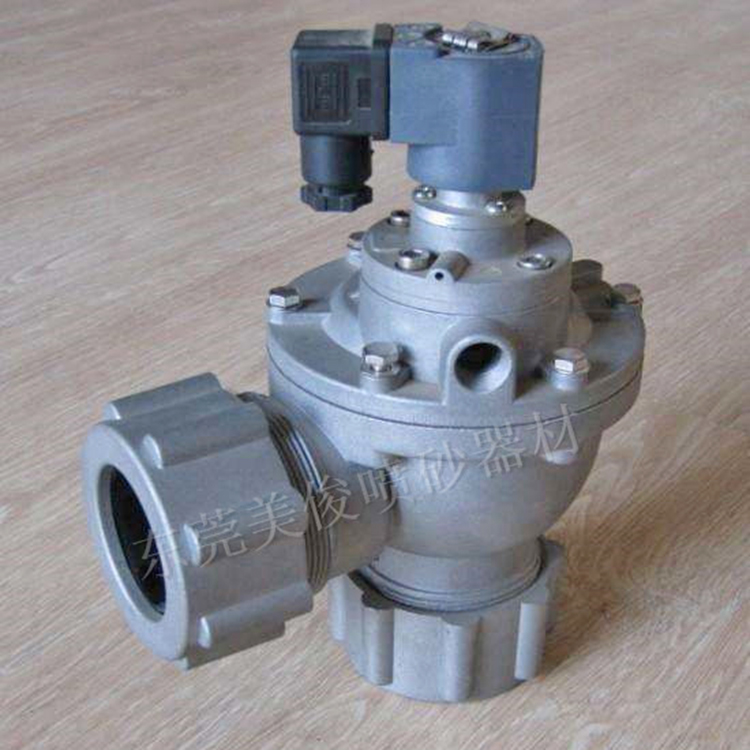
The characteristic of the right-angle pulse valve is that the air inlet and outlet pipes of the valve form a 90° right angle. The structure of the right-angle pulse valve is as shown in the figure. As can be seen from the figure, the diaphragm inside the valve divides the electromagnetic pulse valve into two gas chambers, front and rear. When compressed air is connected, the compressed air enters the rear gas chamber through the throttle hole. At this time, the pressure in the rear gas chamber will tightly seal the diaphragm against the valve's outlet, and the pulse valve is in the "closed" state.
The electrical signal from the pulse spray control instrument causes the armature of the electromagnetic pulse valve to move, opening the exhaust hole of the gas chamber behind the valve. The rear gas chamber quickly loses pressure, the diaphragm moves backward, compressed air can pass through the valve outlet and spray, placing the pulse valve in the "open" state. Compressed air is instantaneously ejected from within the valve, forming a spray airflow.
When the pulse control instrument's electrical signal is lost, the solenoid plunger resets, the exhaust port of the rear gas chamber closes, and the pressure in the rear gas chamber increases, causing the diaphragm to adhere to the valve outlet, bringing the pulse valve back to the "closed" state.
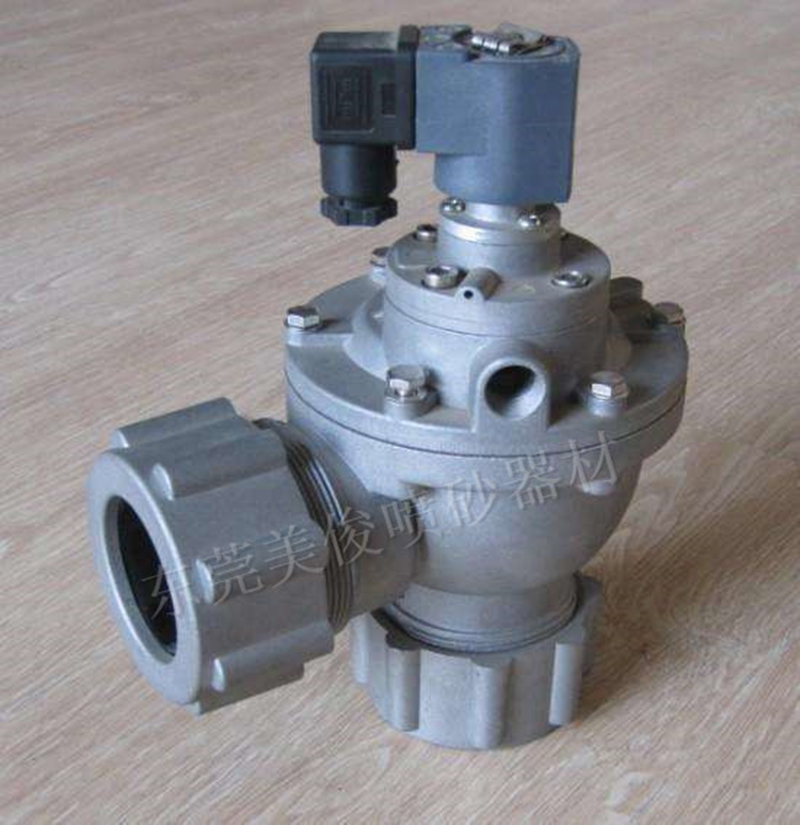
The technical specifications of our factory's electromagnetic pulse valve are as follows.
a. Environmental Adaptability: Temperature -10~+55℃; Relative humidity not exceeding 85%.
b. Working Medium: Clean air, dew point -20°C.
c. Blowing air source pressure: 0.3~0.6 MPa.
d. Blowing air volume: At a blowing air source pressure of 0.6 MPa, with a blowing time of 0.1 seconds, and at the outlet venting.
e. Operating voltage and current of electromagnetic pilot valve: DC 24V, 0.8A; AC 220V, 0.14A; AC 110V, 0.3A.
f. Pulse valve air intake: The intake port connects to the gas accumulator, and the exhaust port connects to the air blowing tube. When connecting by side, the threads should be filled withC₂F₄Tape, to ensure a seal. Also, be mindful that the length of the threaded end at the intake side should not be over-tightened to avoid affecting the blowing gas volume.
② Principle of operation for the submerged type pulse valve
The submerged type pulse valve is installed in a gas pocket, hence the name "submerged." As shown in the figure, the submerged type pulse valve has a reduced flow channel resistance and lower blow-off air source pressure compared to other structural forms, making it suitable for low-pressure applications. Additionally, it can reduce energy consumption and extend the diaphragm life.
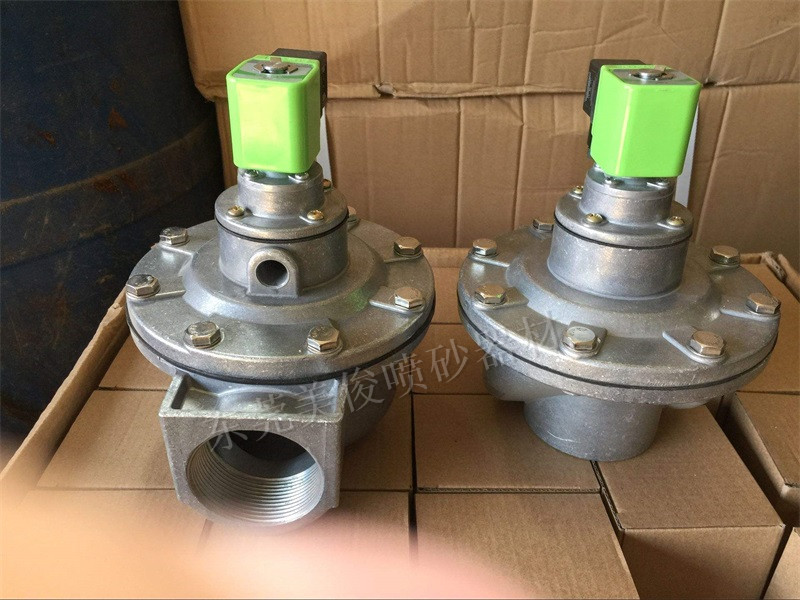
The working principle of the submerged pulse valve is that the diaphragm divides the pulse valve into two chambers: the front and the rear. When compressed air is introduced, it passes through a throttle orifice into the rear chamber. At this point, the pressure in the rear chamber pushes the diaphragm against the valve's outlet, keeping the pulse valve in the "closed" position.
When the pulse controller's electrical signal moves the armature of the pulse valve, the exhaust port of the valve's after-pressure chamber opens, causing the after-pressure chamber to rapidly depressurize. The diaphragm moves, and compressed air is blown through the valve's outlet. The pulse valve is in the "open" position, momentarily releasing a jet of compressed air flow.
Pulse controller electrical signal disappears, solenoid plunger resets, rear gas chamber exhaust hole closes, rear gas chamber pressure increases, causing the diaphragm to seal tightly against the valve outlet, returning the pulse valve to the "closed" position.