

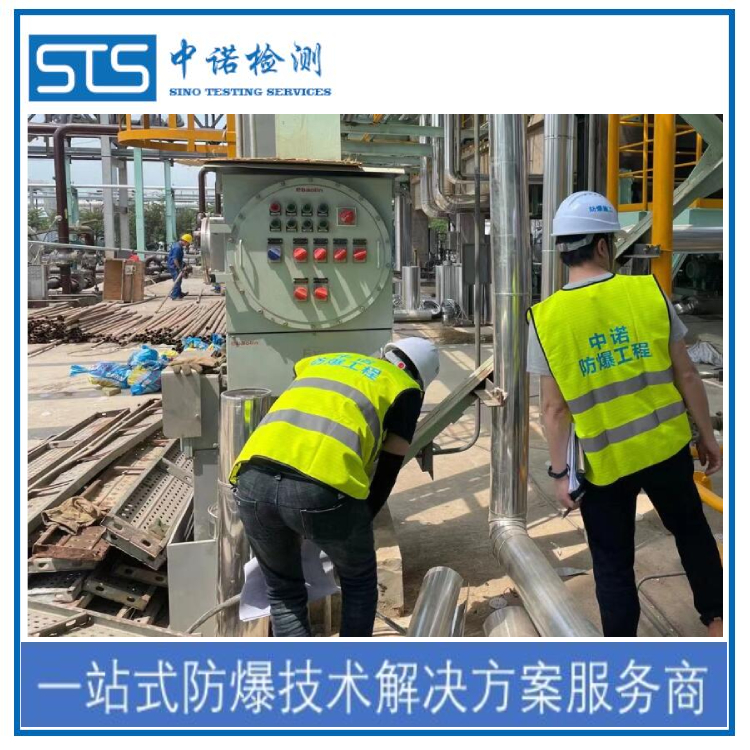
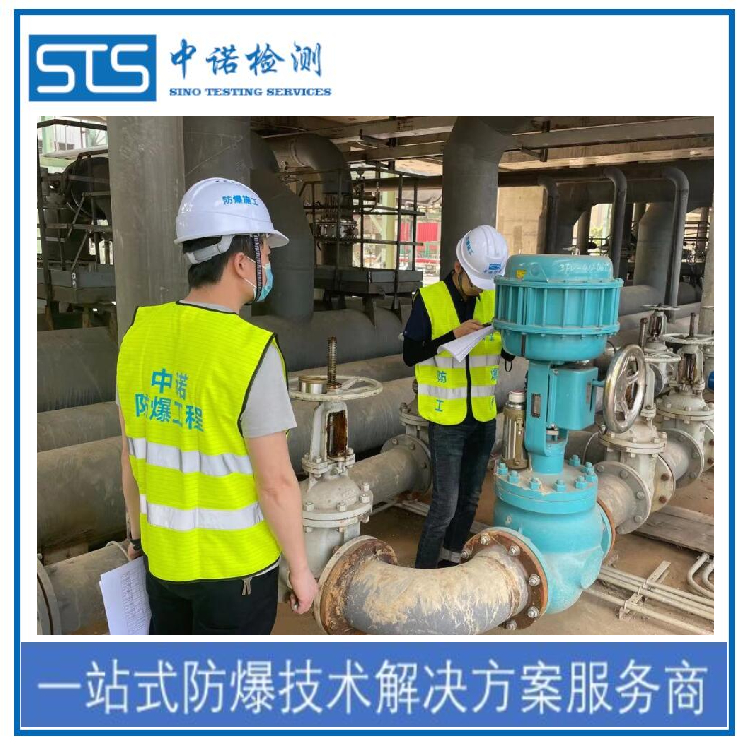



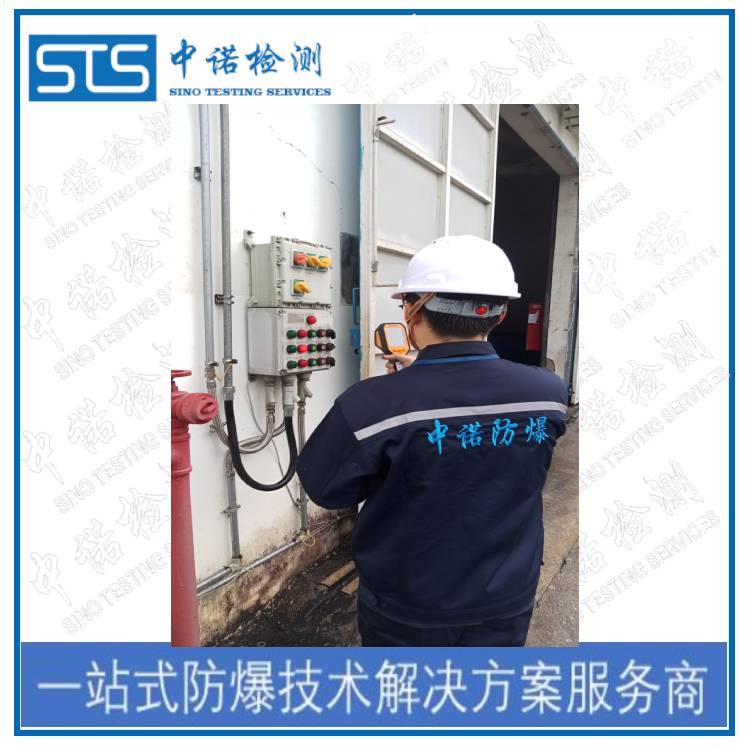








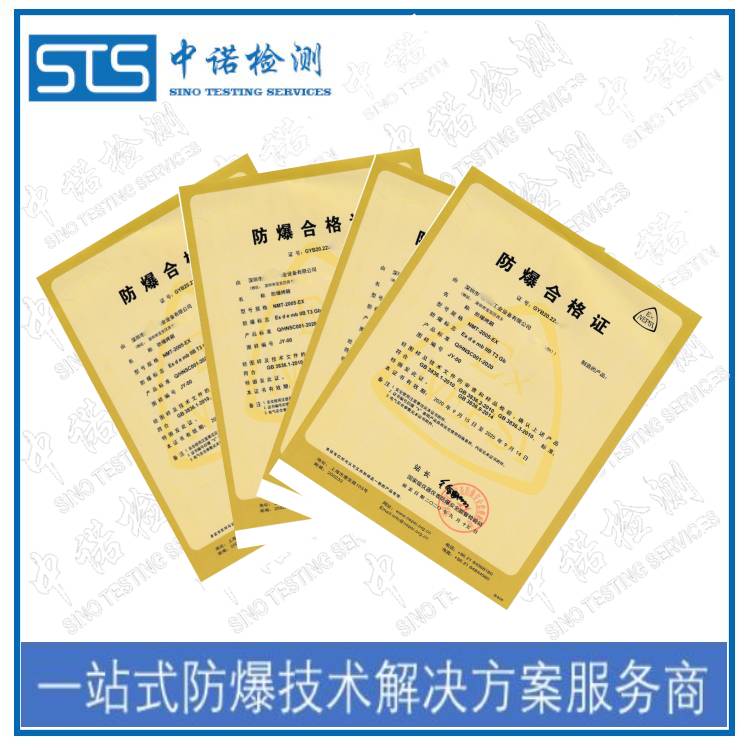
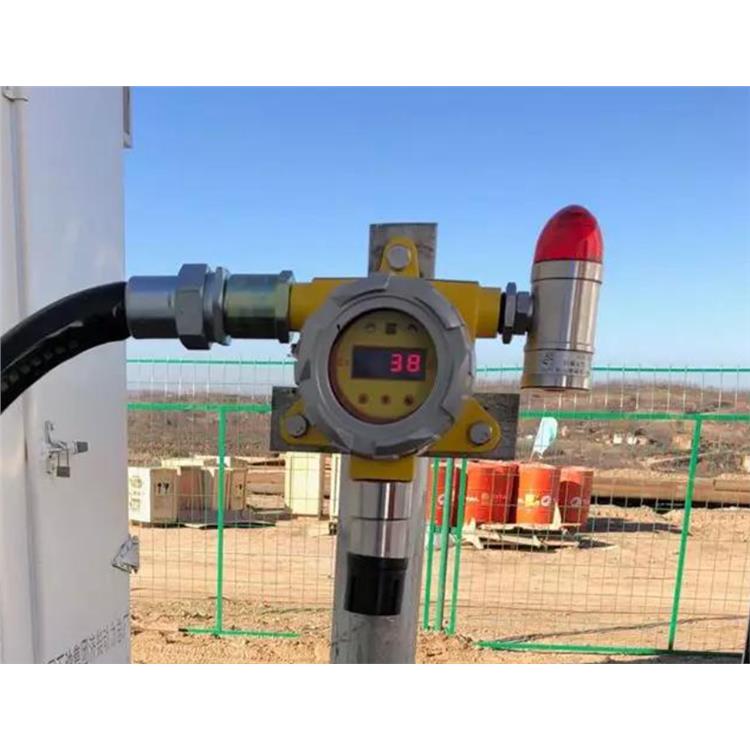
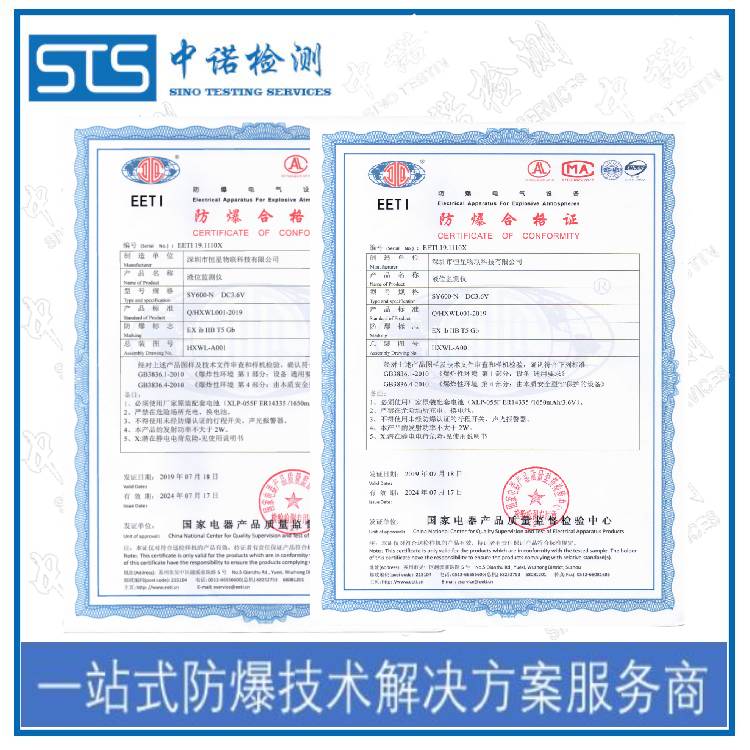
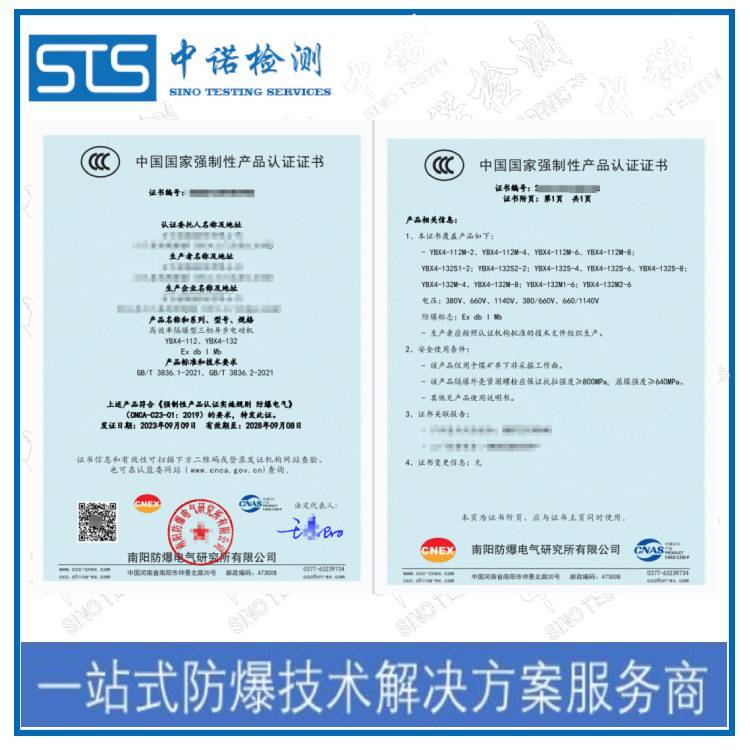

Shenzhen ZhongNuo Testing Technology Co., Ltd. offers on-site explosion-proof electrical inspection, explosion-proof project acceptance services, and can also provide explosion-proof rectification and construction services for items that fail inspection.
Shenzhen Zhongnuo Testing Technology Co., Ltd. summarizes past experiences in explosion-proof electrical inspections, common non-conformities found during on-site explosion-proof electrical inspections:
Currently, our country's hazardous chemical production enterprises frequently experience accidents, thus demanding a high priority on safety production inspections. We should gradually clarify the safety performance of products and equipment involving personal safety, step by step forming a significant role in safety production inspections. Now, safety inspections can provide many technical supports to hazardous chemical enterprises, especially the electrical explosion-proof safety inspections, which should be widely promoted, continuously guiding and serving the enterprises' safe production.
Improper design within the hazardous area
Many businesses are constrained by their company history, and at the same time, the production materials of the companies are continuously changing, resulting in an irregular division of hazardous areas and a relatively chaotic appearance. The layout of equipment and facilities does not meet the explosion-proof requirements.
2. Understanding of explosion-proof knowledge is relatively weak
In many hazardous chemical enterprises, there is a lack of distinction between electrical explosion-proof safety inspections and fire protection electrical and building electrical inspections. There is a lack of standardization in temporary electrical use, firework operations, equipment replacement, and electrical management systems.
3. Improper installation of explosion-proof electrical equipment
Although many companies now have explosion-proof features in electrical facilities, there are still many issues with installation, such as direct connection of trunk wiring, missing explosion-proof face screws, and using PVC pipes for wiring in incoming and outgoing pipelines. Additionally, the installation of switches and sockets, wiring terminals, power and lighting distribution boxes, grounding systems, and electrical wiring systems is not very rational, with many safety concerns.
4. Explosion-proof electrical wiring routing does not meet requirements
In explosive environments, most companies currently do not pay enough attention to explosion-proof electrical wiring, fail to correctly understand the technical parameters of hazardous materials in dangerous areas, and often wire arbitrarily.
5. Non-standard grounding of explosion-proof electrical equipment
For the grounding of explosion-proof electrical equipment, there are mainly internal neutral grounding, casing protection grounding, and antistatic grounding. The grounding of uninsulated metal casings is often poorly done, with frequent occurrences of grounding wires being connected to material pipelines.
6. There is a lack of overall planning for explosion-proof areas in the selection of power distribution rooms and control rooms.
Many electrical control rooms are located within explosion-proof zones without proper precautions in place.
7. Inadequate explosion-proof selection and requirements for explosion-proof electrical equipment
In electrical explosion-proof facilities, they do not differentiate between environments with combustible dust and those with explosive gases; they are mixed and used together. In different hazardous areas, there are distinct electrical explosion-proof specifications, explosion-proof markings, and types, along with varying levels and temperature classes. However, many companies mix and use explosion-proof electrical equipment without distinguishing these differences.
The "Electrical Explosion Proof Inspection Report" issued from regular inspections of explosion-proof electrical equipment is based on standards including but not limited to:
GB 50058-2014 "Code for Design of Electrical Installations in Explosive Hazardous Environments"
GB50257-2014 "Code for Construction and Acceptance of Electrical Installations in Explosive and Fire Hazardous Environments"
GB/T3836.15-2017 "Electrical Equipment for Explosive Gas Atmospheres – Part 15: Electrical Installations in Hazardous Areas (Excluding Mines)"
AQ3009-2007 Electrical Explosion-Proof Safety Standard for Hazardous Areas
Shenzhen ZhongNuo Inspection Technology Co., Ltd. summarizes the experience from past explosion-proof electrical inspections and lists the following common non-compliant items observed during on-site explosion-proof checks for reference.
Common phenomena include:
1. Corrosion and damage to explosion-proof casings. The protective casings of explosion-proof electrical equipment are damaged due to corrosion from surrounding media, leading to rust penetration and structural deterioration, thus losing their original strength. This causes the explosion-proof electrical equipment to lose its explosion-proof capability.
2. Explosive-proof protective shell suffers from electrochemical corrosion damage. When the metal shell is electrified due to electrical leakage or potential drift in electrical appliances, the contact between the electrified metal and the air medium is equivalent to a battery's reaction, causing corrosion of the metal shell. This leads to the appliance losing its explosive-proof capability.
3. Damage from external forces and mechanical impacts. Includes damage to the protective casing caused by collisions with other equipment or mechanical substances on the work site, as well as casing damage due to excessive force during installation.
4. Shell damage due to over-temperature, caused by cold shrinkage and deformation of the protective shell material structure in cold regions due to climate adaptation issues, leading to shell cracking and protective shell damage.
5. Damage caused by improper installation. Damage, loss, and failure of protective functions resulting from non-compliance with installation requirements during the process of installing explosion-proof electrical equipment.
6. Inadequate sealing, including improper handling of sealing materials during installation and maintenance, loose fit of sealing surfaces, damaged sealing components, unsuitable or missing fasteners for sealing fixation, etc., result in inadequate or weak explosion-proof performance.
7. Quality issues with explosion-proof electrical equipment, including substandard material for the explosion-proof housing and unreasonable structural design leading to insufficient load-bearing capacity; internal wiring facilities are prone to looseness, and the internal circuit is not rational, which can easily cause sparking or overheating; unreasonable mechanical structure components, excessive equipment temperature, and internal water accumulation may cause malfunctions in explosion-proof electrical equipment.
8. Due to actual changes in hazardous areas caused by production facility alterations, the electrical equipment in the area has not been promptly upgraded to explosion-proof equipment.
9. Incorrect selection of explosion-proof electrical equipment; inherently safe electrical equipment is used with non-inherently safe voltage, and explosion-proof enclosures are used for circuits producing light, heat, etc.
As an end-user of explosion-proof electrical equipment, it is necessary to conduct regular explosion-proof inspections even if explosion-proof electrical equipment is installed and used in explosive hazardous areas. This is both a requirement of various departments and a high level of concern for personnel and property safety.
How to conduct explosion-proof safety inspections for electrical equipment in use?
In accordance with the AQ3009-2007 "Electrical Explosion Protection Safety Regulations for Hazardous Areas," explosion-proof electrical equipment in use must undergo a regular explosion-proof inspection at least every 3 years to ensure their explosion-proof performance. The inspection items include the selection, installation, wiring, static electricity, grounding, etc., of explosion-proof equipment. The inspection methods include visual inspection, general inspection, and detailed inspection. This inspection is to be conducted on-site, requiring the customer to provide information such as the area of the explosion-proof zone, the number of electrical equipment, and the MSDS on-site. After the on-site inspection is completed, a report with explosion-proof improvement recommendations or an explosion-proof inspection report will be issued based on the actual situation.
ZhongNuo Inspection has provided on-site explosion-proof electrical inspection services for various gas stations, gas stations, oil depots, food factories, feed factories, chemical plants, and more. We also offer explosion-proof整改 and construction services for items not meeting on-site inspection standards, with a wealth of successful cases and industry experience. If you need to prepare an explosion-proof electrical inspection report for on-site requirements, feel free to DM us for specific communication.
On-site Explosion-proof Electrical Equipment Regular Inspection Consulting Service - Shenzhen Zhongnuo Testing Technology Co., Ltd.
WeChat Official Account

Scan to follow Official Account