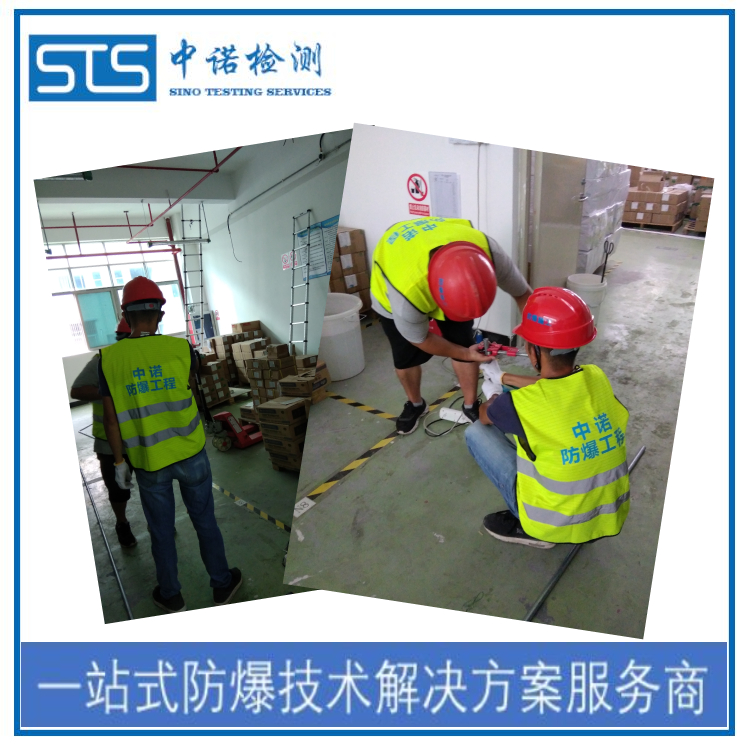

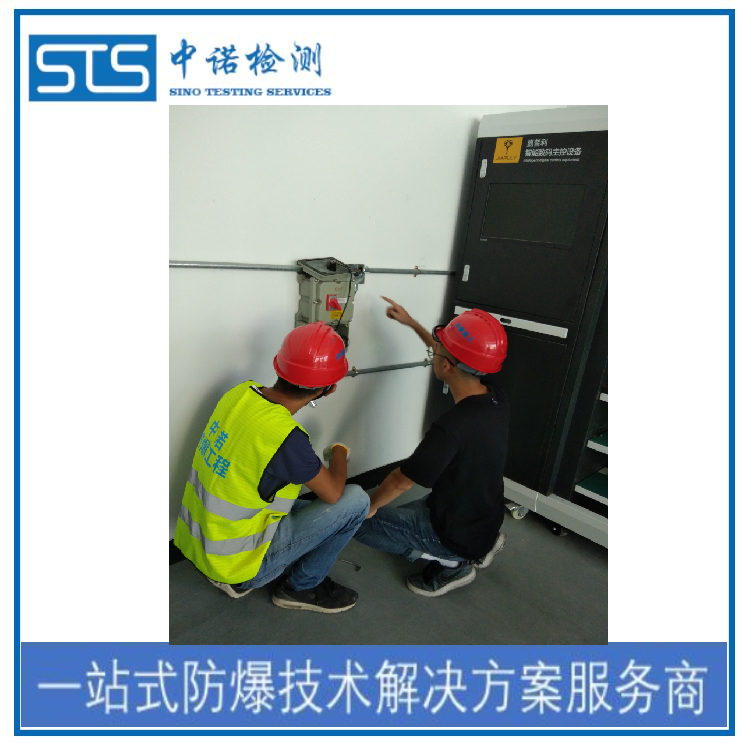
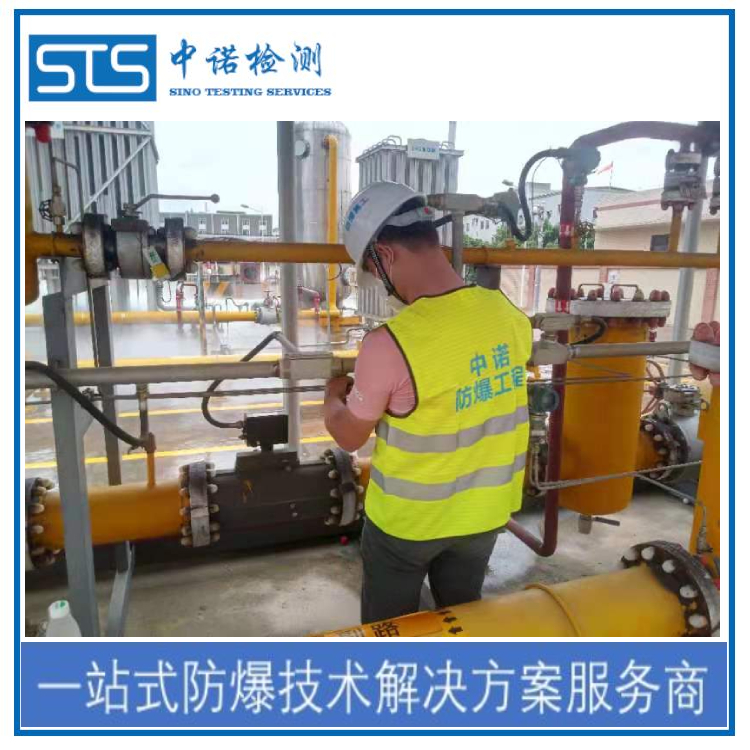



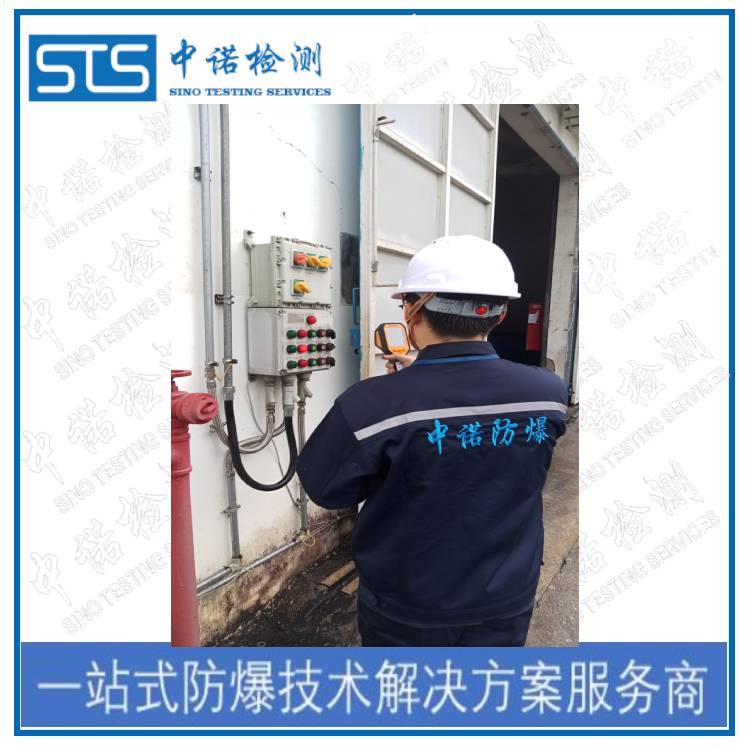








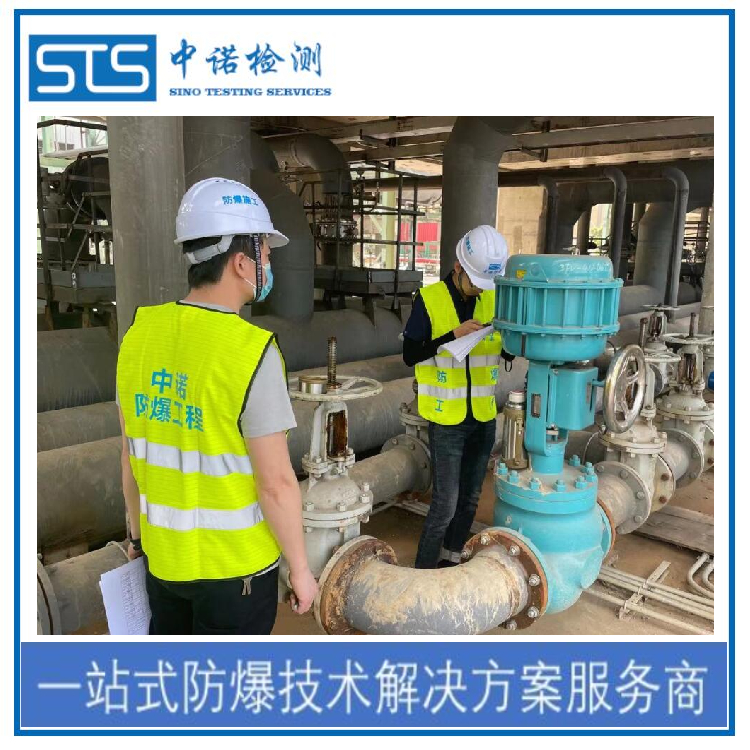
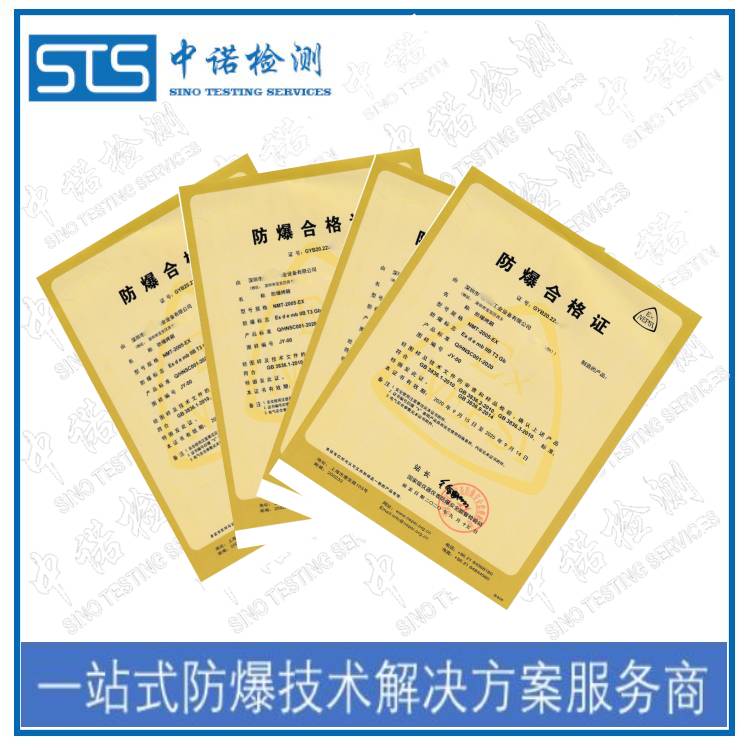
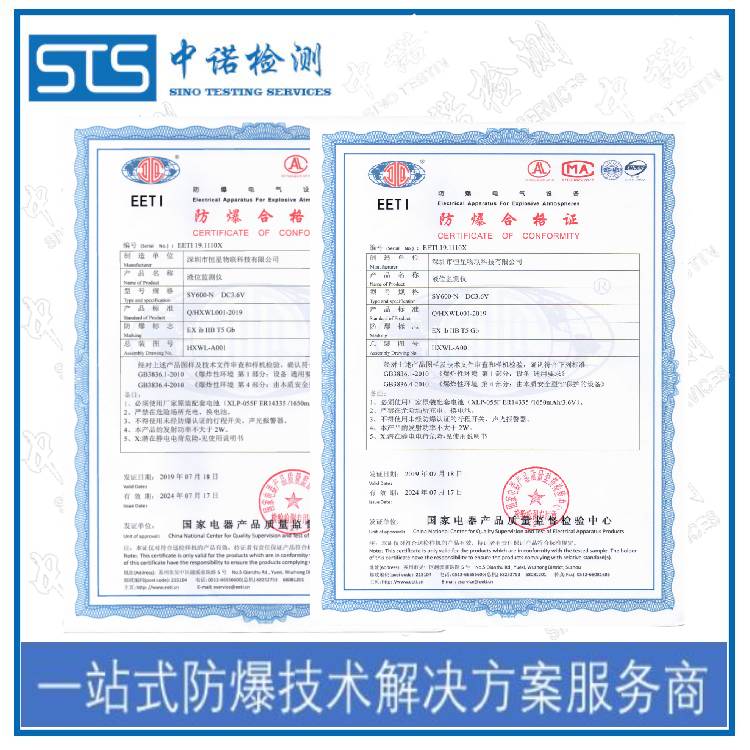
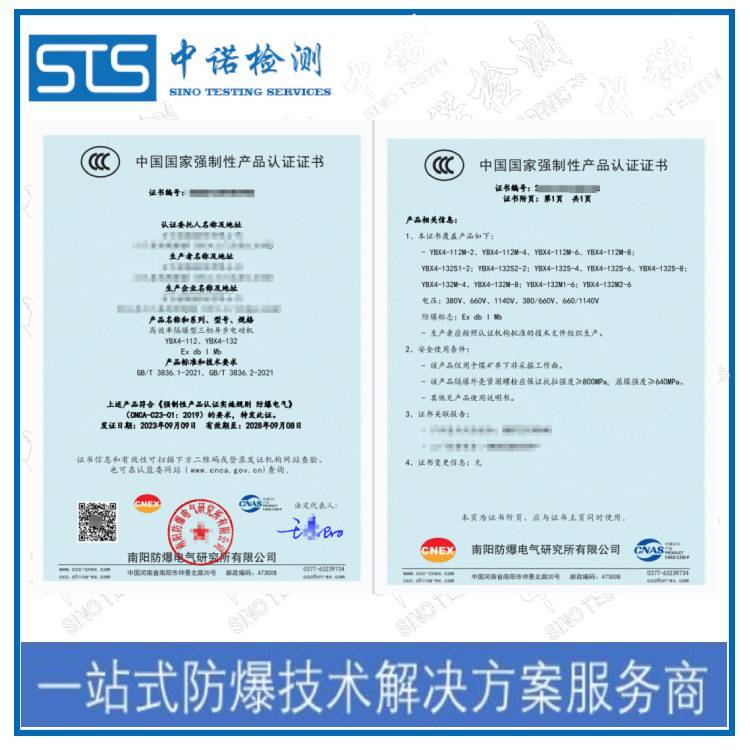

Shenzhen ZhongNuo Testing Technology Co., Ltd. is based in South China, offering services such as on-site explosion-proof construction, safety inspections, renovations, project acceptance, and explosion-proof installation. We are well-versed in explosion-proof construction standards, with experienced teams and a wealth of construction expertise. We have served major corporations like PetroChina, LG, Huanlan Environment, BOE Technology Group, and Sinovac Biotech, receiving consistent praise and trust from our clients!
In accordance with the basic requirements of GB 15577 "Safety Code for Dust Explosion Prevention," in防爆construction and modification in explosive dust environments, the following five main explosion prevention measures can be adopted (shared by Shenzhen ZhongNuo Testing Technology Co., Ltd.).
Explosion-proof
1. Definition: An explosion suppression technique that, in the event of an explosion within an enclosed package containing combustible dust and gaseous oxidizers or air, allows the package to withstand the pressure of the large explosion without being damaged.
2. Objective: By enhancing container wall thickness and improving material, external damage is minimized even in the event of a dust explosion.
3. Basic Requirements:
When producing and handling powders that can cause explosions, if there is no explosion suppression device and no pressure relief measures, all process equipment should be designed with explosion-proof features and capable of withstanding overpressure from internal explosions without bursting.
(2) The connecting parts between various process equipment (such as pipes, flanges, etc.) should have the same strength as the equipment itself. For connections between high-strength and low-strength equipment, explosion-proof devices should be installed.
(3) Equipment for explosion-proof pressure and impact resistance should comply with the requirements of GB/T 24626.
Explosion Relief
1. Definition: An explosion suppression technology that prevents damage to an enclosed package by releasing the high temperature, high-pressure combustion products and unburned materials generated by an explosion through pre-set weak points in the package before the explosion pressure reaches the package's limiting strength, directing them away from hazardous areas.
2. Objective: To reduce explosion losses by installing explosion relief devices.
3. Methods: Two explosion relief methods are available: flammable and non-flammable.
4. Basic Requirements:
When the strength of the process equipment is insufficient to withstand the overpressure generated by internal dust explosion under its actual working conditions, explosion relief openings should be provided. The relief openings should be directed towards a safe direction, and their dimensions should comply with the requirements of GB/T 15605.
(2) Indoor dust explosion hazard process equipment should be vented to a safe outdoor direction through pressure relief ducts. The pressure relief ducts should be as short and straight as possible, with a cross-sectional area not less than that of the relief opening, and their strength should not be less than the strength of the container of the protected equipment.
(3) For equipment inside the room that cannot vent explosion to the outside via a pressure relief conduit, a flameless explosion venting cover should be installed.
(4) Process equipment with inline piping should be designed to withstand at least 0.1 MPa of internal overpressure.
3. Explosion Suppression
1. Definition: In the initial stage of an explosion, extinguish the flame and suppress (prevent) the development of dust explosion through physical and chemical actions.
2. Purpose: To detect and extinguish fires, and suppress explosions in advance by setting up explosion suppression devices.
3. Basic Requirements:
Process equipment with a risk of dust explosion should be protected with explosion suppression devices.
(2) If a monitored explosion suppression device is used, it should comply with the requirements of GB/T 18154.
(3) Design and application of explosion suppression systems should comply with the requirements of GB/T 25445.
Four, Explosion-proof
1. Definition: Technology that prevents the spread of an explosion through physical and chemical actions after the explosion occurs.
2. Purpose: To prevent the spread of flame through pipes or other passages
3. Basic Requirements:
(3) Equipment and facilities with dust explosion hazards that are interconnected through pipelines should ideally be equipped with explosion-proof devices on the pipelines.
(2) Equipment and facilities with dust explosion hazards that are interconnected through pipelines should be equipped with explosion-proof devices on the pipelines. The shutdown direction should align with the direction of explosion propagation.
Five: Inertization
For processes such as crushing, grinding, drying of powders, and pneumatic conveying through pipelines in sealed containers, inert gases like nitrogen, carbon dioxide, halogenated hydrocarbons, argon, helium, and steam, or inert dusts such as fire extinguishing powder, chemical dry powder, and mineral rock powder are introduced. This is to dilute combustible components and reduce the oxygen content in the environment.
General Requirements for Explosion-Proof Workshop Design (Shared by Shenzhen Zhongnuo Testing Technology Co., Ltd.)
4.1 Floor, Interior Wall
Areas producing flammable gases heavier than air or vapors of flammable and combustible liquids, as well as Class B workshops with dust and fiber explosion hazards, should use non-sparking floors. To prevent sparks, the floor can be made of rubber, plastic, rubber mixed with graphite, or asphalt concrete.
Wall surfaces in workshops where combustible dust may settle should be plastered or painted to create an easily cleanable (wipeable) interior surface.
4.2 Office, Break Room
For the safety of personnel, do not establish offices or restrooms in workshops with Class A or B explosive hazards. If necessary, such rooms can be located outside the workshop, separated from the workshop by non-combustible walls with fire resistance of not less than 3.5 hours.
4.3 Electrical Equipment
Electrical equipment in explosion-proof workshops should be selected and installed according to different conditions, using explosion-proof types such as explosion-proof switches, explosion-proof motors, and explosion-proof lighting fixtures, and strictly avoid non-explosion-proof types.
4.4 Lightning Protection Facilities
In facilities and workshops prone to explosion, in addition to installing lightning protection devices on the building itself, it is required to set up grounded lightning rods around the building as specified. This ensures the building is within the protected range of the entire lightning protection system, preventing accidents caused by lightning strikes.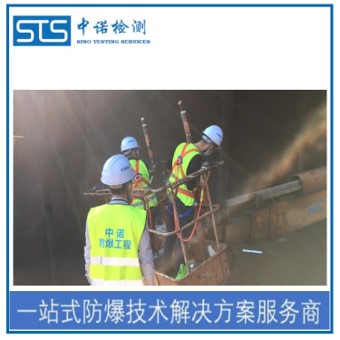
Basic Requirements for Explosion-Proof Electrical Installation in Explosive Areas (Shared by Shenzhen Zhongnuo Testing Technology Co., Ltd.)
1. Oil-immersed equipment should be used under conditions of no vibration, no tilting, and fixed installation.
2. When using non-explosion-proof equipment for mechanical transmission as partition walls, the following regulations should be followed:
The room for installing electrical equipment should be separated from the explosive hazard area by a solid wall made of non-combustible materials.
(2) Transmission shafts should be sealed with gland packing or an equivalent sealing method at the wall partition section.
(3) The exit of the room housing electrical equipment should lead to an environment free of explosive hazard areas.
(4) When the room housing the equipment must be in communication with an explosive atmosphere, the explosive atmosphere should be maintained at a positive pressure relative to the room.
3. Electrical circuits and equipment in explosive environments, excluding intrinsic safety circuits, must be equipped with overcurrent, short-circuit, and grounding protection. Overcurrent protection is not required for electrical equipment that cannot experience overcurrent. Motors in explosive environments, in addition to the necessary protections required by current standards, should also have phase failure protection. If the automatic shutdown of electrical equipment may pose a greater danger than the ignition risk, an alarm system should be used instead of the automatic shutdown device.
4. In emergency situations, appropriate measures should be taken at a suitable location outside the hazardous area to disconnect the power to the equipment in the hazardous area. Continuous operating equipment should not be included in the emergency shutdown circuit and should be installed on a separate circuit to prevent the occurrence of additional hazards.
5. The design of transformer stations, distribution stations, and control rooms shall comply with the following regulations:
Transformer stations, sub-stations (including switch rooms, etc.), and control rooms should be located outside of explosive atmosphere environments. When they are positive pressure rooms, they can be situated in zones 1 and 2.
(2) For explosive gas environments heavier than air, the equipment floor of electrical and instrument systems in power stations and sub-stations, as well as control rooms, located in the additional 2 zone of the explosion hazard area, should be elevated 0.6 meters above the external ground level.
Equipment grounding in explosive environments should comply with the following regulations (Shared by Shenzhen ZhongNuo Inspection & Testing Technology Co., Ltd.)
In accordance with the relevant provisions of the current standard "Code for Design of Grounding for AC Electrical Installations" GB/T50065, the following parts that do not require grounding should still be grounded in explosive environments:
1) Equipment with a normal, uninsulated metal housing, with alternating current rated voltage below 1000V and direct current rated voltage below 1500V, at places with poor electrical conductivity.
2) In dry environments, equipment with alternating voltage ratings of 127V or less and direct voltage ratings of 110V or less generally have non-electrified metal casings.
3) Equipment installed on a grounded metal structure.
(2) In explosive hazardous environments, the exposed, conductive parts of equipment should be reliably grounded. All equipment within explosive zones 1, 20, and 21, as well as other equipment within explosive zones 2 and 22 except for lighting fixtures, should use a dedicated grounding wire. If this grounding wire is installed in the same protective conduit as the phase wire, it must have insulation equal to that of the phase wire. Lighting fixtures within explosive zones 2 and 22 can use a metal piping system with a reliable electrical connection as a grounding wire, but not a pipeline for conveying substances.
(3) In different directions of the slope in the explosion hazardous area, the grounding main should be connected to the grounding body at least twice.
Explosion-proof electrical retrofitting and on-site explosion-proof construction consulting services for hazardous areas — Shenzhen Zhongnuo Testing Technology Co., Ltd.
WeChat Official Account

Scan to follow Official Account