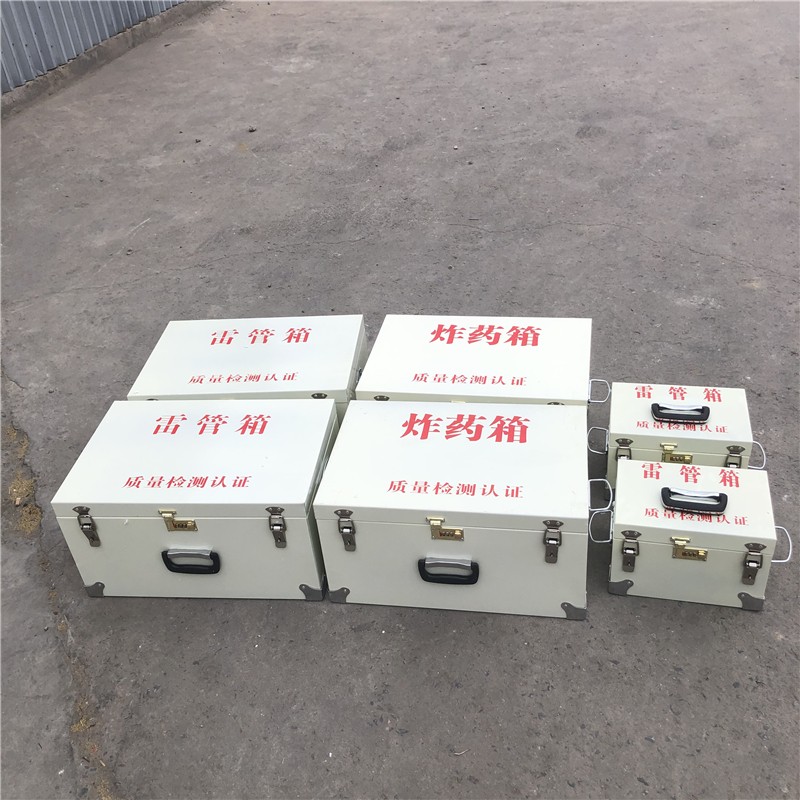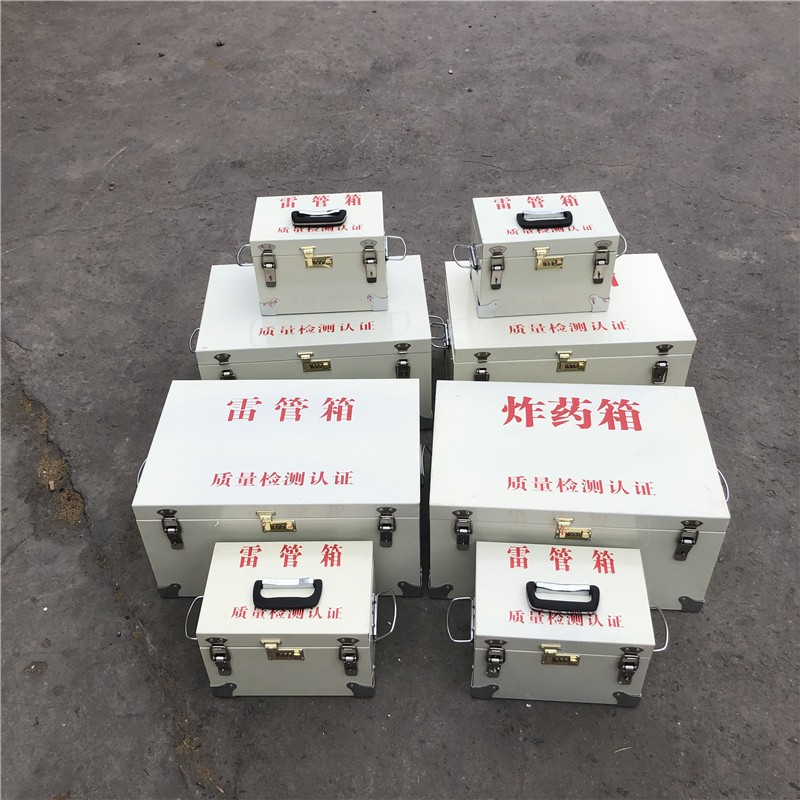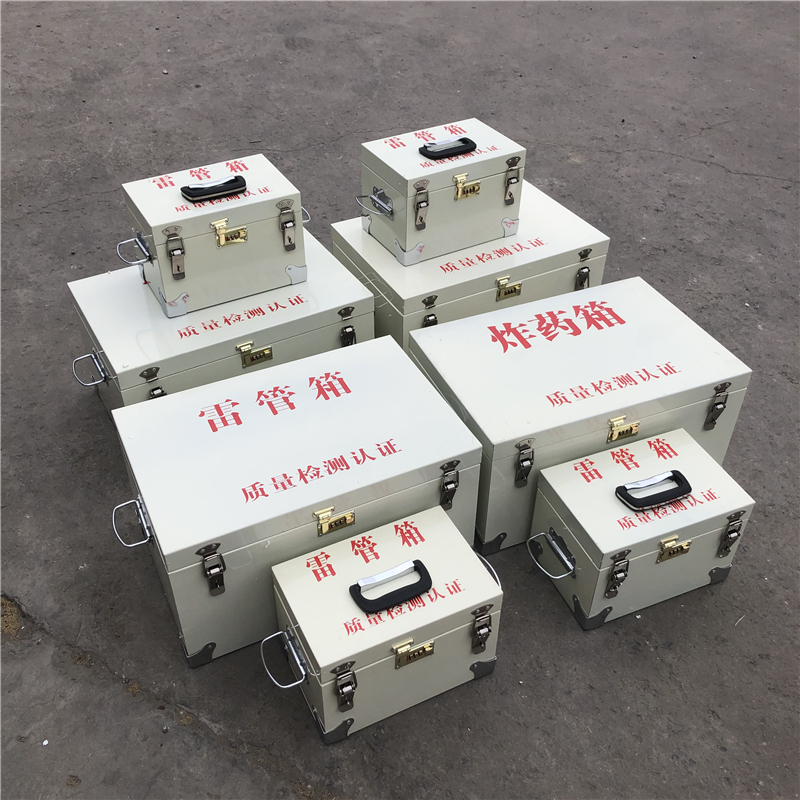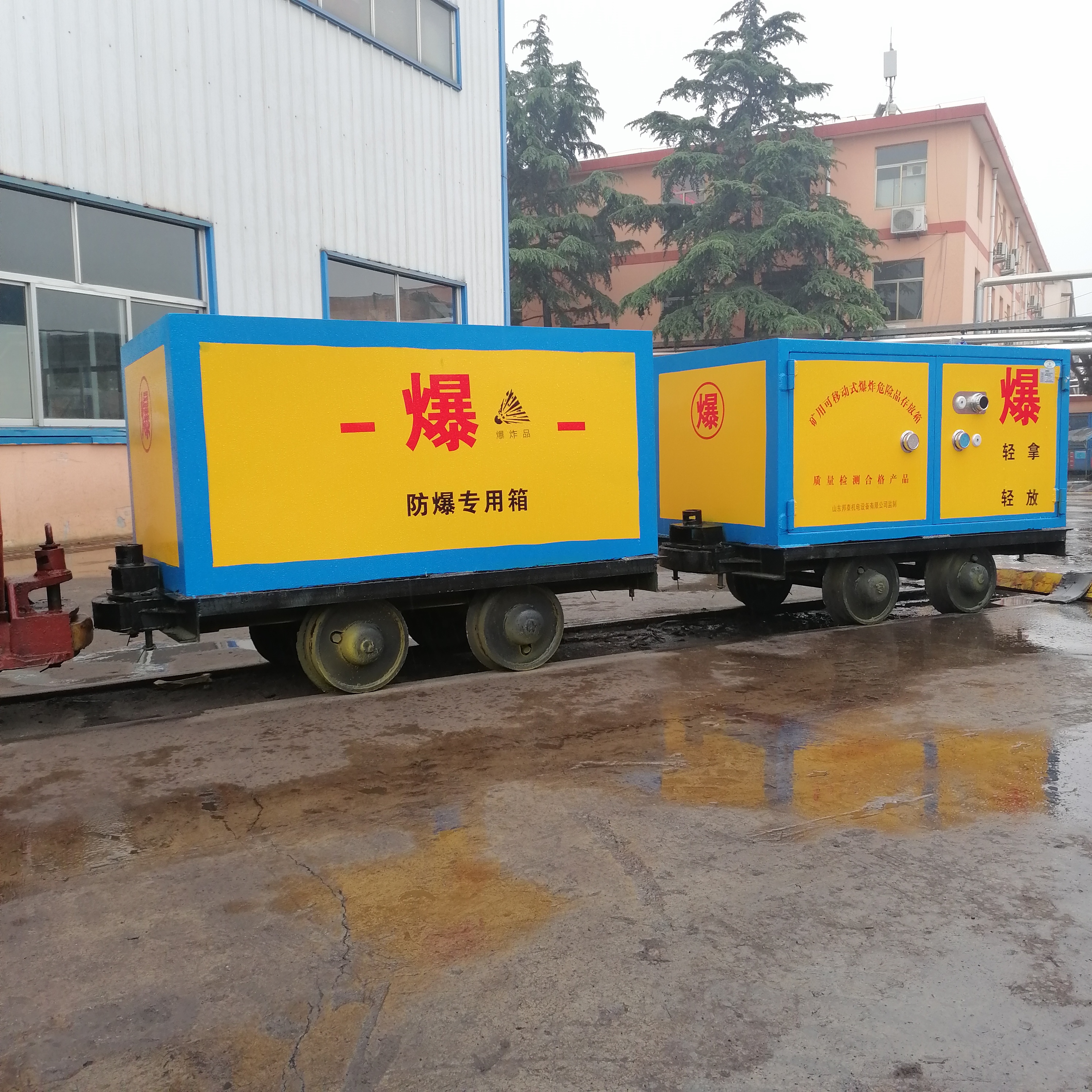

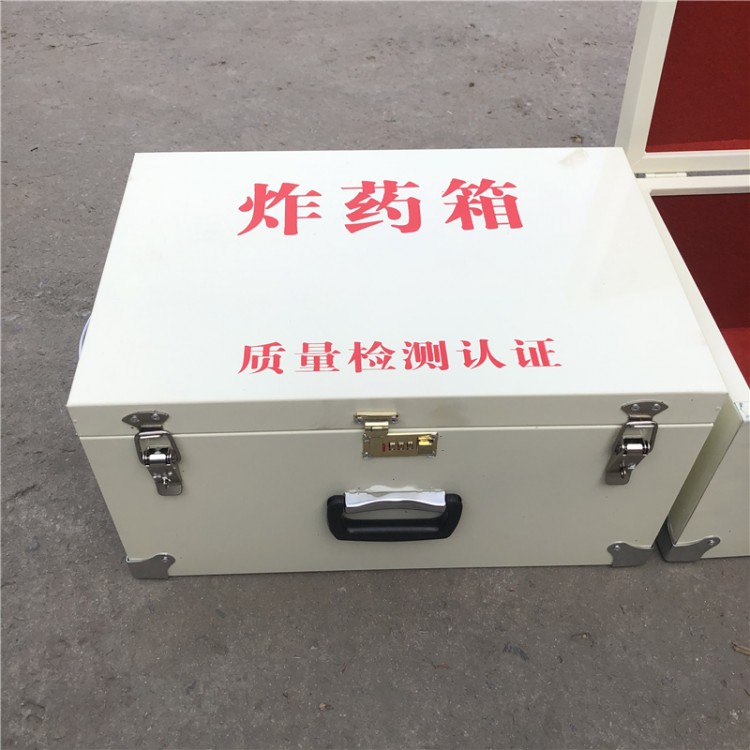

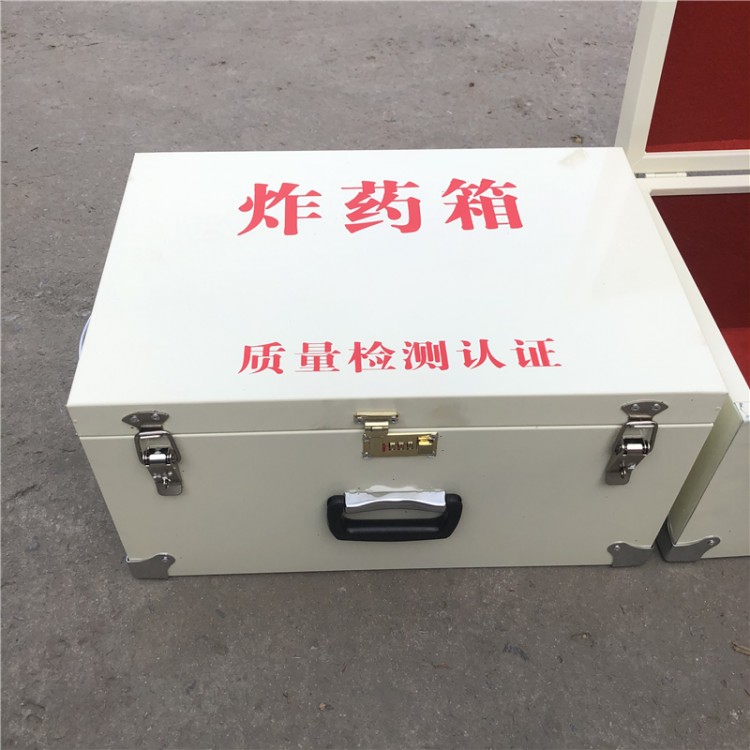
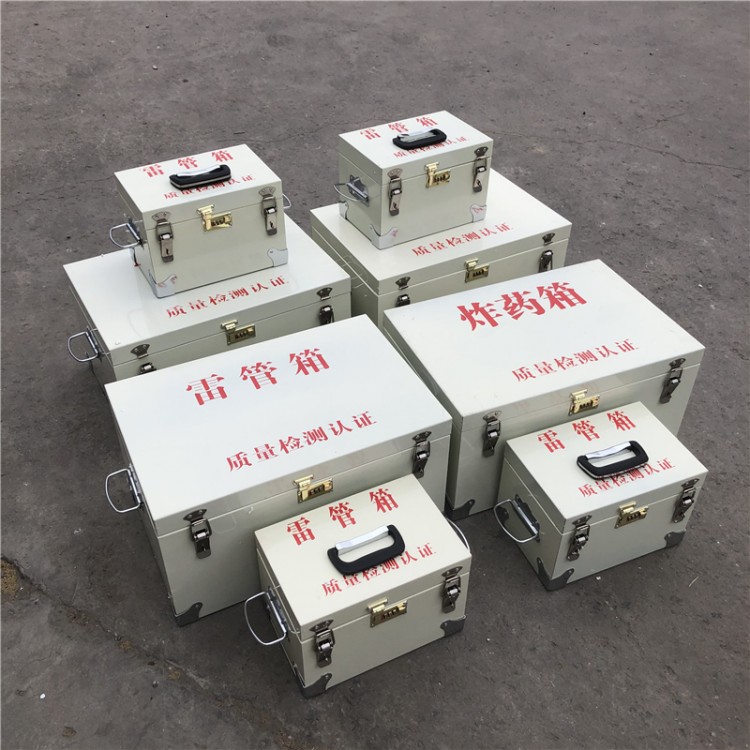


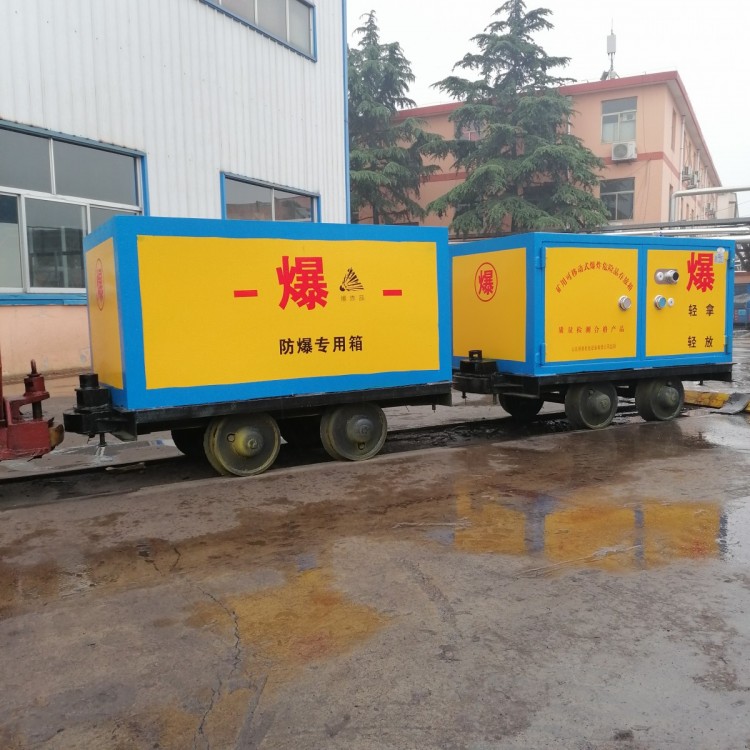






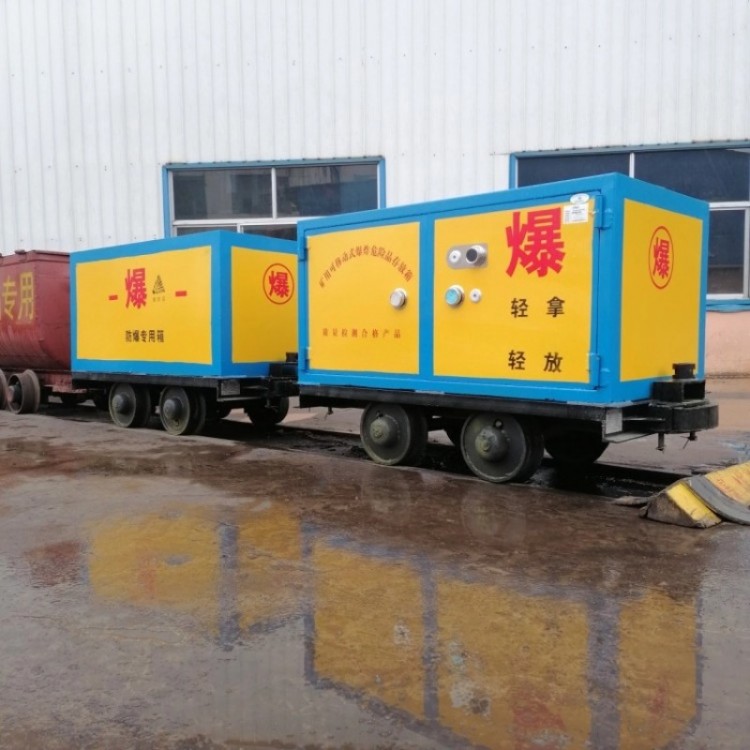
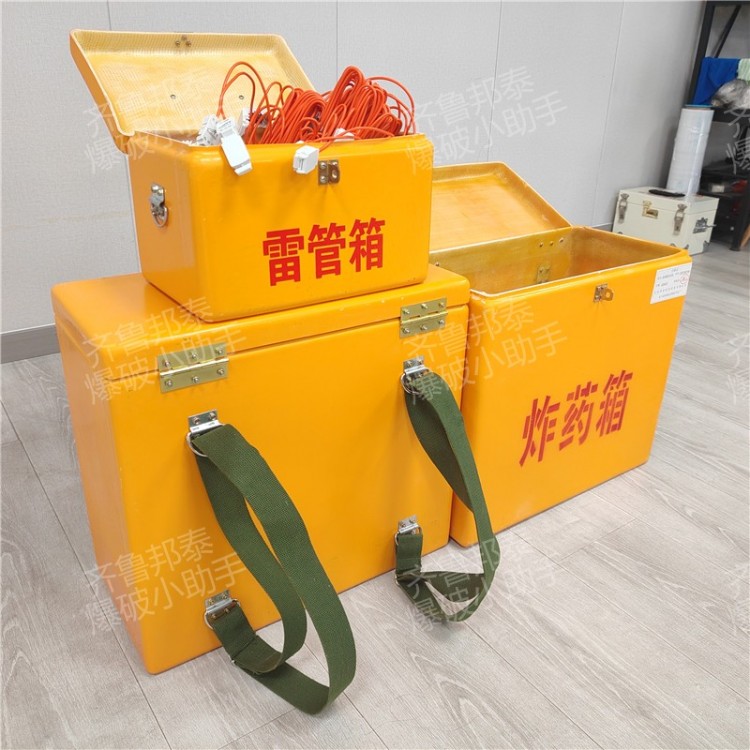
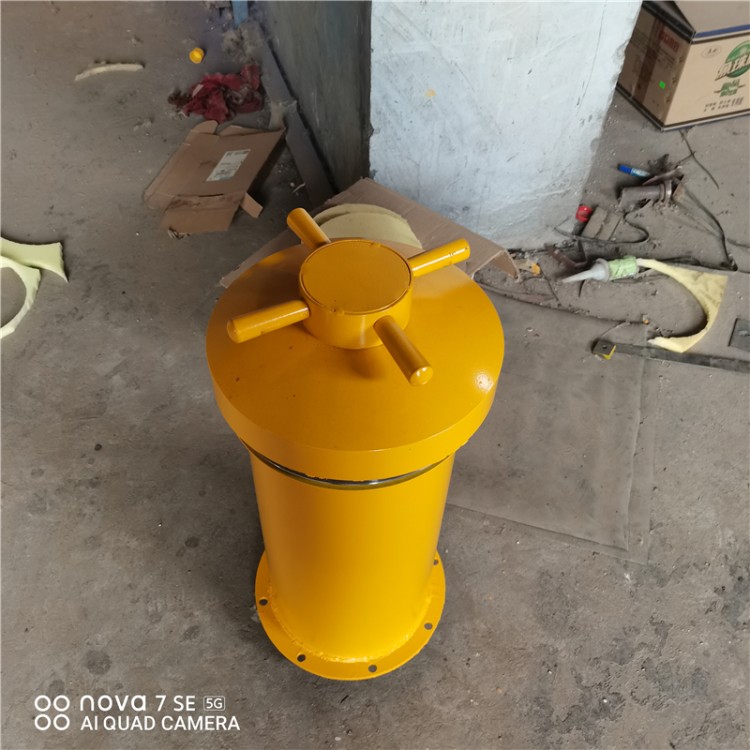
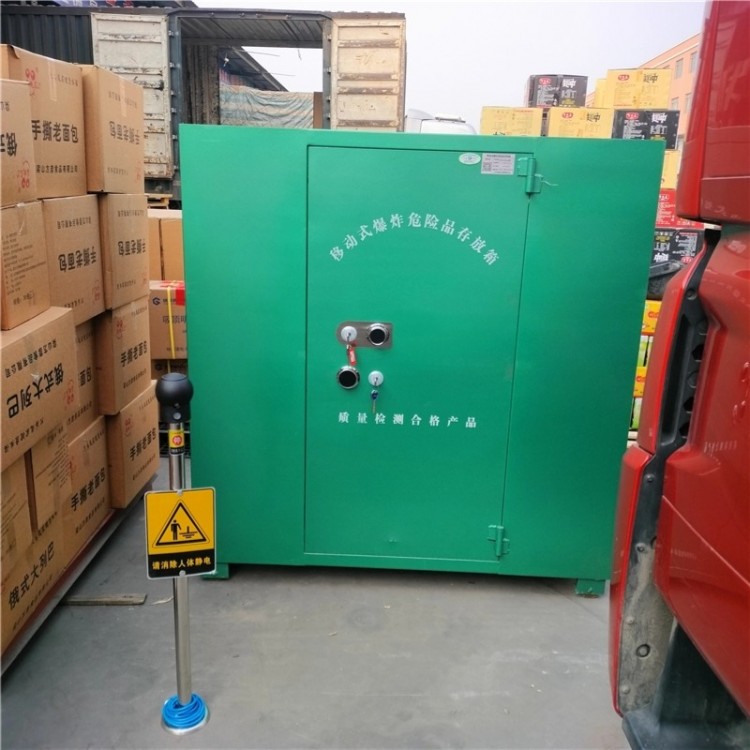
Portable explosive boxes are specialized tools designed for the safety of blasting operations, primarily used for storing and transporting explosives, detonators, and other hazardous explosive materials. These boxes typically feature anti-static, corrosion-resistant, and anti-aging properties to ensure safety under various environmental conditions. The portable explosive boxes comply with the relevant provisions of the "Civil Explosives Safety Management Regulations" and are suitable for locations requiring blasting operations, such as mines, tunnels, tunnel construction, hydroelectric and water conservancy projects, and mining operations.
Material and Structure
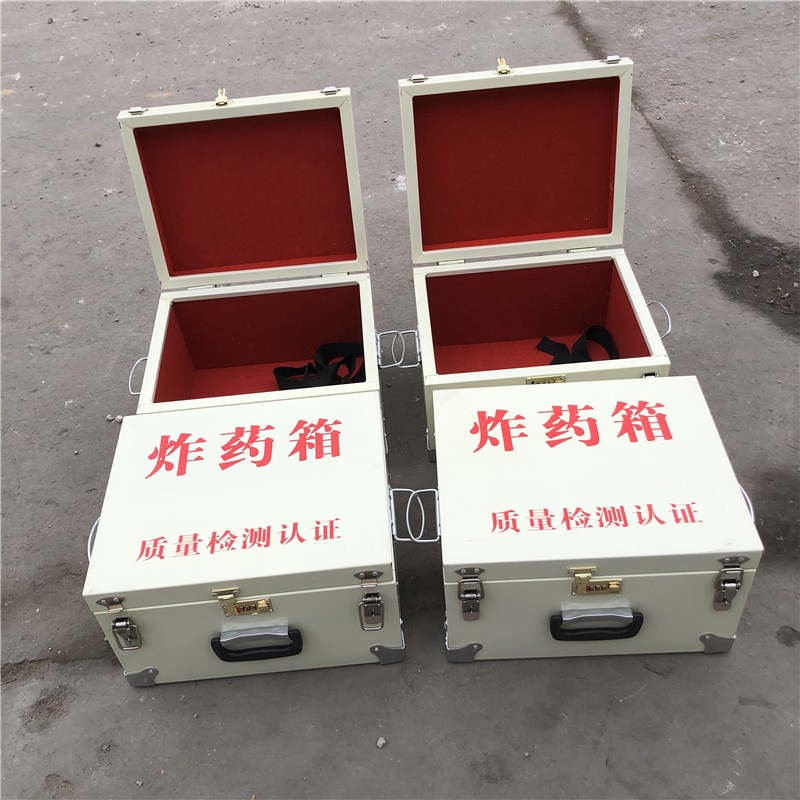
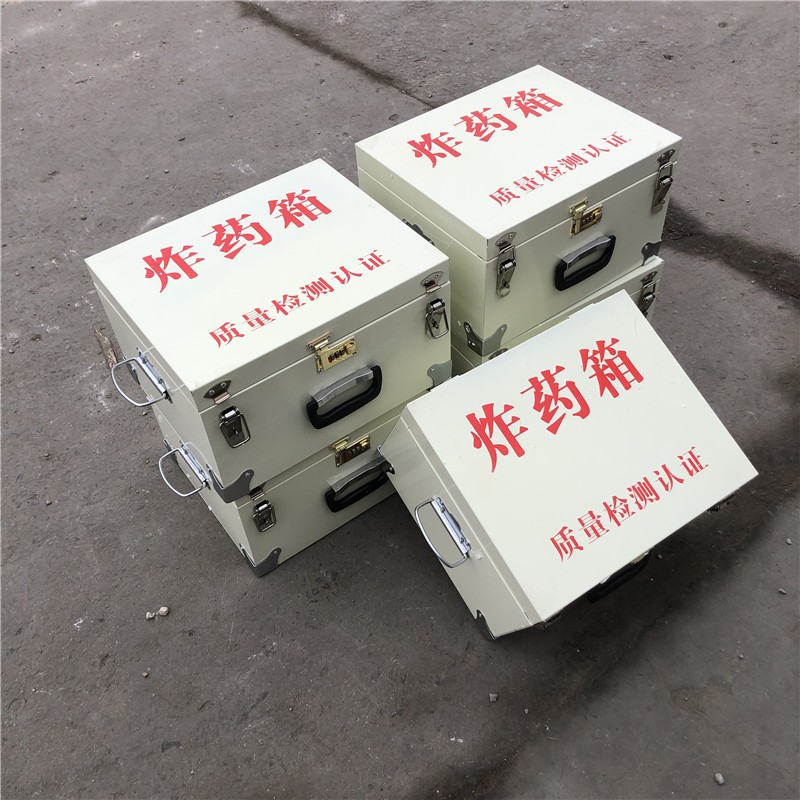
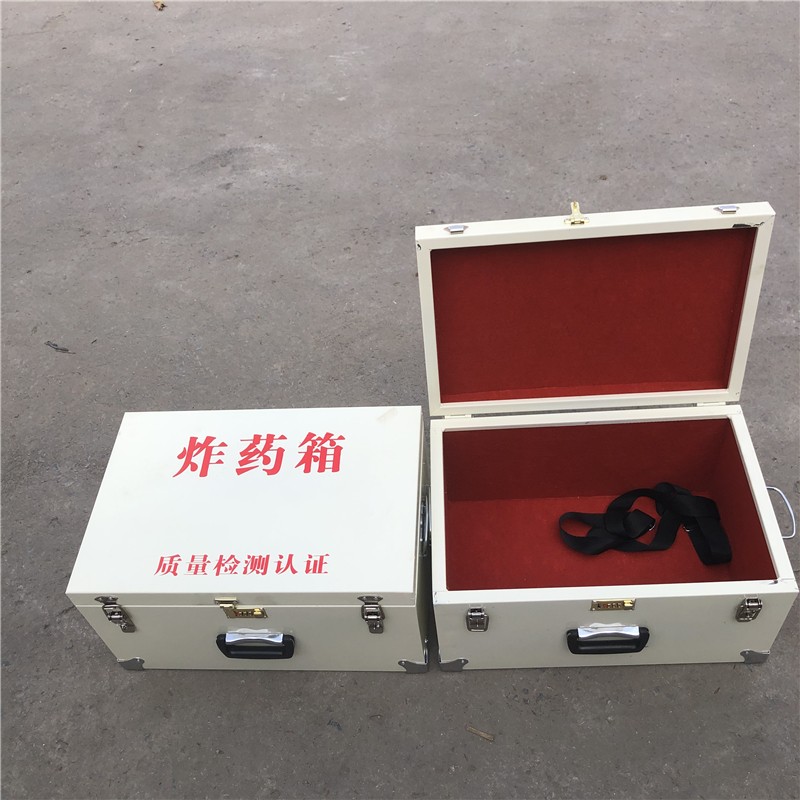
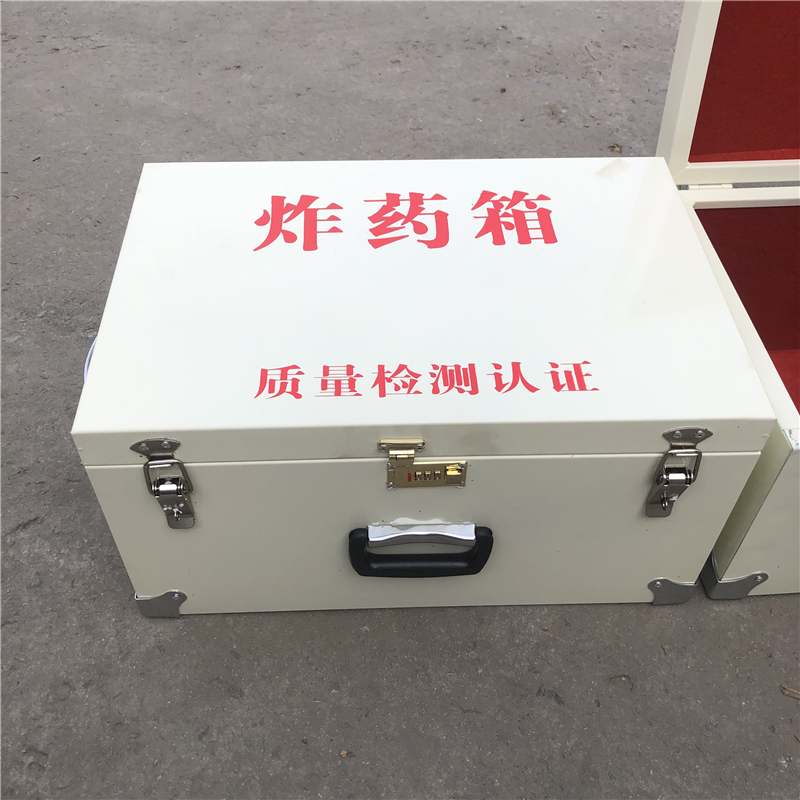
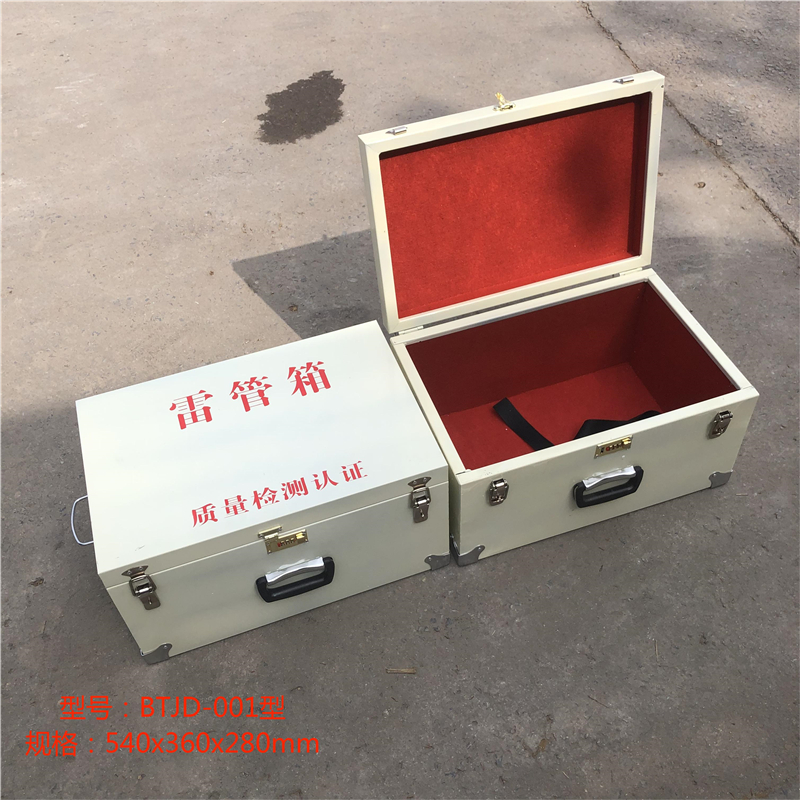
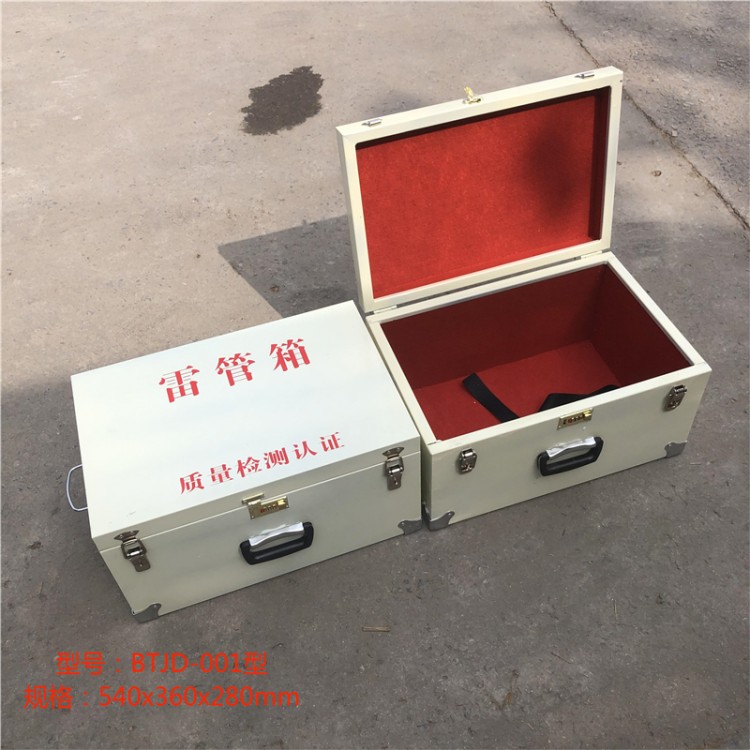
Portable explosive boxes are typically made of explosion-proof steel plates with a thickness of 1-2mm. They are internally lined with antistatic wood boards and flame-retardant felt to effectively prevent the generation of static electricity, avoiding any potential hazards. The box structure is designed rationally, featuring stainless steel corner guards to prevent damage from collisions and to safeguard individuals nearby.
② Safety Performance
Portable explosive boxes feature excellent explosion-proof, anti-pick, and anti-drill properties, with good sealing performance and strong pressure resistance, ensuring the safety of contents under harsh environmental conditions. These boxes are typically equipped with a three-digit anti-theft mechanical combination lock and stainless steel visible latches, guaranteeing the security of stored items inside. Additionally, portable explosive boxes have fire-retardant capabilities, effectively preventing the spread of fire even in high-temperature environments.
③ Standard Usage
During use and transportation, explosives and detonators must be stored separately, strictly prohibited from being mixed. Only explosives and electrical detonators are allowed inside the boxes, no other unrelated items are permitted. Adhere strictly to relevant safety regulations during use and transportation, avoiding heavy pressure, impacts, contact with electrically charged objects, etc., to ensure the safety of fireworks.