

















Silencer Manufacturer, Direct Factory of Impedance Composite Silencers, Micro穿孔Silencers, Manufacturer of H-Shape Silencers
Resistive silencer, Reactive silencer, Impedance-compound silencer, Micro-perforated plate silencer, Small hole silencer, Noise reduction, Durable material, Noise reduction
Zhejiang Hangzhou Resistive Muffler, Noise Reduction, Durable Material, Hangzhou Resistance Muffler, Noise Attenuation, Impedance Composite Muffler, 2-Year Warranty, Made in Zhejiang, Micro穿孔 Plate Muffler, Precision Craftsmanship, Silent, Small Hole Muffler, Lightweight Design, Absorbing, Hangzhou Resistive Muffler, Eco-friendly Material, Durable Noise Resistance, Resistance Muffler, Made in Zhejiang, Precision Noise Reduction, Impedance Composite Muffler, Silent Upgrade, Durable and Reliable, Micro穿孔 Plate Muffler, Precision Manufacturing, Noise Reduction, Small Hole Muffler, Zhejiang Quality, Eco-friendly Silent
Hangzhou Su Tai Technology Co., Ltd. specializes in the production of: resistive silencers, reactive silencers, impedance composite silencers, micro-perforated plate silencers, and small hole silencers.
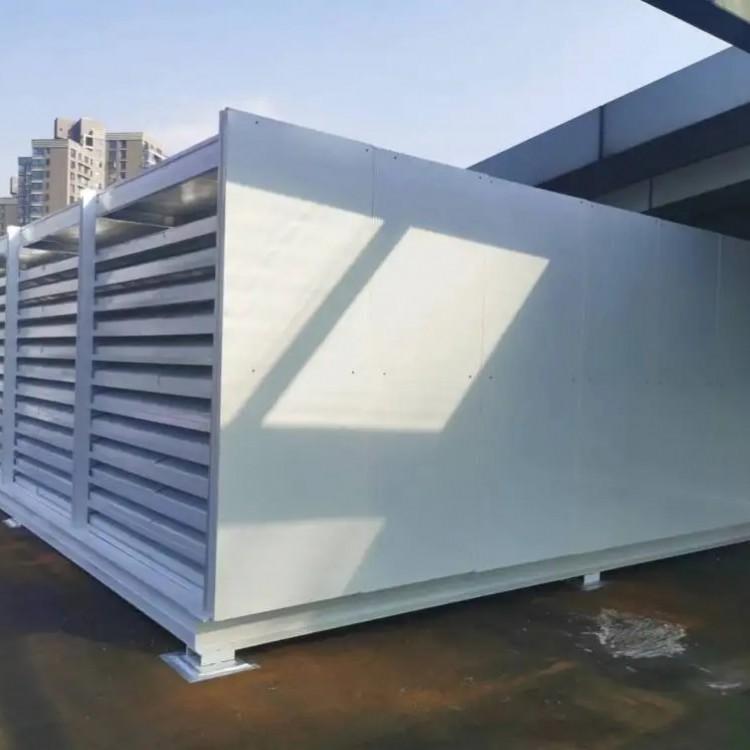
A muffler is a noise-reducing device installed in the airflow channels of aerodynamic equipment (such as blowers, air compressors) or in the intake and exhaust systems. It blocks the propagation of sound waves while allowing airflow, making it an effective tool for noise control.
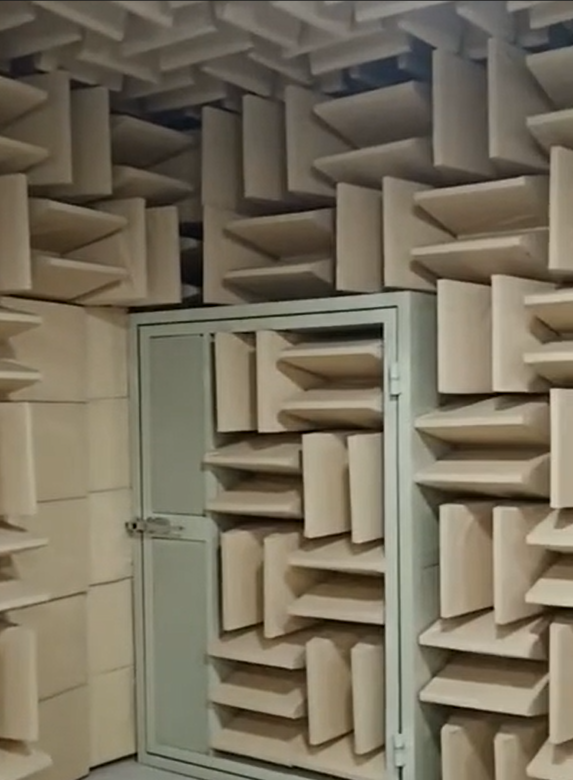
Resistive silencers primarily utilize porous sound-absorbing materials to reduce noise. By fixing the sound-absorbing material to the inner wall of the airflow channel or arranging it in a certain manner within the pipe, a resistive silencer is formed. When sound waves enter the resistive silencer, a portion of the sound energy is frayed within the pores of the porous material, converting it into heat and dissipating it, thereby weakening the sound waves passing through the silencer. A resistive silencer is akin to a pure resistive circuit in electrical terms, with the sound-absorbing material resembling a resistor. Hence, such a silencer is referred to as a resistive silencer. Resistive silencers are effective at suppressing mid-to-high frequencies but less effective at low frequencies.
The resistance silencer is composed of a combination of tubes and chambers at a mutation interface, akin to an acoustic filter, similar to an electrical filter. Each small chamber with a tube acts as a mesh of the filter, with the air quality inside the tube equivalent to electrical inductance and resistance in the electrical domain, known as acoustic mass and acoustic impedance. The air volume within the chamber corresponds to electrical capacitance, termed as acoustic compliance. Just like an electrical filter, each chamber with a tube has its own natural frequency. When sound waves containing various frequency components enter through a short tube, only those waves near the natural frequency of the mesh can pass through to the mouth of the short tube, while other frequencies cannot pass through the mesh but can only reflect back and forth within the chamber. Therefore, we refer to this structure with filtering functions for sound waves as an acoustic filter. By selecting and combining appropriate tubes and chambers, certain frequency components of noise can be filtered out, achieving the purpose of noise reduction. Resistance silencers are suitable for eliminating medium and low-frequency noise. By combining resistive and resistive structures in a certain manner, an impedance composite silencer is formed.
Micro-perforated plate mufflers are typically made from pure metal sheets with a thickness less than 1mm. Holes are drilled into the sheets using drills with a diameter less than 1mm, with a perforation rate of 1% to 3%. By selecting different perforation rates and varying the depth of the cavity, the frequency spectrum performance of the muffler can be controlled, achieving excellent noise reduction within the required frequency range.
The structure of the small-hole muffler is a straight tube with one end sealed and many small holes drilled in the tube wall. The principle of the small-hole muffler is based on the spectrum of jet noise. By maintaining the total area of the nozzle and replacing it with many small nozzles, as the airflow passes through the small holes, the spectrum of the jet noise shifts towards higher frequencies, significantly reducing the audible components in the spectrum, thereby minimizing interference and harm to humans.