



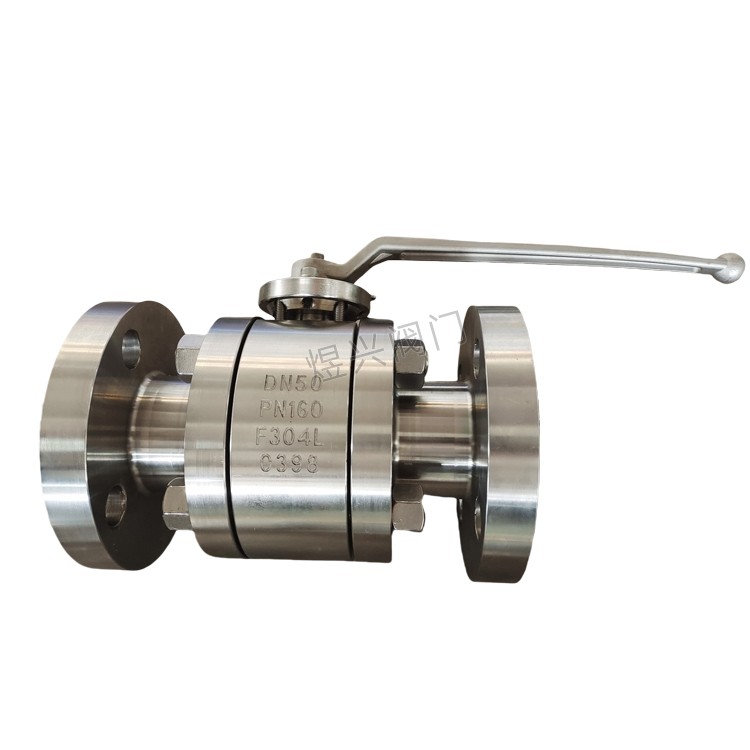









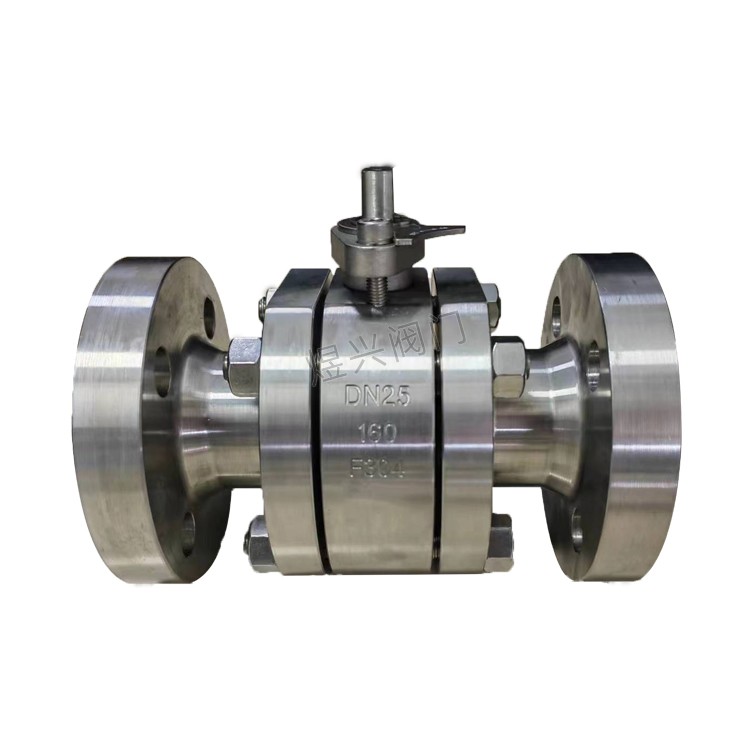
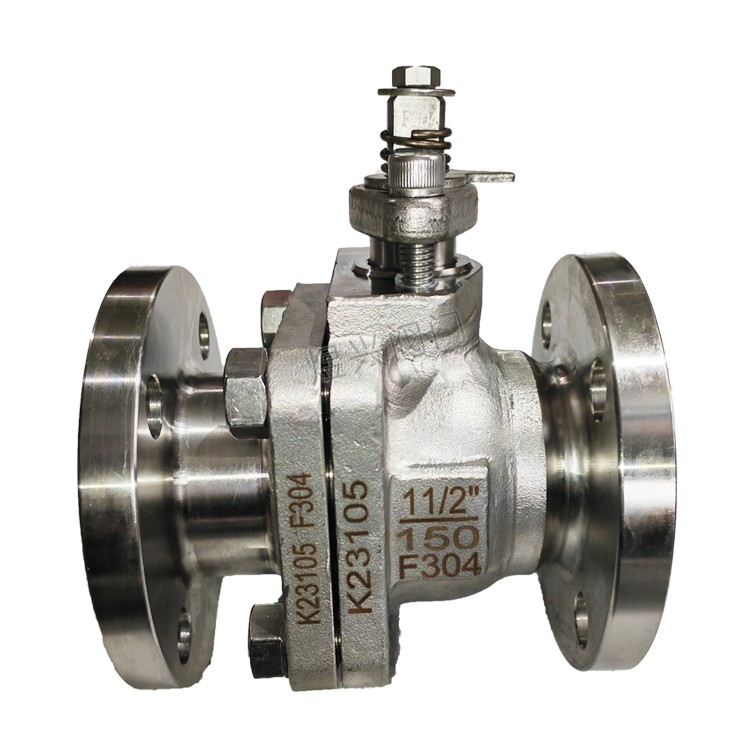


Manual forged steel ball valve is a crucial valve widely used in industrial pipeline systems, primarily controlling the flow and shut-off of fluids through the rotation of a ball. Its operation principle relies on the rotation of the ball; when the ball aligns with the pipeline axis, the valve is fully open, allowing smooth fluid passage; when the ball rotates perpendicular to the pipeline axis, the valve is fully closed, blocking fluid flow.
Structural Features
Manual forged steel ball valves are composed of the body, ball, stem, and handle, etc. The body is typically made by forging, offering high strength and pressure resistance. The ball is a critical part of the valve, controlling fluid flow through rotation. The stem is connected to the ball and is manipulated by the handle, which in turn rotates the ball.
Material Selection
The material selection for forged steel ball valves depends on factors such as the working environment, medium properties, and working conditions. Common materials include:
Carbon Steel: Such as A105, WCB, offering excellent mechanical properties and corrosion resistance.
Stainless Steel: Grades 304, 316, 316L, suitable for corrosive mediums.
Alloy steel: such as A182 F11, A182 F22, suitable for high-temperature and high-pressure environments.
High-Temperature Alloy Steel: Such as A182 F91, A182 F92, suitable for high-temperature conditions.
Tantalum alloys: such as Ta10, Ta2.5, suitable for special corrosive media.
Nickel-based Alloys: Such as Inconel 625, Hastelloy C276, suitable for high-temperature and corrosive media.
Application Fields
Manual forged steel ball valves are widely used in pipeline systems of industries such as oil, chemical, and power, for controlling the on/off and flow of various fluids (such as gases and liquids). Due to their compact structure, simple operation, and good sealing performance, manual forged steel ball valves have become an important member in the industrial valve field.











