










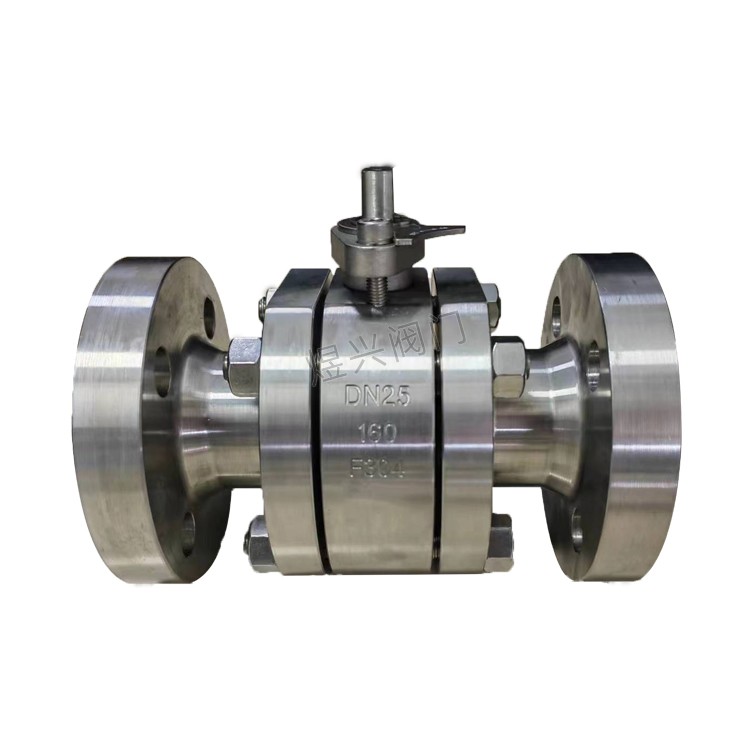
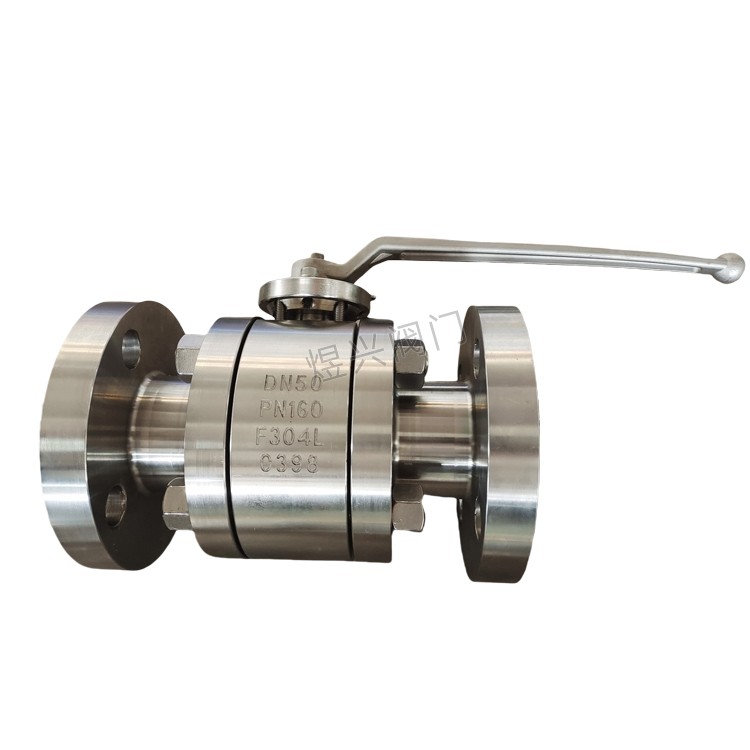
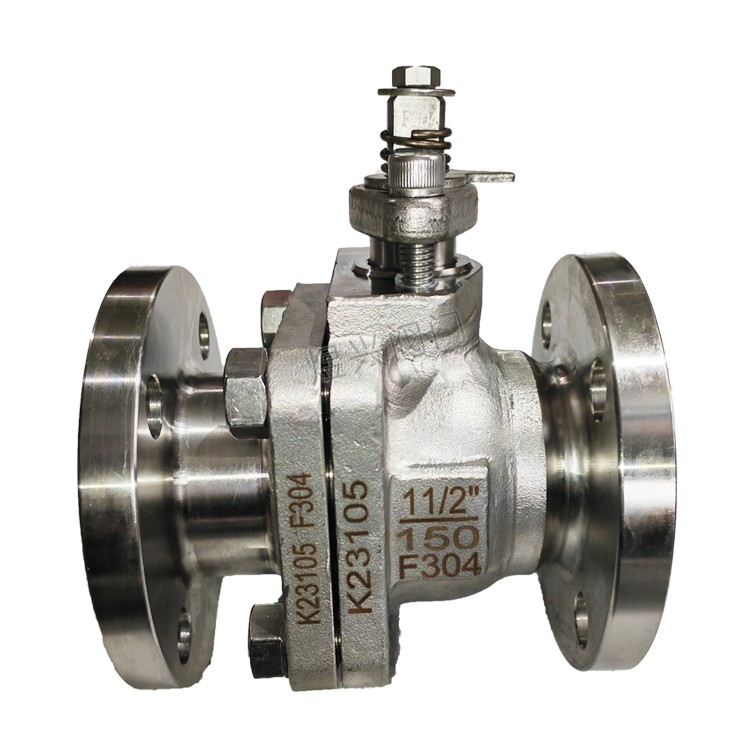


Hard-seated forged steel ball valves are high-performance valves that utilize metal sealing rings for a hard-to-hard seal of the valve seat. Both the ball and the seat sealing rings are made of metal materials, and the valve's opening and closing are achieved by rotating the ball. The hard-seated forged steel ball valve is mainly composed of the valve body, cover, stem, ball, seat, and sealing ring, among which the ball is the opening and closing part, operating by rotating 90 degrees to open or close the valve; the seat and ball fit tightly to form a sealing surface; the stem is used to transfer the rotational torque to control the ball's rotation.
Structural Features
The ball and seat of the hard-sealed forged steel ball valve are sealed in a full metal-to-metal manner, ensuring reliable sealing under various temperatures and pressures. To accommodate different operating conditions and requirements, various advanced hardening technologies for the ball and seat can be employed, such as supersonic spraying, nickel-based spray welding, surface special hardening, and hard alloy spray welding. The surface hardness of the ball and seat generally reaches above HRC60, with some reaching above HRC74.
Application Scenarios
Rigid-sealed forged steel ball valves are suitable for various severe operating conditions, including media containing solid particles, slurry, coal powder, slag, etc. They offer various actuation methods, including manual, worm gear, pneumatic, or electric. Metal hard-seated ball valves are generally connected by flange, but can also be焊接connected. They are applicable on pipes rated from Class 150 to Class 2500 and pressure classes from PN16 to PN160, used for cutting off or connecting the medium in the pipeline.
Manufacturing Standards and Materials
The manufacturing standards for hard-seated forged steel ball valves include national standards GB, German DIN, American API, ANSI, etc. The valve body material can be cast steel, carbon steel, forged steel, stainless steel, etc. These materials offer excellent temperature resistance, up to 550°C and even higher.