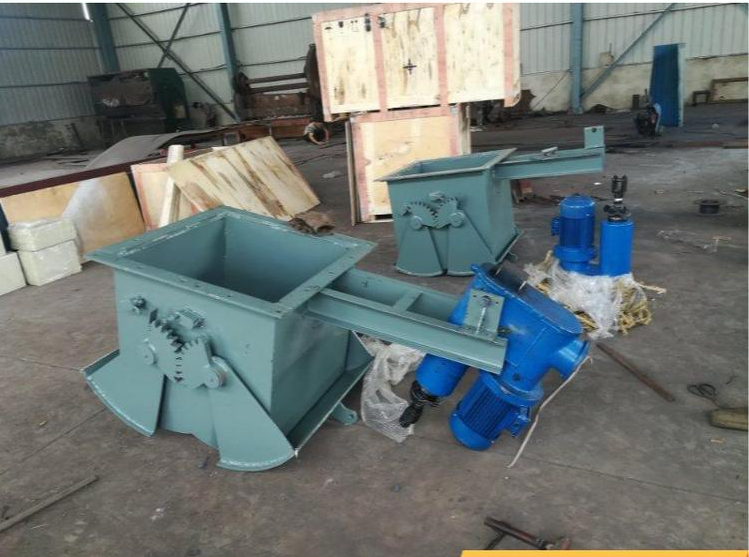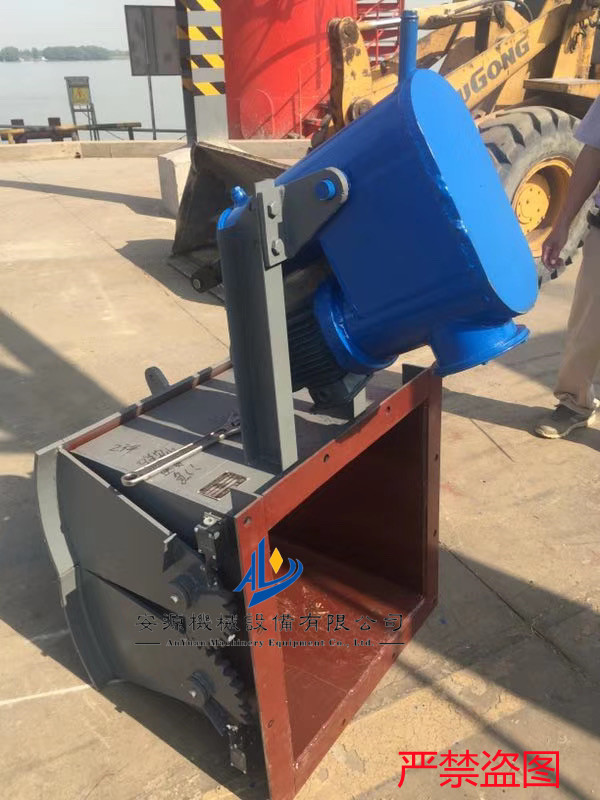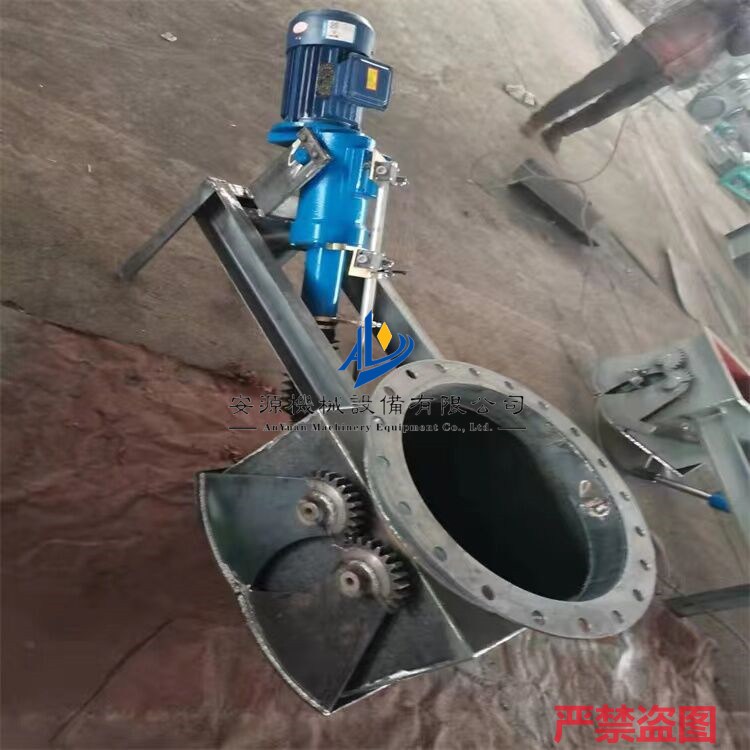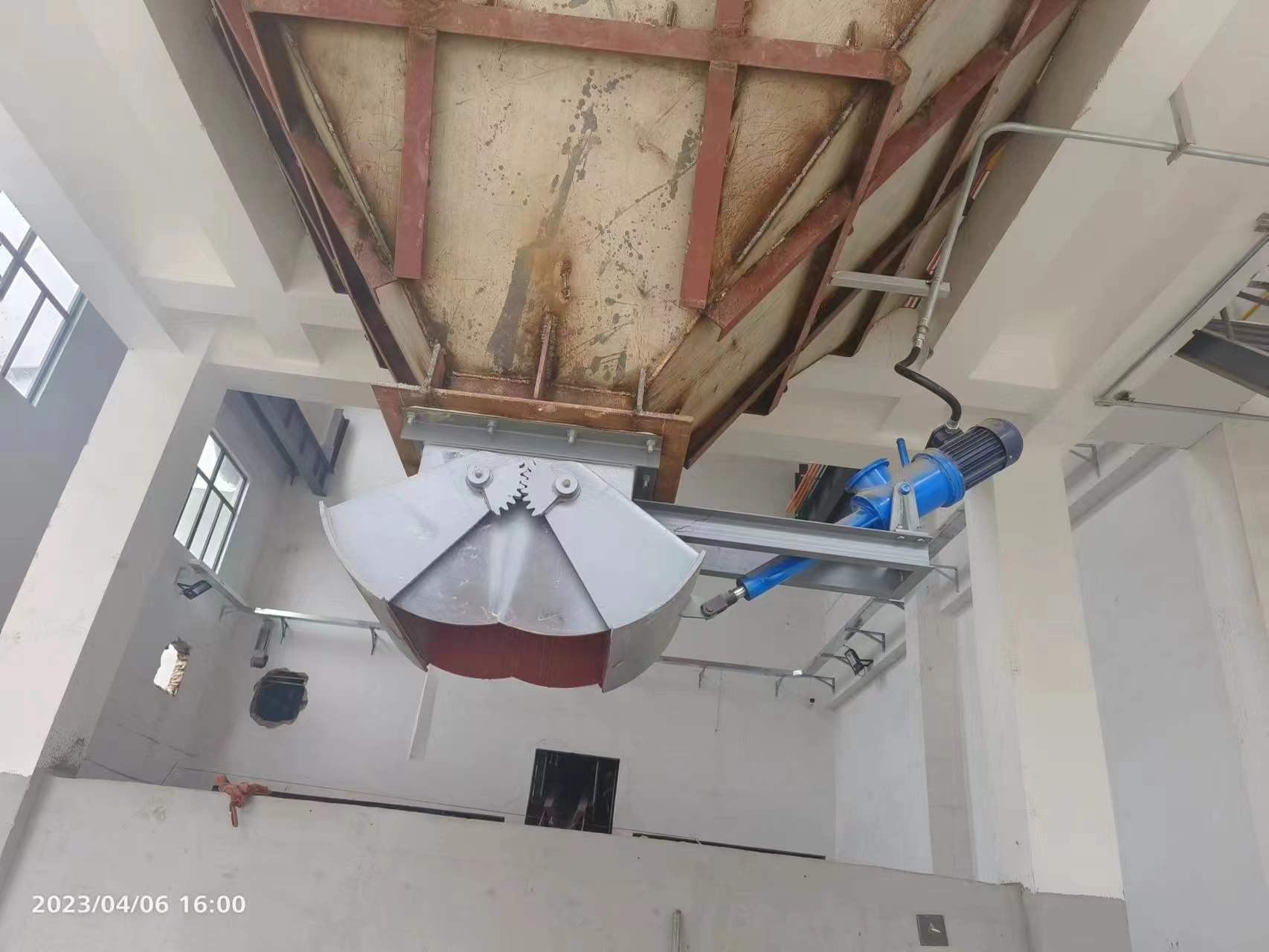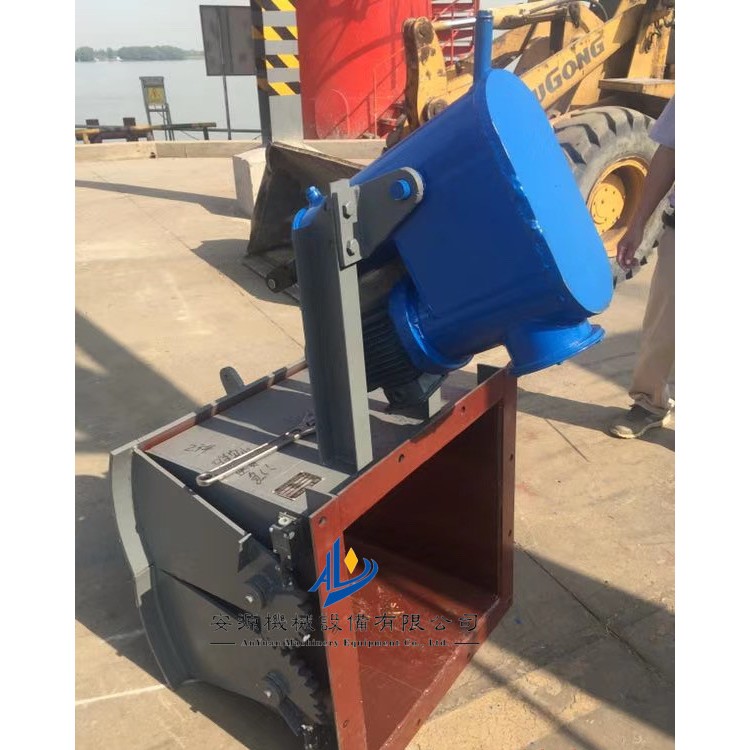

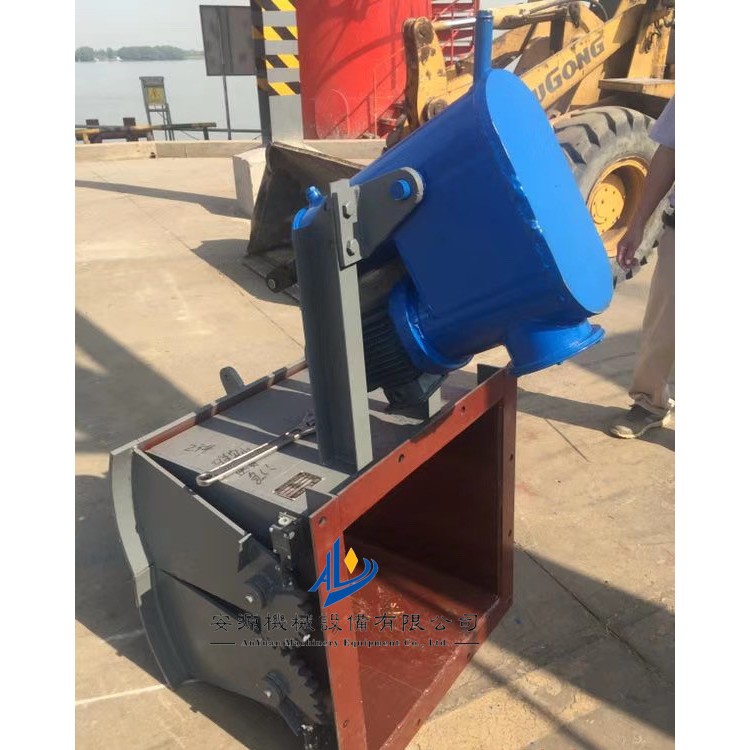
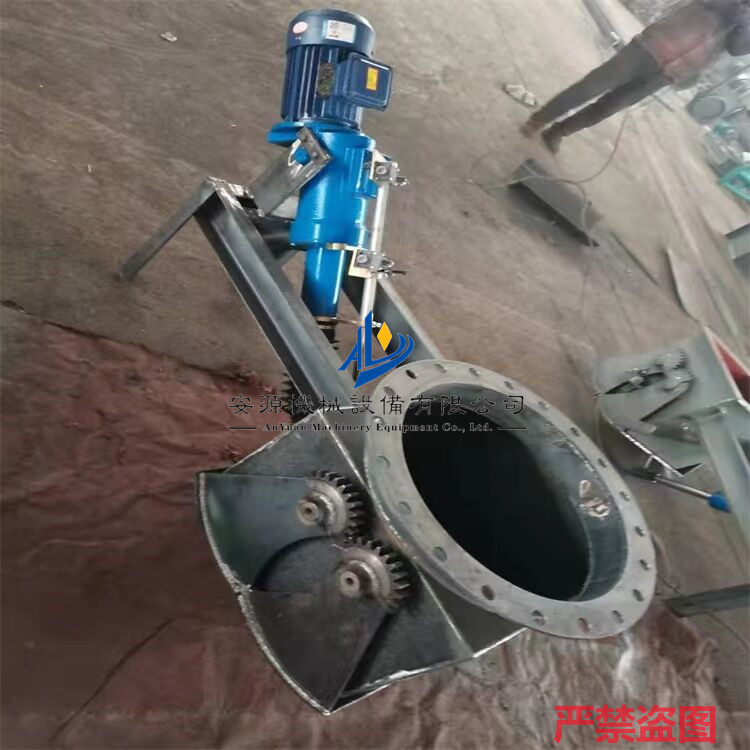
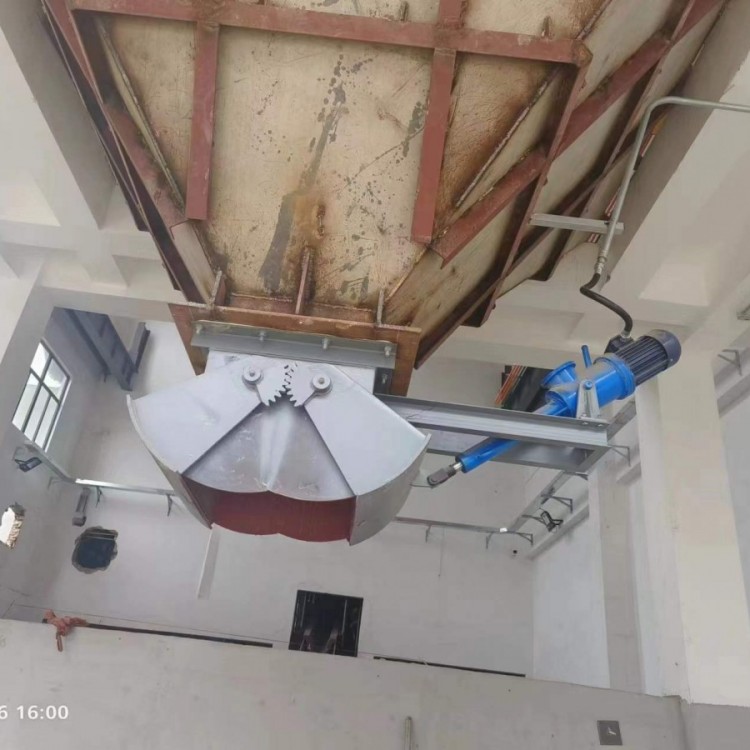












Coal silo plug valve, DEZ-500 electro-hydraulic swing gate, arc discharge valve
Paddle gates are composed of components such as the main body, sector gate plate, shaft, gears, seals, and actuator. They are constructed using carbon steel welding and feature a sturdy structure. Operation is flexible and reliable with no jamming. Different transmission devices can meet various working conditions. Electric gate valves use electric actuators with overload protection to prevent motor burnout, allowing for remote operation or programmable control, and the reciprocating stroke can be adjusted for position locking. Hydraulic gate valves use electro-hydraulic actuators with full hydraulic transmission, enabling stepless speed adjustment for both thrust and pull. Pneumatic gate valves use pneumatic actuators, which can be remotely controlled or locally operated through component assembly.
Operating Principle
The hood gate utilizes an electro-hydraulic push rod, featuring full hydraulic transmission with variable speed adjustment for both thrust and pull forces. The gate is operated manually or by an actuator, which pushes the lever, causing the gears to rotate the sector gate around the axis, opening the two sector gates to the sides, allowing the material to fall. After the receiving device is fully loaded, the actuator moves the lever again to reset the sector gate, closing off the falling material.
Usage Instructions
Butterfly valves: Firstly, during installation, please note the medium flow direction indicated on the valve body. When connecting the flanges, add sealing washers and then evenly tighten the bolts. Secondly, during operation, identify the opening and closing direction of the butterfly plate and correctly wire the actuator. That is, during operation... Regularly apply lubricant to all transmission parts to extend the lifespan of the labial valve. Improper operation will increase the degree of wear on the labial valve.
Application
Pit gates are suitable for bulk density≤2.5t/m³ various ores, coal, coke, slag, chemical products, and other bulk materials, widely used for bottom unloading in storage for industries such as building materials, metallurgy, chemicals, and glass.