








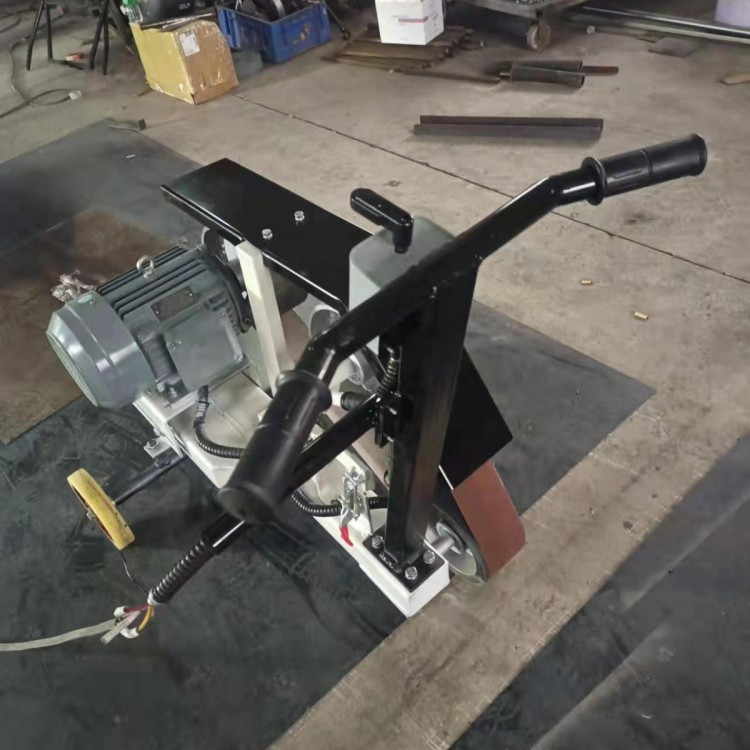
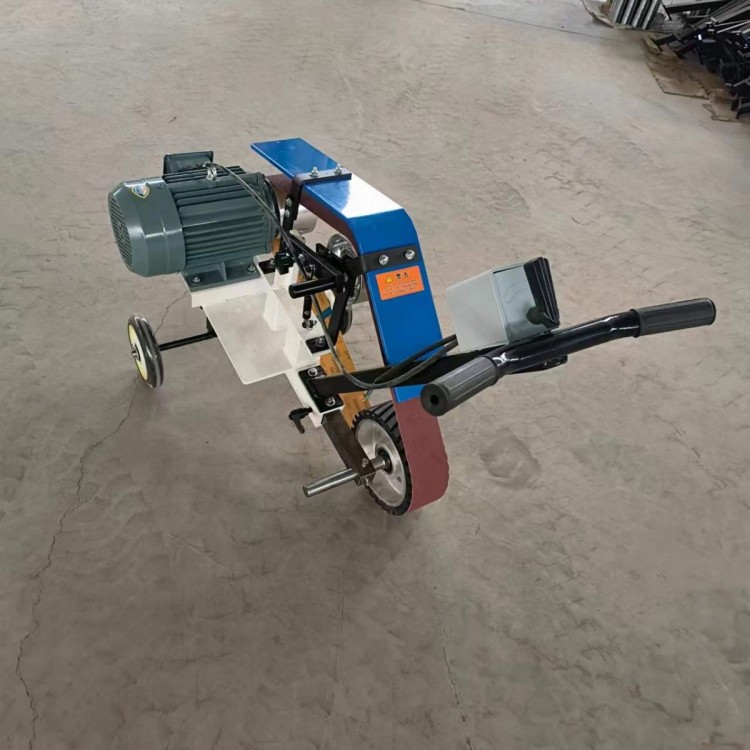
Steel Plate Weld Seam Flat Grinder 2100*100 Push-Type Sanding Belt Machine Push-Type Polishing Machine
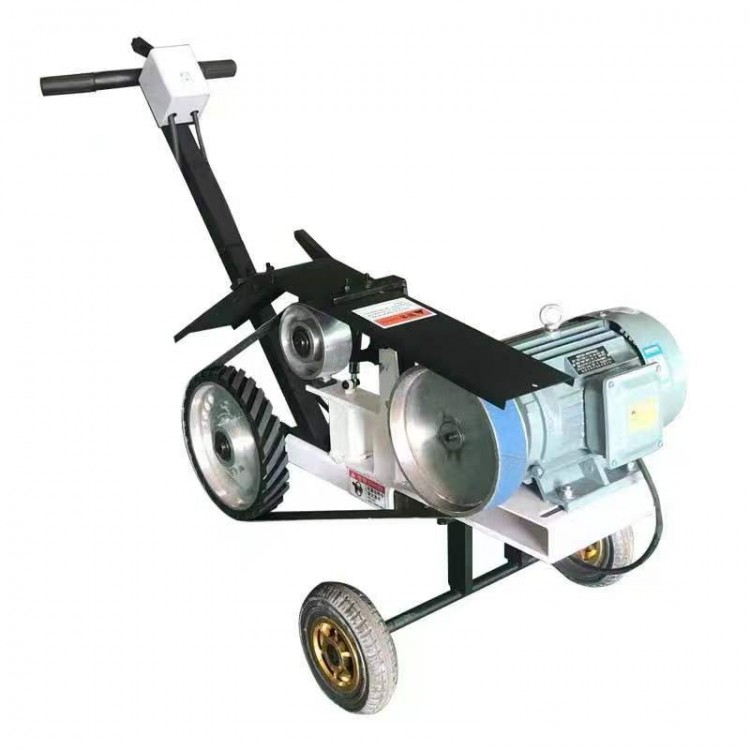
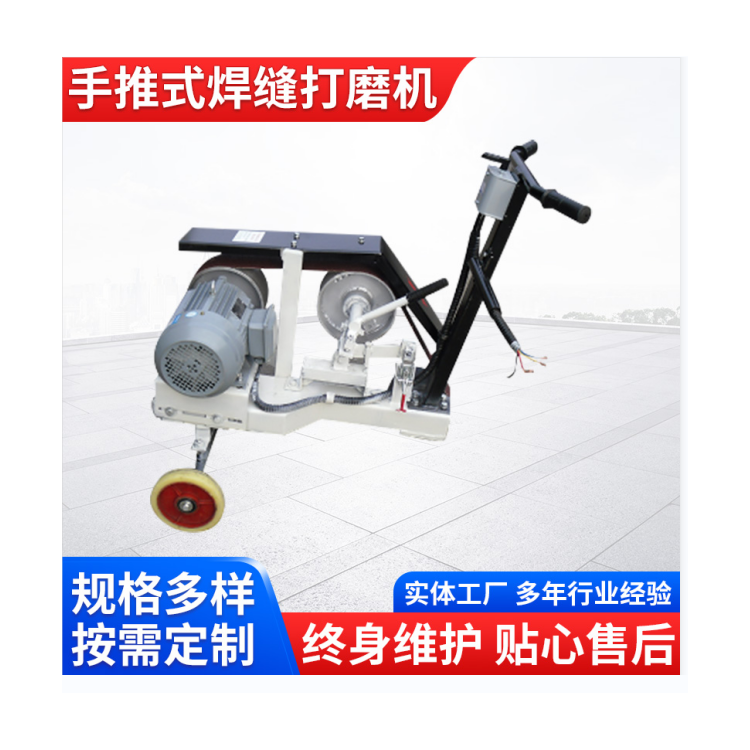
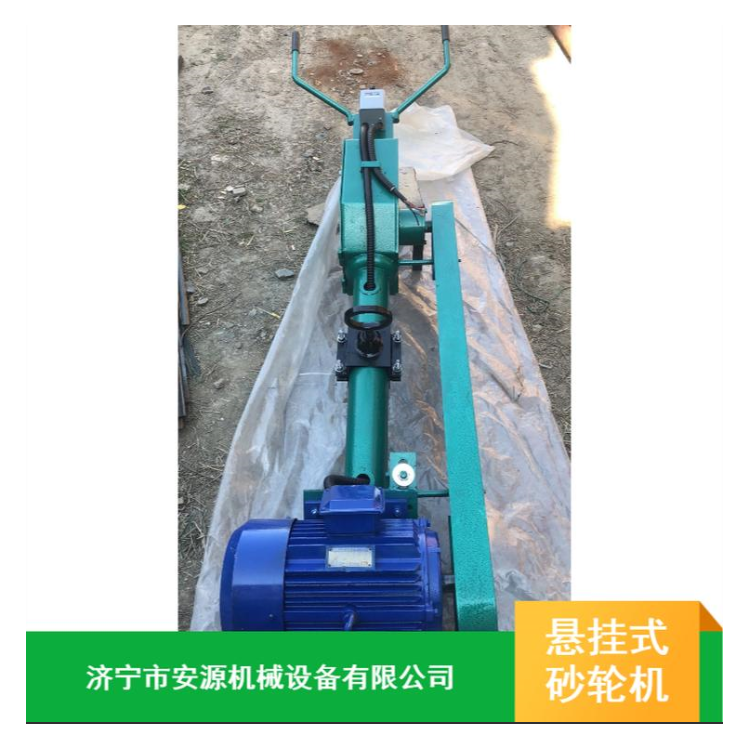
Polishing is a process carried out on castings in the foundry. Regarding the polishing machine...(grinding wheel machine) should be selected based on appropriate ease of operation, efficiency, labor and abrasive wheel savings, low labor intensity, long machine lifespan, and good economic returns. Different grinding machine types can be chosen according to the size and geometric shape of the castings. Generally, small parts use fixed-type grinding wheel machines, while large parts use suspended grinding wheel machines. The casting remains stationary, and the suspended grinding wheel machine moves within an appropriate radius. Alternatively, a portable pneumatic or electric small grinding wheel can be used for grinding any part, though it is convenient, it is not very efficient, consumes more small abrasive wheels, has high labor intensity, and is costly. A handcart-type grinding wheel machine is more suitable for medium-sized castings for grinding flat surfaces or cutting off excess sprues. A simple handcart-type grinding wheel machine can be homemade in a large-scale foundry, is easy to use, has suitable results, and the outline dimensions can be adjusted according to the casting situation.
Parameters:
Name | Handheld grinding wheel machine |
Model | M3130A |
Power(kw) | 3 |
Voltage(v) | 380V 50Hz |
RPM(Transfer/Distribute) | 2100 |
Grinding Wheel Size (mm) - ΦDiameter * Thickness * ΦHole Diameter | Φ300*40*Φ75 |
Number of phases | 3 |
Work Quota | 40 |
Temperature rise(℃) | 75 |
Structure and Advantages
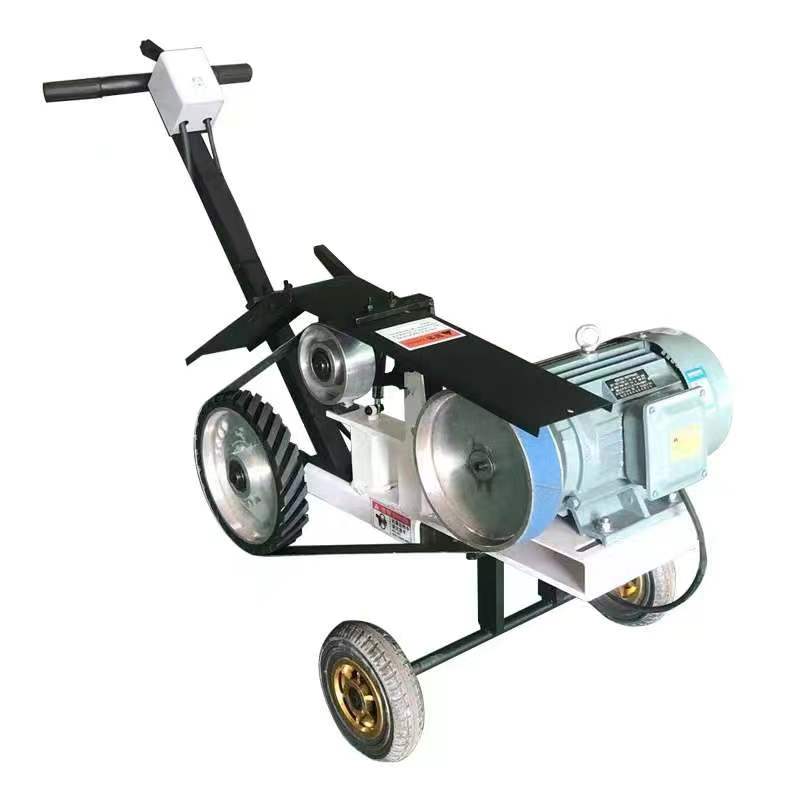
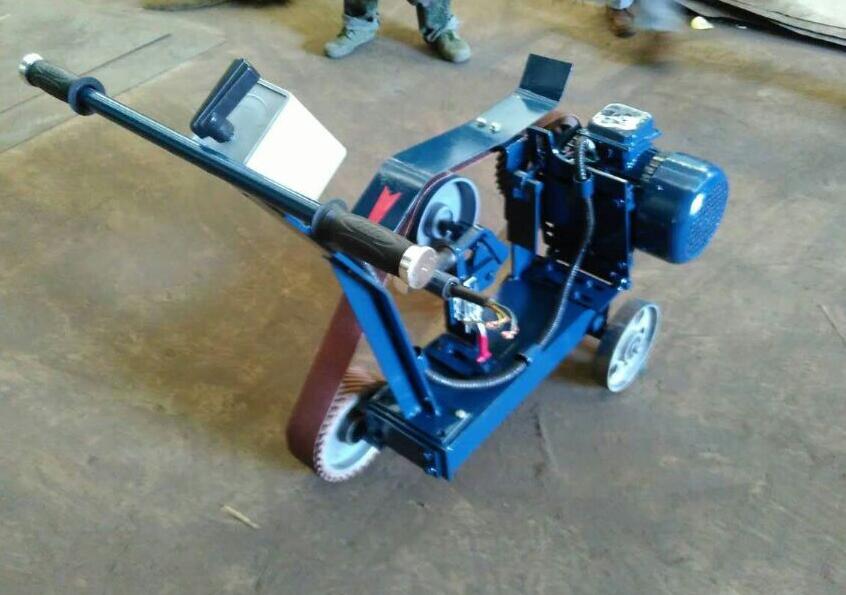
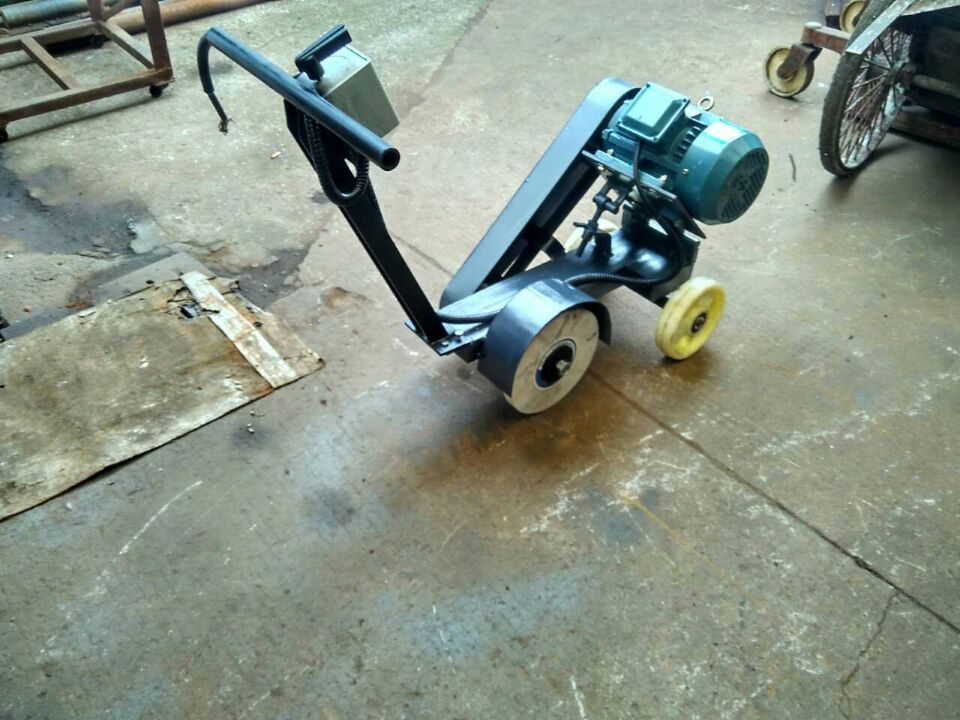
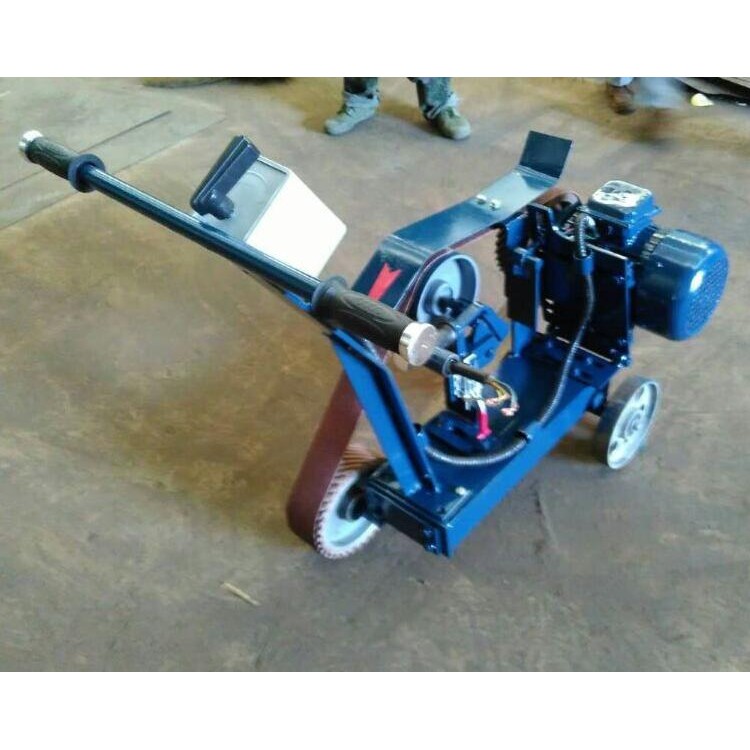
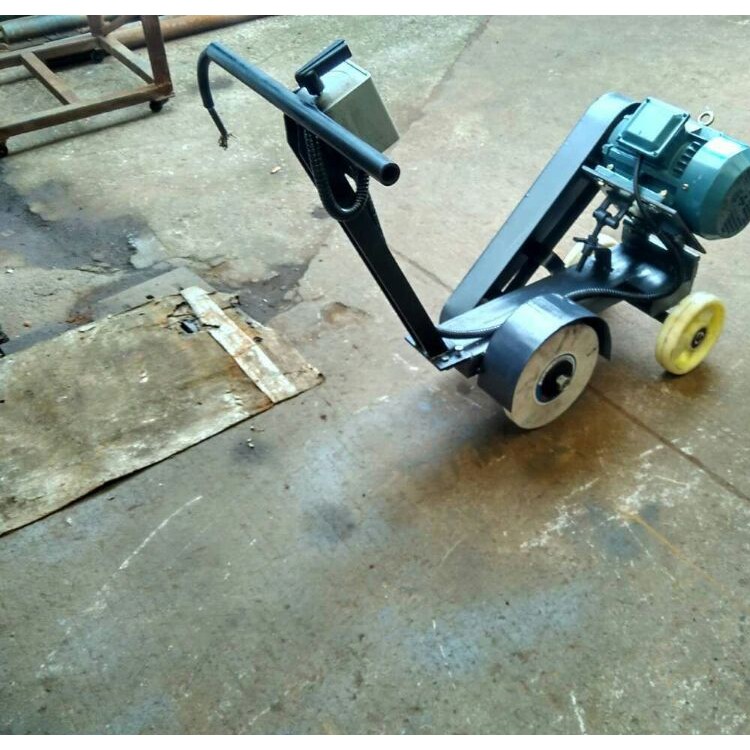
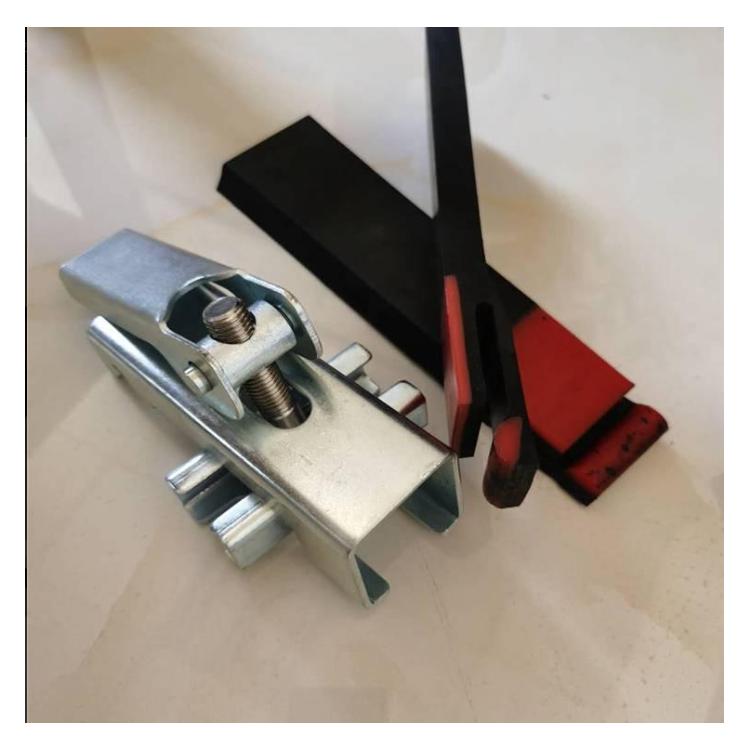
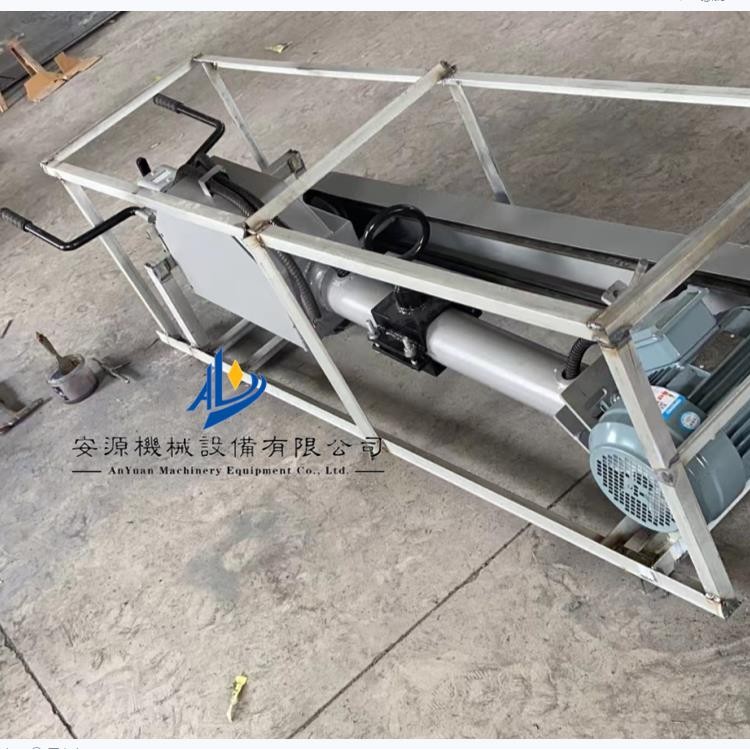
The machine is primarily composed of the drive mechanism, sand belt tensioning mechanism, contact wheel (grinding wheel) system, base, support legs, casters, sand belt, and hand push rod. The motor transmits power directly to the drive wheel, which drives the sand belt to rotate at high speed. The tensioning mechanism tightens the sand belt, and the contact wheel performs the grinding process. Depth adjustment devices are set on both sides of the contact wheel to control the grinding depth, ensuring that the weld can be flattened without damaging the base material.
This machine is primarily used for grinding flat seam joints, and can also be used for polishing flat surfaces.