









I. Definition and Implementing Institutions
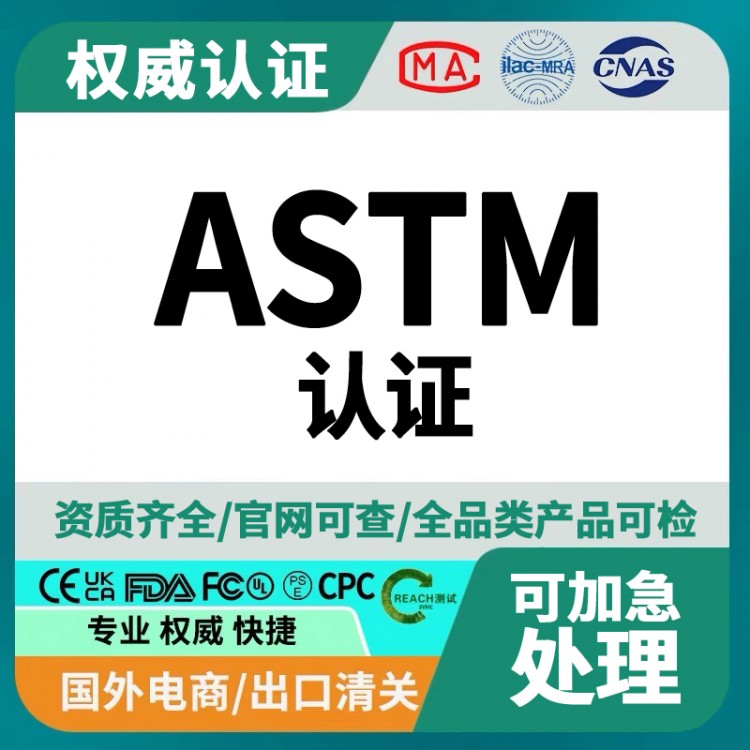
ASTMCertification refers to the American Society for Testing and Materials (ASTM)American Society for Testing and MaterialsThe standard system is established, with its certification process verified by third-party laboratories or institutions to ensure product compliance.ASTMStandard Requirements。ASTMEstablished1902Year, focused on material testing methods, later expanded to standardization in fields such as construction, mechanical, chemical, and medical, is one of the most influential non-profit standard-setting organizations globally.。
II. Certification Purpose
Quality AssuranceEnsure that products and materials comply with unified technical specifications to enhance safety and reliability.。
Market AccessMeet the mandatory standard requirements for specific industries in the U.S. and international markets (such as construction materials and medical devices).。
Trade PromotionEliminate technical barriers through internationally recognized standards to help businesses expand into overseas markets.。
Section 3: Applicable Scope
ASTMCertification covers the following industries and products:
Material FieldMetals, plastics, rubber, textiles, etc.。
Engineering fieldBuilding structural components, mechanical parts, electronic components。
Consumer GoodsToys, furniture, children's products (to be combined with...)CPSC(Other certifications, as applicable)。
Special IndustryMedical devices, aerospace materials, energy equipment。
IV. Certification Process
Standard SelectionDetermine the applicable based on the product typeASTMStandard (such as)ASTM F2057-23Stability Test for Clothing Storage Cabinets。
Product TestingPlease provide the Chinese content you would like translated into American English.ASTMCertified laboratory for physical, chemical, or mechanical property tests (such as tensile strength, corrosion resistance, etc.)。
Report CompilationA detailed test report issued by the lab, including test methods, results, and compliance conclusions。
Submit for reviewSubmit reports and application documents to the certifying body or the regulatory authority of the target market (such as Amazon and other e-commerce platforms).。
Certification MaintenanceRegular re-inspection to ensure continuous compliance with updated standards requirements。
V. Core Testing Items
Physical Property TestingTensile strength, hardness, wear resistance, etc.。
Chemical Safety TestingHeavy metal content (such as lead, cadmium), migration of harmful substances。
Mechanical Property TestingStructural stability (such as furniture's resistance to tipping), load-bearing capacity。
Special Performance TestingFlame Retardancy (Building)/Textile Materials, Biocompatibility (Medical Devices)。
Section 6: Precautions
Standard Dynamic Updates:ASTMThe standard is frequently revised with technological advancements; please pay attention to the new versions (such as...).ASTM F2057-23Replace the old version)。
Institutional Qualification RequirementsTesting laboratory must be equipped withISO/IEC 17025Qualification orASTMOfficially recognized。
File integrityThe application materials must include product identification, production information, and test details; any omission may result in the application being rejected.。
Section 7: Associated with Other Certifications
CPSCCertificationChildren's products must meet bothASTMStandard (such as toys) andCPSCLead Content Limit。
CECertificationWhen exporting to Europe,ASTMStandards comparable toENStandard parallel use is allowed, but individual testing is required.。
ThroughASTMCertified products significantly enhance consumer trust, especially in highly regulated fields like construction and healthcare, where compliance is the core threshold for market entry.。