
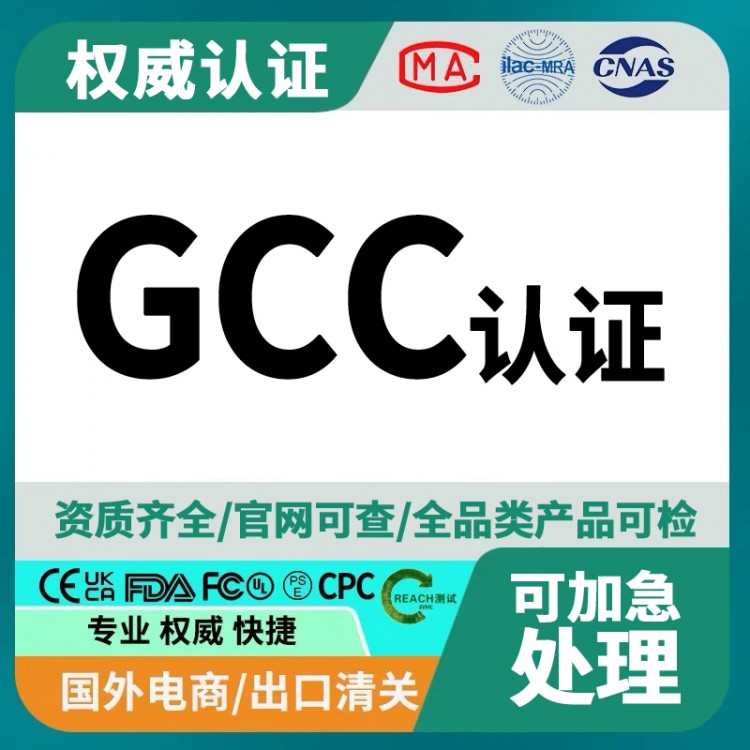









The GCC certification (Gulf Cooperation Council Certification) for children's toys is a mandatory certification required for toy products exported to Gulf Cooperation Council member states (including Saudi Arabia, UAE, Qatar, Kuwait, Oman, and Bahrain). The GCC certification aims to ensure that products comply with technical regulations and safety standards in the Gulf region.
GCC Certification Process
1. Define product scope
Firstly, confirm if the product falls under the GCC certification scope. Children's toys usually need to comply with the GCC technical regulations.
2. Select a Certification Body
Select an accredited certification body or laboratory recognized by the GSO (Gulf Standardization Organization) for testing and certification.
3. Product Testing
The product is sent to a certified testing facility to ensure compliance with GCC technical regulations and relevant standards (such as GSO 1943/2016 "Toy Safety Technical Regulations"). Typical test items include:
Physical and mechanical properties
Chemical properties (such as heavy metal content, ortho-phthalates, etc.)
Electrical Safety (as applicable)
Labels and Instructions
4. Prepare technical documents
Prepare complete documents, including:
Product Description
Design Drawings
Material List
Test Report
User Manual
Labels and warning messages
Submit Application
Submit GCC certification application to the certifying authority and provide all necessary documents.
6. Audit and Evaluation
The certifying body reviews submitted documents and test reports to ensure the products meet GCC requirements.
7. Issuance of GCC Certification Certificate
Upon approval, the certifying body issues a GCC certification. The certificate is valid for 1 year and requires an annual renewal.
8. Apply G mark label
After obtaining certification, the product must be affixed with the G mark to indicate compliance with GCC technical regulations.
GCC Certification Requirements
1. Meets GSO Standards
Children's toys must comply with the requirements of GSO 1943/2016 Toy Safety Technical Regulations, which are based on international standards (such as ISO 8124, EN 71, etc.).
Tags and Instructions
Product labels and instruction manuals must be in Arabic and include the following information:
Product Name
Manufacturer or Importer Information
Applicable Age Range
Warning Message
Declaration of Conformity to GCC Technical Regulations
3. Chemical Restrictions
Hazardous substances (such as lead, cadmium, and phthalates) in toy materials must comply with the limit values set by GSO.
4. Physical and Mechanical Safety
The design and manufacturing of toys must ensure they do not cause physical harm to children (such as sharp edges, small parts, etc.).
5. Electrical Safety (as applicable)
Electrical toys must comply with GSO electrical safety standards to ensure they do not pose an electric shock or fire risk to children during use.
Cautionary Notes
Certification Validity: The GCC certification is valid for 1 year and requires renewal annually.
Market Supervision: Gulf countries conduct random inspections of toy products on the market to ensure they continuously meet GCC requirements.
Importers' Responsibility: Importers must ensure that the toy products they import have obtained GCC certification and are labeled with the G mark.
Through GCC certification, it ensures that children's toys can be legally sold in Gulf Cooperation Council countries and meet local safety and quality standards.