
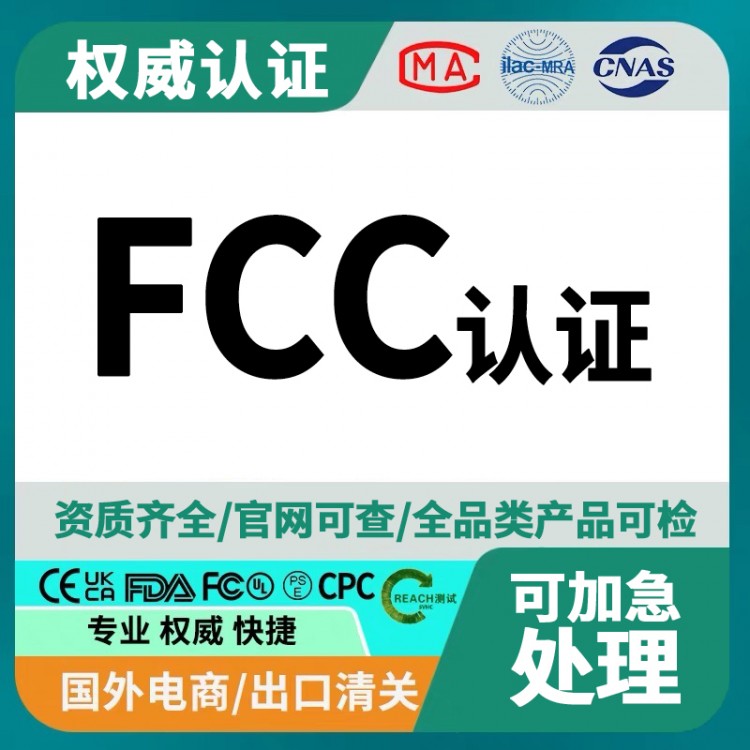









FCC (Federal Communications Commission) certification is a mandatory certification in the U.S. for the electromagnetic compatibility (EMC) and radio frequency (RF) performance of electronic products and equipment. The following are the basic steps for obtaining FCC certification:
Determine Product Category
FCC ID Certification: Applicable to wireless devices (such as Bluetooth, Wi-Fi, radio frequency modules, etc.).
FCC SDoC Certification: Applicable to general electronic equipment (such as household appliances, computer equipment, etc.).
FCC VOC Certification: Applicable to low-risk equipment (such as certain IT devices).
2. Select Certified Laboratory
Choose a lab that is FCC-recognized (certified by A2LA or NVLAP) for testing.
The lab will test the products in accordance with FCC standards, including electromagnetic compatibility (EMC) and radio frequency (RF) tests.
3. Prepare test samples
Supply samples that meet the requirements to the laboratory.
Make sure the sample matches the mass production version and is fully functional.
4. Conduct testing
The lab will test the product according to FCC standards and generate a test report.
The test includes radiation emissions, conducted emissions, and radio frequency power.
5. Prepare technical documents
Including product manuals, circuit diagrams, PCB layouts, and user guides.
For FCC ID certification, product photos and label information are also required.
Submit Application
If it's for FCC ID certification, an application must be submitted through an FCC-authorized TCB (Telecommunication Certification Body).
If it's an FCC SDoC certification, the manufacturer or importer self-declares compliance.
7. Obtain Certification
Upon approval, FCC will issue a certification certificate.
For FCC ID certification, the product must display the FCC ID number.
8. Product Labels and Compliance Statements
Apply the FCC label to the product (e.g., "FCC ID: XXXXXXX" or "This device complies with part 15 of the FCC Rules").
Ensure the product complies with all relevant FCC requirements.
Market Supervision
After the product enters the US market, the FCC may conduct random inspections to ensure the product continues to meet certification requirements.
Cautionary Notes
Cost: Certification fees include laboratory testing fees, application fees, etc., with specific costs depending on the complexity of the product.
Cycle: Typically requires 2-4 weeks; more complex products may take longer.
Regulatory Updates: The FCC regulations may be updated; ensure your products meet the standards.
Recommend partnering with a professional certification body or lab when handling FCC certification to ensure a smooth process and compliance with all requirements.
WeChat Official Account

Scan to follow Official Account