










1. Overview
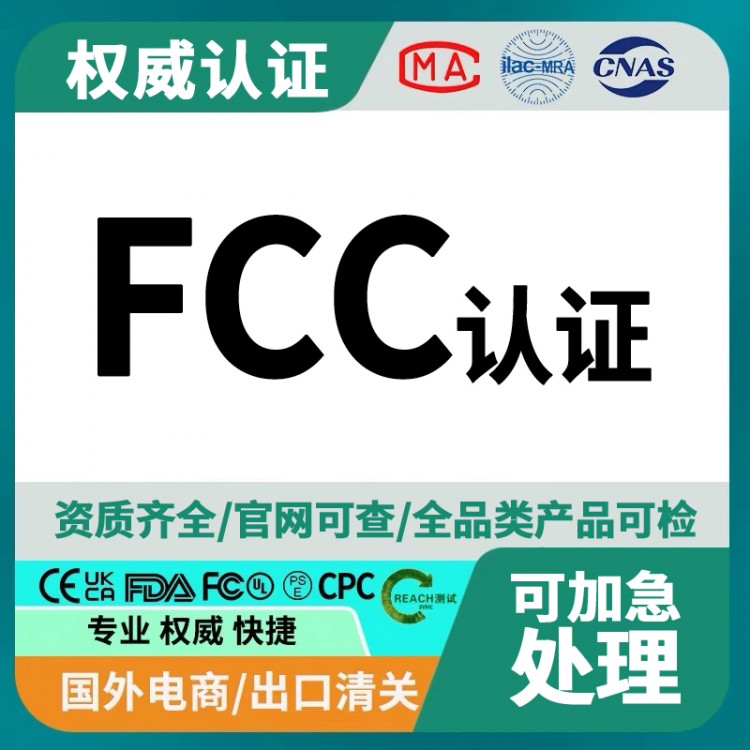
FCCCertificationFederal Communications Commission CertificationIt is a mandatory certification by the U.S. Federal Communications Commission for electronic and electrical equipment, ensuring that the product will not cause electromagnetic interference to other devices during use and also has anti-interference capabilities.FCCCertification is applicable to all electronic and electrical equipment sold in the U.S. market.
2. Applicable Product Range
FCCCertification covers a variety of product categories, mainly including:
Information Technology Equipment (such as computers, printers)
Household Appliances (such as microwaves, washing machines)
Industrial Equipment (such as motors, controllers)
Communication Equipment (such as telephones, routers)
Lighting equipment (such as)LEDLamps, ballasts
Radio Equipment (such as walkie-talkies, wireless microphones)
3. Certification Authority
FCCCertification by the Federal Communications Commission (FCC)FCC,Federal Communications CommissionRegulation. Certification testing is typically conducted by recognized laboratories, with manufacturers or importers responsible for applying for certification and labeling.
4. Certification Process
1. Product Testing: Electromagnetic Compatibility (EMC) testing conducted in an approved laboratory.EMC) and radio frequenciesRFTest to ensure complianceFCCStandard.
2. Submit Application: SubmitFCCSubmit test reports and other documents.
3. Registration: After approval, products will be listed onFCCRegister, obtainFCCCertification.
4. Labeling: Apply labels ontoFCCLogo and supplier information.
5. Key Standards
FCC Part 15RF Equipment Electromagnetic Compatibility
FCC Part 18Electromagnetic compatibility of industrial, scientific, and medical equipment.
FCC Part 22Radio frequencies for public mobile communication services.
FCC Part 24Radio frequencies for personal communication services.
FCC Part 68Electromagnetic compatibility of terminal equipment and telecommunication systems.
6. Certification Mark
ThroughFCCCertified products must be labeled with:FCCLogo, and identify the supplierFCC IDItem Number (if applicable).
7. Cautionary Notes
Expiry Date:FCCCertification does not have a fixed expiration date, but products must continuously meet the standards.
Cost: Includes testing, registration, and labeling fees; specific amounts vary by product and laboratory.
Market Supervision:FCCMarket inspections will be conducted; uncertified or substandard products will be penalized.
Technical Documents: Manufacturers must retain technical documents for at least10Year, for regulatory review.
8. Importance
Market Access: NoneFCCCertified products are not eligible for sale in the U.S. market.
Electromagnetic Compatibility: Ensures the product does not cause electromagnetic interference to other devices during use.
Brand Reputation: Certification enhances brand image and market competitiveness.
Summary
FCCCertification is a crucial step to enter the U.S. market. Companies must ensure their products meet relevant standards, choose the right lab for testing, and complete the registration and labeling process. Once certified, products can be legally sold in the U.S. market and enhance brand credibility.