


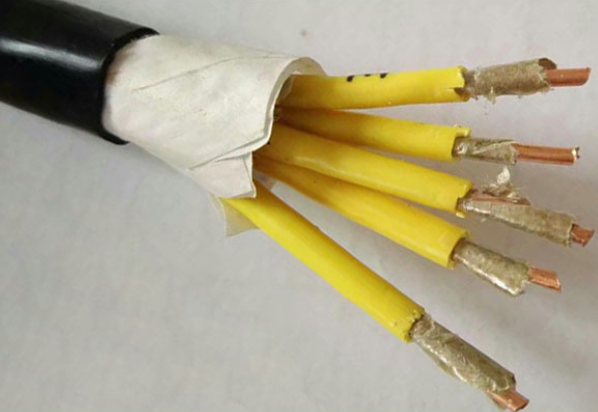













FIRE-RESISTANT CABLES AND STANDARD CABLES DIFFER SIGNIFICANTLY IN STRUCTURE, PERFORMANCE, AND APPLICATION SCENARIOS. THE MAIN DISTINCTIONS ARE AS FOLLOWS:
1. Refractory properties
Fire-resistant Cables: Fire-resistant cables can maintain normal circuit operation for a certain period under fire conditions, typically withstanding high temperatures (such as above 750℃) and providing power supply for a duration (like 90 minutes, 120 minutes, etc.). These cables are commonly used in critical locations such as fire protection equipment, emergency lighting, and evacuation routes.
Standard Cables: Standard cables are prone to combustion in fires, cannot guarantee continuous power supply to the circuit, and may even exacerbate the fire.
2. Materials and Structure
Fire-resistant Cables: Fire-resistant cables typically use special fire-resistant materials (such as mica tape, ceramicized silicone rubber, etc.) for insulation or sheath, which are not easily flammable at high temperatures and maintain their insulating properties. Additionally, the structural design of fire-resistant cables is more complex, often including multiple protective layers.
Standard Cables: The insulation and sheath materials of standard cables are typically PVC, PE, and other plastics, which can quickly melt or burn at high temperatures, losing their insulating properties.
3. Application Scenarios
Fire-resistant cables: Primarily used in high-security requirement locations such as high-rise buildings, subways, tunnels, and nuclear power plants, to ensure critical equipment continues to operate during fires.
Standard Cables: Suitable for general power transmission and distribution in common places such as homes, offices, and factories.
4. Cost
Fire-resistant cables: Due to the特殊性 of materials and technology, the cost of fire-resistant cables is usually higher than that of ordinary cables.
Standard Cable: Lower cost, suitable for general use.
5. Standards and Certifications
Fire-resistant cables: Must comply with strict fire-resistant standards (such as GB/T 19666, IEC 60331, etc.) and pass relevant certifications.
Standard Cables: Simply meet general cable standards (such as GB/T 5023, IEC 60227, etc.).
6. Installation and Maintenance
Fire-resistant cables: Pay attention to protecting the fire-resistant layer during installation to avoid damage, and maintenance requirements are high.
Standard Cables: Easy installation and maintenance with lower costs.
Summary
Fire-resistant cables offer higher safety and reliability under extreme conditions such as fires, making them suitable for environments with high requirements for circuit continuity. Standard cables, on the other hand, are suitable for general power transmission and distribution. Selection should be made based on the specific application scenario and safety requirements.
Anhui Tianming Cable Co., Ltd., as a cable manufacturer, offers both fire-resistant and standard cables in compliance with customer requirements, ensuring the safe and stable operation of power systems.




















