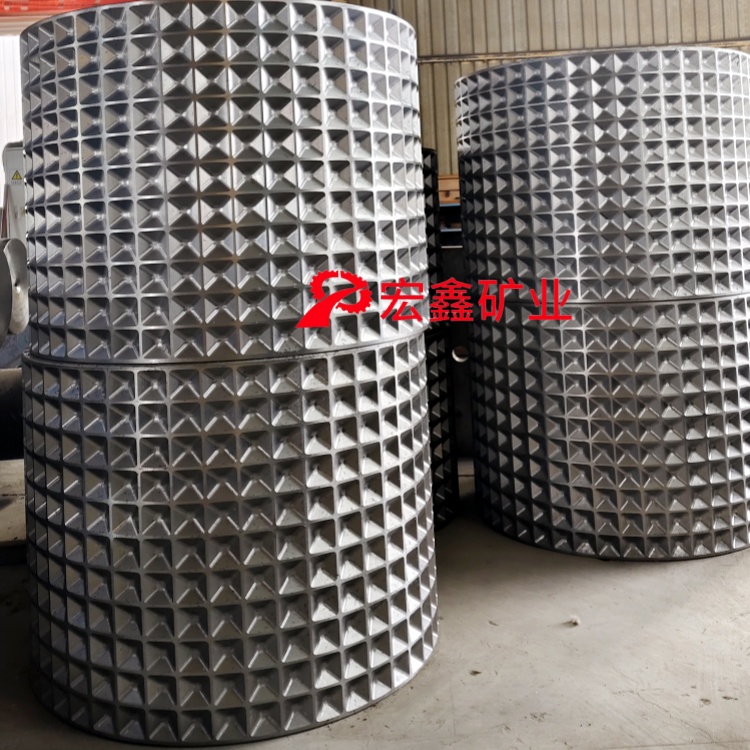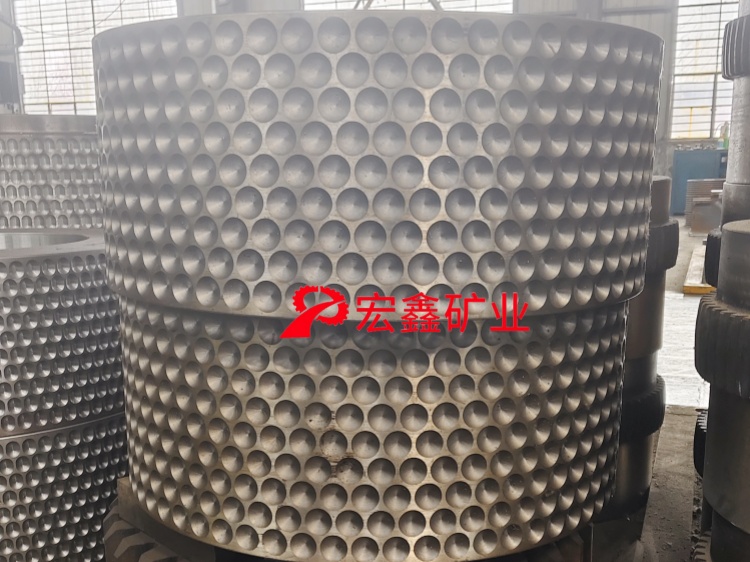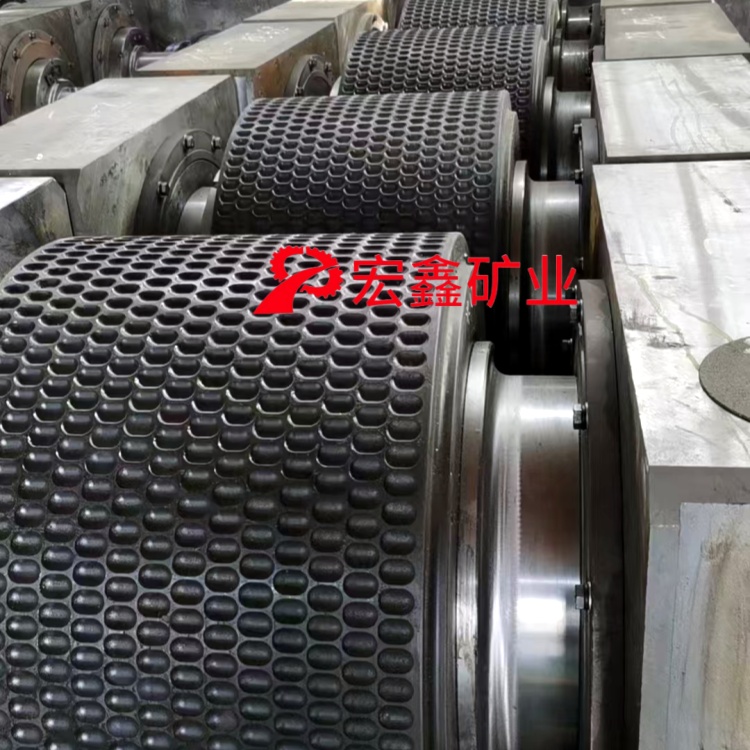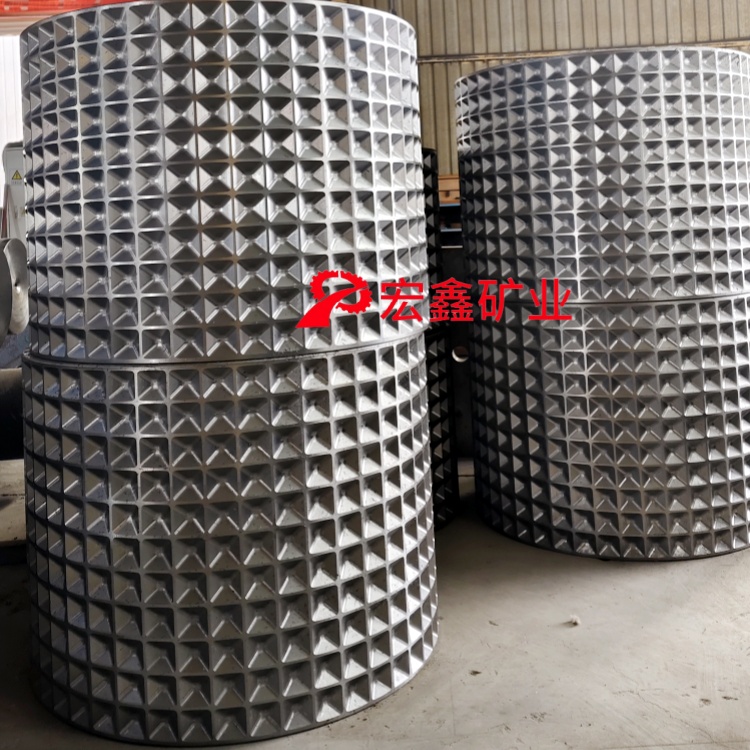

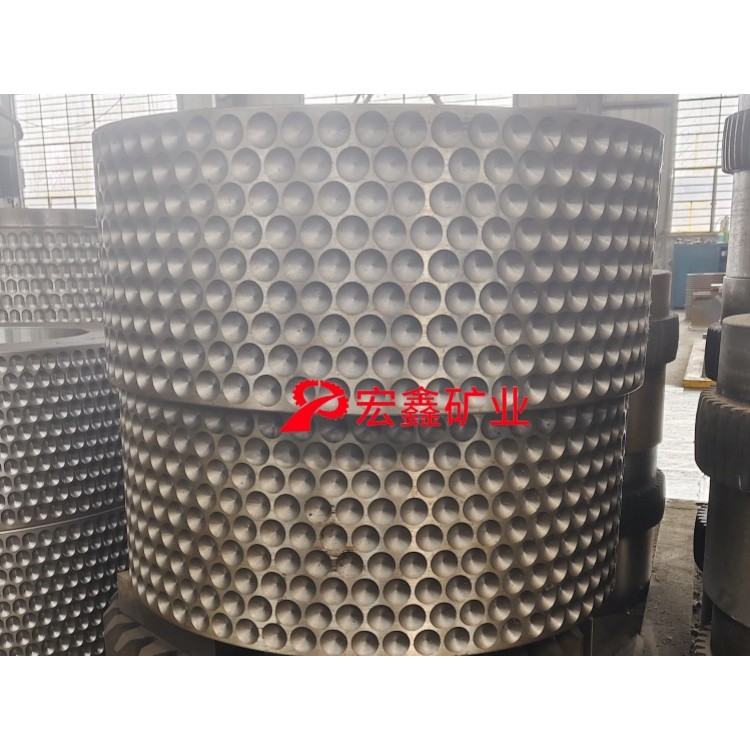







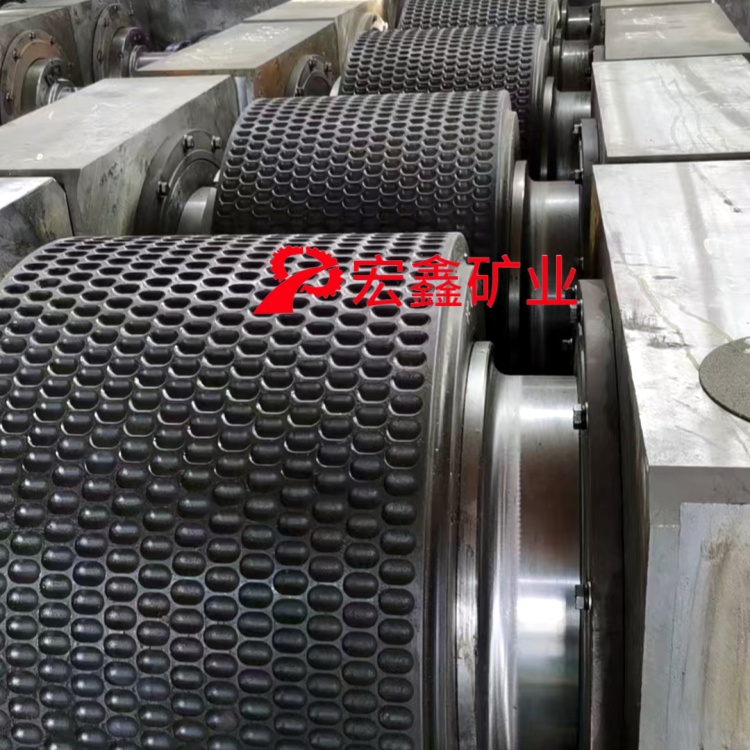
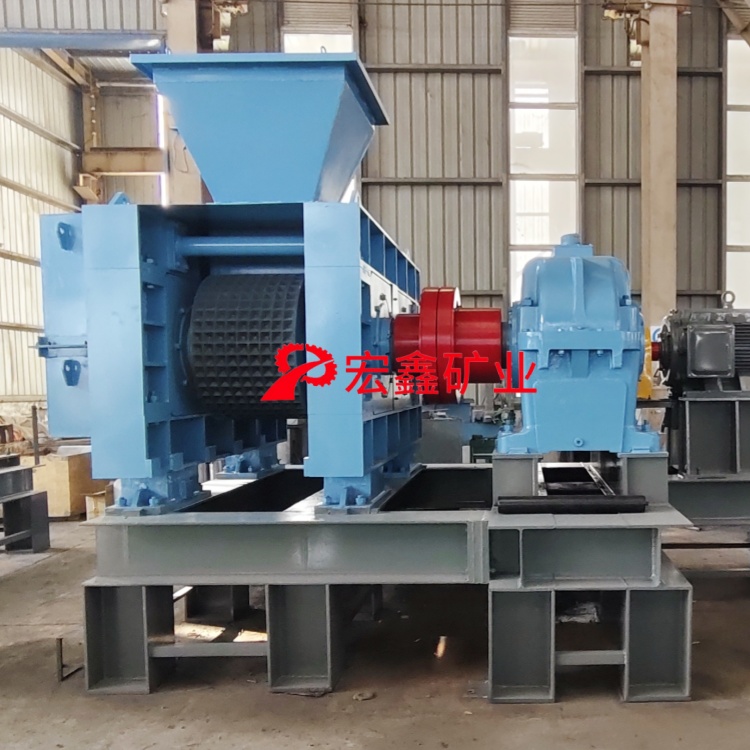
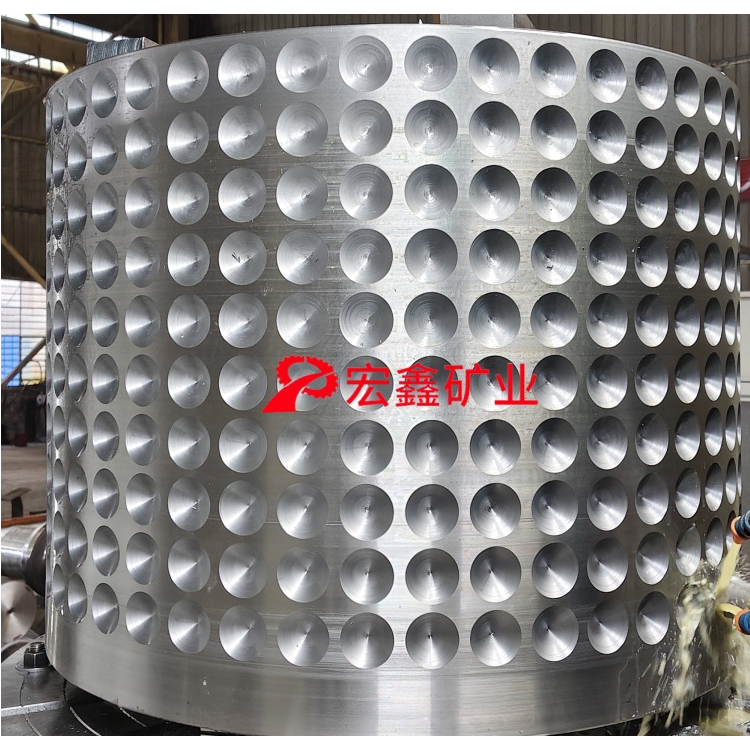
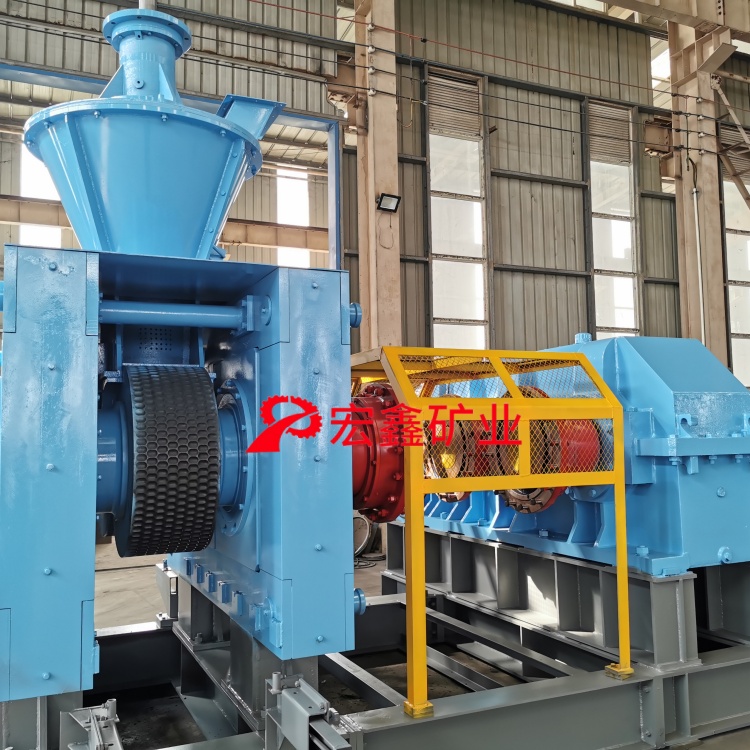
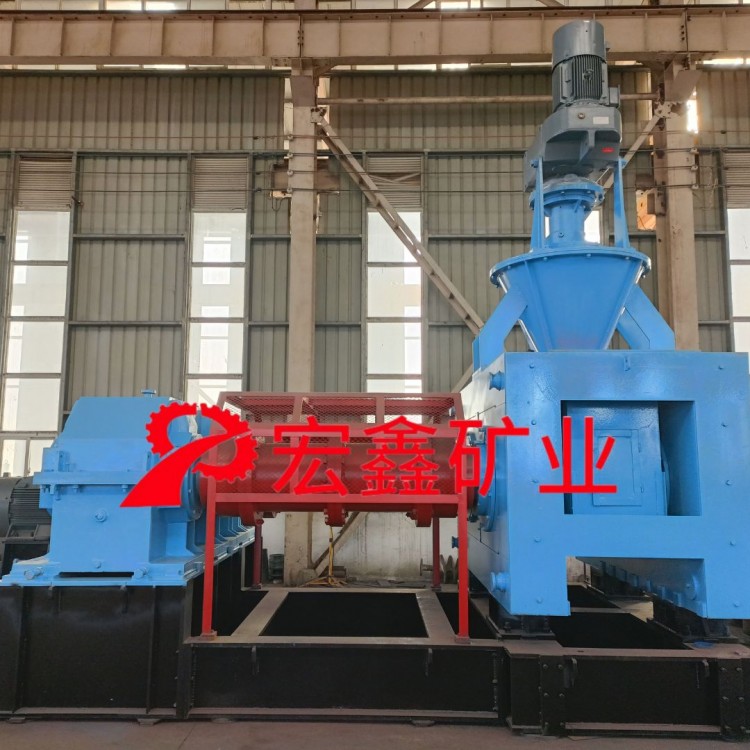
Rolling skinAn essential component of the ball press, it provides the necessary molding pressure during the ball press operation. The design and material selection of the roller skin have a critical impact on the performance and quality of the finished products.
Here are some detailed specifications about the roller skins:
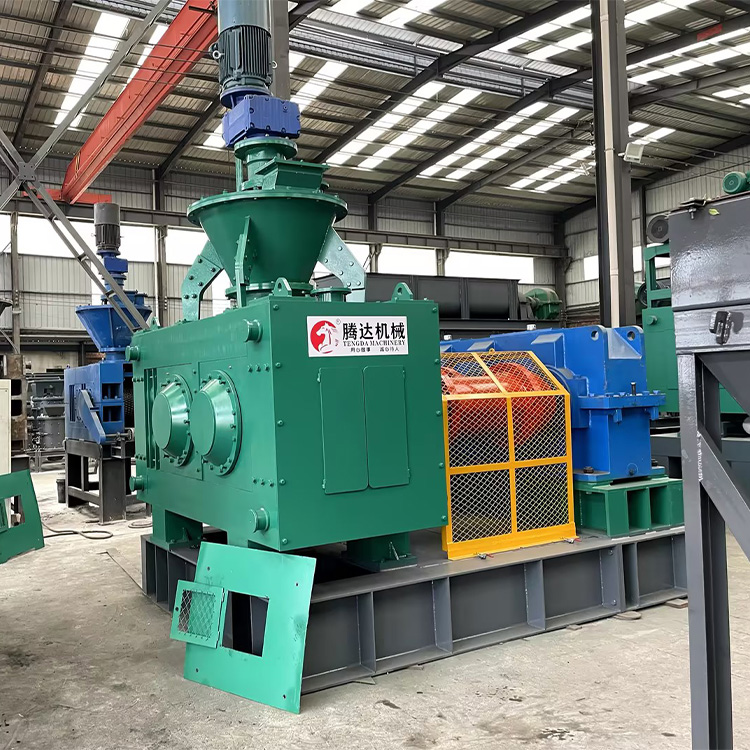
UsageRoller shells are primarily used in ball presses, where they come into contact with the material and apply pressure to shape it. In dry extrusion granulators, roller shells are made of high-strength, wear-resistant, alloy stainless steel and are subject to multiple hard-facing treatments.
Ensure the ball socket is smooth for easy demolding, thereby extending the extrusion's service life.
Material and TreatmentRollers are typically made of high-strength, wear-resistant stainless steel alloy, which, combined with multiple hard-facing techniques, offers excellent wear resistance and durability. The smoothness of the ball sockets is crucial for ensuring the quality of the finished product.
Crucial as it affects ease of demolding and prevents the finished balls from having burrs or substandard products.
Adjustment and maintenanceThe use and maintenance of roller skins should also be noted. For instance, if the quenching hardness of the roller skins is not high enough, it may reduce the molding pressure of the ball press. In this case, the surface quenching heat treatment of the roller skins can be applied.
Replace the roller skins. Additionally, the ball sockets on the two roller skins of the ball press must be centered to avoid misalignment or quality issues in the finished balls.
The roller shell of Zhengzhou Hongxin Mining Equipment Co., Ltd.'s ball press machine is made of 9Cr2Mo material, while there are many GCr15 materials available in the market. Below is the difference between the two materials:
GCr15 is a commonly used bearing steel; it contains 1.2% carbon by weight and 1.5% Cr by weight; 9Cr2Mo is a cold working die steel; it contains 0.9% carbon by weight and 2.0% Cr by weight.
The Mo element content is around 1%; of course, bearing steel can also be used as cold working die steel, and can be used to manufacture files, dies, gauge blocks, and more. 9Cr2Mo steel is commonly used to manufacture tap bits, dies, screw-cutting plates, punch dies, and other components.
The alloy element content of 9Cr2Mo steel is twice that of GCr15 bearing steel, and its performance is superior to GCr15 bearing steel; both the Cr and Mp elements, when solidly dissolved in the matrix, increase the electrode potential of the matrix, which in turn raises the material's...
Electrochemical corrosion resistance; which improves the steel's resistance to acidic and alkaline corrosion. The quenching hardness of GCr15 bearing steel is slightly higher than that of 9Cr2Mo steel, but its hardenability is significantly lower than the latter; its toughness is also lower than the latter. Overall,
GCr15 bearing steel is far inferior to 9Cr2Mo steel.