








Product Product Please provide the Chinese content to be translated. Clear:
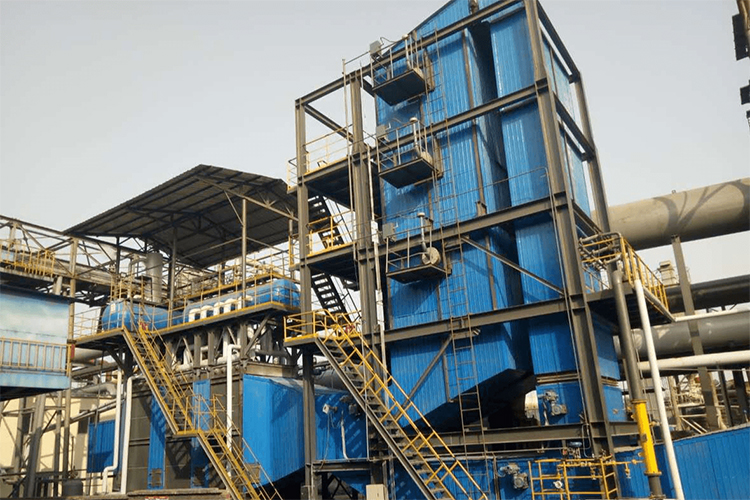
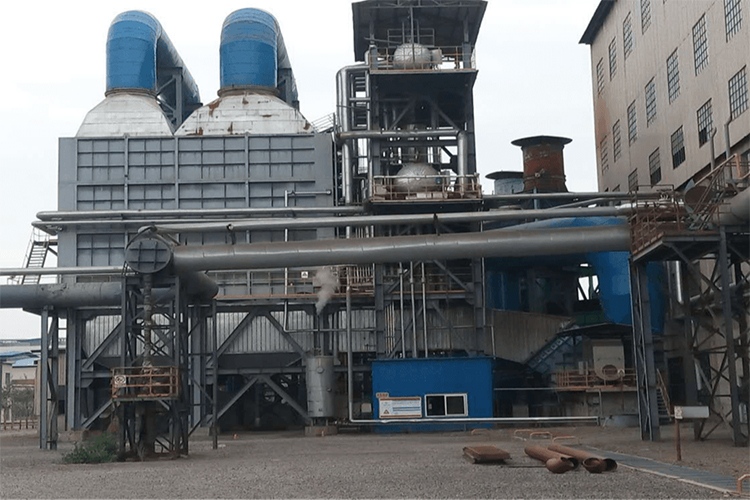
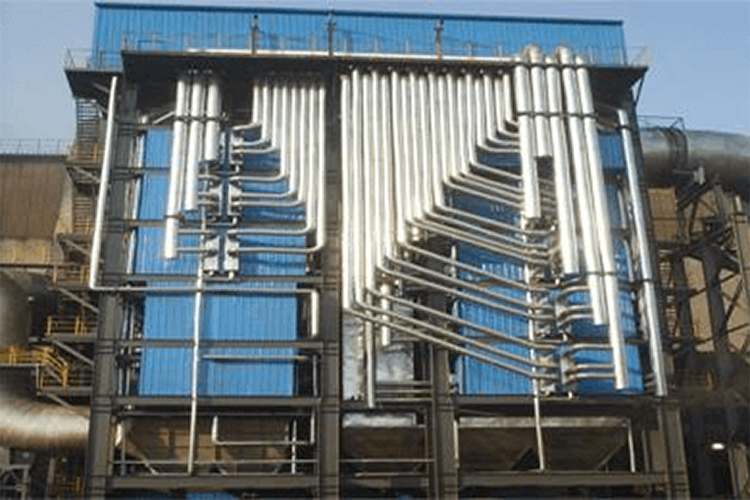
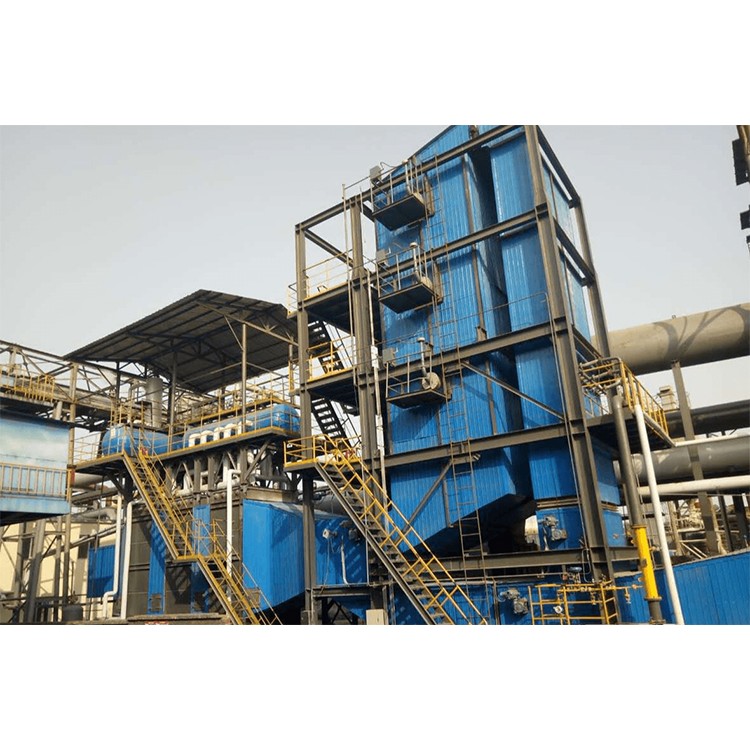
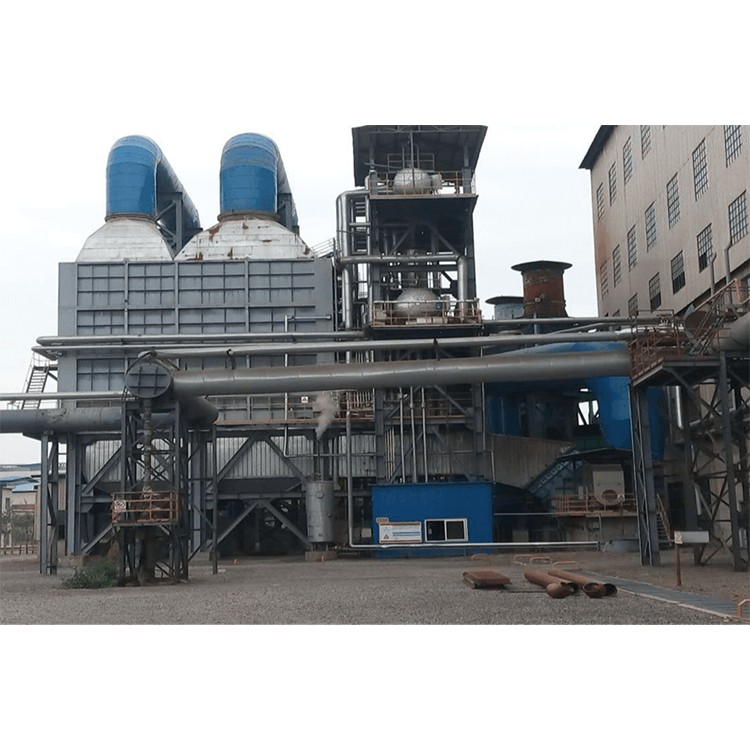
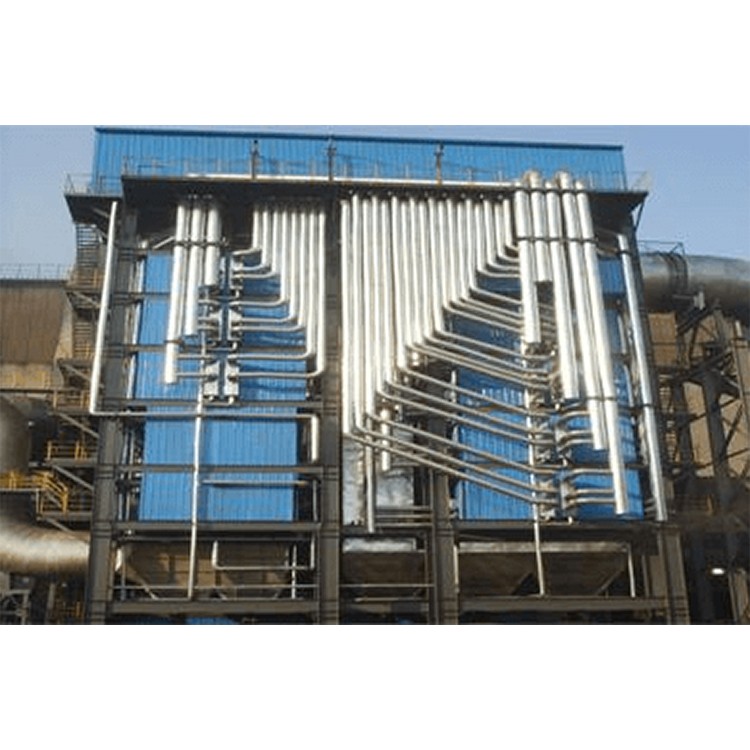
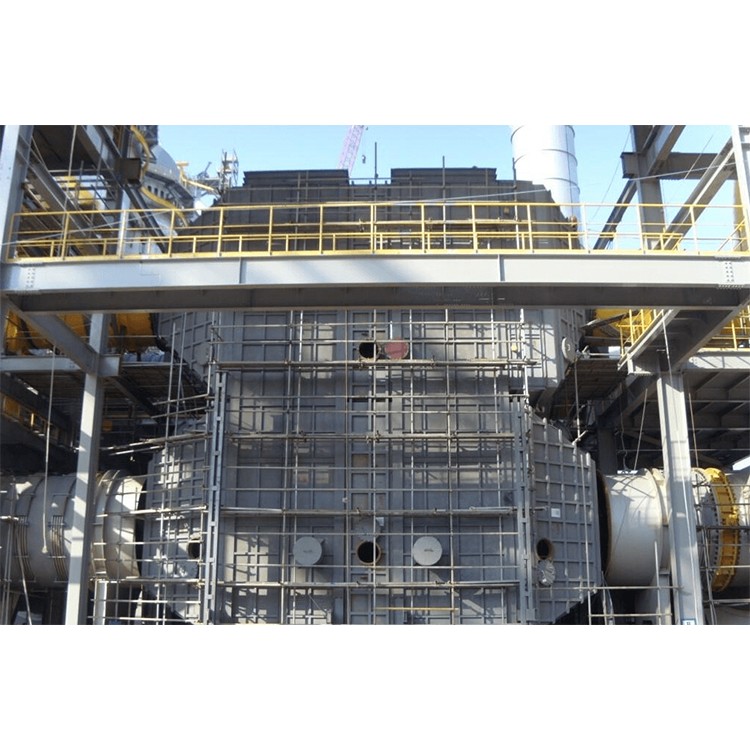
Coke oven gas desulfurization, denitrification, and waste heat recovery integration is increasingly mature in China. Our company's main promoted technologies include: SCR denitrification + pure dry or semi-dry desulfurization + waste heat recovery from flue gas.
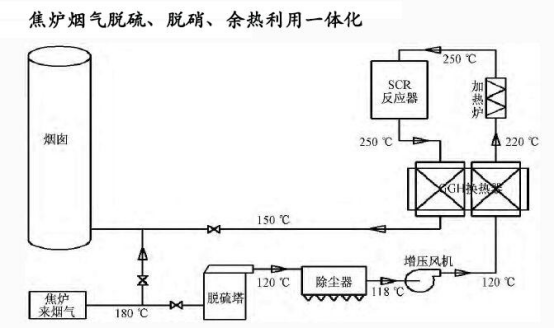
PrimaryProcess flowProcess as follows:
The flue gas from the coking furnace first enters the flue gas denitrification system, and the temperature of the flue gas is then reduced.The flue gas, around 15 degrees, enters the desulfurization system for desulfurization treatment. Afterward, the treated flue gas is sent to the flue gas waste heat recovery unit, where it is heat exchanged and then returned to the underground flue. It is finally emitted through the original chimney.
Engineering Applications
This technology has been successfully applied at Inner Mongolia American Coal & Coke Co., Ltd., which operates four coke ovens, each with a production capacity of600,000 tons/year; each pair of coke ovens shares one chimney; each chimney emits 250,000 Nm3/h of flue gas; the SO2 content in the emitted flue gas is 250 mg/Nm3; the NOx concentration is 1000 mg/Nm3.
Each chimney is equipped with an integrated flue gas desulfurization and denitrification waste heat recovery unit, respectively at:Completed and successfully tested in June and August 2016, the facility has been operating smoothly for over half a year. The treated flue gas has an SO2 concentration of less than 30 mg/Nm³ and an NOx concentration of less than 150 mg/Nm³, meeting not only the environmental protection requirements of the Wuhai area but also the standards for special regions in Table 6 of GB16171-2012 "Emission Standards of Pollutants from Coking Chemical Industry." Additionally, it produces 12 tons of 0.6 MPa low-pressure saturated steam per hour.
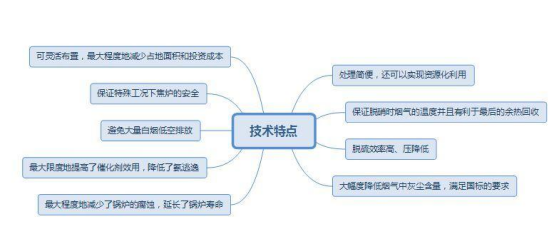
Technical Features
1) Pre-desulfurization followed by denitrification, with subsequent waste heat recovery. The烟气 post-desulfurization contains a lower SO2 content, which is beneficial for reducing the amount of denitrification catalyst required and extending its lifespan. The desulfurization by-products are conventional solid waste, easy to dispose of, and can also be recycled for resource utilization.
2) First application of dry desulfurization in actual engineering, with minimal temperature drop, significantly lower than that of semi-dry and wet desulfurization methods. The entire unit has no temperature drop except for heat dissipation, ensuring the temperature of flue gas during denitrification and promoting subsequent waste heat recovery.
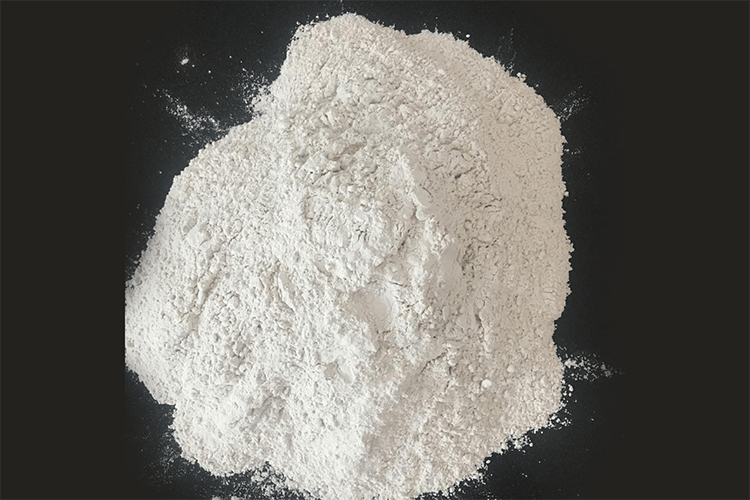
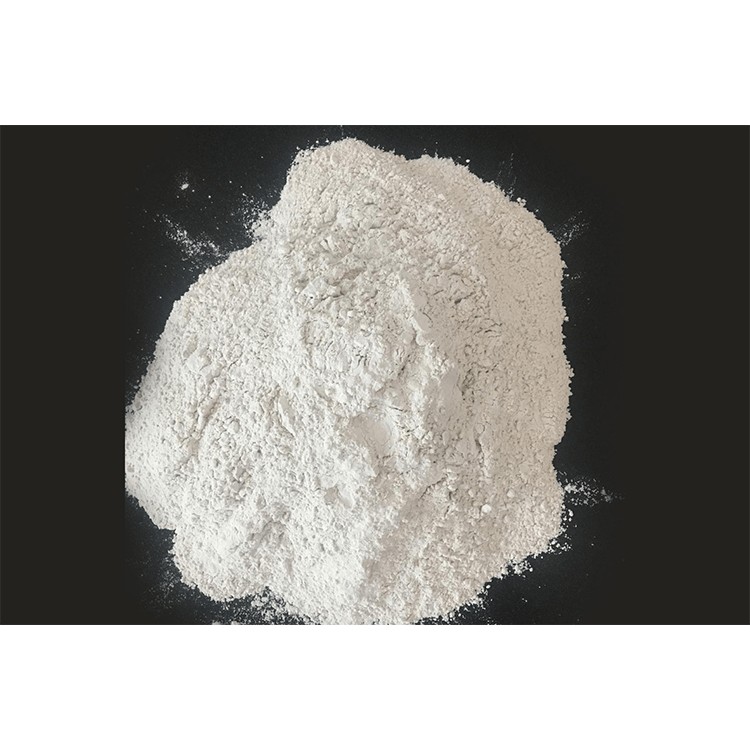
3) Utilizes mobile bed desulfurization technology and has developed a dedicated desulfurizing agent, achieving high desulfurization efficiency and reduced pressure.
4) Mobile bed dry desulfurization features efficient dust removal, significantly reducing dust content in flue gas, meeting national standards without the need for additional dust removal equipment.
5) Flue gas entering the waste heat boiler has been purified, significantly reducing boiler corrosion and extending the boiler's lifespan.
6) Utilizing low-temperature denitrification with imported porous high-efficiency low-temperature denitrification catalysts, the denitrification efficiency is approximately twice that of conventional denitrification catalysts with the same filling volume, and the catalyst filling volume is reduced; service life can reach 3-4 years or more. Designing the ammonia injection system with CFD simulation maximizes the catalyst's effectiveness and minimizes ammonia escape.
7) Post-waste heat recovery, the exhaust gas temperature is high, and the treated flue gas returns to the original chimney, keeping it in a hot standby state at all times, and also avoids the low-altitude emission of large amounts of white smoke.
8) The underground original flue damper door has an automatic opening system upon power failure, ensuring the safety of the coke oven under special working conditions.
9) The complete set consists of only three main equipment: desulfurization tower, denitrification reactor, and waste heat boiler. The reduced number of equipment allows for flexible arrangement, minimizing land use and investment costs, making it feasible to expand desulfurization and denitrification either for new integrated plants or for the expansion of existing waste heat recovery systems.
Integrated Solution Technology
In response to customer requirements and the existing coke oven gas treatment process, researchers at Zhonggang Heat Energy have researched, developed, and integrated a unified technology for desulfurization and denitrification of coke oven flue gas and the recovery and utilization of waste heat.
1. Proposal Description
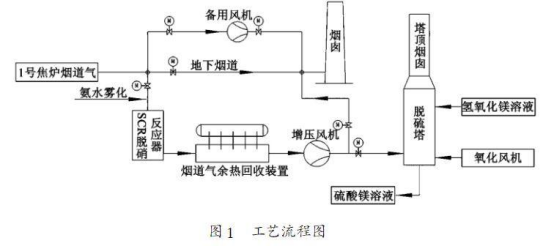
Coke oven gas treatment process (as shown in Figure 1): Coke oven→ Coke oven flue gas → Denitrification reactor → Heat exchanger for flue gas → Boosting fan → Desulfurization tower → Tower top chimney emissions.
First, the underground flue gas from the coke oven is extracted to the ground before entering the existing gate valve. An electric regulating valve is set on the pipeline, and the flue gas is then piped to the denitrification reactor. After denitrification, the flue gas enters the flue gas waste heat recovery unit, primarily to recover the sensible heat of the flue gas and produce 0.6 MPa saturated steam. The hot flue gas, after being cooled by the waste heat recovery unit, is pressurized by a booster fan and enters the wet flue gas desulfurization tower unit. After desulfurization, the flue gas is emitted through the chimney at the top of the tower. A bypass pipeline is installed before the denitrification unit, which uses a small auxiliary fan and a diesel generator to send the flue gas into the underground flue. Its purpose is to temporarily start up the emergency operation in case of a fault in the desulfurization or denitrification system or a power outage, to send the high-temperature flue gas into the underground flue, raise the temperatures of the flue and chimney, and then close the auxiliary fan and open the underground flue gate when the chimney draft is sufficient.
2. De-NOx reactor
Currently, commonly used denitrification methods include Selective Non-Catalytic Reduction (SNCR), Oxidation Absorption, and Selective Catalytic Reduction (SCR). Selective Catalytic Reduction (SCR) is a method for denitrifying exhaust gases.
The principle of Selective Catalytic Reduction (SCR) for NOx removal involves adding a certain amount of ammonia to the exhaust gases..Gas, with ammonia as the reductant, is reduced to N2 on the catalyst surface, the reaction
Formula: NOx + NH3 + O2→N2+H2O。
Ammonia sources are used in the denitrification reaction in liquid form..An ammonia or ammonia steam section produces a 20% concentrated ammonia solution, which is piped into the denitrification reaction system. After flow control via a regulating valve, it enters a mixer where it is uniformly mixed with flue gas. NOx sensors are installed at both the inlet and outlet of the denitrification reactor to monitor the NOx concentration in real-time online. The amount of ammonia added is controlled based on the feedback signal.
In the denitrification process, the key is the denitrification catalyst, which is a monolithic coated structure based on ceramic honeycomb, composed of ceramic honeycomb, metal oxide coating, and active components. The oxide coating is uniformly and firmly attached to the outer surface of the ceramic honeycomb, with active components dispersed on the oxide coating. This catalyst boasts high denitrification rates, high operating velocity, low resistance, good selectivity, low ammonia escape rate, wide temperature range, and small thermal expansion coefficient, making it an ideal overall catalyst for flue gas NOx treatment.
Even with high initial NOx concentrations (2000-3000 mg/m³) using this type of catalyst, a high NOx removal efficiency can be achieved, with the exhaust gas NOx concentration after reaction being less than 150 mg/m³. Should the emission standards be further tightened, no modifications to the catalyst or reaction unit are necessary; simply slightly increasing the ammonia feed rate and providing the required ammonia for the reaction will ensure the exhaust gas NOx concentration is below the specified emission limits.
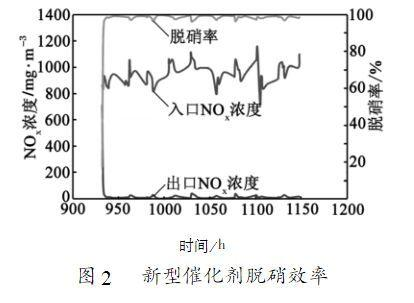
Continuous monitoring of the concentration of various substances in the flue gas at the butterfly valve outlet, with NOx, NO, SO2, O2, and NO2 concentrations around 1100, 720, 450, 190, and 10 mg/m³, respectively. The composition of the coke oven flue gas undergoes periodic fluctuations every 15 minutes, which are caused by the coke oven operation schedule.
Figure 2 displays the nitrogen oxide concentrations at the reactor's inlet and outlet during the denitrification experiment, along with the denitrification efficiency. It can be observed that during the experiment, the nitrogen oxide concentration in the flue gas fluctuated between 800 to 1200 mg/m³. After denitrification treatment, the nitrogen oxide concentration can be reduced to below 20 mg/m³, with a denitrification efficiency exceeding 98%.
Conclusion
(1) Denitrification efficiency consistently stays above 98% (the measurable NO content is in the several 10^-6 range, which can be considered as systematic error), nearing 100%, demonstrating the ultra-high denitrification efficiency of the catalyst.
(2) The operating speed of the experiment is approximately 16,000 h^-1, about four times that of traditional denitrification catalysts.
(3) Catalyst bed pressure drop is around 300 Pa, significantly reducing fan energy consumption.
(4) Catalysts are designed with a modular approach.Please provide the Chinese content that needs to be translated into American English.Minimized potential issues with future engineering scale-up, conducive to successful scale-up implementation.