






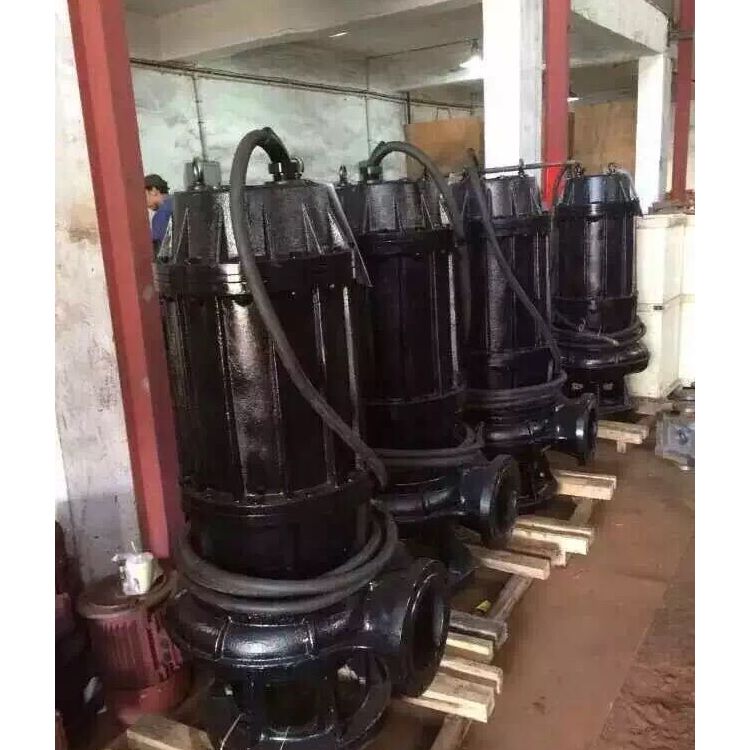

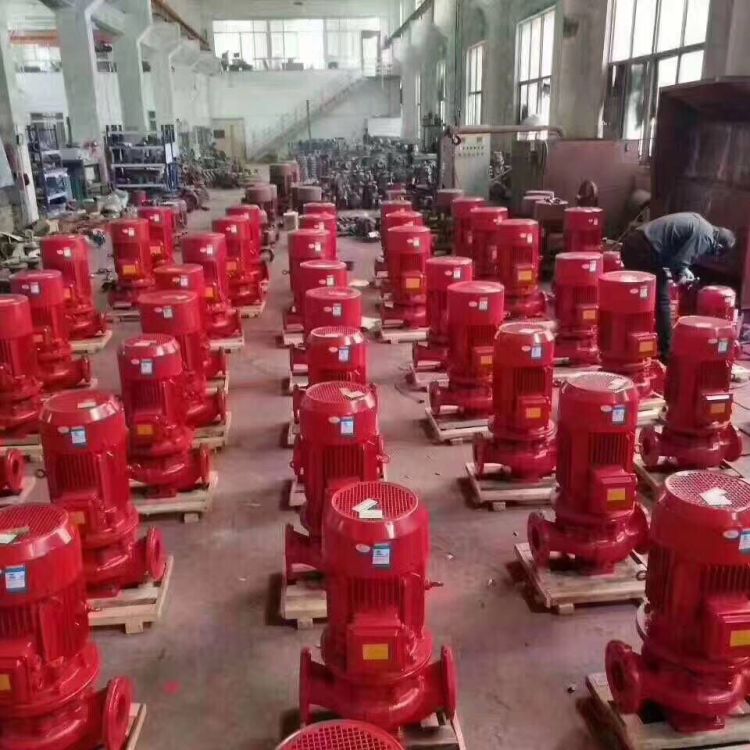

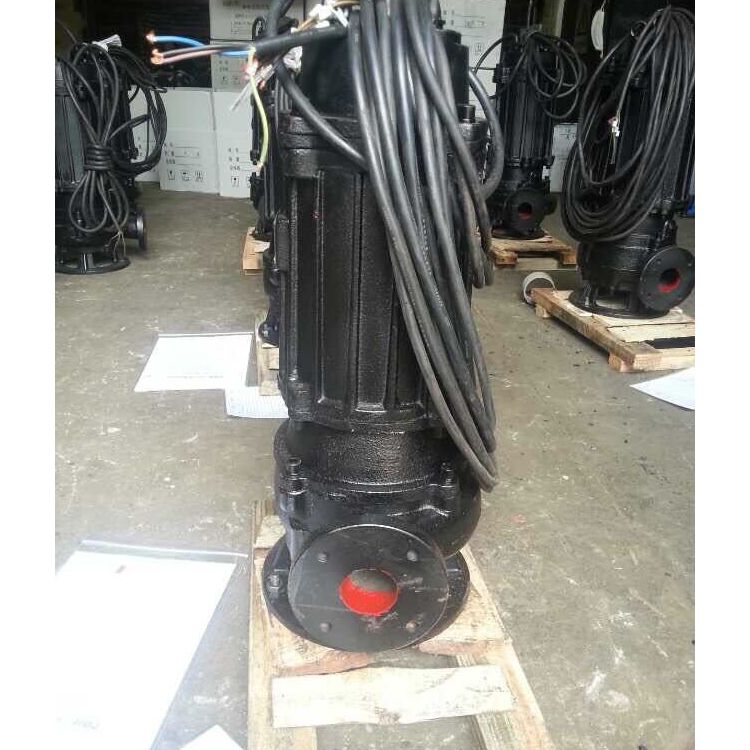
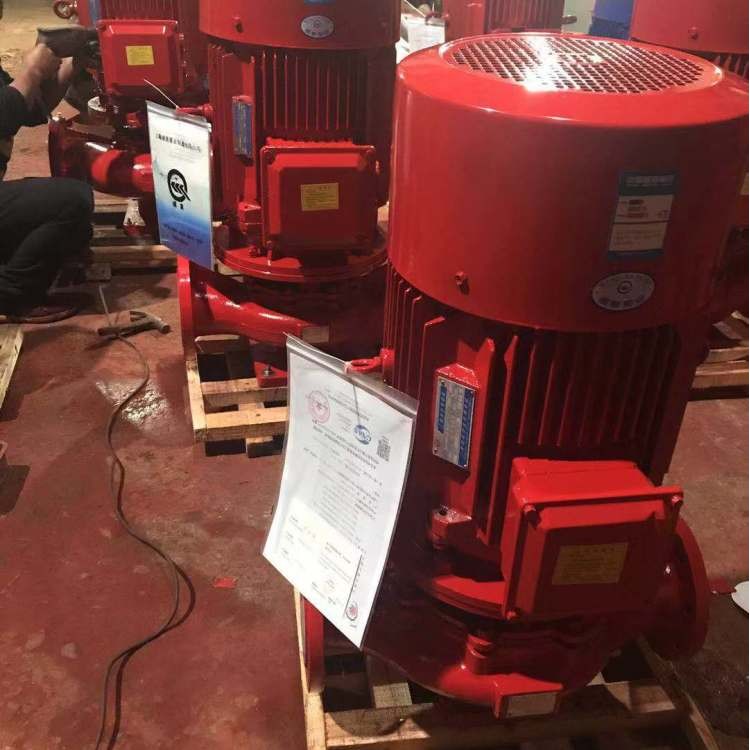
3.3. Storage of Centrifugal Pumps
① Pumps not yet installed should be coated with an appropriate rust inhibitor on unpainted surfaces. Oil-lubricated bearings should be filled with the correct oil, while grease-lubricated bearings should only be filled with one type of grease; do not use mixed lubricants.
②Pump clean liquid quickly, flush, suction lines, discharge lines, pump casing and impeller, and drain the flush liquid from the pump casing, suction lines, and discharge lines.
Drain the oil from the bearing housing, refill with clean oil, thoroughly grease, and then replenish with new lubricating oil.
④Seal the intake and exhaust ports, store the pump in a clean, dry location, protect the motor windings from moisture, and spray anti-rust and anti-corrosion fluids inside the pump housing.
⑤Rotate the pump shaft once a month to prevent freezing, and lubricate the bearings.
Leakage at the dynamic and static seal surfaces is primarily caused by: the end face flatness and roughness not meeting requirements, or surface scratches; particle matter between the end faces, preventing them from running identically; improper installation, and incorrect method.
② Causes of leakage in compensating ring seals mainly include: deformation of the cover, uneven pre-tension; incorrect installation; seal quality not meeting standards; incorrect seal selection.
Actual usage shows that the sealing elements frequently fail at the ends of the dynamic and static rings. Cracking at the ends of the dynamic and static rings of centrifugal pump mechanical seals is a common failure phenomenon, primarily due to:
① Excessive gap between sealing surfaces during installation, allowing insufficient flushing fluid to remove the heat generated by the friction components; leakage of flushing fluid through the gap results in overheating and damage to the end face.
②The liquid medium vaporizes and expands, separating the two ends due to the vaporizing expansion force. When the two sealed surfaces are pressed tightly together, the lubricating film is destroyed, causing the end surface to overheat.
③ Poor lubricity of the liquid medium, combined with overload operation pressure, results in the two sealing surfaces not tracking rotation synchronously. For instance, a high-speed pump with a speed of 20,445 rpm and a center diameter of the sealing surface at 7 cm, upon operation, its linear velocity reaches up to 75 m/s. If one sealing surface lags behind and cannot keep up with the rotation, the instantaneous high temperature can cause damage to the sealing surface.
④Sealed flush hole plate or filter screen blockage, resulting in insufficient water flow and failure of the mechanical seal.
(1) Adjust the valve opening
Modifying the valve switch on the centrifugal pump's outlet pipeline essentially alters the pipeline characteristic curve. As shown, when the valve is partially closed, the local resistance of the pipeline increases, causing the characteristic curve to steepen, and the operating point shifts from M to M1, with the flow rate decreasing from QM to QM1. When the valve is fully opened, the pipeline resistance decreases, and the characteristic curve flattens slightly, moving the operating point to M2, and increasing the flow rate to QM2.
Quick and easy flow adjustment with valves, allowing for continuous flow changes, which is suitable for the continuous production characteristics of the chemical industry. Therefore, its application is very widespread. The drawback is that when the valve is closed, the resistance loss increases and energy consumption rises, making it not very economical.
Launch
I. Preparations Before Starting the Centrifugal Pump
a. Check centrifugal pump before startup
Are the name, model, main performance, and filling quantity of the lubricating oil in compliance with the requirements of the technical documents?
Are the bearing lubrication system, sealing system, and cooling system in good condition, and are the oil and water passages of the bearing unobstructed?
Rotate the impeller 1 to 2 turns, check for any friction or jamming.
Are there any obstructions near the coupling or belt guard that may hinder rotation?
Are the foundation bolts of the pump, bearing base, and motor loose?
Valves or auxiliary devices of the pump operating system should be in positions with minimal load during pump operation, and the outlet regulating valve should be closed.
Pilot pump, check if the impeller rotation aligns with the designed rotation. If not, the impeller must be fully stopped before adjusting the motor wiring and then it can be restarted.