














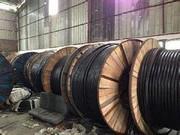
Recycling company for scrap cables offers long-term high-priced services for various types of scrap cable collection. Scrap cables are typically composed of several wires or groups of wires (each group containing at least two wires) twisted around a central core, resembling a rope in shape, with a highly insulated sheath on the outer layer.
Section 1: Scrap Cable Recycling Brand:
Long-term high-price recycling services for domestic and imported scrap cables from brands such as Baosheng, Runluntaishan, Yuandong, Shangshang, Panda,亨通光电, Nanglian, Prysmian, Wujiang, Yuandong, Kaikai, Hongqi, Xintei, Nanding, Bendakang, Zhongtian, Taiyang, Kunlun, Jincheng, Gebei, Shengpai, Taihang, Yuetao, Jiangsu Taixiang, Wenzhou Wangwenwang, Jiangsu Dayu, Zhejiang Huatai, Jiangsu Yafei, Jiangxi Shengta, Shanghai Qifan, Lanzhou Zhongbang, Shanghai Youjiang, Qingdao Hongri, Tianjin Jinshan, Kunshan Changjiang, Wuxi Huzhong, Guangzhou Tianhong, Shanghai Shenghua, Jiaxing Duojiao, and more.
Section II: Areas for Scrap Cable Recycling
Our company serves the following regions in Shanghai (Pudong New Area, Xuhui District, Changning District, Putuo District, Zhabei District, Hongkou District, Yangpu District, Huangpu District, Luwan District, Jing'an District, Baoshan District, Minhang District, Jiading District, Chongming County), as well as Nanjing, Zhenjiang, Wuxi, Suzhou, Yangzhou, Taizhou, Yancheng, Huai'an, Lianyungang, Nantong, Taicang, Kunshan, Yixing, Jiangyin, Qidong, Haimen, Zhangjiagang, Hefei, Wuhu, Bengbu, Fuyang, Huainan, Huaibei, Tongling, Wuhu, Anqing, Maanshan, Jiuhuashan, Huangshan, Xuancheng.
Local pick-up and recycling of various waste cables, waste wires, and wire cables.
Section 3: Waste Cable Recycling Product Introduction
Definition 1: A wire composed of one or more insulated conductors and an outer insulating protective layer, used to transmit electricity or information from one place to another.
Definition 2: A cable resembling a rope, typically composed of several wires or groups of wires (each group consisting of at least two wires), twisted together. The wires in each group are insulated from each other and often twisted around a central core, with a highly insulated sheath covering the entire exterior. The cable features internal conductivity and external insulation.
1. SYV: Solid Insulated Radio Frequency Coaxial Cable
2. SYWV(Y): Physical Foam Polyethylene Insulated CATV System Cable, Video (RF) Coaxial Cable (SYV, SYWV, SYFV) for Closed-Circuit Surveillance and Cable TV Projects
SYWV (Y), SYKV coaxial cable structure for cable TV and broadband internet: single oxygen-free round copper wire + physical foam poly (insulation) + tin wire + aluminum + poly (polyester)
3. Signal Control Cables (RVV jacketed wire, RVVP shielded wire) are suitable for projects such as intercom systems, anti-theft alarms, fire protection, and automatic meter reading.
RVVP: Copper-core insulated shielded multi-core flexible cable, voltage 250V/300V, 2-24 cores
Applications: Instruments, Meters, Intercom, Surveillance, Control Installations
4. RG: Physical Foam Insulated Submarine Cable for Data and Analog Signal Transmission in Coaxial Fiber Hybrid Networks (HFC)
5. KVVP: Shielded braided cable with polyethylene sheath, used for signal transmission, control, and measurement in electrical appliances, instruments, and distribution equipment.
6. RVV (227 IEC 52/53): Poly-insulated flexible cable, Applications: Household appliances, small electrical tools, instruments, and power lighting
7. AVVR: Soft Cable for Installation of Sheath Protection
8. SBVV: HYA Data Communication Cables (for indoor and outdoor use) are used for connecting telecommunication and radio equipment, as well as for wiring junction boxes in telephone distribution networks.
9. RV, RVP: Poly-insulated cable
10. RVS, RVB: Suitable for cables used in household appliances, small electrical tools, instruments, meters, and power lighting connections.
11. BV, BVR: Poly-insulated cable, Application: Suitable for fixed wiring of electrical instruments and equipment, as well as power and lighting.
12. RIB: Speaker Connection Wire (Hi-Fi Wire)
13. KVV: Insulated Control Cables, Applications: Signal Transmission, Control, and Measurement for Electrical Appliances, Instruments, and Distribution Equipment
14. SFTP: Twisted Pair, for transmitting telephone, data, and information networks
15. UL2464: Computer Cable
16. VGA: Monitor Cable
17. SYV: Coaxial Cable, for transmitting radio frequency signals in systems for wireless communication, broadcasting, surveillance, and related electronic equipment (including general-purpose coaxial cables)
18. SDFAVP, SDFAVVP, SYFPY: Coaxial Cables, Elevator-Specific
19. JVPV, JVPVP, JVVP: Copper-core insulated and sheathed copper wire, woven electronic computer control cable
Section 4: Waste Cable Recycling Product Classification
Cables include power cables, control cables, compensation cables, shielded cables, high-temperature cables, computer cables, signal cables, coaxial cables, fire-resistant cables, marine cables, mining cables, and aluminum alloy cables, among others. They are composed of single or multiple strands of conductors and insulation, used for connecting circuits and electrical appliances.
Flame-retardant rubber-sheathed cables
I. Usage
This product is a series of mining rubber sheathed flexible cables. Suitable for power connections for coal mining machines and similar equipment with rated voltage Uo/U of 1.9/3.3KV and below. Commonly used in coal mines.
II. Terms of Use
The conductor is designed for long-term operation at a temperature of 65°C, with the minimum bending radius being 6 times the cable diameter. Yellow jacket cables should not be exposed to sunlight for extended periods.
Nuclear-grade cable
Application Range
·This product is suitable for control and signal cables used in the control network of power plants rated voltage Uo/U at 0.6/1kV.
· The cable conductor is designed for a continuous operating temperature of 90°C, with the conductor temperature not exceeding 250°C during a short circuit, for a duration not to exceed 5 seconds.
The environmental temperature during cable laying should not be below 0°C.
·The allowable bend radius for cable laying is:
— Unarmored cables should not be less than 6 times the diameter of the cable
Cables with armored or copper tape shielding should be at least 12 times the diameter of the cable.
— Soft cables with shielding structures should be no less than 6 times the diameter of the cable.
· When the conductor is allowed to operate at a long-term working temperature not exceeding 90°C, the certified life of the cable is not less than 40 years.
The finished cables should comply with the requirements of the A-type bundling combustion test specified in GB/T18380.3 standard.
Finished cable smoke density: Light transmittance not less than 70%.
Radiation Resistance: 25×10^4 Gy
· Halogen-free: The acidity of the gases emitted during the combustion of non-metallic materials (expressed as pH value) should be greater than 4.3; the electrical conductivity should not exceed 10μS/mm.
Bare wires and bare conductors products
The primary features of this category of products include pure conductive metal, without any insulation or sheath layers, such as steel-core aluminum conductors, copper-aluminum busbars, electric locomotive wires, etc.; the main processing technology is pressure processing, such as smelting, rolling, drawing, twisting/compacted twisting, etc.; the products are mainly used in urban and suburban areas, rural areas, user main lines, switch cabinets, and so on.
Electrical Cable
The product is mainly used for the transmission of strong electrical energy in power transmission lines for distribution, transmission, transformation, and supply, with high current flow (ranging from dozens to thousands of amperes) and high voltage (up to 500kV and above).
Communication cables and optical fibers
Over the past two decades, the rapid development of the telecommunications industry has led to astonishing growth in products. The evolution has progressed from simple telephone and telegraph cables to thousands of pairs of cables, coaxial cables, optical fibers, and data cables, even to composite communication cables. These products typically have smaller and uniform structures, with high manufacturing precision requirements.
Electromagnetic Wire (Winding Wire)
Primarily used for various motors, instruments, and meters.
Flexible Fire Resistant Cable
1. Excellent fire-resistant properties; the耐火等级 meets not only the international GB12666.6A class 950℃ for 90min requirement, but also the British BS6387-1994 standard for A grade 650℃ for 3 hours, B grade 750℃ for 3 hours, and C grade 950℃ for 3 hours. Additionally, it can withstand water spray and mechanical impact during combustion.
2. Continuous length is long, whether it's single-core or multi-core cables, the length meets the power supply requirement, with an ultimate length of up to 2000m.
3. Sectional area: Single-core cables can reach up to 1000mm², while multi-core cables can reach up to 240mm².
4. Flexible, cables can be coiled on a drum, with a bending radius ≥ 20D, where D is the outer diameter of the cable.
5. Smoke and toxin-free during combustion, using non-combustible inorganic materials for insulation. No harmful gases are produced during combustion, nor is there any secondary pollution, making it an environmentally friendly and green product.
6. The cross-sectional capacity is excessive; the cable not only has a high cross-sectional flow rate but also possesses significant overload capability. Generally, according to wiring requirements, the cable surface temperature should not exceed 70°C. If the wiring is not touchable or does not come into contact with flammable building materials, the cable jacket temperature can reach 105°C. During overload, the working temperature of fire-resistant cables can reach up to 250°C.
7. Corrosion-resistant, organic insulated fire-resistant cables may need to be sheathed in plastic or iron pipes. Plastic tends to age and become brittle, while iron pipes are prone to rust. Fire-resistant cables, however, have copper sheathing that does not require sheathing and boasts excellent corrosion resistance.
8. Non-electromagnetic interference: When fire-resistant cables are laid in the same vertical shaft as signal, control, and other cables, the fire-resistant cables, shielded by the copper sheath, will not interfere with the transmission of information on the signal and control cables.
9. Excellent safety: fire-resistant cables not only provide normal power supply and activate fire extinguishing equipment during flames to minimize fire damage, but also offer exceptional reliability for personal safety. Their copper sheath is an excellent conductor, ensuring grounding wires are continuous throughout the entire cable length, significantly enhancing the sensitivity and reliability of grounding protection.
10. Long service life, inorganic insulating material, high-temperature resistance, and low aging tendency; its lifespan is many times longer than that of organic insulated cables. Under normal operating conditions, its lifespan can be equivalent to that of the building itself.
11. The transportation and installation of flexible fire-resistant cables include the installation process.
New Product
Derivative/new products of wires and cables are mainly generated due to varying application scenarios and requirements, the convenience of equipment, and the need to reduce equipment costs, which leads to the use of new materials, special materials, alterations in product structure, enhanced process requirements, or combinations of different product types.
Utilizing various materials such as flame-retardant cables, low-smoke halogen-free/halogen-reduced cables, termite-proof, rodent-proof cables, oil-resistant/cold-resistant/temperature-resistant cables, etc.
Restructure product offerings such as: refractory cables
Enhance process requirements such as medical cables.
Composite products such as OPGW
Ease of installation and cost reduction for equipment, such as pre-fabricated branch cables.
V. Model of Scrap Cable Recycling Products
The model composition and sequence for cables and wires are as follows: [1: Category, Usage][2: Conductor][3: Insulation][4: Inner Sheath][5: Structural Characteristics][6: Outer Sheath or Derivative]-[7: Usage Features]
1-5 items and item 7 are represented by pinyin letters, high polymer materials are represented by the initial letters of their English names, each item can be 1-2 letters; item 6 is 1-3 digits.
Common Codes
Application Code - Not marked as power cable, K-(control cable), P-(signal cable);
Conductor Material Code - Not marked as copper (can also be marked as CU), L-(aluminum)
Inner Sheath Code – Q-(Lead), L-(Aluminum), H-(Rubber), V-(Poly Sheath); the inner sheath is generally not marked.
Outer sheath code - V-(Polyester), Y-(Power Cable)
Derived Code - D-(No Drip), P-(Dry Insulation)
Special Product Codes - TH-(Moist Tropical), TA-(Dry Tropical), ZR-(Flame Retardant), NH-(Fireproof), WDZ-(Low Smoke Halogen-Free, Corporate Standard).
Omitting Principle
Modeling Omission Principle: In wire and cable products, copper is the main conductor material, so the copper core code "T" is abbreviated, except for bare wires and bare conductor products. For products of bare wires and bare conductors, power cables, and electromagnetic wire, the general category code is not indicated. For electrical equipment wire and cable products and communication cable products, the category or series codes are listed instead.
Item 7 includes marks for special usage occasions or additional requirements, denoted by pinyin letters following the "-" symbol. Occasionally, to highlight this item, it is placed at the beginning. For example, ZR-(flame-retardant), NH-(fire-resistant), WDZ-(low-smoke, halogen-free, corporate standard), TH-(for humid and hot areas), FY-(termite-proof, corporate standard), etc.
Section 6: Applications of Worn-out Cable Recycling Products
Power System
Electricity system电线电缆 products primarily include overhead bare conductors, busbars, power cables (plastic insulated cables, oil-paper insulated cables, mostly replaced by plastic power cables), rubber-sheathed cables, overhead insulated cables, branch cables (replacing some busbars), electromagnetic wires, and electrical equipment cables for power equipment.
Information Transmission
Cable and wire products used for information transmission systems mainly include local telephone cables, television cables, electronic cables, radio frequency cables, optical fiber cables, data cables, electromagnetic wires, power communication cables, or other composite cables.
Instrumentation system
This section is applicable to nearly all products except for overhead bare wires, primarily including power cables, magnetic wires, data cables, and cables for instruments and meters.
Section 7: Common Faults of Recycled Cable Products
Common issues with cable lines include mechanical damage, insulation damage, moisture in insulation, aging and deterioration of insulation, overvoltage, and overheating faults. When such faults occur, the power supply to the faulty cable should be disconnected, locate the fault point, inspect and analyze it, then repair and test. Remove what needs to be cut, and only after the fault is eliminated can power be restored.
The most direct cause of cable failure is the reduction in insulation, leading to breakdown.
Mainly includes:
a. Overloading operation. Prolonged overloading will cause the cable temperature to rise, insulation to age, and eventually lead to insulation breakdown, reducing construction quality.
b. Electrical issues include: cable head construction not meeting requirements, poor cable head sealing, moisture intrusion into the cable interior, and decreased cable insulation performance; failure to implement protective measures during cable laying, resulting in damage to the protective layer and reduced insulation.
c. Civil engineering issues include: poor drainage in manholes and trenching, resulting in cables being submerged in water and damaged insulation strength; manholes being too small, insufficient cable bend radius, leading to long-term external force compression and damage; primarily due to rough and aggressive construction practices during municipal projects, which may dig through or cut cables.
d. Corrosion: Long-term chemical corrosion or cable corrosion of the protective layer leads to its failure and reduced insulation.
e. Poor quality of the cable itself or cable head accessories, poor cable head sealing, insulation glue dissolution, cracking, leading to resonance phenomena at the station as a line break fault, where the line-to-line capacitance and ground capacitance are in a resonance circuit with the excitation inductance of the distribution transformer, thereby triggering ferromagnetic resonance.
Harm caused by resonance due to broken wire fault
In severe cases, the resonance of open circuit can cause the superposition of high-frequency and fundamental frequency resonances, leading to overvoltage amplitudes reaching 2.5 times the phase voltage [P]. This may result in the neutral point displacement in the system, overvoltage in windings and conductors, and in extreme cases, insulation breakdown, lightning arrester explosion, and damage to electrical equipment. In some instances, the phase sequence of the load transformer may reverse, and overvoltage may be transmitted to the low-voltage side of the transformer, causing harm.
Primary measures to prevent overvoltage due to open-circuit resonance include:
(1) No fuse is used to prevent non-complete phase operation.
(2) Enhance line inspections and maintenance to prevent wire breakages.
(3) Do not leave an unloaded transformer connected to the line for an extended period.
(4) Utilize ring or dual power supply.
(5) Add inter-phase capacitors on the transformer side.
The principle is: using capacitors as energy-absorbing elements to absorb energy during transient processes, thereby reducing the intensity of impact disturbances to suppress resonance. By adding an inter-phase capacitor ΔC, on the transformer side, the value of 8[Co + 3(Co + Au)/Ca] increases, thereby increasing the required capacitance for the equivalent capacitance C and the equivalent electromotive force Eo. The required capacitance can be calculated using the method described in reference [6]. (6) Using transformers with good excitation characteristics can help reduce the probability of overvoltage due to broken wires.
Section 8: Waste Cable Recycling Process
1. Price Inquiry by Phone 2. On-Site Viewing 3. Faithful Pricing 4. Contract and Agreement 5. Secure Collection and Disassembly 6. Site Cleaning 7. Regular Market Updates
1. Products with the "CCC" certification mark for wire and cable are mandatory safety-certified, and all manufacturers must obtain the "CCC" certification from the China National Electrical Products Certification Committee, with the "CCC" certification mark on the certificate of conformity or the product itself.
2. Review the inspection report
Cables and wires, as products affecting personal and property safety, have always been a priority for supervision and inspection. Regular manufacturers are subject to periodic checks by supervisory departments. Therefore, sellers should be able to provide inspection reports from the quality control department; otherwise, the quality of the cables and wires lacks a basis for assessment.
3. Check the packaging
All legitimate enterprises that produce products in compliance with national standards pay great attention to the packaging of their wire and cable products. When selecting, look for attractive packaging with clear printing, complete with model specifications, manufacturer's name, and address.
4. Inspect the appearance
Our wire and cable products meet the standard appearance requirements, with smooth, round shapes and even coloration. Counterfeit products, on the other hand, have a rough and lackluster appearance. For rubber-insulated flexible cables, the requirement is for a round shape with a tight jacket, insulation, and conductor that are not easily peeled off. Counterfeit ones are rough, have a large ellipticity, a weak jacket insulation, and can be torn apart by hand.
5. Inspect Conductors
The conductor is lustrous, with direct resistance and conductor structural dimensions meeting national standards. Wire and cable products that meet national standards, whether made with aluminum or copper conductors, are quite bright and free of oil stains. As a result, the conductors' direct resistance fully complies with national standards, offering excellent electrical conductivity and high safety.
6. Measure the length of electrical cables
Length is the primary直观 method to differentiate between products meeting national standards and counterfeit goods. When purchasing, never be swayed by lower prices and opt for cables or wires that have an actual length less than their stated meters. The length must match the stated meter count. The national standard allows for an error of ±0.5 meters per 100 meters.
One, Insufficient Cross-linking (Thermal Extension): If the cross-linking does not meet the standard, the cable's thermal-mechanical properties are not up to par and cannot meet the requirement of operating at 90℃. The reasons for insufficient cross-linking are: 1) An inadequate formula, improper ratios of additives, which should be addressed by adjusting the formula; 2) Incorrect vulcanization process, such as low pressure, high line speed, and high cooling water level, etc. The solution is to first identify the cause, which may be one or several factors simultaneously present, and then eliminate them accordingly.
Section 2: Structural and Aesthetic Non-compliance
The insulation thickness is either below the minimum required by the standard or the average thickness is less than the nominal value. The cause of the non-compliant insulation thickness includes factors such as high line speed, low extruder output, and incorrect mold selection.
Solution: Reduce line speed or increase extruder speed




















