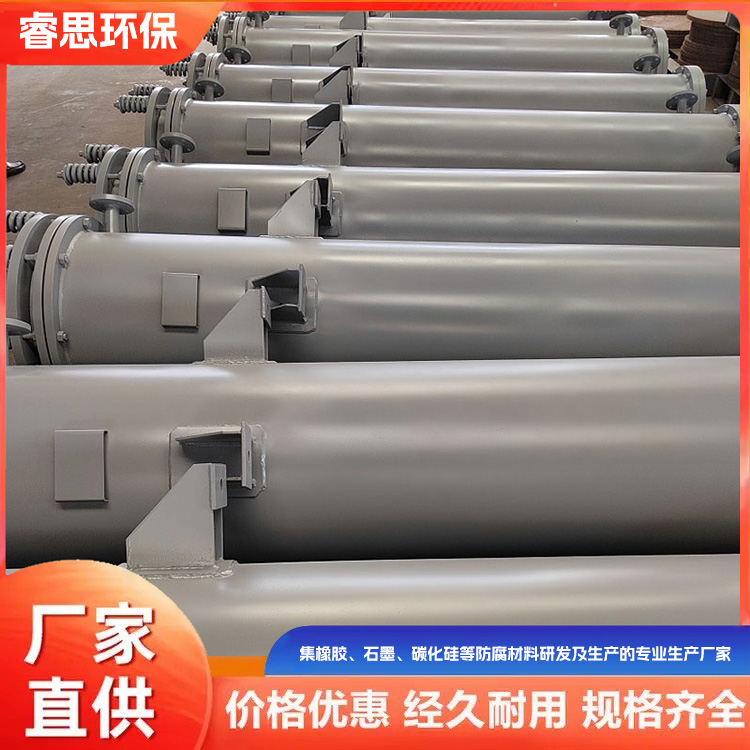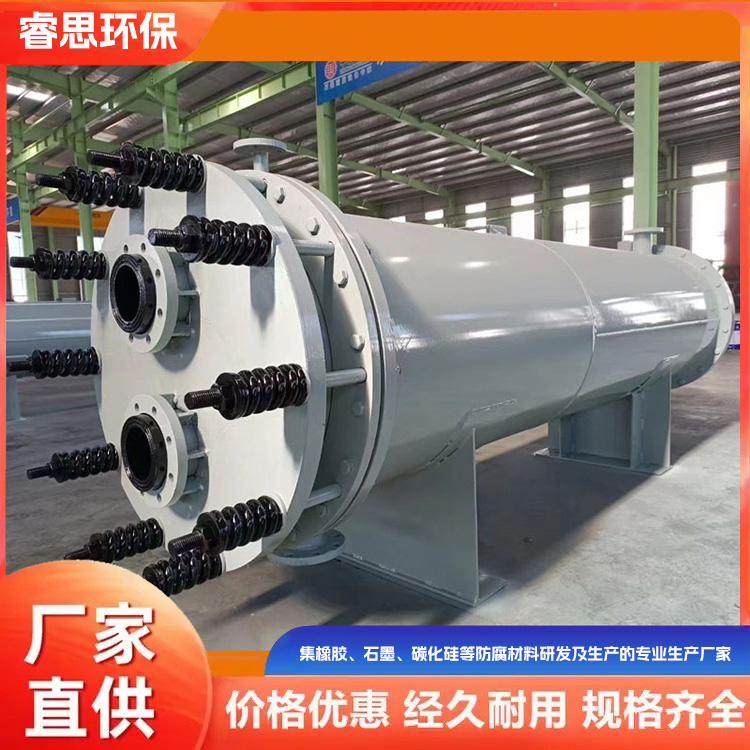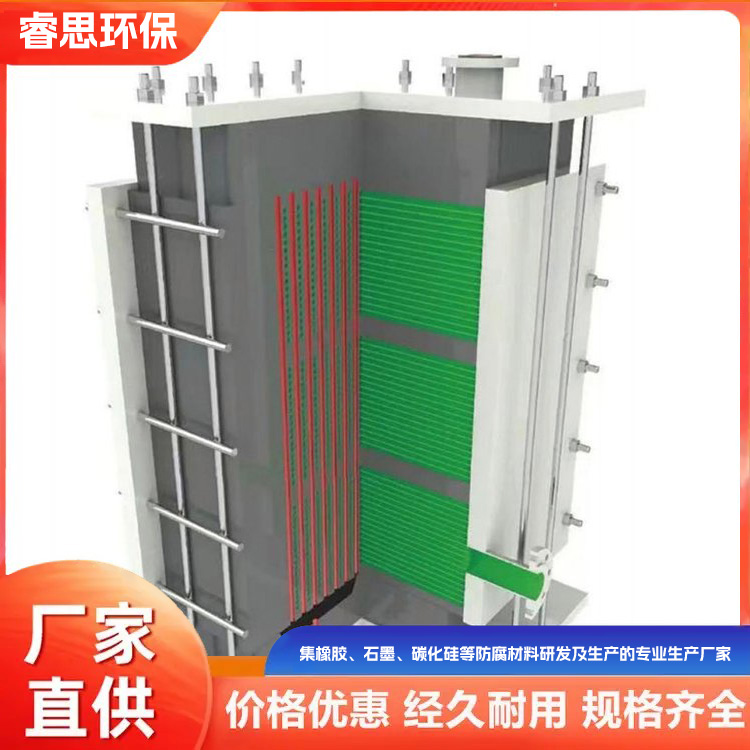

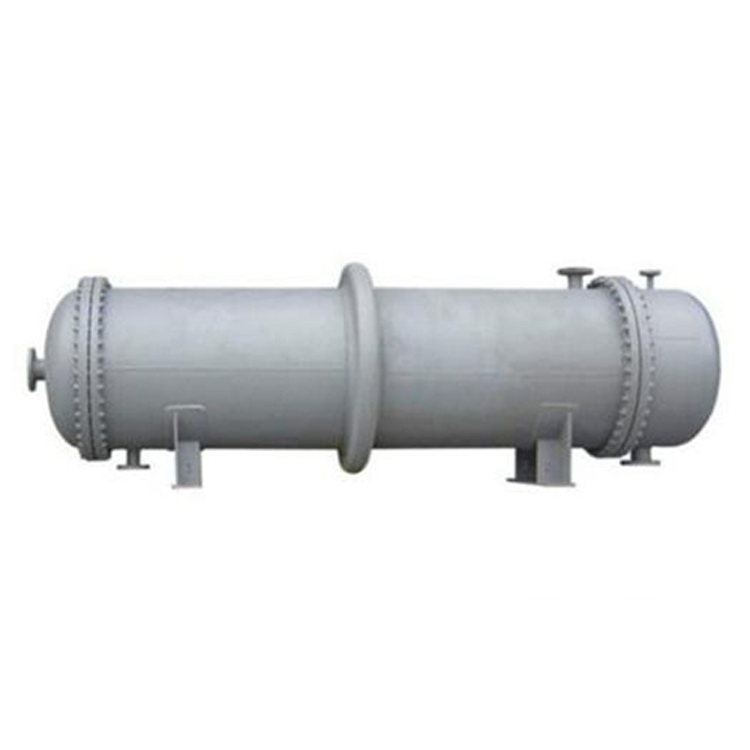


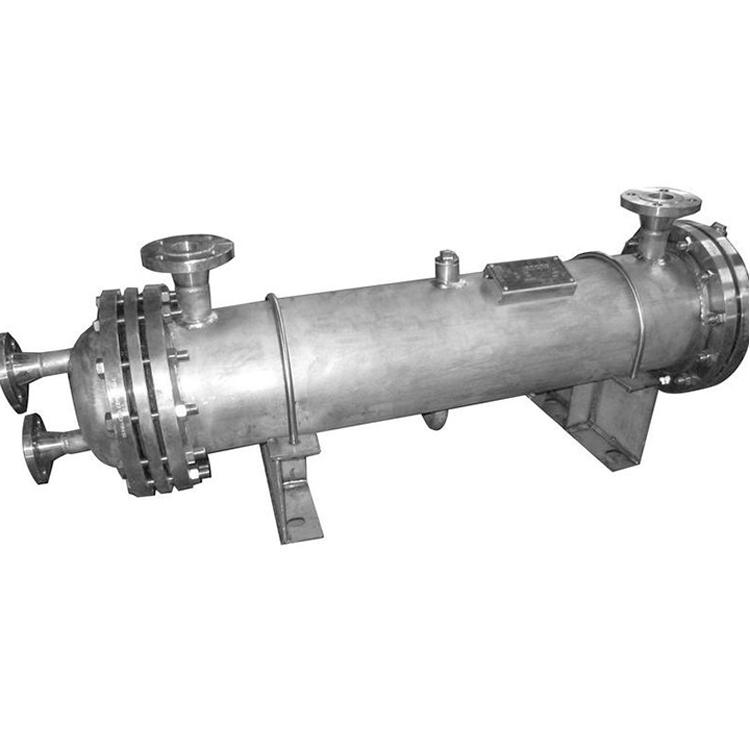
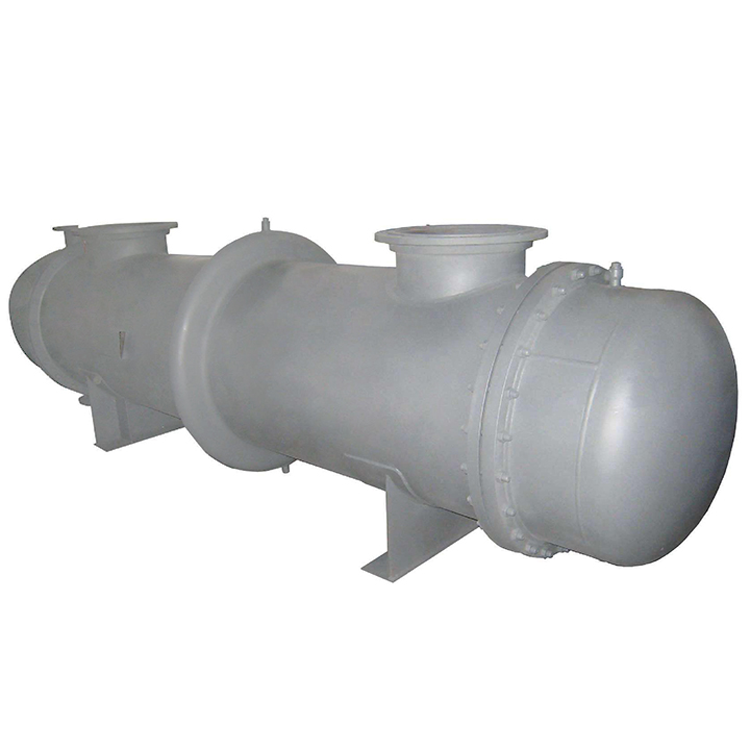


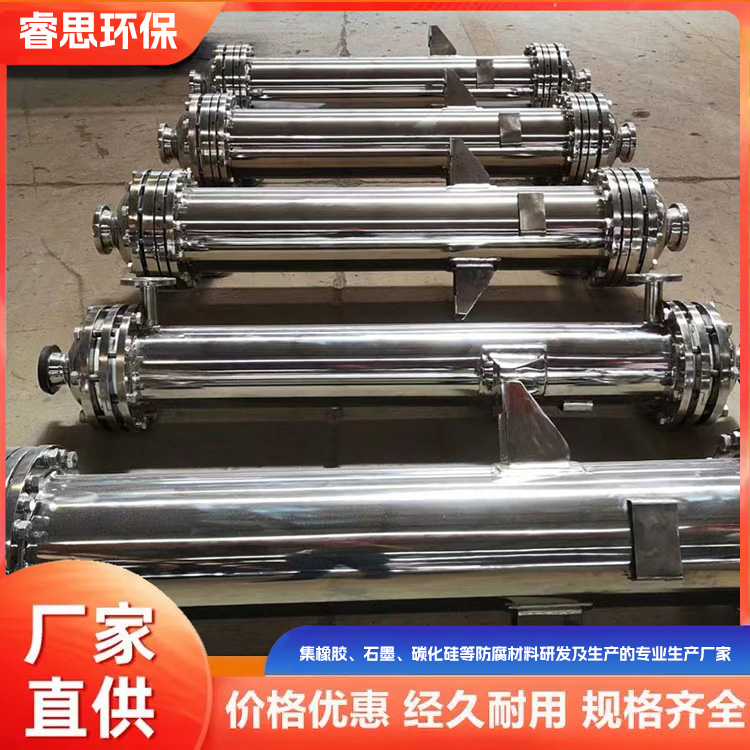
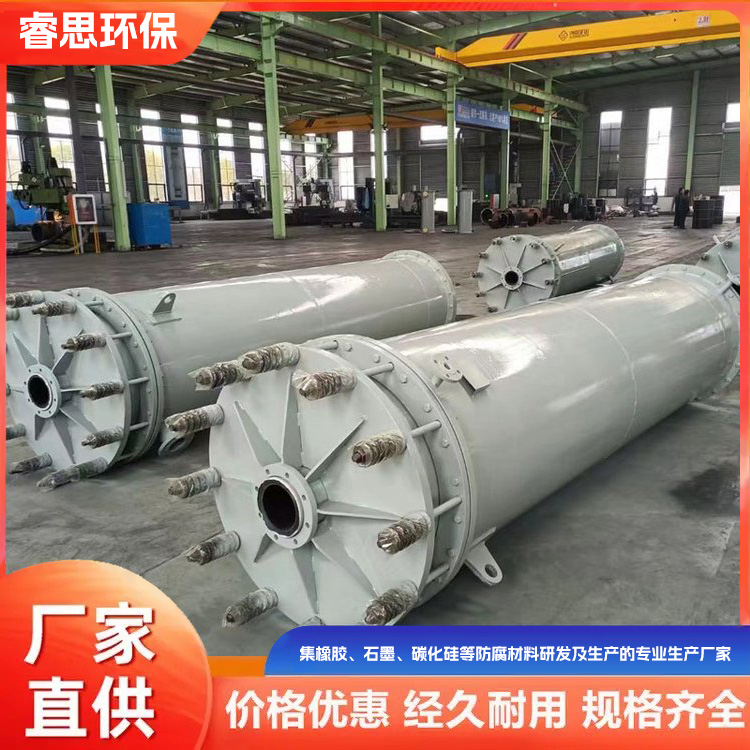
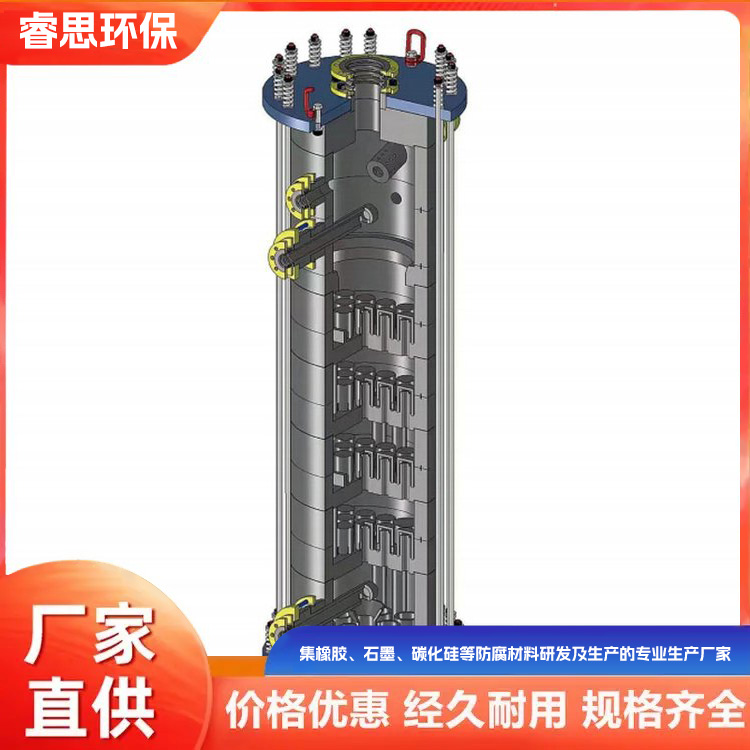





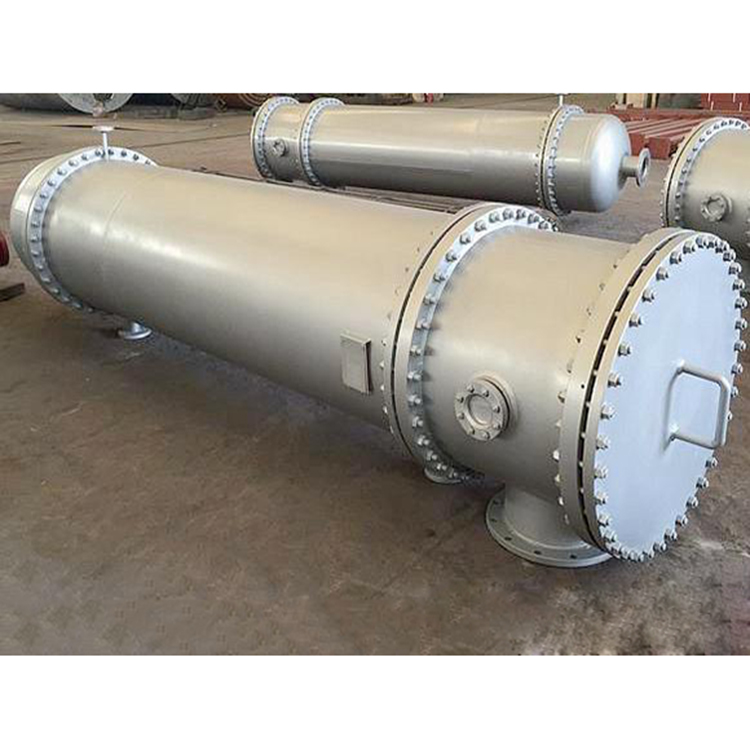
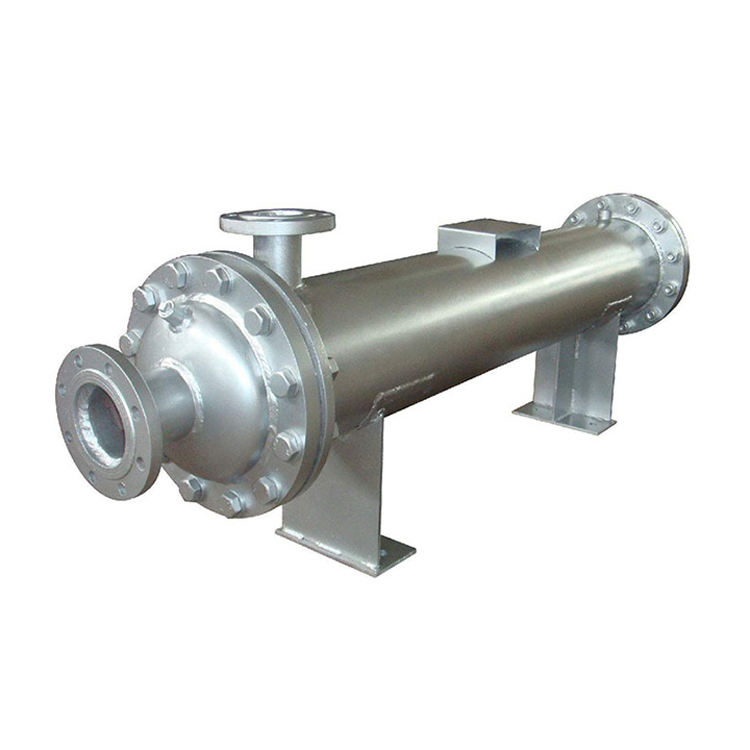
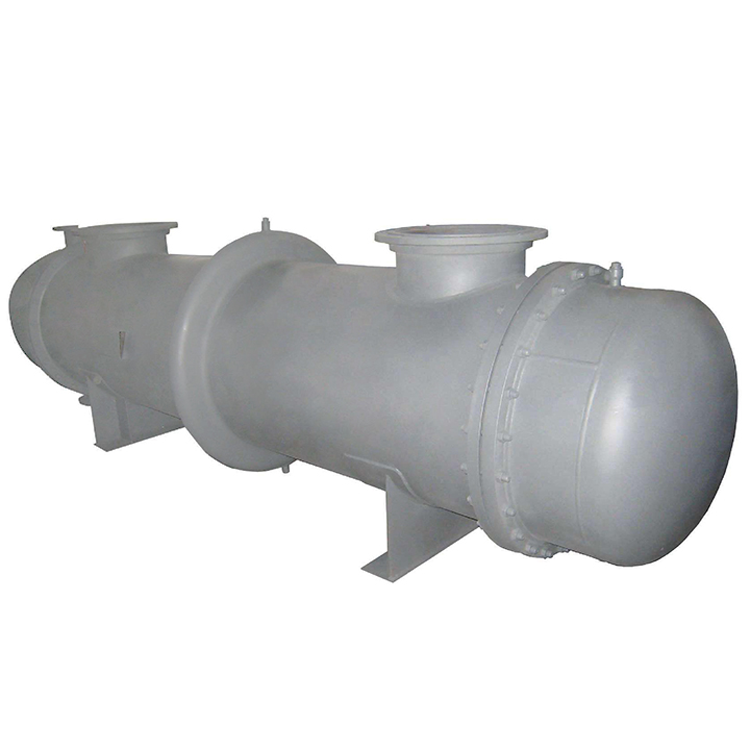
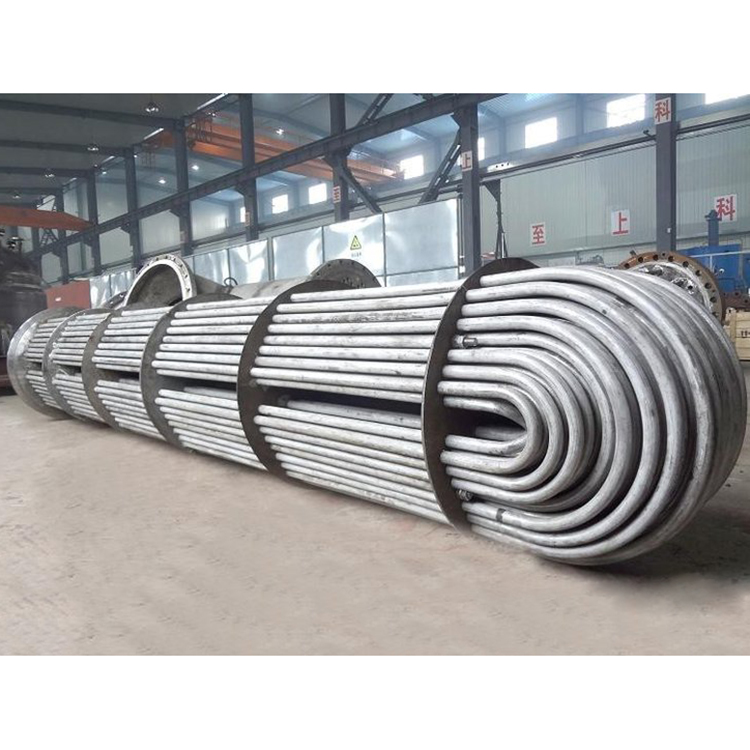

Shell and Tube Heat Exchanger
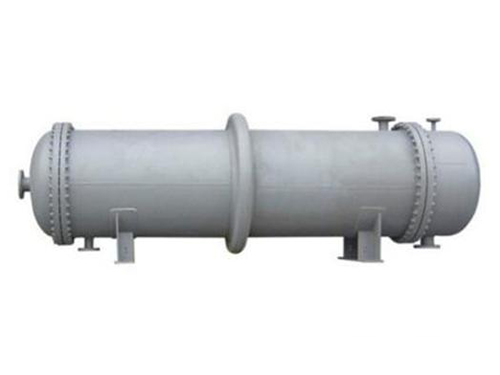
Main Factors Causing Corrosion in Tube-in-Tube Heat Exchangers
(1) Medium Composition and Concentration: The effect of concentration varies, for instance, in hydrochloric acid, the higher the concentration, the more severe the corrosion. Carbon steel and stainless steel are severely corroded in sulfuric acid with a concentration of about 50%, but the corrosion decreases sharply when the concentration increases to above 60%.
(2) Impurities: Harmful impurities include chloride ions, sulfate ions, cyanide ions, and ammonia ions, which can cause severe corrosion under certain conditions.
(3) Temperature: Corrosion is a chemical reaction, and the rate of corrosion approximately increases by 1 to 3 times for every 10℃ rise in temperature, but there are exceptions.
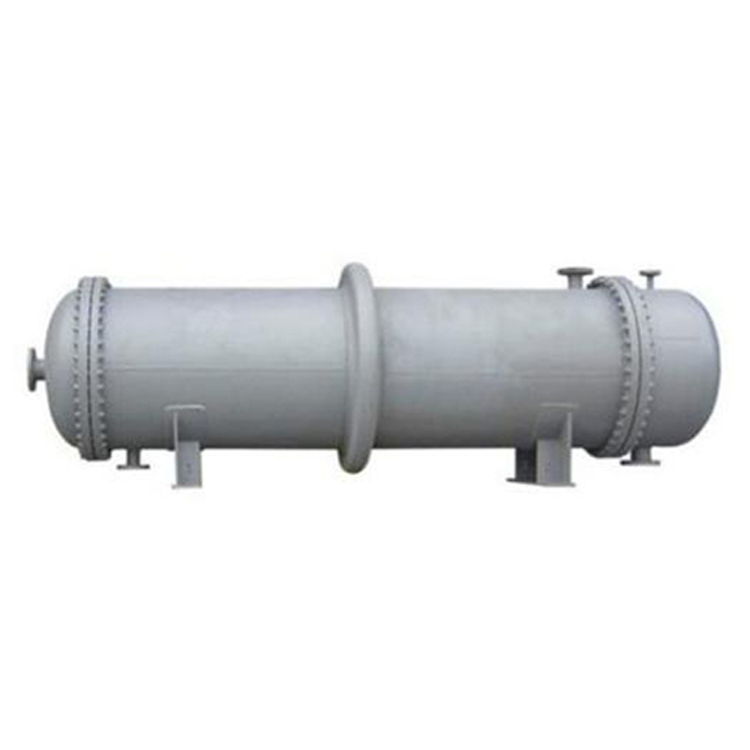
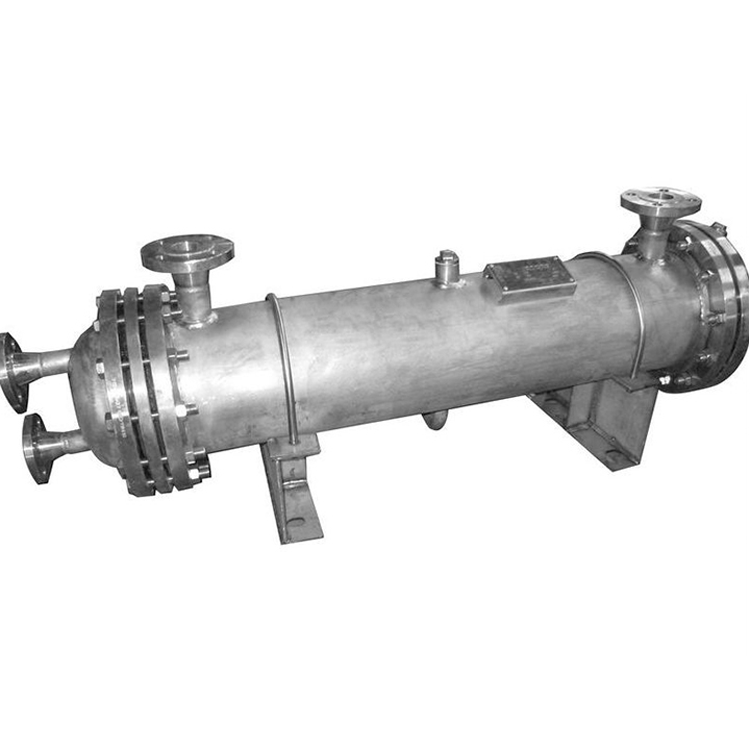
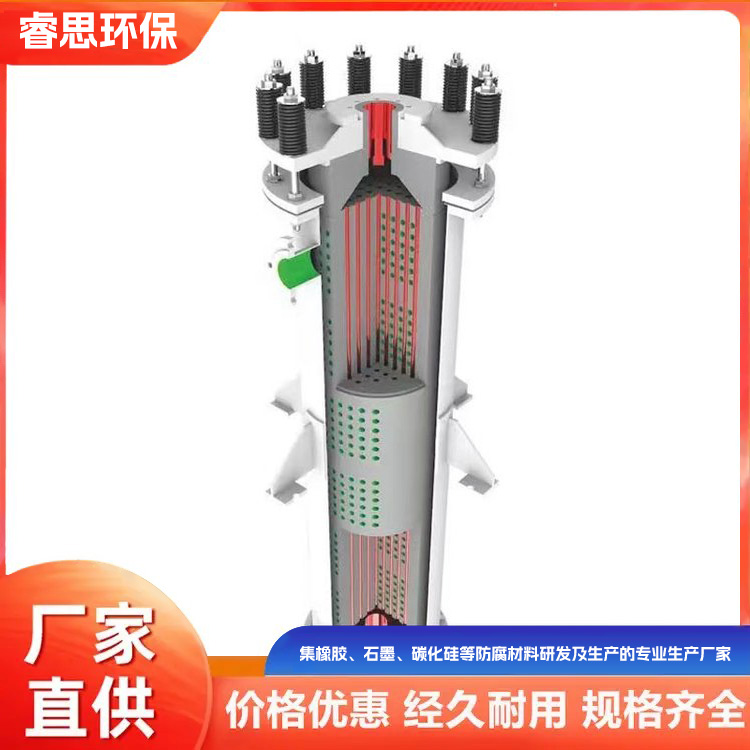
(4) pH Value: Generally, the lower the pH value, the greater the metal corrosion. Shell-and-tube heat exchangers mainly include fixed tube sheet heat exchangers, floating head heat exchangers, glanded heat exchangers, and U-tube heat exchangers. The fixed tube sheet heat exchangers are widely used due to their simple structure and low cost. In chemical companies, there are various types of shell-and-tube heat exchangers, such as plate-type, sleeve-type, spiral shell-type, and tube-type. Although the shell-and-tube heat exchangers are not as efficient, compact, or have less metal consumption as plate-type heat exchangers, they offer robust structure, high reliability, strong adaptability, and a wide range of materials. Therefore, they are the primary structural form for oil and chemical production, especially for high-temperature, high-pressure, and large-scale heat exchangers.
(5) Flow Rate: In most cases, the greater the flow rate, the more severe the corrosion. Therefore, it is the primary structural form in the oil and petrochemical industry, particularly in high-temperature, high-pressure conditions and large heat exchangers. Tube bundle heat exchangers include fixed tube sheet heat exchangers, floating head heat exchangers, packed gland heat exchangers, and U-tube heat exchangers. Among them, the fixed tube sheet heat exchangers are widely used due to their simple structure and low cost.