








Overview
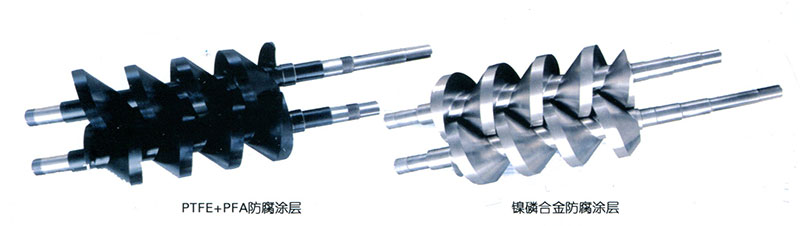
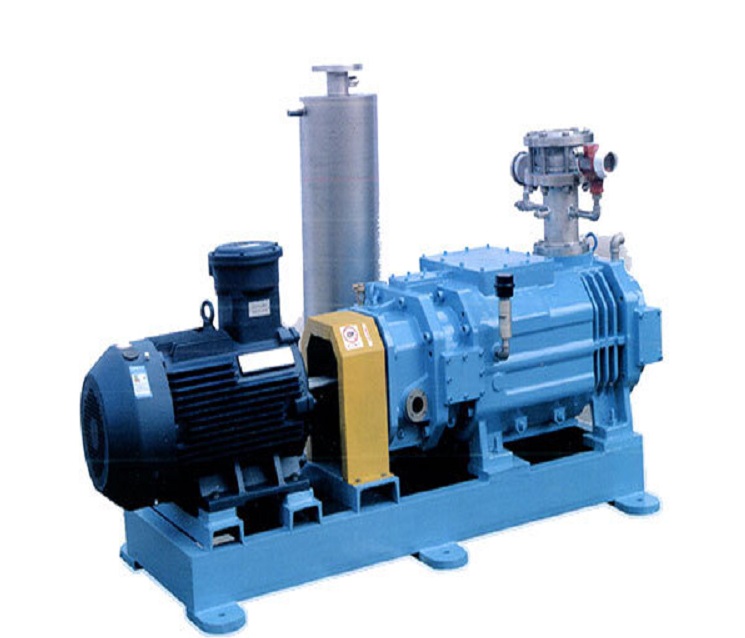
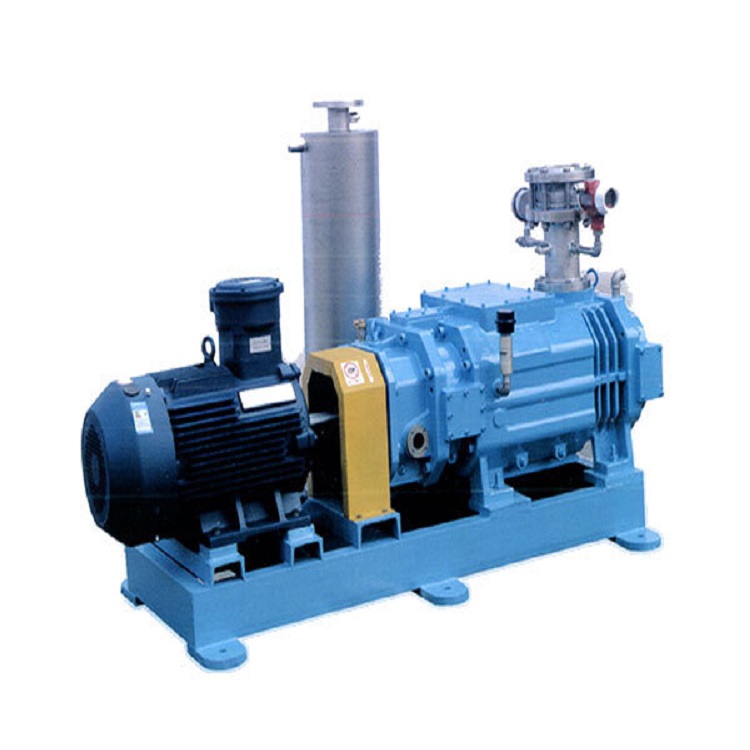
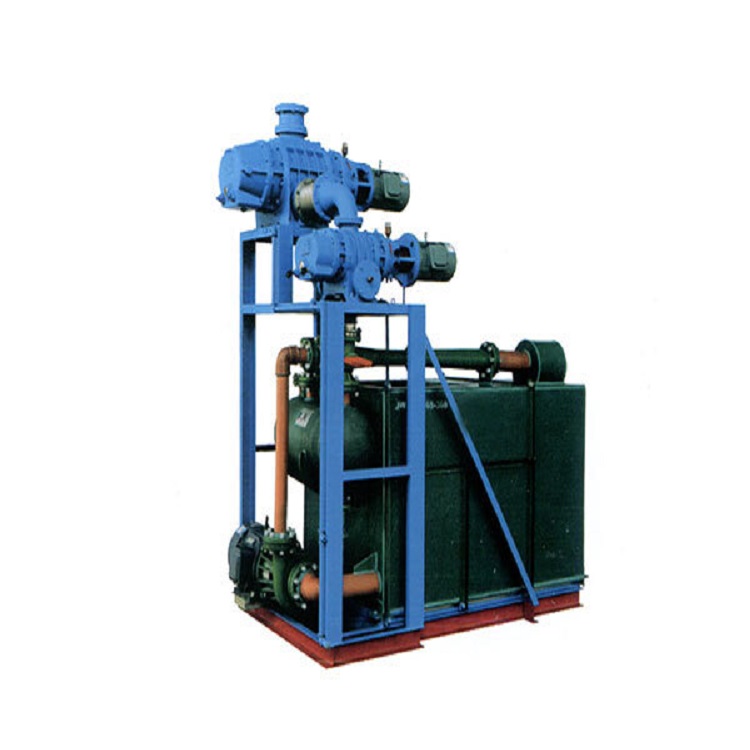
LG series screw vacuum pumps are our company's independently developed, technologically advanced dry vacuum pumps (national patent). Their working principle involves the use of two parallel screws rotating synchronously and at high speed in opposite directions within the pump cavity to produce suction and exhaust actions. The screws have been processed for fine dynamic balance and are supported by bearings, installed in the pump housing. There is a certain gap between the screws, allowing the pump to run smoothly without friction between them during operation, and the working chamber does not require a working medium. Therefore, screw vacuum pumps can remove gases containing a large amount of condensable gas and dust, making them environmentally friendly and energy-saving vacuum pumps. They are the upgraded products of vane vacuum pumps, liquid ring vacuum pumps, reciprocating vacuum pumps, and slide valve vacuum pumps.
Operating Principle
As shown in the figure, the screw vacuum pump is equipped with a pair of parallel helical rotors. The pump bodies of the two rotors are synchronized in reverse rotation through a pair of precise gears. There is friction between the rotors and the pump body, with a certain gap maintained. Multiple sealed cavities are formed between the two rotors and the pump body, with the number of sealed cavities equal to the number of spiral turns on the rotors.
Two rotors rotate in the direction shown in the diagram. As they spin, the sealed chamber connected to the suction port gradually expands, drawing in gas and transporting it to the exhaust side. Concurrently, the sealed chamber on the exhaust side decreases in size during rotation, compressing the gas into the exhaust port. These sealed chambers "move" from the pump's intake side to the exhaust side in a regular pattern, sending the gas away in a swirling motion. The continuous movement of the pump does not alter the direction of gas flow, allowing particles carried by the gas to be pumped out as steam within a certain range.
During prolonged operation, an adequate amount of coolant should be circulated through the pump body and side cover jacket to cool the pump and achieve temperature equilibrium. Since the heat of compression is mainly on the exhaust side, to sufficiently cool the rotor, in most cases, an appropriate amount of air or other suitable gas can be introduced into the pump cavity through the leakage port.