


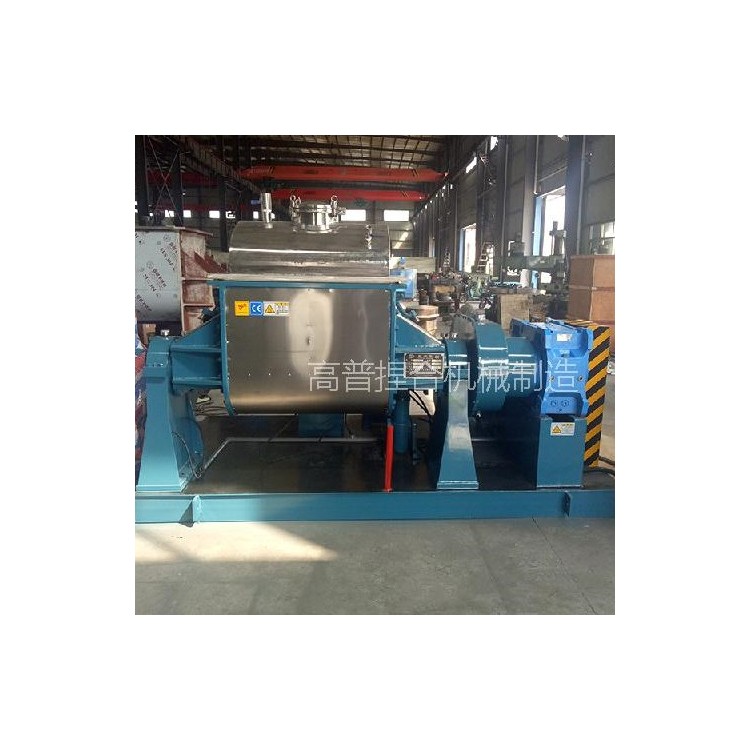

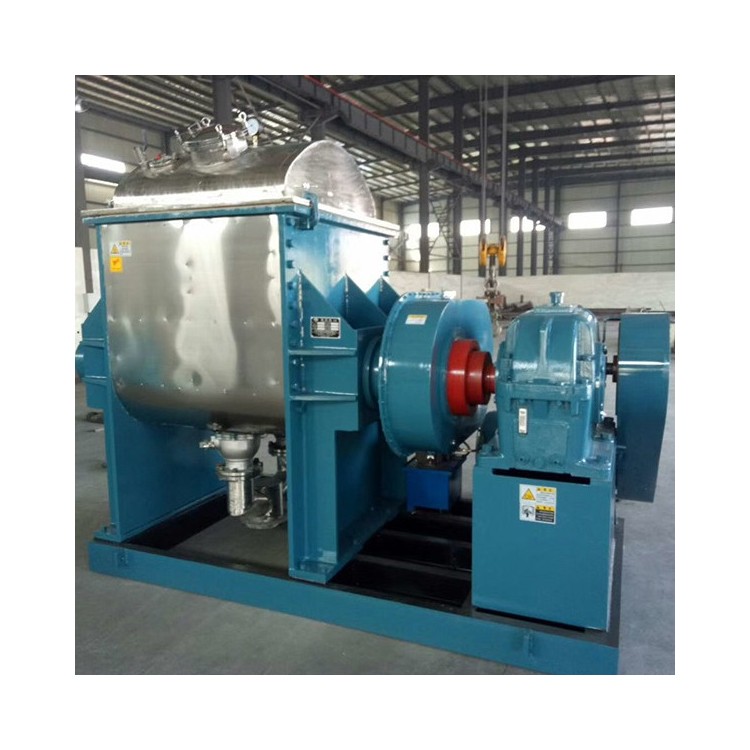
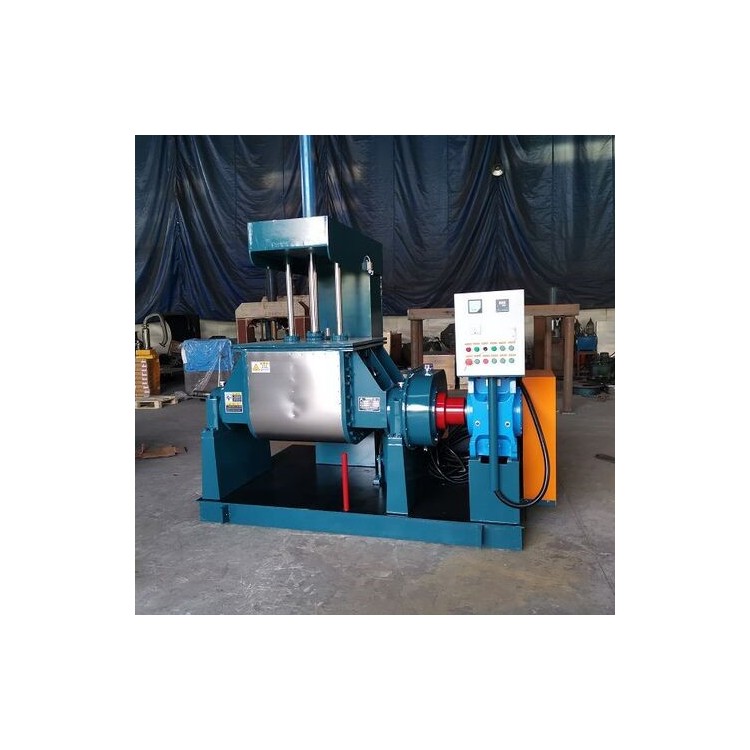












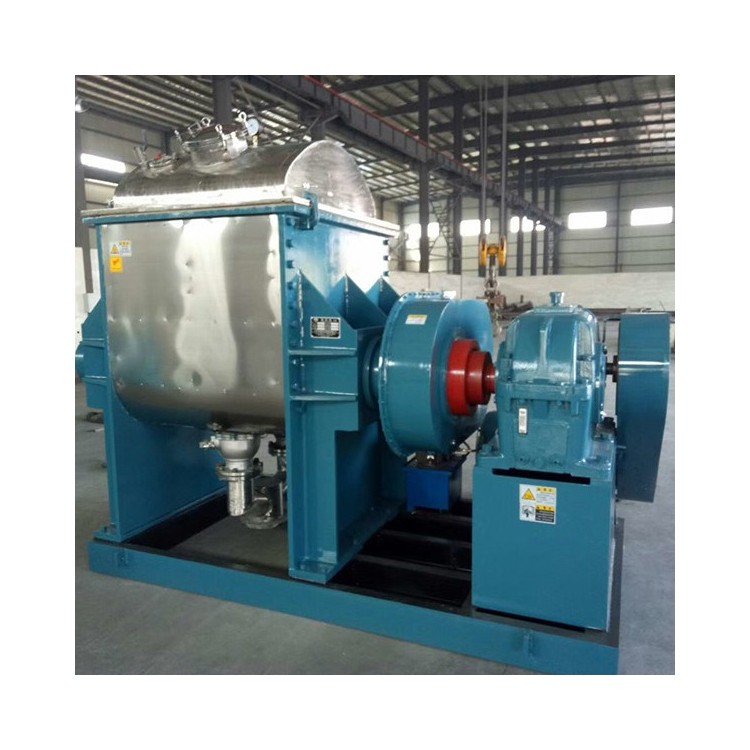


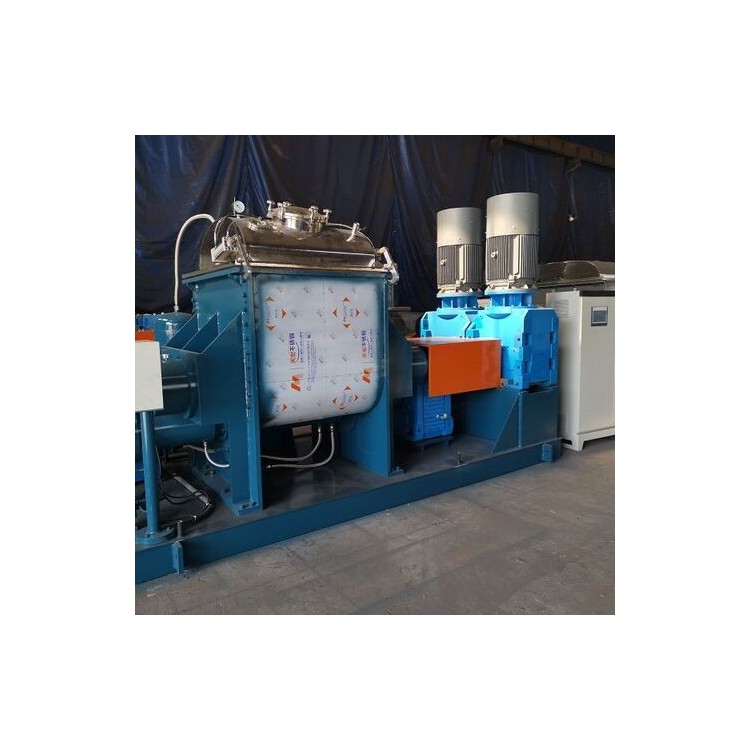
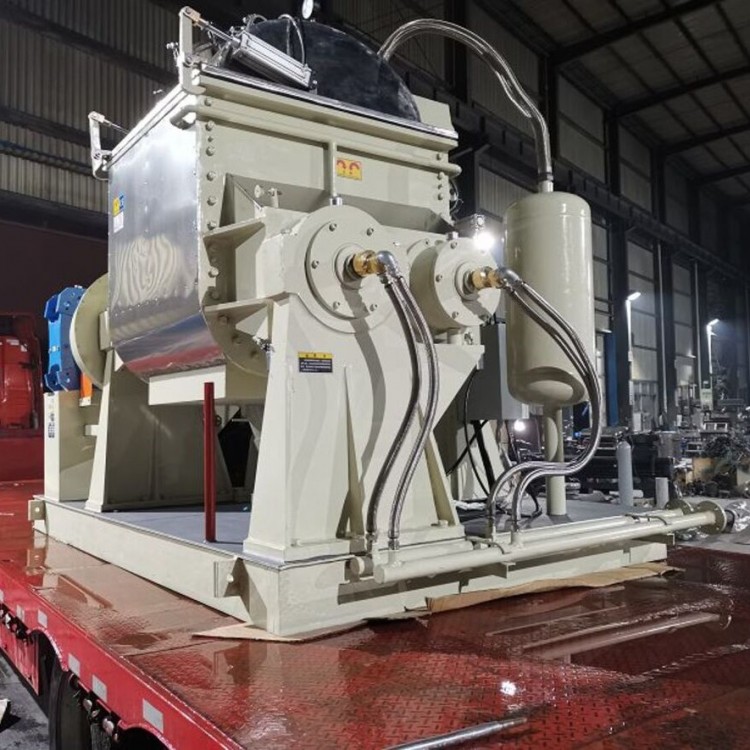
Intensive mixer is the ideal equipment for kneading, blending, vulcanizing, and polymerizing high-viscosity, elastoplastic materials. It is used in the production of silicone rubber, sealant, hot melt adhesive, food gum base, and more. An intensive mixer is a mixing and blending device, commonly featuring two Sigma blades arranged in parallel, with one blade rotating faster than the other to generate shearing force. The varying blade speeds allow the blended materials to be quickly sheared, ensuring uniform mixing.
Vacuum kneaders are a type of kneader, primarily used in the chemical production fields such as silicone rubber, glass glue, butyl rubber, and thermoplastic adhesives. Kneaders typically consist of several major components, including the kneading system, vacuum system, heating system, cooling system, and electrical control system.
The kneader generates a strong shearing action through a pair of interlocking and rotating Σ blades, which rapidly reacts with semi-dry or rubbery, thick plastic materials to achieve uniform mixing and blending.
The kneader is mainly composed of five major parts: the kneading section, base section, hydraulic system, transmission system, and electrical control system. The hydraulic system is operated by a hydraulic station to control the large oil cylinder for opening and closing functions. It also uses a hydraulic station to operate the cylinder for functions like turning over and opening the lid. The detailed parameters can be freely selected and requested by the user, offering convenient and reliable operation. The transmission system consists of an electric motor, a reducer, and gears, which are matched with the motor according to the kneader model.
The kneading machine's transmission section is driven by an electric motor at synchronous speed, which passes through an elastic coupling to the reducer. The output device then drives the fast paste to reach the specified speed, and it can also be adjusted by a variable frequency drive.
The kneader features two Sigma-type blades, with different speeds for the two blades. The rotational speed can be set according to various processes, with common speeds being 42/28 rotations per minute.
Mixer kneaders can be designed with or without heating capabilities. Heat exchange methods typically include: electric heating, steam heating, circulating hot oil heating, and circulating water cooling.
The discharge methods of the kneading machine include hydraulic tilting drum, ball valve discharge, and screw extrusion. The cylinder and blade contacting parts are all made of SUS304 stainless steel to ensure product quality.

















