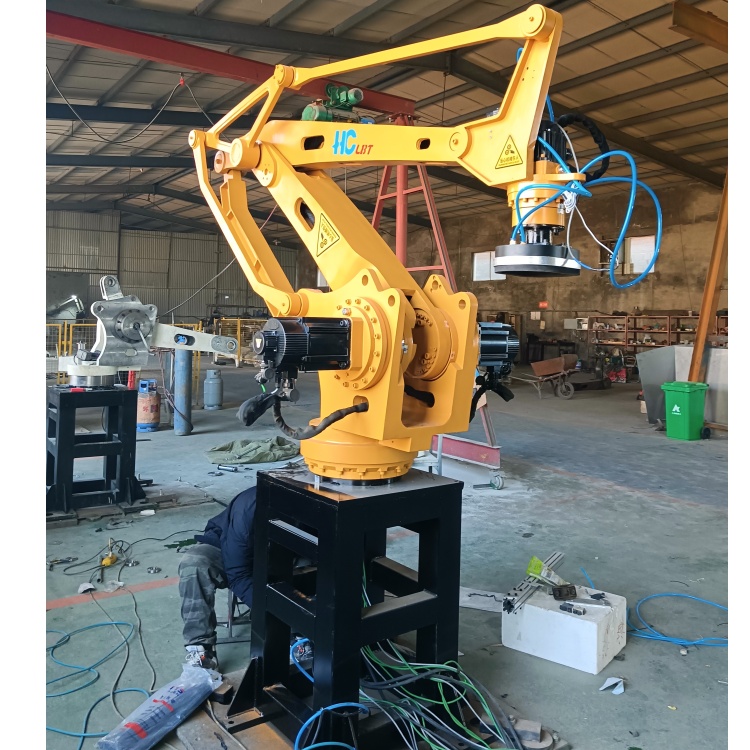
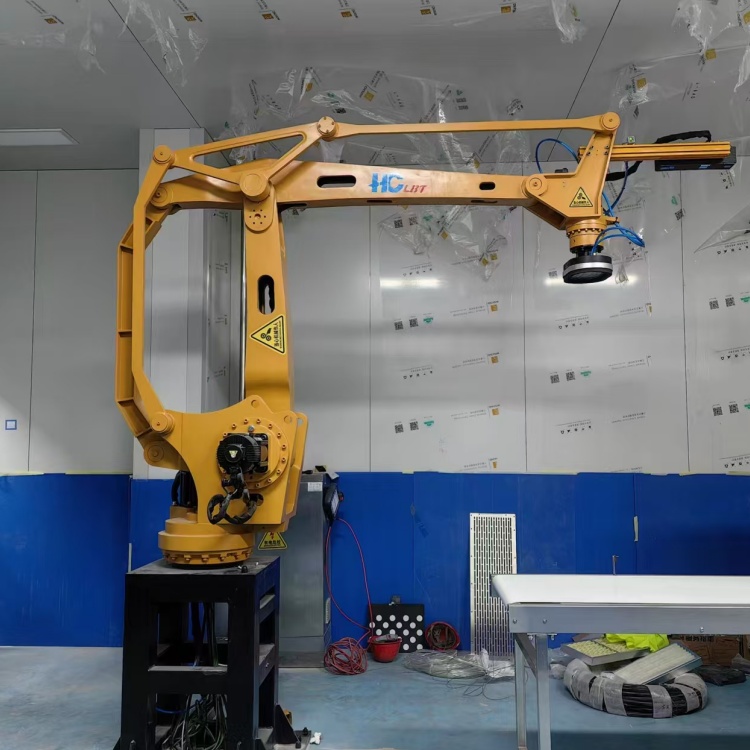
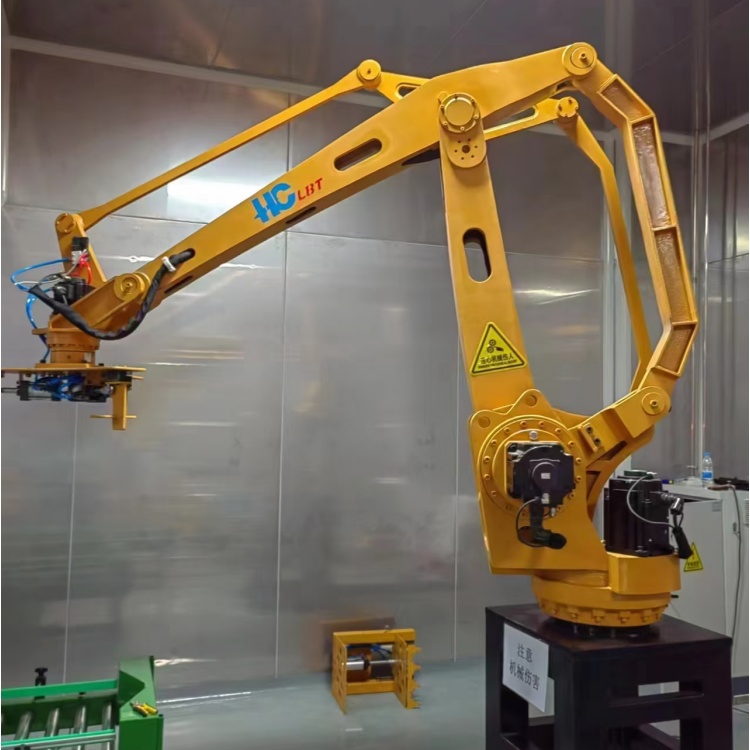


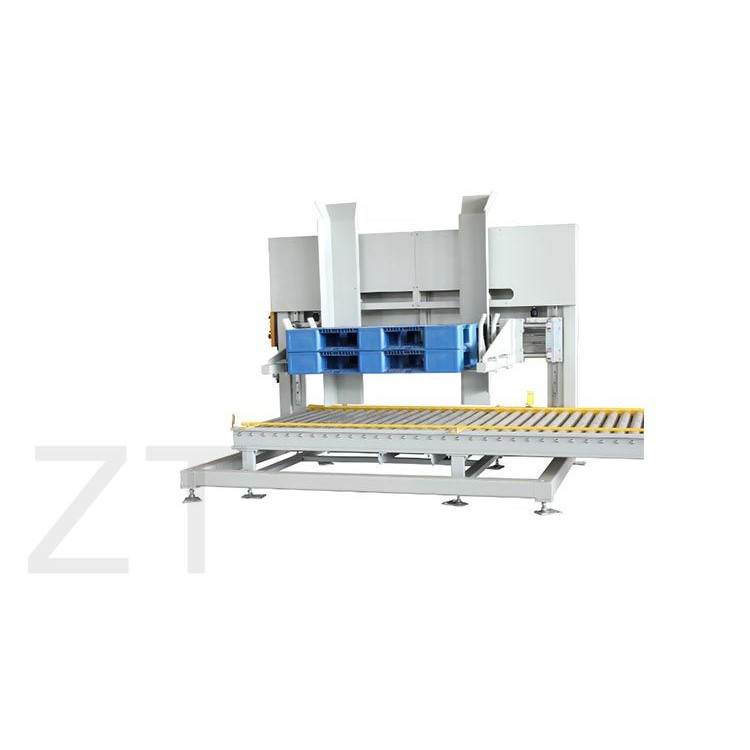
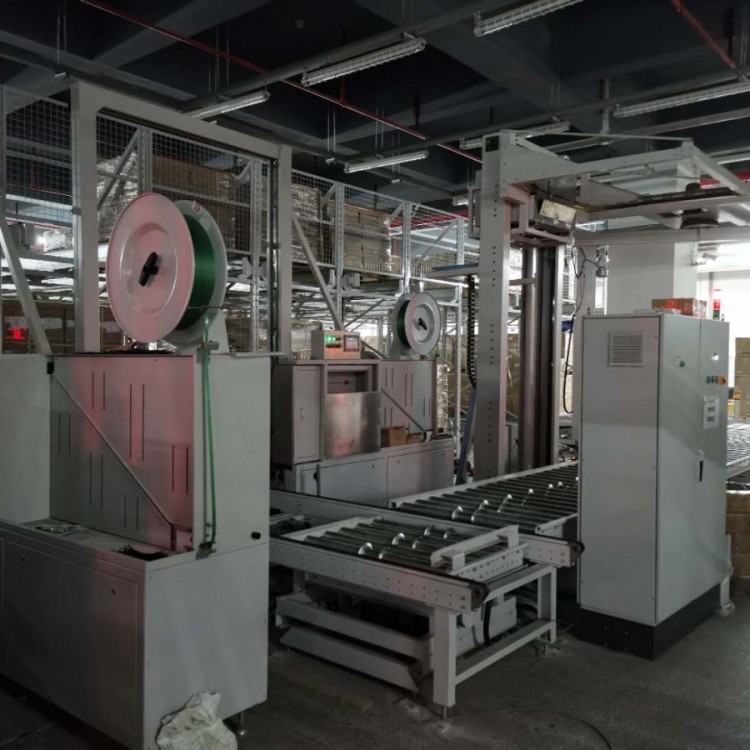





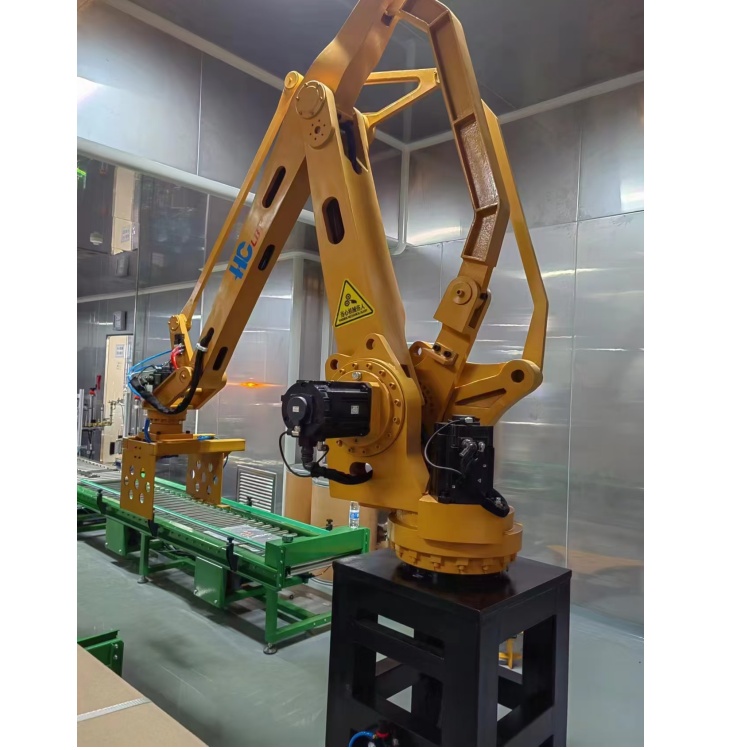
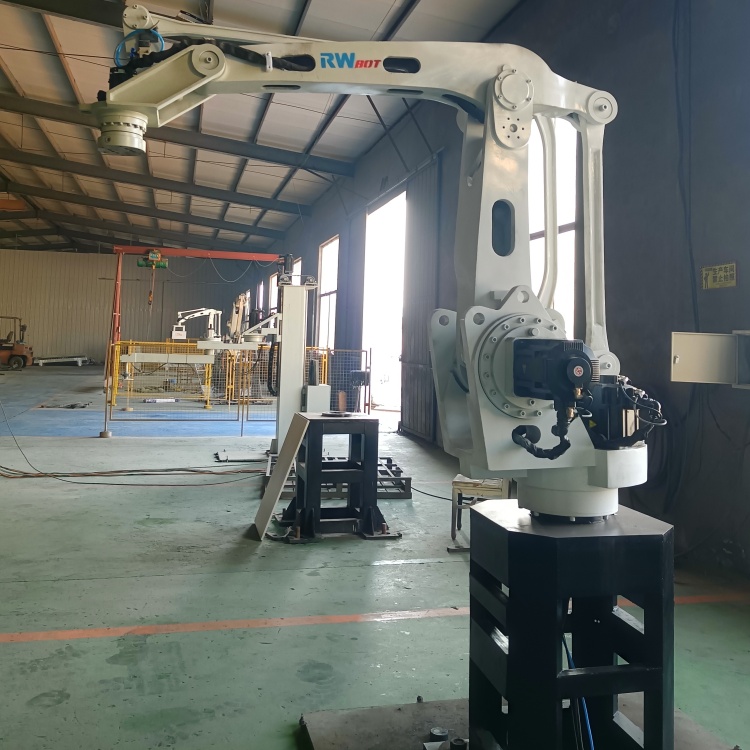
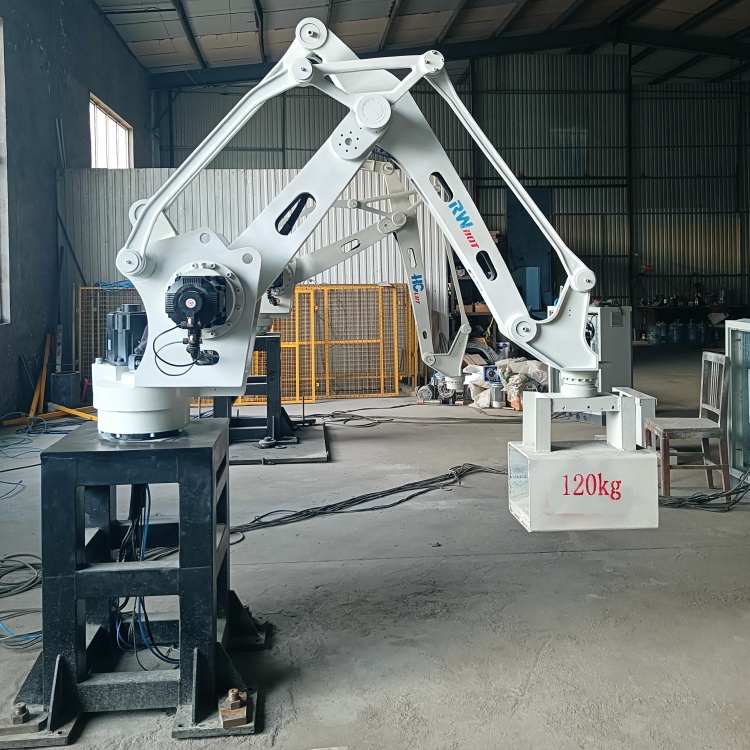
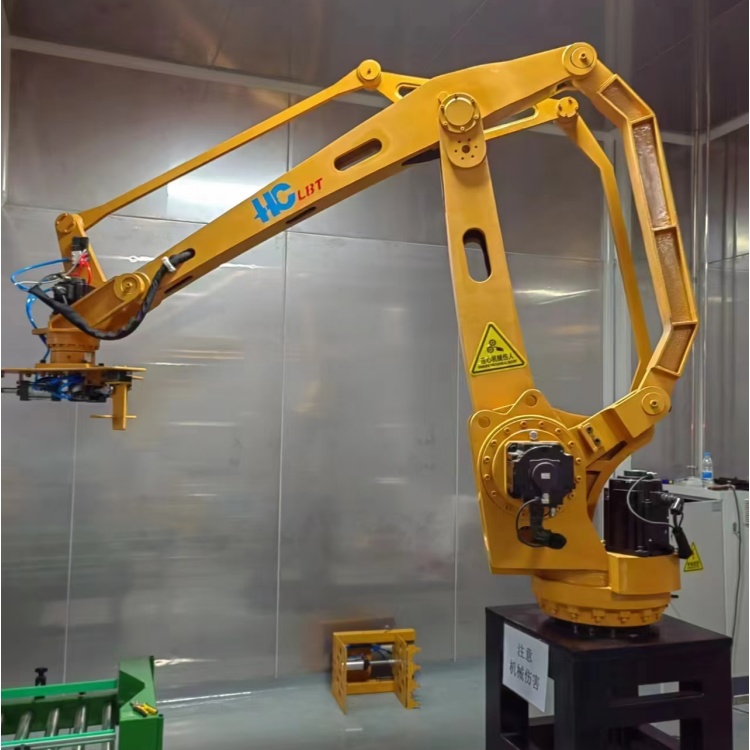
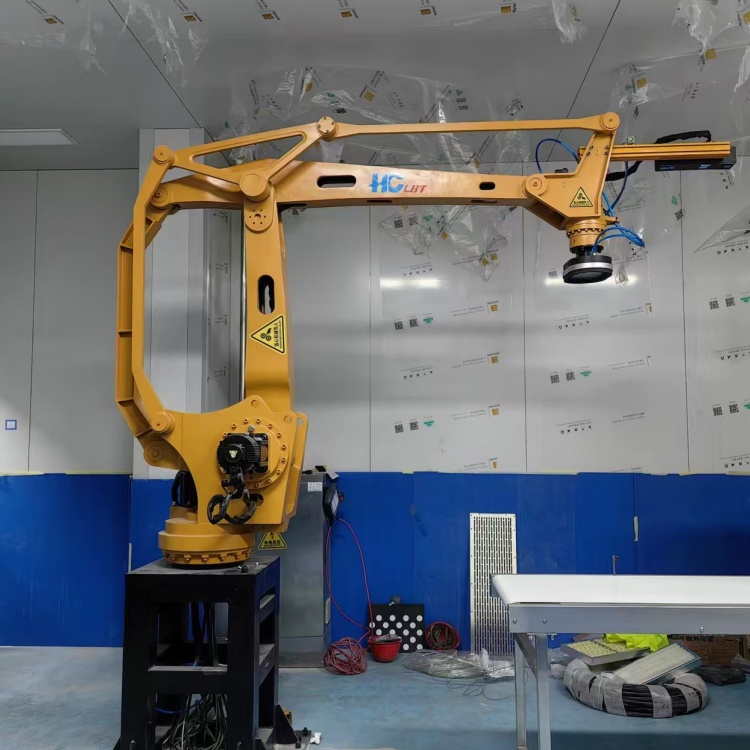
Palletizing robot

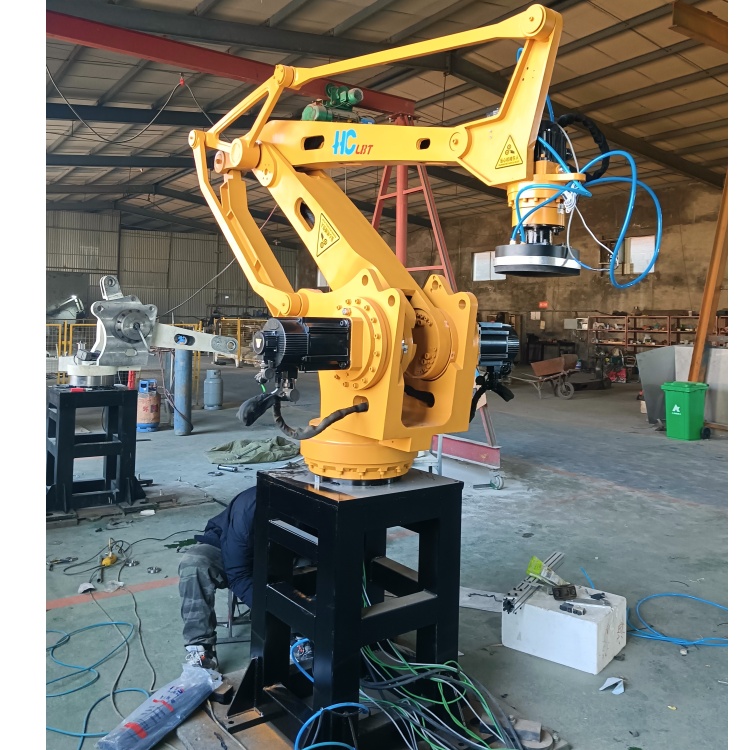
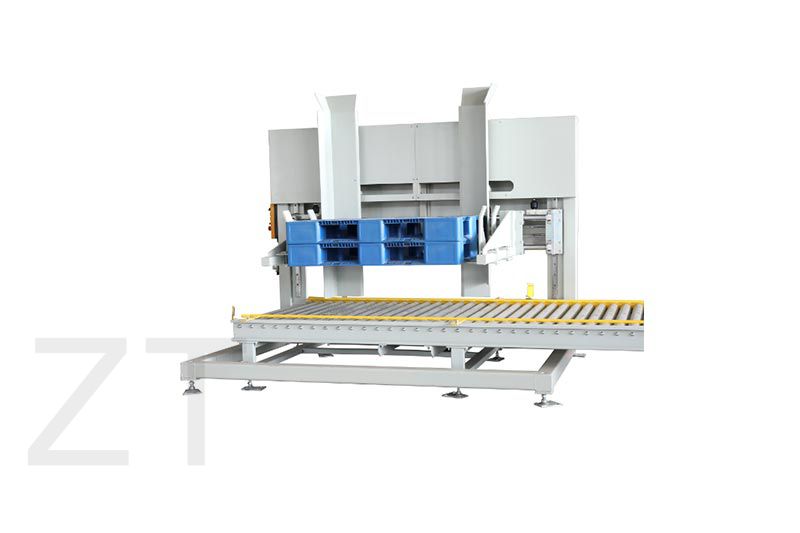
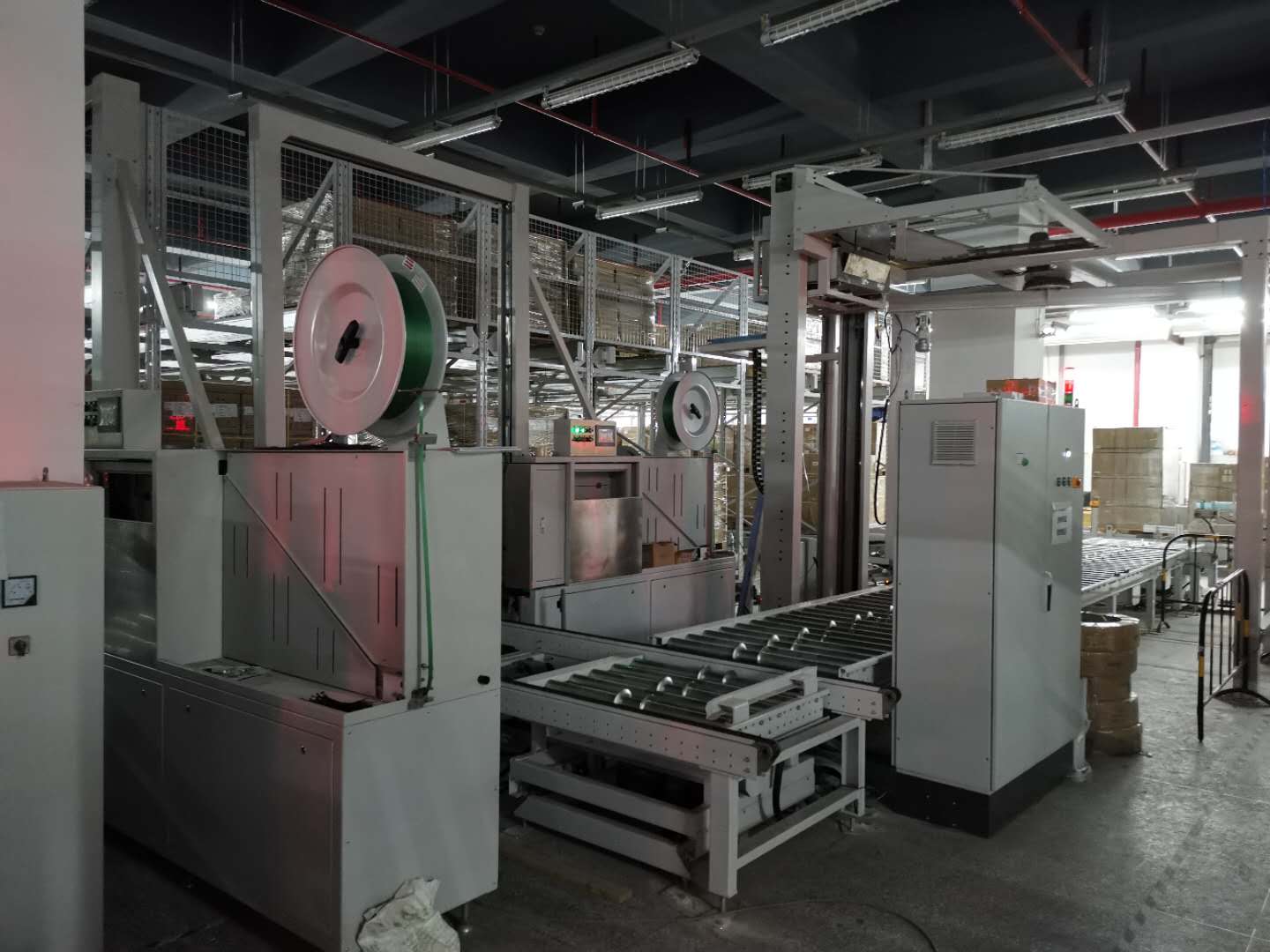
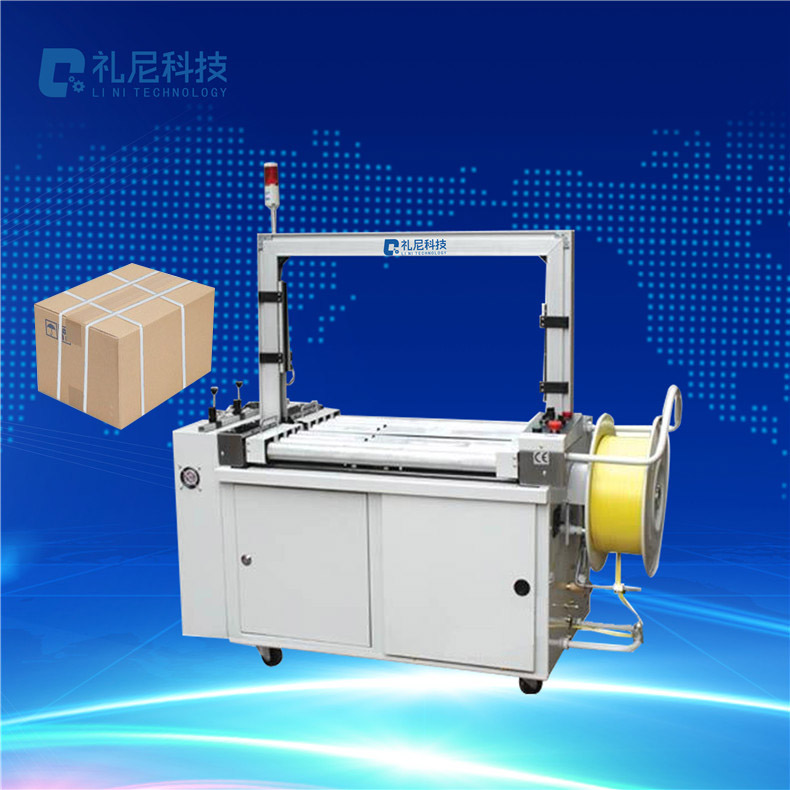
Palletizing robots are the result of the organic integration of machinery and computer programs, widely used in modern production fields, playing a crucial role especially in the palletizing industry. Below is a detailed introduction to palletizing robots:
I. Definition and Significance
DefinitionPalletizing robots are automated equipment that can stack and palletize items.
SignificanceThe advent of stacking robots has significantly enhanced production efficiency, saved labor and space, and is an indispensable part of modern automated production lines.
Section II: Features and Advantages
EfficiencyThe stacking robot operates with flexibility and precision, working quickly and efficiently to significantly enhance the efficiency of stacking operations.
StabilityThe robot palletizing offers high stability, ensuring accuracy and consistency in the stacking process.
Space-savingThe stacking robot system utilizes a patented coordinate robot installation, offering flexible and compact space usage, enabling efficient production within a smaller footprint.
AdaptableStacking robots can be customized and adjusted for different products and requirements, offering strong adaptability.
III. Working Principle
Stacking robots, equipped with mechanical arms and suction cups, grasp items from the conveying line and lift them to a fixed position, then stack them according to the pre-set pattern. Throughout the process, the robot adjusts its position and posture in real-time based on sensors and the control system, ensuring accuracy and stability in stacking.
Section 4: Application Fields
Palletizing robots are widely used in various industries such as food, beverage, chemicals, and construction materials. For instance, in the food industry, these robots can automatically stack packaged food boxes into piles; in the chemical industry, they can handle various bagged or drummed chemical products; and in the construction materials industry, they can be used for stacking bricks, cement, and other construction materials.
V. Technical Specifications
The technical specifications of stacker robots vary by model and application, but generally include the following aspects:
PowerThree-phase 5KW, 380V, 50/60Hz.
PressureAs per 3~6 kg/sq. cm.
SpeedAs per 25 cartons per minute, etc.
Additionally, parameters such as load capacity, repeat positioning accuracy, and working range are also important indicators for assessing the performance of stacker robots.
Section 6: Trending Developments
With advancements in technology and increased automation, stacker robots will evolve towards greater intelligence, flexibility, and efficiency. In the future, these robots will be more integrated into production lines, achieving seamless connection and collaborative operation with other equipment, further enhancing production efficiency and product quality.
In summary, stacker robots are one of the indispensable important equipment in modern production. Their high efficiency, stability, and space-saving features have made them widely used in various fields. With the continuous advancement of technology and the expansion of the market, the development prospects for stacker robots will be even broader.